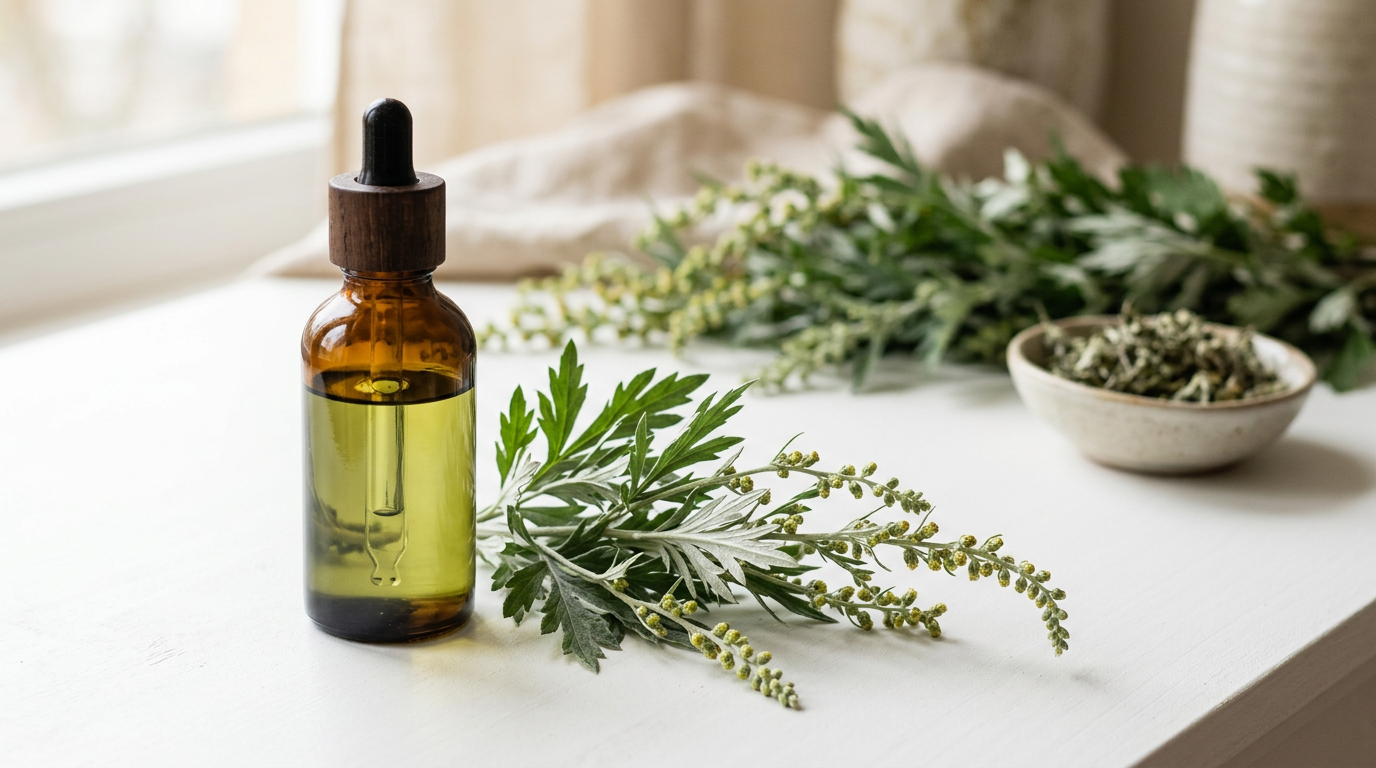
Buying Mugwort Oil for Candles: Flashpoint and Load Rate Guide
Mugwort has been showing up more often in candle studios lately, thanks to its green, herbal, faintly sweet profile that sits well against woods and citrus. But mugwort essential oil for candle making isn't a plug-and-play ingredient. It behaves differently than the lavender or vanilla oils most candle makers already know, and buying the wrong batch can mean a candle that never throws scent, or worse, one that doesn't cure safely in the vessel. This guide walks through what actually matters when buying mugwort oil for candles: the numbers on the spec sheet, the questions worth asking a supplier, and the price points where quality tends to fall apart.
What to Look for: Quality Indicators
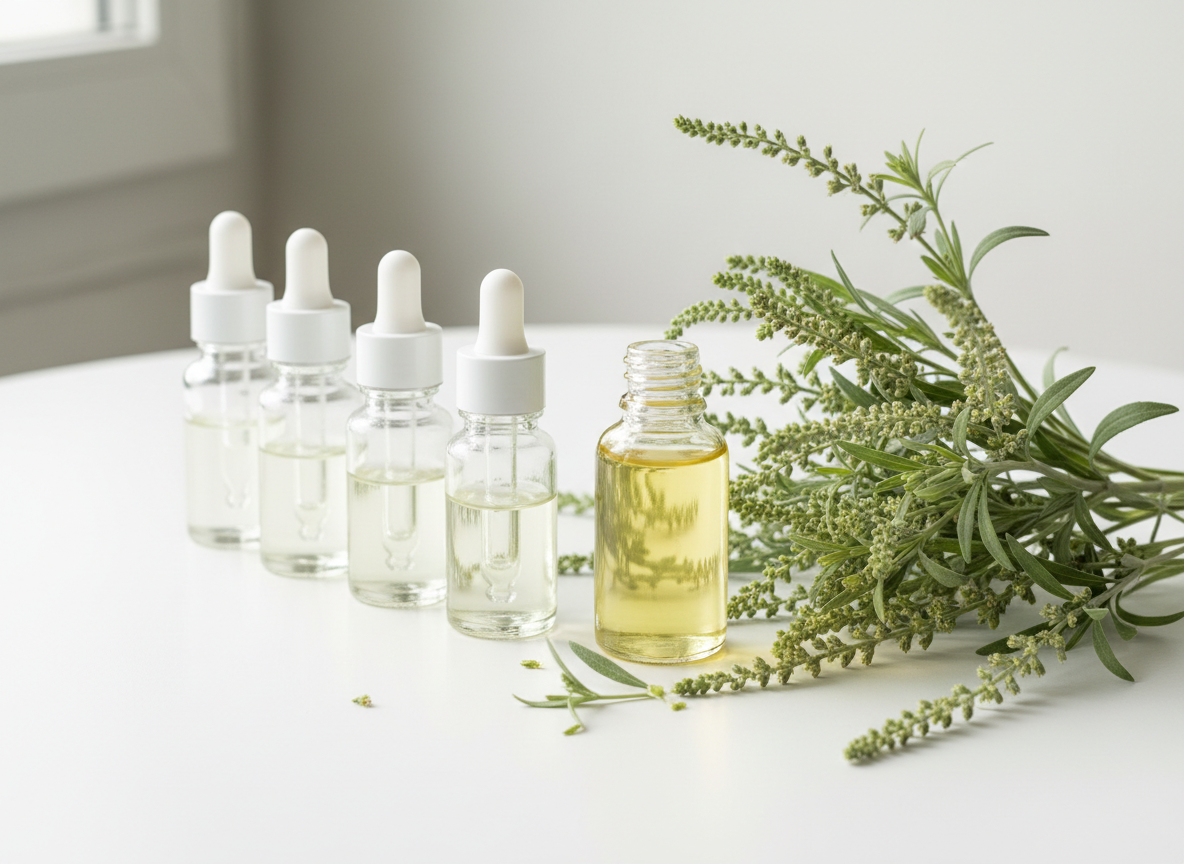
Mugwort oil sold for candle work should come with documentation, not just a pretty label. Before adding a supplier to your cart, look for these markers.
- A batch-specific GC-MS report. Gas chromatography-mass spectrometry testing shows the actual chemical makeup of that lot of oil, including the presence of thujone and other constituents that vary by harvest. A supplier who can produce this on request is telling you something about how seriously they run their lab.
- Botanical name and plant part. Look for Artemisia vulgaris listed explicitly, along with the plant part used (typically leaf and flower tops). Generic labeling that just says "mugwort oil" without a Latin binomial is a shortcut, not a shortage of space.
- Country of origin and harvest year. Mugwort grown in different regions, and even different seasons, can vary in aroma intensity and chemical profile. A supplier that states origin and harvest date is giving you traceability; one that won't isn't.
- Extraction method. Steam distillation is standard for mugwort oil. If a listing is vague about how the oil was extracted, ask before you buy.
- Flashpoint and fragrance load data specific to candle applications. This is the section most general aromatherapy suppliers skip entirely, because it's not relevant to their diffuser-focused customers. For candle work, it's non-negotiable.
If a listing gives you an origin, a harvest year, a GC-MS report, and candle-specific data in the first scroll, that's usually a strong signal the seller understands who buys mugwort oil and why.
Understanding Mugwort Oil Flashpoint
The mugwort oil flashpoint is the temperature at which the oil's vapors can ignite when exposed to an open flame. It's a safety and formulation number, not a scent-quality one, but it directly affects how you use the oil in a candle.
Most reported ranges for mugwort essential oil sit in the 155 to 180°F band, though this varies by supplier and by how the oil was processed. That's a meaningfully lower flashpoint than many fragrance oils and some other essential oils used in candle making, and it means a few things in practice:
- Add the oil to melted wax after the wax has cooled somewhat from pouring temperature, rather than at peak heat, so you're not needlessly pushing vapor loss or standing near heated wax above the oil's flashpoint.
- Always confirm the exact flashpoint listed on that specific supplier's documentation. "Around 165°F" on one site's blog post is not the same as a number tested on the lot sitting in your cart.
- Store the oil away from heat sources and open flame, in a dark glass bottle, tightly capped. A low flashpoint oil degrades faster and loses potency when stored carelessly.
A reputable seller will list the flashpoint plainly on the product page or safety data sheet, not bury it in a PDF you have to request by email. If you can't find a flashpoint number anywhere, treat that absence as a red flag rather than an oversight.
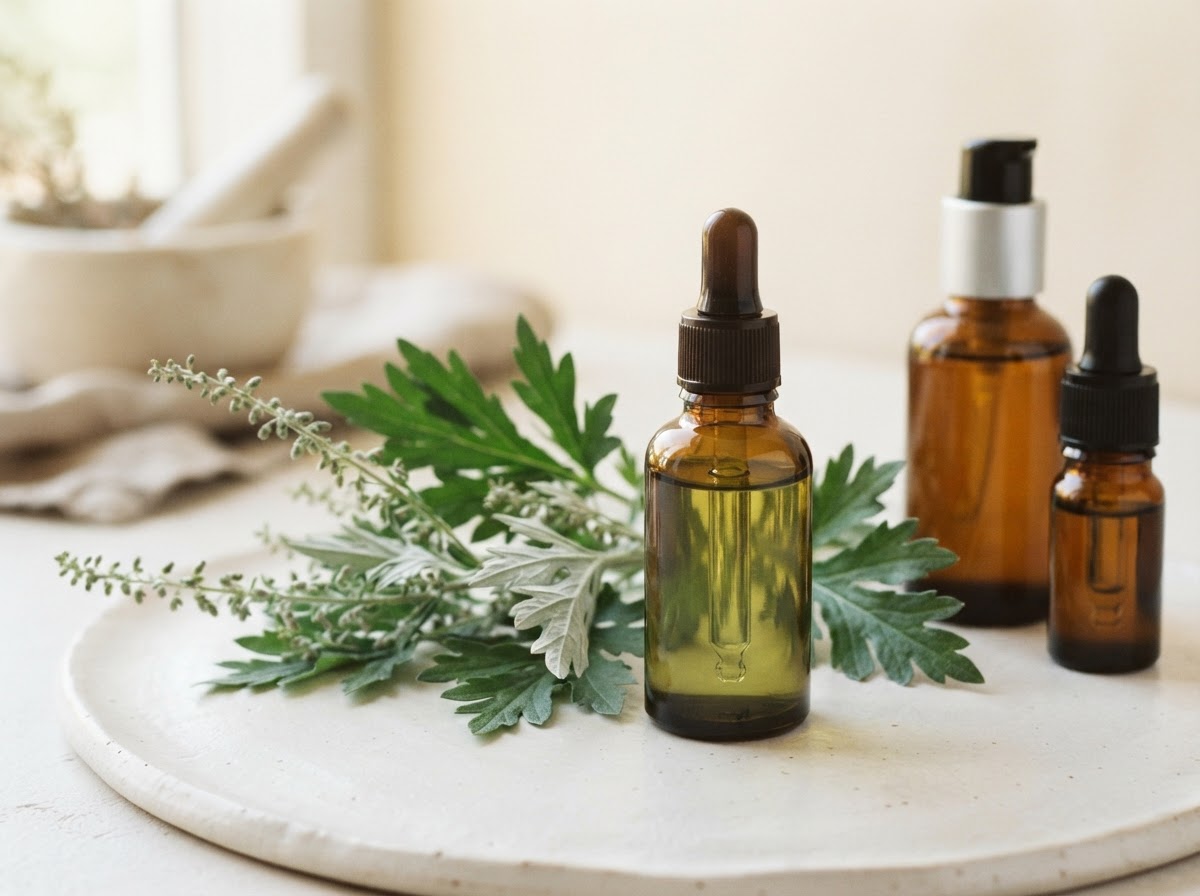
Fragrance Load Rate: How Much Mugwort Oil to Use
The mugwort oil candle fragrance load is the percentage of oil by weight relative to your total wax. Get this wrong in either direction and the candle disappoints: too low and there's no cold throw or hot throw worth mentioning; too high and you risk a weak, sooty flame, sweating wax, or poor adhesion of the wax to the vessel.
General starting points candle makers report for mugwort oil:
| Wax Type | Typical Starting Load | Notes |
|---|---|---|
| Soy wax | 6% to 8% | Soy tends to hold fragrance oils loosely; test at the higher end if hot throw is weak. |
| Coconut wax blends | 5% to 7% | Coconut wax often carries scent well at a lower load; start conservative. |
| Paraffin | 6% to 10% | Paraffin generally tolerates a higher fragrance load than soy. |
| Beeswax | 3% to 5% | Beeswax has its own honey-like scent and a lower saturation point; less oil goes further. |
These are starting points, not fixed rules. Every wax blend, wick, and vessel size shifts the ideal fragrance load rate slightly. Run a small test batch, let it cure for the full period the wax manufacturer recommends (usually one to two weeks), and evaluate both cold throw (scent from an unlit candle) and hot throw (scent while burning) before committing to a full production run.
One practical note specific to mugwort: because it's an essential oil rather than a synthetic fragrance oil, its aromatic compounds can be more volatile during the burn. Candle makers who work with mugwort essential oil for candle making often report needing to test slightly higher within the wax manufacturer's maximum fragrance load to get a hot throw that reads clearly across a room, without exceeding that maximum. Never exceed your wax supplier's stated maximum load regardless of how the scent tests.
Key Features to Compare Across Suppliers
Once you've narrowed down a shortlist, compare listings side by side using these features rather than price alone.
| Feature | Why It Matters |
|---|---|
| GC-MS report availability | Confirms actual composition of that batch, not a generic average |
| Flashpoint listed per batch | Needed for safe handling and wax temperature planning |
| Recommended fragrance load range | Saves testing time and wasted wax |
| Bottle size options | Small trial sizes (5ml to 15ml) let you test before bulk buying |
| Packaging | Amber or cobalt glass protects against light degradation; clear plastic is a warning sign for a light-sensitive oil |
| Return or sample policy | A confident supplier lets you sample before a large order |
| Price per milliliter at volume | Bulk pricing should scale down meaningfully; if it doesn't, the "bulk discount" is mostly marketing |
Top Picks at Different Price Points
Pricing for mugwort oil varies widely depending on origin, purity claims, and packaging. Here's roughly what to expect at each tier, and what to prioritize at each one.
Budget Tier (Under $12 for 10ml)
At this price, expect basic labeling and possibly no batch-specific GC-MS report. This tier can work for a first test batch if the listing at least states botanical name, origin, and a flashpoint figure. Order a small quantity, run a test pour, and evaluate the hot throw before scaling up. Skip anything in this range that has no safety data sheet at all.
Mid Tier ($12 to $25 for 10ml)
This is where most serious candle studios land. Look for suppliers who publish flashpoint and recommended fragrance load ranges directly on the product page, along with a GC-MS report available on request or by download. Consistency between batches tends to improve here, since suppliers at this tier are usually selling to repeat business customers rather than one-off retail buyers.
Premium Tier ($25 and up for 10ml)
Premium mugwort oil often comes from a single named region or farm, with a harvest date, a batch-specific GC-MS report as standard rather than on request, and detailed candle formulation notes. This tier makes the most sense for studios producing at scale, where a single off batch would waste significant wax and labor. It's a harder price to justify for a hobbyist testing one candle recipe.
Whichever tier fits your budget, buy the smallest size that lets you run a legitimate test batch before committing to a bulk order. Mugwort oil's aroma and performance can shift between harvests, so even a trusted supplier's next batch deserves a fresh test pour.
Red Flags to Avoid
- No flashpoint listed anywhere. If you have to email and wait days for a basic safety number, that's a supplier not set up for candle-making customers.
- No botanical name. "Mugwort oil" without Artemisia vulgaris printed somewhere on the listing or label is a labeling shortcut worth questioning.
- Suspiciously cheap bulk pricing with no sample option. If a seller won't let you buy a small trial size first, they may be counting on buyers not testing before reordering.
- Clear plastic bottles for a light-sensitive oil. Amber or cobalt glass is standard for a reason; clear packaging suggests the seller hasn't thought through storage.
- Vague or copy-pasted product descriptions. If the same paragraph appears verbatim across a dozen unrelated oils on the same site, the seller likely isn't testing each one individually.
- No return policy or unclear shipping practices. Essential oils degrade in heat; a seller who ships in flimsy packaging during summer months without insulation isn't protecting the product you're paying for.
- Reviews that only mention scent, never candle performance. A listing full of reviews from diffuser or perfume users won't tell you anything about how the oil behaves in melted wax.
Where to Buy
A few channels tend to serve candle makers better than others when buying mugwort oil for candles:
- Specialty candle-supply retailers. These sellers already understand fragrance load rate and flashpoint because their whole customer base asks about it. Their documentation tends to be more complete than general wellness or aromatherapy shops.
- Direct-from-distiller suppliers. Buying closer to the source often means fresher stock and more willingness to share a specific batch's GC-MS report, though minimum order sizes can be higher.
- Established essential oil retailers with a candle-making section. Larger retailers that serve multiple markets (aromatherapy, soap, candles) sometimes publish separate technical data for each use case. Confirm you're looking at candle-specific numbers, not general aromatherapy dilution guidance, which uses an entirely different scale.
Wherever you buy, keep a simple log of supplier, batch number, flashpoint, and the fragrance load you tested. Mugwort oil isn't as standardized across suppliers as more common candle fragrances, and that log becomes valuable the first time you need to reorder or troubleshoot a batch that behaves differently than the last one.
A Few Final Considerations
Mugwort oil rewards candle makers who treat it like a formulation ingredient rather than a scent to pour in and hope for the best. The flashpoint tells you how to handle it safely during production. The fragrance load rate tells you how much to use for a candle that actually performs once it's burning. Between those two numbers, and a supplier willing to document both, you have most of what you need to buy with confidence. Run small test batches, keep notes, and let the cured candle, not the bottle on the shelf, be the final judge of whether a supplier's mugwort oil is worth reordering.