Folklore's Silver Herb
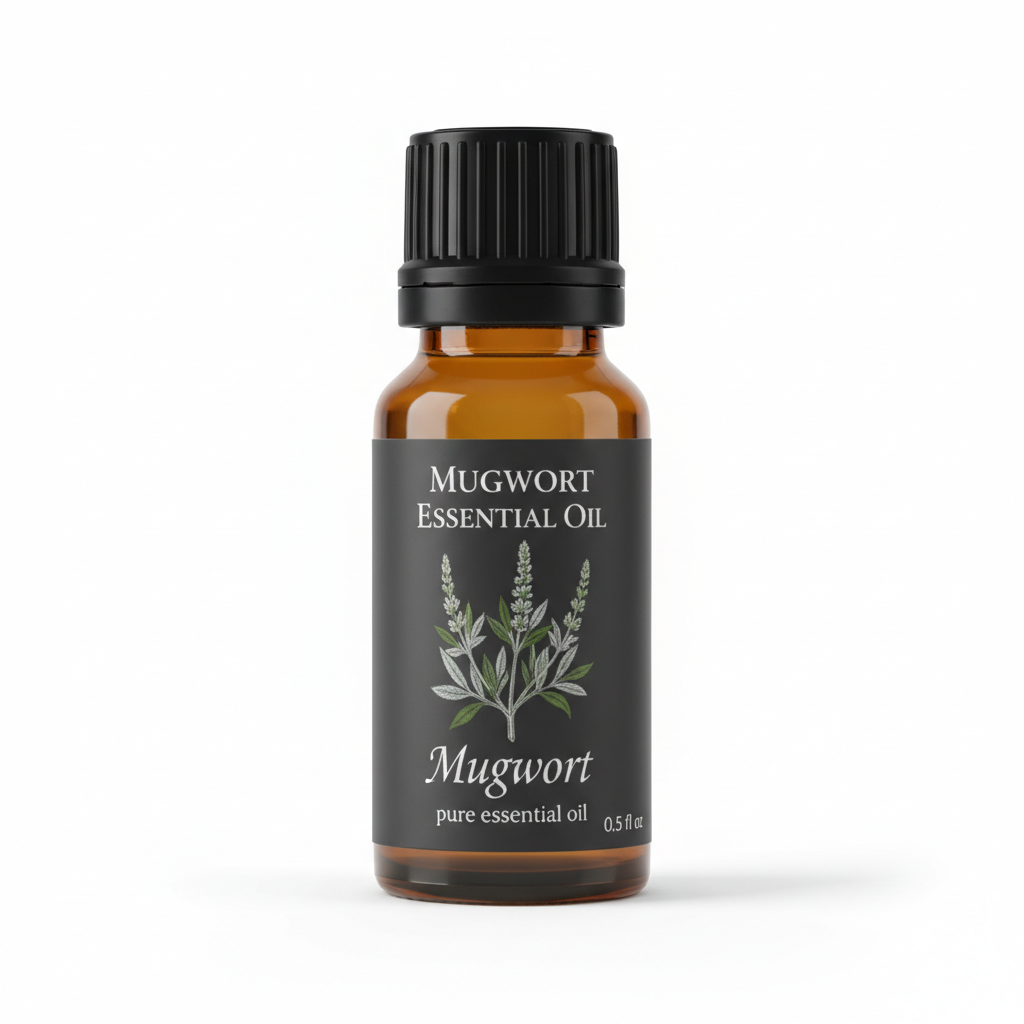
Mugwort essential oil carries centuries of folklore in its bitter-green scent. Steam-distilled from the leaves and flowering tops of Artemisia vulgaris, it is a specialist's oil for incense work, natural perfumery, and craft projects with an old-world soul.
Blend mugwort into loose incense mixes and herb bundles for a smoky, green, apothecary-style burn.
Explore →Dose mugwort into soy or paraffin candles for a moody, bitter-green scent that reads as vintage apothecary.
Explore →Work this green, camphoraceous note into natural perfume formulas alongside cedarwood, clary sage, and frankincense.
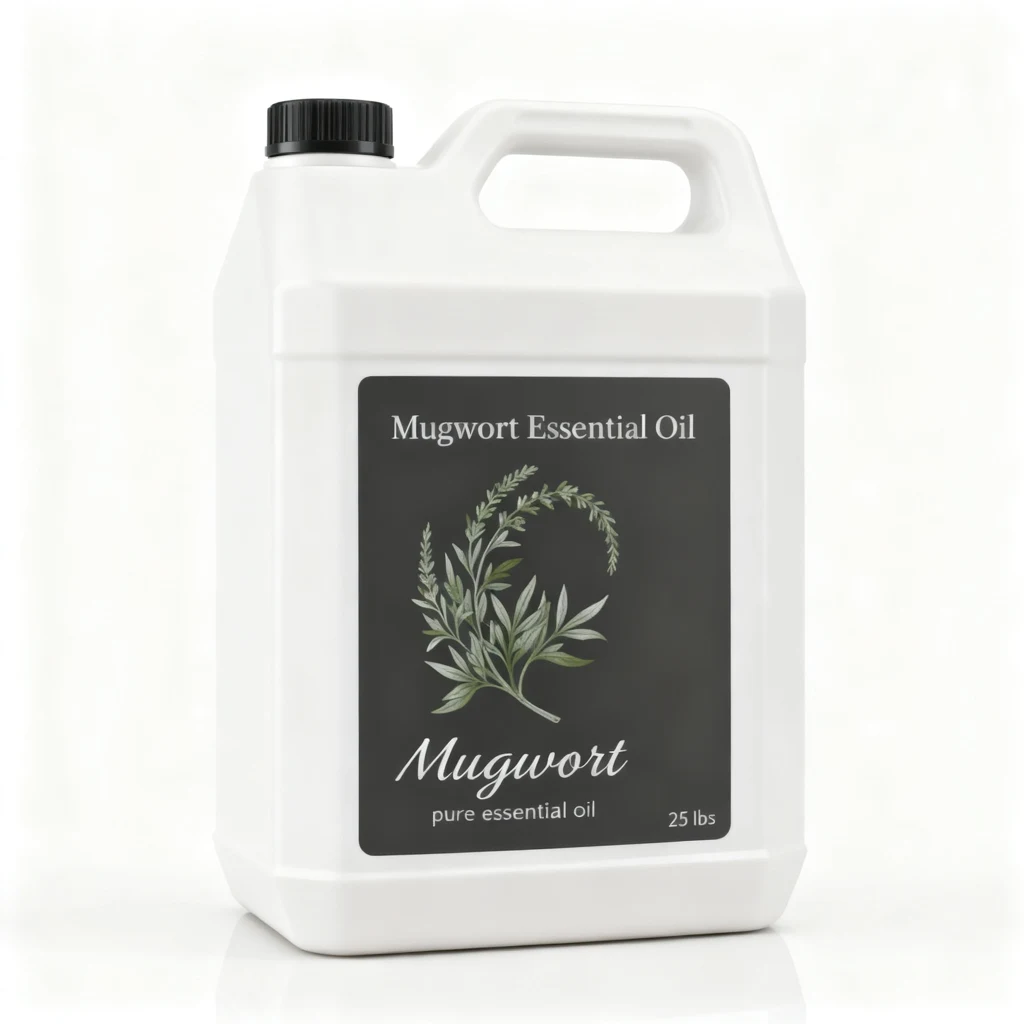
Explore →Order mugwort oil by the pound for candle lines, perfume batches, and incense production runs.
Explore →
First Sniff
A half-ounce bottle to test the green, bitter aroma before committing to a blend.
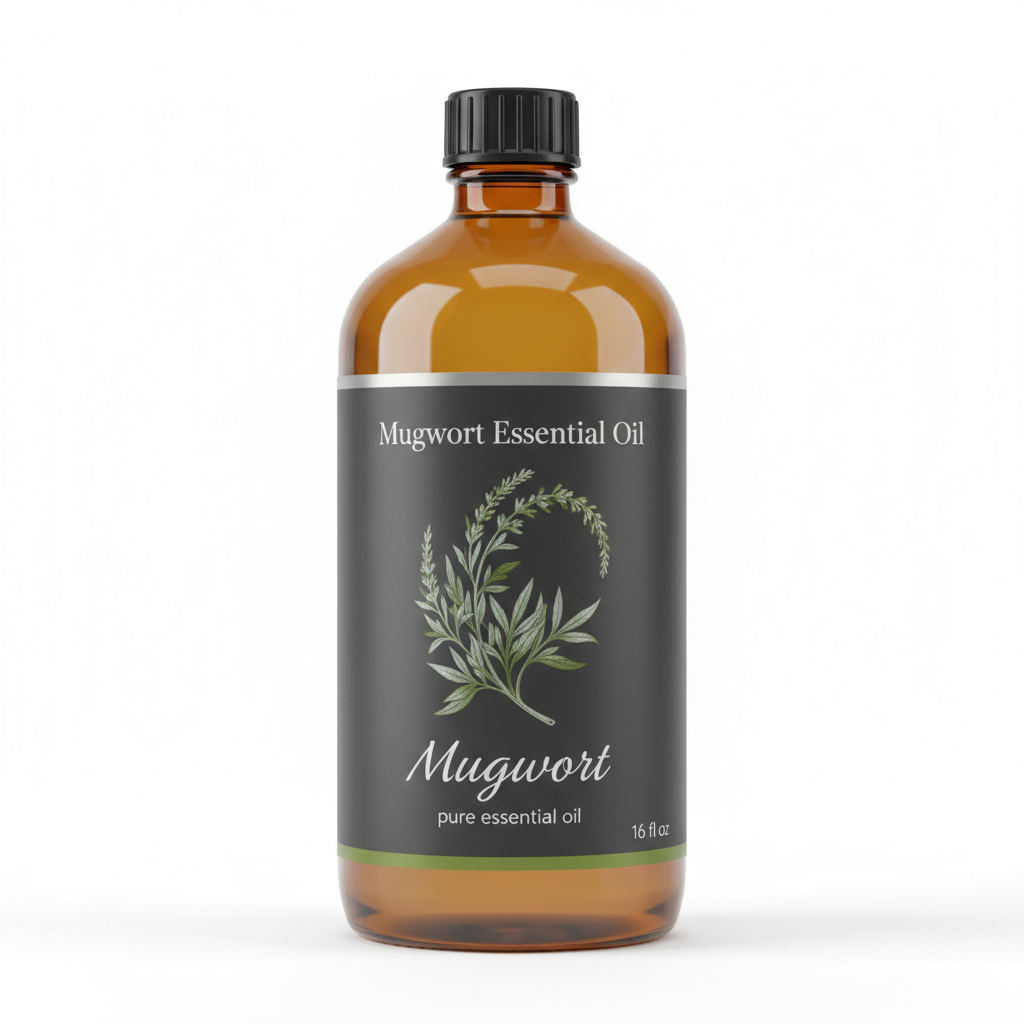
Pilot Batch
Sixteen ounces for running a real test batch of candles, incense, or a perfume accord.
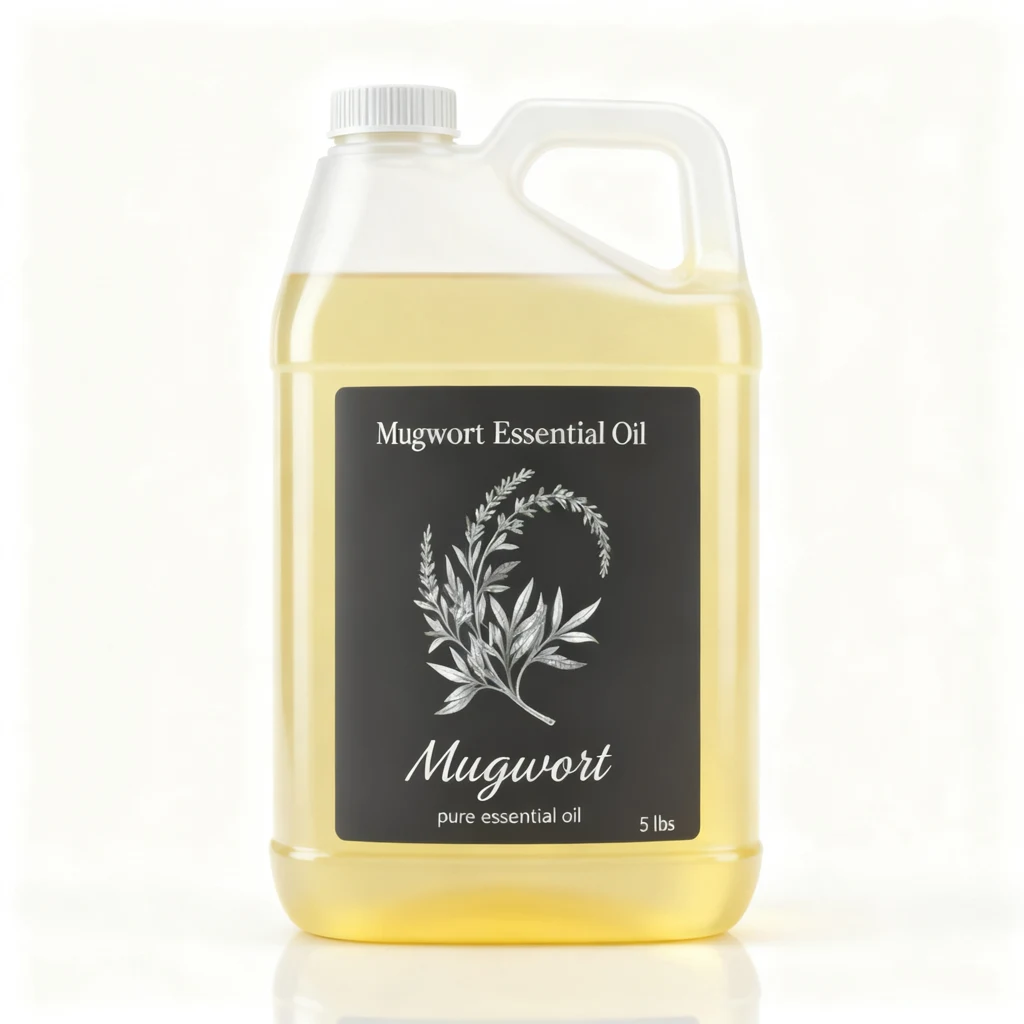
Production Start
Five pounds is the first production size, with a lower per-ounce cost than the smaller bottles.
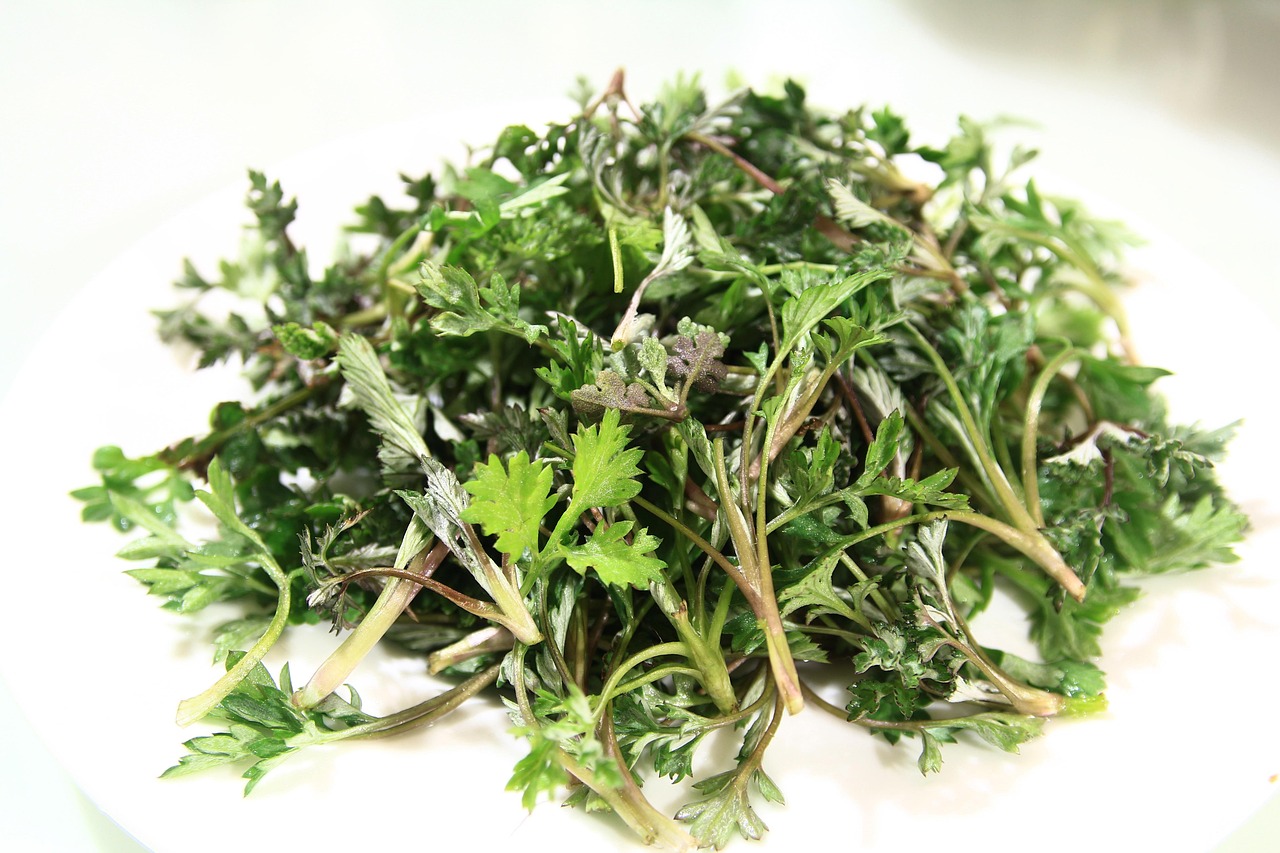
Mugwort essential oil is steam-distilled from the aerial parts of Artemisia vulgaris, the silvery roadside herb woven through European and Asian folk tradition, from dream pillows to seasonal rites. The oil concentrates the plant's aromatic character many times over.
The scent is green, bitter, and camphoraceous with sage-like and herbaceous facets and a curious sweet undertone. In natural perfumery it plays a distinctive herbal accent role beside cedarwood, clary sage, juniper, and frankincense.
This is an oil for fragrance craft rather than body care: loose incense and smudge-style blends, ritual candles, potpourri, and perfume accords with an apothecary character. Mugwort is a potent botanical, so keep dilutions minimal, avoid use during pregnancy, and store it well out of reach of children.
Aerial parts of Artemisia vulgaris are cut from the plant at the right point of growth.
The harvested herb is sorted and prepared to remove stems and debris before distillation.
Steam passes through the prepared plant material, carrying its aromatic compounds into the essential oil.
Each finished batch is tested and the results are compiled into a certificate of analysis.
The tested oil is bottled and stored away from heat and light to protect the batch.
Mugwort essential oil comes from one plant, one process, and one region, which makes it possible to check what a bottle actually contains instead of taking a label's word for it.
The current batch's certificate of analysis is published on this site, so you can see the testing behind the bottle you are ordering before it ships and compare it against what arrives.
| Steam-Distilled Mugwort | Synthetic Fragrance Oil | |
|---|---|---|
| Source | Steam-distilled from Artemisia vulgaris | Lab-blended aroma chemicals |
| Aroma | Green, bitter, camphoraceous, complex | Approximated scent, often one-note |
| Composition | Natural plant compounds only | Synthetic esters and isolates |
| Documentation | Batch COA published on this site | Rarely tested or disclosed |
| Best for | Natural perfumery and apothecary craft | Cheap mass-market scenting |
every batch comes from Artemisia vulgaris alone, never blended with other botanicals
the origin region for the mugwort plant material behind this oil
the extraction method used to pull the plant's aromatic compounds free
the above-ground portion of the plant that gets harvested and distilled
Hands-on ways to work mugwort into incense, sachets, perfume, and signature blends at your own bench.


Candle studios, natural perfumers, and incense makers order mugwort oil by the pound rather than the bottle, since a single production run can use far more than a home crafter ever would. The same batch documentation covering our smaller sizes, including the published certificate of analysis, applies to every bulk size as well, so a five-pound order is backed by the same testing as a half-ounce sample.
Consistent pound-scale supply for candle lines that pour mugwort into the same moody, green formula run after run.
See the guide →A steady source of this bitter-green accent for formulators building apothecary-style perfumes and layered natural accords.
See the guide →Bulk oil for herb bundles, loose incense blends, and ritual candle lines made at real production volume.
See the guide →