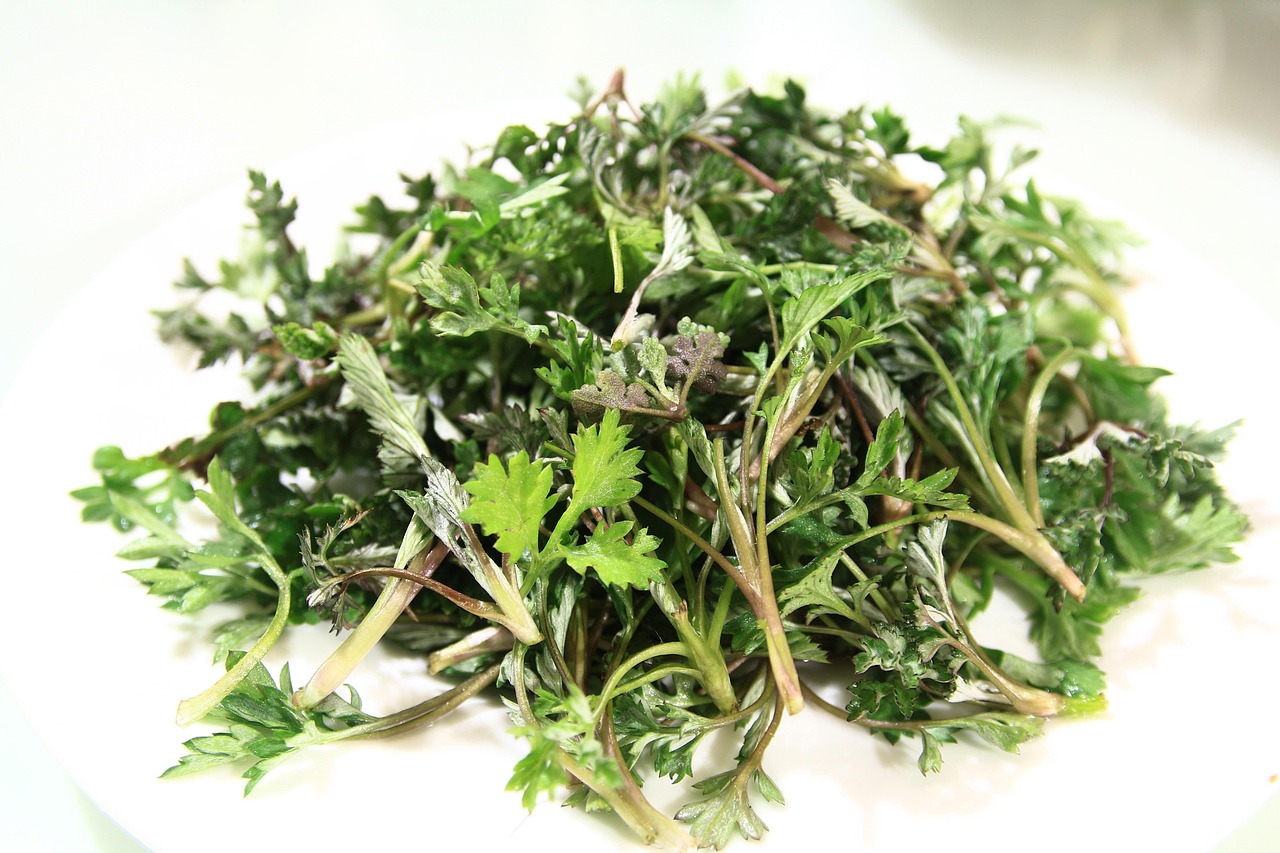
Mugwort in Autumn: Harvest-Season Blends for a Moody, Green Home Scent
There is a particular quality to autumn air that no candle aisle quite captures. It is green and cold at the edges, smoky in the middle, and threaded through with something almost medicinal but not quite. That nameless note is exactly where mugwort lives. As the days shorten and the instinct to nest kicks in, mugwort essential oil has started appearing in more home fragrance conversations, and it makes complete sense for the season.
This article is a practical guide to building autumn diffuser blends around mugwort oil. We will cover why the oil suits the harvest season so well, which other notes it pairs with, and how to layer those pairings into finished blends you can actually use at home. Safety notes and dilution guidance are included throughout, because green and moody should never come at the cost of safety.
Why Mugwort and Autumn Belong Together
Mugwort (Artemisia vulgaris) is a plant of hedgerows and harvest margins. In the Northern Hemisphere, it has been gathered in late summer and dried through autumn for centuries, appearing in everything from folk wreaths to continental beers. That harvest-time association is not arbitrary. The plant reaches its aromatic peak just before the first frost, when the volatile compounds in its leaves are most concentrated. Distillers who source from European or East Asian wild-harvested stocks often note that the oil from late-season material carries a fuller, more resinous character than spring distillations.
For herbal home fragrance purposes, that fuller character is exactly what you want. Spring mugwort oil can read as bright and almost grassy. Autumn-distilled material leans darker: camphoraceous on the top note, green and slightly bitter in the heart, with a dry, almost woody base that lingers on fabric and soft furnishings.
Practically speaking, this makes mugwort oil autumn's most underused diffuser ingredient. While everyone reaches for cinnamon bark and clove bud, mugwort offers a genuinely different direction: cool rather than warm, shadowy rather than sweet. It anchors blends with a botanical seriousness that the spice-and-vanilla category simply cannot deliver.
Understanding Mugwort's Scent Profile Before You Blend
Before building any autumn diffuser blend, it helps to spend a few minutes with mugwort oil on its own. Place a single drop on an unscented strip and let it dry down over twenty minutes. You will notice at least three distinct phases.
- Top note (0 to 5 minutes): Sharp, camphoraceous, with a cool herbal brightness that can read almost aquatic in some batches.
- Heart note (5 to 15 minutes): The classic green bitterness emerges. Wormwood relatives, fresh-cut stems, and a faint suggestion of dried sage.
- Dry-down (15 to 30 minutes): The note quiets to something almost earthy. Certain batches show a subtle sweetness here, which is where blending partners do their best work.
Knowing this arc matters because you will be layering other oils that also have their own dry-down behavior. A note that smells harmonious on the strip at five minutes might clash by the time both oils reach their base phases.
If you want a deeper breakdown of mugwort's aromatic character and its position in natural perfumery, the article on perfumery with mugwort and using a challenging green note goes considerably further into the technical side of working with this oil.
The Autumn Palette: Oils That Work with Mugwort
Mugwort does not blend in straight lines. It has strong opinions. The following categories represent notes that have shown consistent harmony with mugwort oil in an autumn home fragrance context.
Resins and Woods
Cedarwood (Atlas or Virginian), vetiver, and frankincense all share a dry, grounding quality that amplifies mugwort's base phase rather than fighting it. Vetiver in particular creates an almost smoky, root-cellar depth that reads as deeply autumnal without announcing itself as "autumn scent."
Cool Spices
Cardamom and black pepper both operate in cooler registers than cinnamon or clove. Cardamom's eucalyptol content creates an interesting echo of mugwort's camphoraceous top note, while black pepper adds a dry heat that suits rainy afternoon diffusing rather than festive warmth.
Citrus on the Dark Side
Sweet orange reads too cheerful alongside mugwort. Bergamot, yuzu, or cold-pressed grapefruit are more appropriate: they lift the opening of a blend without sweetening it. A single drop of bergamot can make a mugwort-forward blend approachable to guests who find the straight oil slightly forbidding.
Other Herbs
Clary sage shares botanical territory with mugwort and blends predictably well. Rosemary (specifically the camphor chemotype) reinforces mugwort's cool character. Patchouli at very low percentages adds the kind of damp-earth quality that belongs on an autumn forest floor.
Five Autumn Diffuser Blends to Try
The following blends are sized for a standard 100ml ultrasonic diffuser. Drop counts assume you are working with the water-fill line at approximately 80ml. Adjust proportionally for larger or smaller units.
Important safety note: Mugwort essential oil contains thujone and other ketones. It should always be used at low concentrations. In a diffuser, limit mugwort to no more than 10 to 15 percent of the total drop count, and diffuse in well-ventilated spaces. Do not use around young children, during pregnancy, or while nursing. If you have a history of neurological concerns, consult your healthcare provider before using thujone-containing oils aromatically. Run your diffuser in 30-minute intervals with breaks.
1. The Harvest Field
A wide-open green blend that evokes cut stems and cold morning air.
| Oil | Drops |
|---|---|
| Mugwort | 2 |
| Cedarwood (Atlas) | 4 |
| Bergamot | 3 |
| Black pepper | 1 |
2. Root Cellar
Darker and more grounding. Good for overcast afternoons when you want the room to feel sheltered.
| Oil | Drops |
|---|---|
| Mugwort | 2 |
| Vetiver | 2 |
| Patchouli | 1 |
| Frankincense | 4 |
| Clary sage | 1 |
3. Silver Smoke
A slightly resinous, almost incense-forward blend. Suited to evening use and low-light settings.
| Oil | Drops |
|---|---|
| Mugwort | 2 |
| Frankincense | 5 |
| Cardamom | 2 |
| Grapefruit | 1 |
4. Cold Kitchen Garden
Herbaceous and slightly culinary without being food-like. Works well in kitchen and dining spaces.
| Oil | Drops |
|---|---|
| Mugwort | 2 |
| Rosemary (camphor type) | 3 |
| Clary sage | 2 |
| Cedarwood (Virginian) | 3 |
5. The Moody Green
The most mugwort-forward of the five. For those who already enjoy the oil and want to explore its range.
| Oil | Drops |
|---|---|
| Mugwort | 3 |
| Vetiver | 3 |
| Bergamot | 2 |
| Black pepper | 2 |
Beyond the Diffuser: Other Seasonal Uses for Mugwort's Fragrance
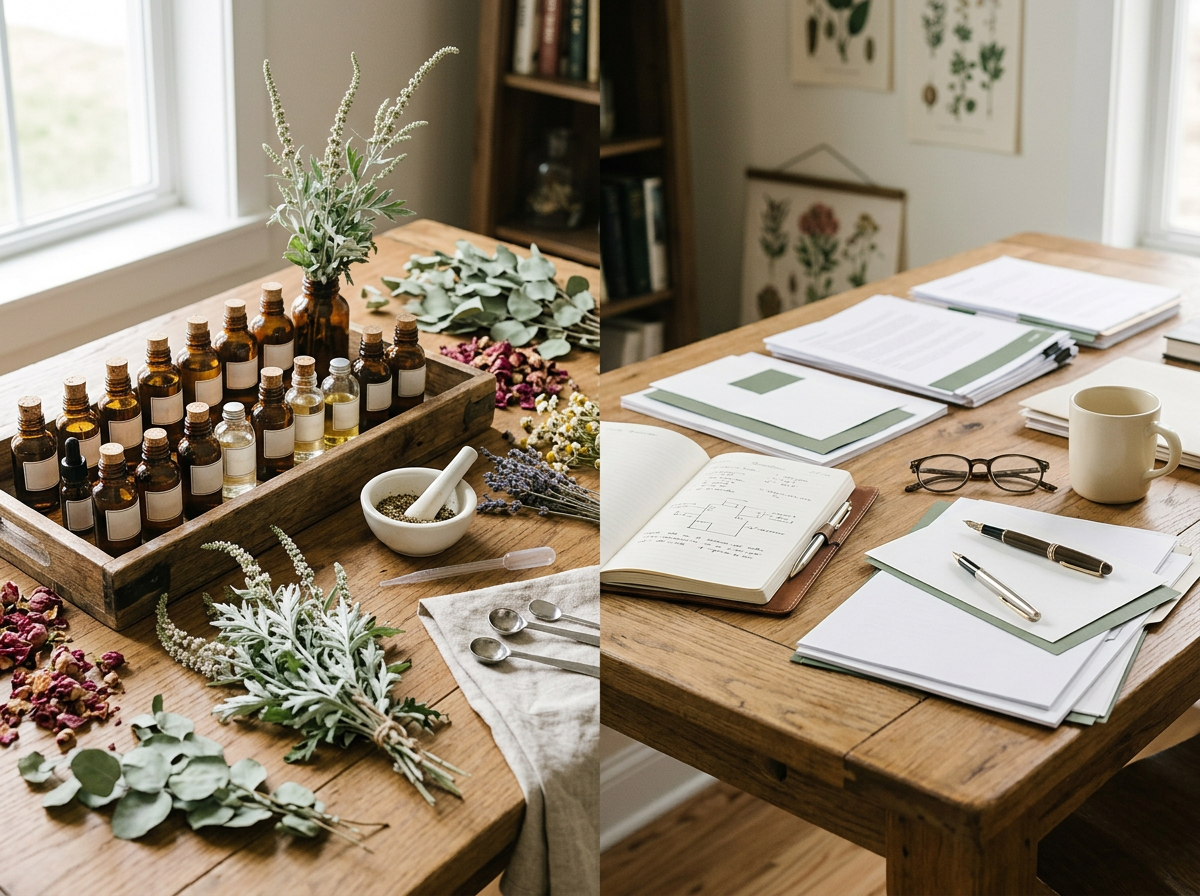
Autumn home fragrance does not have to be purely electronic. Mugwort's dry, botanical quality translates well to other formats, each of which diffuses scent at a slightly different rate and intensity.
Reed Diffuser Bases
For a reed diffuser, combine your chosen blend at a 15 to 20 percent dilution in a carrier such as fractionated coconut oil or dipropylene glycol (a common fragrance-industry carrier). Place four to six reeds in a narrow-necked vessel and flip them every few days. The scent will be quieter than an ultrasonic diffuser, which suits smaller rooms. For full instructions on building a reed diffuser from scratch, the guide on how to use mugwort oil in fragrance and craft covers ratios, vessel selection, and reed types in practical detail.
Botanical Simmers
A stovetop simmer pot using dried mugwort, cedar chips, cardamom pods, and a strip of dried orange peel will fill a kitchen with a version of the same scent palette. Add a single drop of mugwort essential oil to the water only after removing the pot from heat, since sustained boiling drives off volatiles unevenly and can degrade some compounds.
Linen Spray
Mix mugwort essential oil at 1 percent (approximately 5 drops per 25ml) in a base of distilled water and a small amount of alcohol (high-proof vodka or perfumer's alcohol) to act as an emulsifier. Shake before each use and mist over cushion covers, curtains, or bedding. Always patch test on a hidden area of fabric first. Keep away from the face and eyes.
Sourcing Mugwort Oil for Seasonal Blending
Quality matters more than usual when you are building nuanced autumn blends, because mugwort oil varies considerably between suppliers. Look for oils that list the botanical species (Artemisia vulgaris or Artemisia argyi for the Chinese variety), the country of origin, and a GC/MS report. The latter will confirm the thujone content and allow you to make an informed decision about how prominently to feature the oil in your blends.
Mugwort oil from Eastern Europe (Hungary, Bulgaria) tends toward the camphor-heavy profile. Chinese-distilled material (Artemisia argyi) often reads warmer and more complex in the base notes. Both work for autumn diffuser blends; the choice depends on whether you prefer the cooler or the fuller direction.
Interestingly, Korean beauty's long relationship with Artemisia species has influenced how some distillers present their mugwort oil, emphasizing the calmer, skin-contact-safe fractions of the plant. If you are curious about how that tradition developed, the piece on mugwort in K-beauty and why Korean skincare fell for it offers useful context on the plant's cultural range.
Seasonal Tips for Getting the Most from These Blends
- Run your diffuser before guests arrive, not during. Mugwort's camphoraceous opening note can startle people who do not know what they are smelling. Diffusing for twenty minutes beforehand lets the blend settle into the room and reach its more approachable heart phase.
- Match intensity to room size. In a small room (under 150 square feet), use the lower end of the drop counts. In larger, open-plan spaces, you may need to run the diffuser longer rather than adding more drops of mugwort.
- Store your blends in amber glass. Pre-blend your autumn combinations in small amber bottles at full concentration, then add the drops per session. This keeps oxidation minimal and makes your routine faster.
- Rotate blends weekly. Nose fatigue is real. Switching between two or three blends across the season keeps the scent perceptible rather than invisible through familiarity.
- Adjust for weather. The Root Cellar and Silver Smoke blends suit rain and fog. The Harvest Field and Cold Kitchen Garden read better on clear, crisp days when the windows might be cracked open for a few minutes.
A Note on Who These Blends Are For
Mugwort oil autumn blending is not a mainstream pursuit. The oil's character is specific: green, cool, slightly intense. People who gravitate toward these blends tend to find conventional warm-spice autumn scents cloying or one-dimensional. If you are someone who lights incense, buys unfinished wood furniture, and prefers the smell of a bookshop to a bakery, you are probably already thinking about how the Moody Green blend would work in your living room.
These blends also suit a growing interest in herbal home fragrance that moves away from synthetic-adjacent sweetness toward something more botanically honest. Mugwort does not pretend to be anything other than exactly what it is: a field herb with history, character, and a slight wildness that no fragrance oil facsimile quite replicates.
Start with the Harvest Field blend if you are new to the oil. Give it a full season. By the time the first snow arrives, you may find that no other scent quite captures the feeling of autumn's particular, irreplaceable mood.