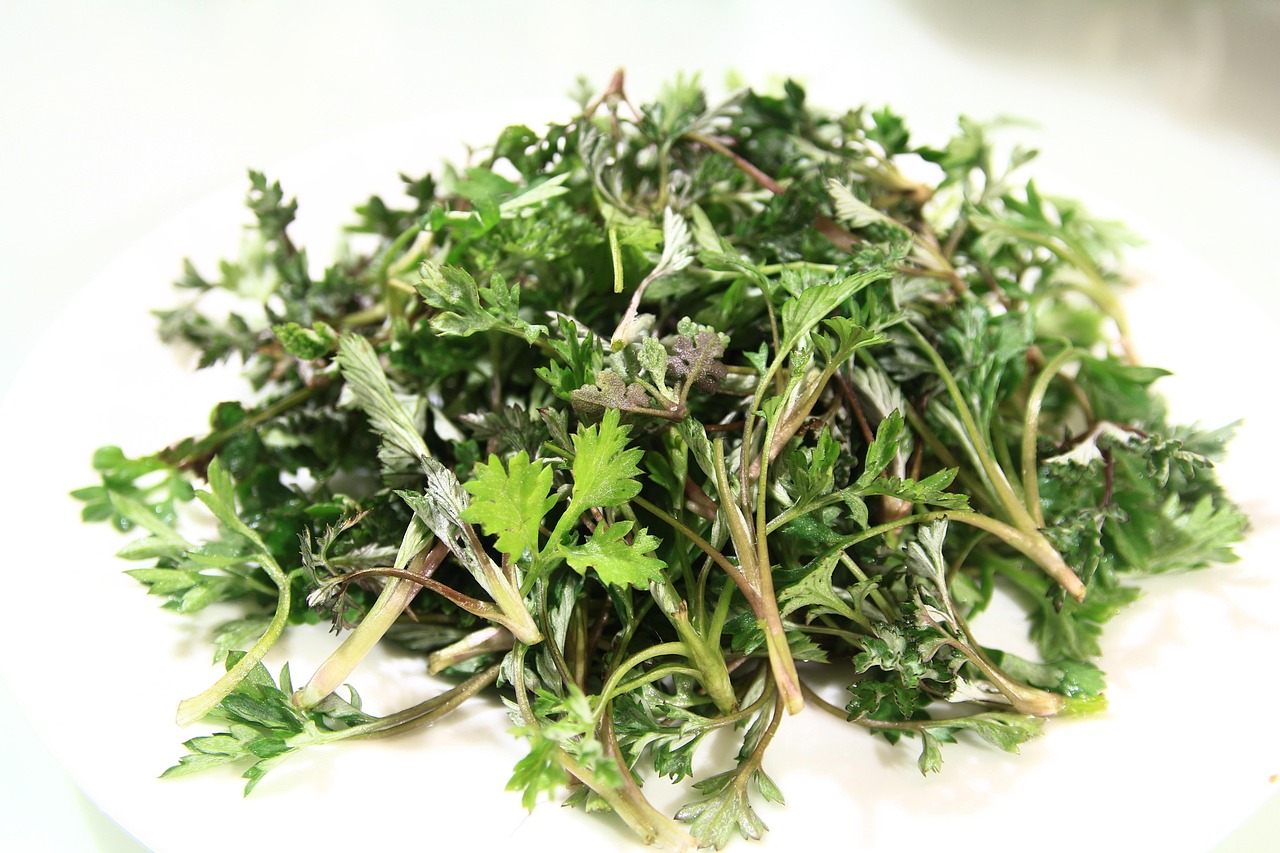
Mugwort in K-Beauty: Why Korean Skincare Fell for This Bitter Herb
If you have spent any time browsing Korean beauty hauls on social media lately, you have probably noticed a certain silvery-green herb appearing on ingredient lists with unusual frequency. Mugwort, known in Korean as ssuk, has moved from traditional herb bundles and rice cakes into serums, toners, sheet masks, and cleansing oils sold in the millions. The mugwort skincare trend is not a flash-in-the-pan ingredient story. It reflects something deeper: a growing curiosity about botanical ingredients that carry centuries of cultural meaning alongside genuinely interesting cosmetic properties.
This piece explores how mugwort earned its place at the center of K-beauty, what makes the ingredient compelling from a formulation standpoint, and how you can bring mugwort into your own routine through high-quality essential oil formats, including cleansing oils made at home or sourced from craft producers.
The Cultural Roots of Ssuk in Korean Life
To understand why Korean skincare embraced mugwort so readily, it helps to understand how deeply the plant is woven into Korean daily life. Artemisia princeps, the Korean species most commonly used in beauty products, has been part of the peninsula's food culture for generations. Ssuk tteok, rice cakes tinted green by mugwort paste, are a springtime staple. Mugwort soup appears in postnatal care traditions. The herb is steamed, dried, and burned in wellness rituals that have existed far longer than modern cosmetic science.
When K-beauty formulators began reaching into this cultural archive for ingredient inspiration, mugwort was an obvious candidate. It was already trusted. Consumers who had grown up eating and smelling it needed no convincing that it belonged in a skincare routine. That pre-existing familiarity is rare in the cosmetic ingredient world, where most trendy botanicals arrive as complete strangers.
Why Mugwort Is Having a Moment Right Now
The mugwort skincare trend has been building for several years, but a few forces are amplifying it right now. First, global interest in fermented and herb-forward Korean beauty has reached a new peak. Consumers in North America, Europe, and Southeast Asia are actively seeking out ingredients they recognize from Korean food culture, and mugwort sits squarely in that overlap.
Second, the broader clean beauty movement has created appetite for plant-derived actives with long histories of traditional use. Mugwort fits that profile neatly. It is a plant people have applied to skin and consumed as food for centuries, which lends it a kind of instinctive credibility that a newly synthesized compound simply cannot replicate.
Third, and perhaps most importantly, the ingredient performs well in cosmetic formulations. It has a distinctive, slightly bitter green scent that grounds herbal blends. Its extract is richly colored, giving products a visual identity that photographs well. And its fatty acid and aromatic compound profile makes it genuinely interesting for formulators working on cleansing and moisture-barrier products.
Mugwort in Korean Skincare: What the Ingredient Actually Does

When you see mugwort listed on a K-beauty product, the actual ingredient form matters. Some products use water-based mugwort extract. Others use fermented mugwort. A growing number of craft cleansers and DIY formulations use mugwort essential oil as the aromatic and active component. Each form carries different properties.
Mugwort Extract
Aqueous mugwort extract is the most common format in mass-market K-beauty. It delivers the plant's water-soluble compounds and is easy to incorporate into toners, essences, and sheet mask solutions. Some research suggests that extract preparations may support the appearance of balanced, calm-looking skin, though the cosmetic literature is still developing and most findings should be read as preliminary observations rather than established conclusions.
Fermented Mugwort
Fermentation is a cornerstone technique in Korean skincare, and mugwort is no exception. Fermenting the herb may alter its compound profile in ways that formulators find useful for texture and absorption, though the science here is genuinely complex and brand claims should always be read critically.
Mugwort Essential Oil
This is where things get especially interesting for artisan formulators, fragrance enthusiasts, and anyone making products from scratch. Mugwort essential oil is steam-distilled from the aerial parts of the plant, typically Artemisia vulgaris or related species. The resulting oil is rich in aromatic compounds including camphor, 1,8-cineole, and various sesquiterpenes. It has a distinctive green, slightly medicinal, herbaceous scent that behaves beautifully in blends when used with a skilled hand.
For a deeper exploration of how mugwort essential oil performs in fragrance applications, our guide on perfumery with mugwort and working with this challenging green note walks through the compositional nuances in detail.
The Mugwort Zero Film Cleansing Oil Connection
One of the most talked-about product formats in recent K-beauty is the cleansing oil, and within that category, the mugwort zero film cleansing oil has attracted particular attention. The phrase "zero film" refers to a formulation philosophy: a cleansing oil that rinses completely clean without leaving a greasy residue on the skin. This is a significant formulation challenge, since most oil cleansers require an emulsifier to achieve clean rinsing, and balancing that emulsification with skin-feel and scent integrity is genuinely difficult.
Mugwort essential oil is an interesting addition to these formulations for several reasons. Its aromatic profile is sharp enough to cut through the sometimes heavy scent of carrier oils like caprylic/capric triglyceride or squalane. Its camphoraceous top notes give the cleansing experience an invigorating, fresh-start quality that consumers find satisfying. And its connection to Korean botanical tradition adds a layer of storytelling that brands can build around meaningfully.
If you are interested in making your own mugwort cleansing oil at home, our resource on mugwort oil for skin-adjacent crafts including soaps and cleansing oils covers formulation basics, dilution guidance, and where mugwort essential oil fits into a cleansing oil recipe.
A note on safety for DIY cleansing oils: Mugwort essential oil is potent and should always be used at appropriate dilution levels, typically no more than 0.5 to 1 percent in a rinse-off formulation. Always perform a patch test before full use. Mugwort is not recommended during pregnancy due to its thujone content in certain species. Consult a qualified healthcare provider if you have questions about suitability for your situation.
Seasonal Variations: Using Mugwort Through the Year
Part of what makes the mugwort skincare trend feel so alive right now is its natural seasonality. Like most herbs, mugwort has a rhythm. Fresh growth appears in early spring. Distillation of essential oil typically happens in late spring through early summer, when the plant's aromatic compound content peaks before flowering. Dried mugwort and bottled extracts carry that green vitality forward through colder months.
Spring
Spring is the prime season for mugwort in Korean tradition. New growth is harvested for food and ritual use. In your skincare practice, spring is an ideal time to introduce lighter mugwort-forward products, particularly essences and toners, as skin transitions out of winter's drier conditions. A drop of mugwort essential oil in a facial mist base (well-diluted and shaken before use) can make the morning routine feel particularly fresh.
Summer
Mugwort's green, slightly cooling aromatic profile makes it a useful note in summer cleansing routines. A well-formulated mugwort zero film cleansing oil cuts through sunscreen and excess sebum effectively, and the camphoraceous scent supports a feeling of freshness in humid weather. This is also peak season for purchasing freshly distilled mugwort essential oil from reputable producers, since harvest-to-distillation timing matters for oil quality.
Autumn
As the air dries and skin routines shift toward richer textures, mugwort transitions gracefully into oil-richer formats. Cleansing balms, facial oils, and craft soaps all absorb mugwort's aromatic profile well. The slightly bitter, earthy character of mugwort essential oil blends beautifully with warmer notes like cedarwood, sandalwood, and vetiver, making autumn an ideal time to explore more complex blends.
Winter
In winter, mugwort appears most often in steaming and aromatic applications. A few drops of essential oil in a bowl of warm water for a facial steam (keeping eyes closed and maintaining a safe distance from the water) is a traditional-style ritual that carries mugwort's scent story into the colder, quieter months. The ritual itself, the warmth, the botanical scent, the intentional pause, is part of why the ingredient resonates with people looking for more meaning in their evening routines.
How to Source Mugwort Essential Oil Well
The quality of mugwort essential oil varies considerably depending on species, origin, harvest timing, and distillation method. When shopping for mugwort in korean skincare formulations or as a standalone essential oil, a few sourcing signals are worth knowing.
- Species clarity: Look for suppliers who specify whether the oil is from Artemisia vulgaris, Artemisia princeps (the Korean species), or another variety. Each has a distinct compound profile and scent character.
- GC/MS testing: Reputable essential oil suppliers provide gas chromatography and mass spectrometry test results. For mugwort, you want to see data on thujone content in particular, as this varies by species and affects safe use guidelines.
- Harvest season: Oil distilled before the plant flowers tends to have a greener, more complex aromatic profile. Post-flowering oil can shift toward sharper, more camphoraceous notes.
- Country of origin: Korean-origin Artemisia princeps oil will be more expensive and harder to source outside specialty suppliers. European Artemisia vulgaris is more widely available and still excellent for fragrance and cosmetic use.
For those interested in mugwort's aromatic applications beyond skincare, including candle making, room sprays, and craft perfumery, our comprehensive guide on how to use mugwort oil in fragrance and craft covers blending ratios, note pairings, and supplier evaluation in detail.
Bringing Mugwort Into Your Routine: Practical Starting Points
You do not need to overhaul your entire skincare shelf to explore mugwort. A few targeted entry points make sense depending on how you prefer to engage with ingredients.
Start with a Finished K-Beauty Product
If you are new to mugwort in korean skincare, purchasing a ready-made product from an established Korean brand is a low-risk way to understand how the ingredient behaves on your skin. Sheet masks and toners tend to be the most affordable entry points. Pay attention to whether you enjoy the scent profile. Mugwort has a distinctive character that is not universally loved, and it is better to discover that with a 10-dollar mask than with a batch of homemade cleansing oil.
Experiment with Essential Oil in a Simple Base
For those comfortable with DIY cosmetics, adding a small amount of mugwort essential oil to an unscented cleansing oil base is a straightforward experiment. Start at 0.2 percent and build up, noting how the scent evolves as the oil warms on skin. Keep detailed notes. The aromatic experience of mugwort changes substantially depending on what it is blended with and at what temperature it is applied.
Use Mugwort as an Aromatic Anchor in Blends
Mugwort essential oil functions well as a middle-to-base note anchor in green herbal blends. It grounds lighter notes like lemon verbena or green tea extract without overwhelming them. A well-balanced blend might pair mugwort with lavender for a classic pairing, or with yuzu for a citrus-forward K-beauty nod that feels both modern and rooted.
A Note on Realistic Expectations
Mugwort is a genuinely compelling cosmetic ingredient with a rich story, a distinctive scent, and a formulation profile that rewards careful use. It is also, at the end of the day, a plant. The fervor around it in K-beauty reflects real enthusiasm and real cultural meaning, but it is worth maintaining clear-eyed expectations about what any single ingredient can do.
Focus on the sensory experience, the ritual quality, the pleasure of working with an ingredient that carries history. Those are the parts of mugwort that will stay interesting long after the trend cycle moves on. And given how deep the herb's roots go in Korean tradition, it is hard to imagine mugwort ever fully going out of style.
The bitter herb that flavored spring rice cakes for generations has found a new audience. It is not difficult to understand why.