DIY Mugwort Solid Perfume: A Beeswax Balm Recipe
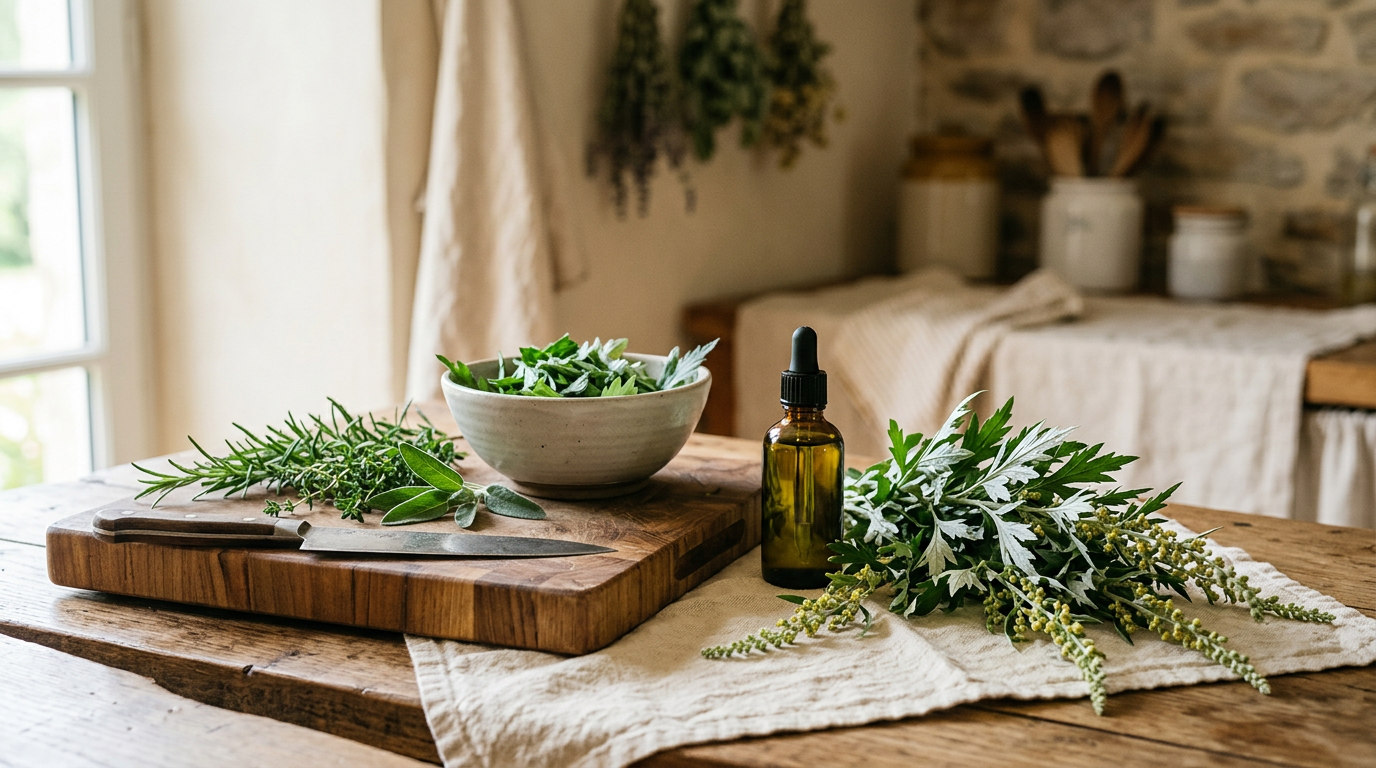
Solid perfume is one of the easiest projects for anyone curious about working with essential oils at home. There's no alcohol to source, no complicated ratios to memorize, and the finished product fits in a pocket. This DIY mugwort solid perfume leans into mugwort's green, herbaceous, slightly bitter-sweet character, the kind of scent that reads more like a walk through a dry meadow than a bottled fragrance. Folded into a beeswax balm base, it becomes a portable, screen-free ritual: a small tin you can carry, warm between your fingers, and apply to pulse points whenever you want a moment of quiet.
This mugwort beeswax balm recipe is written for beginners. If you've never worked with essential oils before, you'll still be able to follow it start to finish in under an hour, plus cooling time. If you already have a solid perfume routine, the variations section near the end covers how to adjust texture, scent complexity, and vegan swaps.
Difficulty and Time
- Difficulty: Beginner
- Prep time: 10 minutes
- Active time: 15 to 20 minutes
- Cooling and set time: 1 to 2 hours
- Yield: About 3 ounces of balm, enough to fill four to six 0.5 oz tins
Ingredients
These measurements make a small batch, ideal for a first attempt or for gifting. Everything is measured by weight where precision matters (the wax and oils) and by drops for the essential oil, since that's the standard for fragrance blending.
- 1 tablespoon (about 14g) beeswax pellets or grated beeswax
- 2 tablespoons (about 28g) jojoba oil (or sweet almond oil, or fractionated coconut oil)
- 1 tablespoon (about 14g) shea butter or cocoa butter, for a creamier glide (optional but recommended)
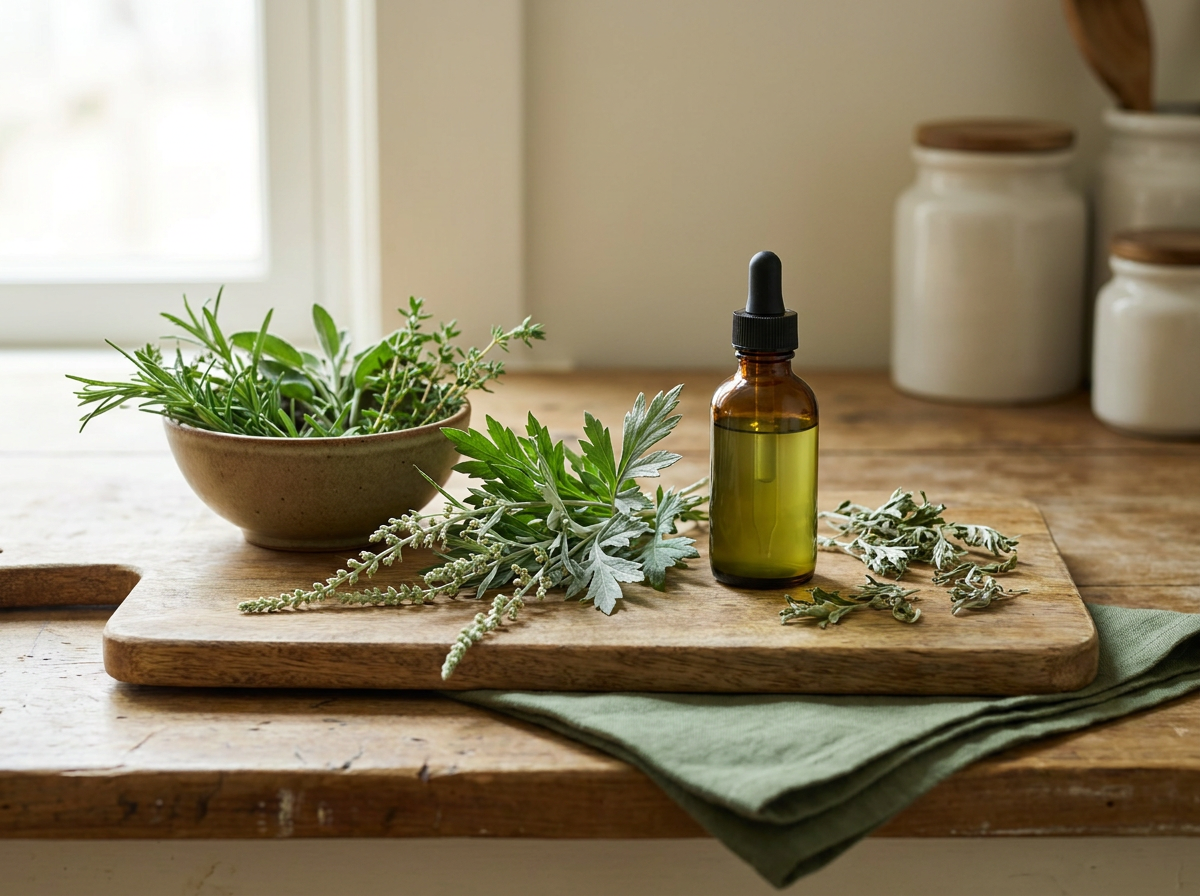
- 15 to 20 drops mugwort essential oil (Folklore's Silver Herb)
- Optional: 5 to 8 drops of a complementary oil, such as cedarwood, clary sage, or sweet orange, to round out the profile
- 4 to 6 small tins or lip balm style containers (0.5 oz each)
A quick note on sourcing: mugwort essential oil varies a lot in quality between suppliers, and a cheap, adulterated oil will throw off both the scent and the safety profile of your balm. Look for a supplier who publishes batch-specific GC-MS testing and lists the plant's botanical name (Artemisia vulgaris) and country of origin. If a listing can't tell you where the plant was grown or how the oil was tested, that's worth treating as a red flag before you buy.
Step-by-Step Instructions
- Set up a double boiler. Fill a small saucepan with an inch or two of water and set a heatproof glass measuring cup or bowl inside it, making sure the bottom doesn't touch the water. Bring the water to a gentle simmer.
- Melt the beeswax and carrier oil. Add the beeswax pellets and jojoba oil to the glass bowl. Stir occasionally as the wax melts into the oil, about 5 to 7 minutes.
- Add the butter. Once the beeswax has fully melted, stir in the shea or cocoa butter until it's completely incorporated and the mixture looks smooth and glossy.
- Remove from heat and cool slightly. Take the bowl off the double boiler and let it sit for 2 to 3 minutes. This step matters: adding essential oil to a mixture that's too hot can cause some of the more delicate aromatic compounds to evaporate off before the balm even sets, weakening the scent.
- Add the mugwort essential oil. Stir in your mugwort essential oil, along with any complementary oil you're using. Mix gently but thoroughly for about 30 seconds.
- Pour into containers. Working quickly before the mixture starts to set, pour it into your tins. A small funnel or a measuring cup with a spout makes this easier and less messy.
- Cool and cure. Let the tins sit undisturbed at room temperature for 1 to 2 hours, or until fully solid. Avoid the fridge for the initial set; rapid cooling can cause the surface to crack or look uneven.
- Cap and label. Once solid, cap each tin and label it with the date you made it. This is a small step that makes tracking shelf life much easier later.
How to Use Your Solid Perfume
Warm a fingertip against the balm's surface for a few seconds so it softens slightly, then dab it onto pulse points: wrists, the sides of the neck, behind the ears. A little goes a long way with a balm this concentrated. Because mugwort's scent has real depth and doesn't fade quickly, one or two applications a day is usually plenty.
Safety First: Dilution, Patch Testing, and Who Should Skip This
Essential oils are potent plant extracts, and mugwort is no exception. This recipe is formulated at roughly a 3 percent dilution, which is generally considered appropriate for a leave-on product applied to small areas of skin like the wrists and neck. Please don't increase the essential oil quantity beyond what's listed here in an attempt to make the scent stronger; a stronger scent doesn't require a higher dilution, and going above the recommended range raises the likelihood of skin sensitivity.
Always patch test first. Before applying your finished balm anywhere else, dab a small amount on the inside of your forearm. Cover loosely if you like, and wait 24 to 48 hours. If you notice redness, itching, or any discomfort at the site, wash the area with mild soap and water and do not use the balm elsewhere on your body.
Who should be cautious or avoid mugwort essential oil altogether:
- Individuals who are pregnant or nursing. Mugwort is one of the essential oils commonly flagged for caution in pregnancy in aromatherapy safety literature, largely due to its thujone content, so it's best avoided during this time unless a qualified healthcare provider says otherwise.
- Anyone currently under a doctor's care or managing a diagnosed condition should check with their healthcare provider before adding a new essential oil to their routine, especially one applied regularly to the skin.
- Children and pets. Keep this balm, and the essential oil itself, well out of reach. What's a small, pleasant dose for an adult body can be far too concentrated for a child or animal.
- Anyone with a known sensitivity to plants in the daisy or aster family (Asteraceae), since mugwort belongs to that botanical family and cross-reactivity is possible.
A few more general precautions: keep this balm away from your eyes and other mucous membranes, don't apply it to broken or freshly shaved skin, and discontinue use if you notice any ongoing skin discomfort. This article is educational and reflects traditional and anecdotal use of mugwort in aromatic and cosmetic applications. It is not medical advice, and mugwort essential oil is intended for external, aromatic use only, never ingested. If you have questions about whether this recipe is right for you, a qualified healthcare provider is the right person to ask, not a blog post.
| Use Case | Approx. Dilution | Notes |
|---|---|---|
| Solid perfume (this recipe) | ~3% | Small application area, wrists and neck only |
| Full-body balm or lotion | 1% or less | Larger skin surface calls for a much lighter hand |
| Room or linen spray (non-skin) | 2 to 5% | No skin contact, different safety considerations apply |
Storage and Shelf Life
Store your finished solid perfume in a cool, dry place, away from direct sunlight and away from bathroom humidity if possible (a bedroom dresser or closet shelf works better than a steamy shower shelf). Kept this way, a beeswax and carrier oil balm like this one typically stays in good condition for 6 to 12 months.
A few signs it's time to make a fresh batch: the scent turns flat, sharp, or noticeably different from when you made it; the texture becomes grainy or separates; or you notice any change in color. Carrier oils are the part of this recipe most likely to shift over time, since oils like jojoba and shea butter have their own natural shelf life even before essential oil is added. If in doubt, trust your nose. A batch that smells off is one to toss rather than use.
Variations and Substitutions
Once you've made the base recipe once, it's easy to adjust:
- Carrier oil swap: Jojoba oil is a popular choice because it's technically a liquid wax and has a long shelf life, but sweet almond oil, fractionated coconut oil, or apricot kernel oil all work well too. Fractionated coconut oil stays liquid at room temperature and gives a slightly lighter finished texture.
- Vegan version: Substitute candelilla wax for beeswax, using about half the amount by weight since candelilla wax is harder and more concentrated than beeswax. Start with 2 teaspoons and adjust from there.
- Firmer or softer balm: Add a bit more beeswax for a firmer, more travel-friendly balm, or reduce it slightly and increase the carrier oil for a softer, more spreadable texture.
- Layered scent profile: Mugwort pairs well with woodsy and earthy notes. Try adding cedarwood or patchouli for depth, or a touch of sweet orange or bergamot for brightness (note that some citrus oils, including bergamot, can increase skin sensitivity to sunlight, so save citrus-blended balms for evening wear or areas that won't see direct sun).
- Botanical infusion boost: For a deeper connection to the plant itself, infuse your carrier oil with dried mugwort leaf for two to four weeks before using it in this recipe. Strain well before melting it with the beeswax.
- Tin size: This recipe scales easily. Double the ingredients for a batch of eight to twelve 0.5 oz tins, useful if you're making a set as gifts.
Troubleshooting
- Balm is too soft or doesn't fully set: Melt it down again and add a bit more beeswax, about a teaspoon at a time, until you reach the texture you want.
- Balm is too hard or drags on skin: Melt it down again and stir in a bit more carrier oil.
- Scent fades quickly: This can happen if the essential oil was added while the mixture was still too hot. Next batch, let the melted wax and oil cool a little longer, closer to 3 minutes, before adding the mugwort oil.
- Surface looks cracked or uneven: This is usually from cooling too fast, often from placing the tins in the fridge right away. Let future batches cool at room temperature instead.
Making your own mugwort solid perfume is a small, repeatable ritual: melt, blend, pour, wait. Once you've got the base recipe down, it becomes something you can return to whenever you want a fresh batch, tweaking the wax-to-oil ratio or the accompanying notes until you land on a version that feels entirely your own.