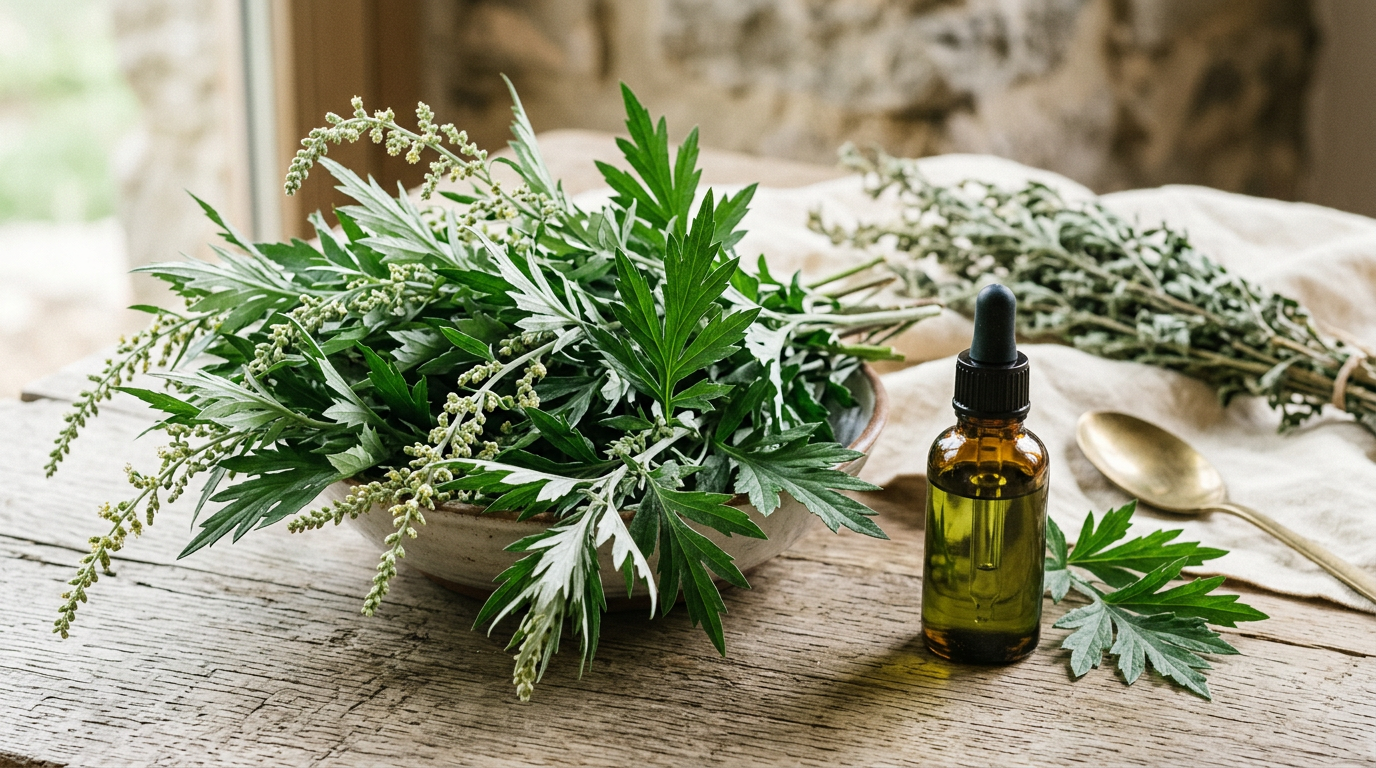
Mugwort Oil from Korea, China, and Europe: A Sourcing Comparison
Ask three different mugwort oil suppliers where their material comes from and you'll likely get three different answers, and three different bottles that smell nothing alike. Mugwort is not one plant grown one way in one place. It's a loose family of related Artemisia species, harvested by hand or machine across very different climates, then steam distilled by small family operations or larger co-ops depending on the region. That variation is exactly why a mugwort oil origin comparison is worth doing before you commit to a supplier, whether you're formulating a small batch candle line, building a soap bar recipe, or just curious which bottle on the shelf is worth the price tag.
This guide lays out what actually differs between Korean, Chinese, and European mugwort oil: the species involved, how each is distilled, what the finished oil smells and performs like, and where the sourcing story gets murky. We'll end with a straightforward verdict, but the honest answer is that "best" depends heavily on what you're making.
Why Origin Matters for Mugwort Oil
With most essential oils, origin is a nice-to-know detail. With mugwort, it changes the product almost entirely. The genus Artemisia includes dozens of species that get sold under the umbrella name "mugwort oil," and the species grown in a given region is largely dictated by what's native or cultivated there. Korean and Chinese producers most often work with Artemisia argyi, sometimes called Chinese mugwort or ai ye, a plant with a long history in East Asian herbal households. European producers more commonly distill Artemisia vulgaris, the wild roadside mugwort found across the UK, France, and Eastern Europe, or occasionally Artemisia annua in smaller specialty batches.
Different species mean different chemotypes, meaning the ratio of aromatic compounds like camphor, 1,8-cineole, and thujone can swing widely from one bottle to the next even when both are honestly labeled "mugwort oil." That's before you factor in harvest timing, soil, and distillation technique, all of which shift the final scent and consistency. A mugwort oil origin comparison really is a comparison of growing philosophy as much as geography.
Korean Mugwort Oil vs Chinese: The Close Cousins
Because Korean and Chinese producers frequently work with the same or closely related Artemisia argyi stock, Korean mugwort oil vs Chinese mugwort oil is less a battle of different plants and more a battle of different farming and distillation cultures.
Korean mugwort, known locally as ssuk, is deeply woven into food and skincare traditions, which means Korean producers tend to have well established supply chains geared toward the cosmetics industry. Distillation batches are often smaller and more tightly controlled, with an emphasis on a cleaner, greener, slightly sweeter aromatic profile that suits skincare and personal care formulation. Pricing reflects that care: Korean mugwort oil generally sits at the higher end of the market.
Chinese mugwort oil, by contrast, is produced at a much larger scale, often from wild-harvested or semi-cultivated Artemisia argyi across provinces like Hubei and Henan, historically associated with moxa production. Because the plant is harvested in such volume for other uses, the oil is a comparatively efficient byproduct, which keeps prices lower. The tradeoff is more batch-to-batch variation. Some lots lean sharp and camphoraceous, others softer and more herbal, and buyers who need consistency across large production runs sometimes find that frustrating.
European Mugwort Essential Oil: The Wilder Option
European mugwort essential oil takes a different path from the start. Much of it comes from Artemisia vulgaris growing wild along hedgerows and riverbanks in France, Hungary, and the Balkans, harvested by small cooperatives rather than large commercial farms. That wild-harvest model appeals to buyers who want a rustic, traceable sourcing story, and it often comes with easier access to organic or wild-crafted certification than East Asian counterparts.
Aromatically, European mugwort tends to run a bit more bitter and herbaceous, with a sharper green top note compared to the softer, sweeter character often found in Korean lots. It's a distinctive profile that some perfumers and candle makers specifically seek out for its complexity, while others find it too assertive for a whole-bottle scent and prefer to blend it in smaller percentages.
Supply is the main limitation. Wild harvest yields fluctuate year to year with weather and foraging access, so European mugwort oil is often sold in smaller batches, at a premium, and can go out of stock for stretches at a time. If you're building a recipe you plan to repeat for years, that unpredictability is worth planning around, the same way you'd budget extra dilution testing time into any new small batch candle studio recipe.
Side-by-Side Comparison Table
| Attribute | Korean | Chinese | European |
|---|---|---|---|
| Primary species | Artemisia argyi | Artemisia argyi | Artemisia vulgaris (occasionally A. annua) |
| Harvest model | Cultivated, small to mid batches | Large-scale cultivated and wild-harvested | Wild-harvested, small cooperatives |
| Typical aroma | Green, sweeter, softer herbal note | Herbal with sharper camphor top note; variable by lot | Bitter-green, assertive, complex |
| Batch consistency | Generally high | Moderate, varies by supplier and season | Lower, subject to wild-harvest variability |
| Typical price tier | Mid to high | Low to mid | High |
| Organic/wild-crafted certification availability | Available, less common | Available but harder to verify | Widely available |
| Best documented use case | Skincare and personal care formulation | Bulk soap, candle, and household fragrance production | Fine fragrance and small-batch artisan work |
Pros and Cons by Origin
Korean Mugwort Oil
- Pros: Consistent aromatic profile from batch to batch, strong ties to established cosmetics-grade supply chains, generally softer scent that blends easily into skincare formulas.
- Cons: Higher price point than Chinese sources, smaller production volume can mean longer lead times for large orders.
Chinese Mugwort Oil
- Pros: Most affordable of the three, widely available in bulk quantities, well suited to soap and candle applications where a strong herbal note is welcome.
- Cons: Batch-to-batch variability can be significant, sourcing transparency varies widely by supplier, and buyers should always request a current GC-MS report rather than assume consistency from one order to the next.
European Mugwort Essential Oil
- Pros: Distinctive, complex aroma prized by perfumers, easier access to organic and wild-crafted certification, appealing traceable small-cooperative sourcing story.
- Cons: Highest price tier, supply can be inconsistent year to year, stronger bitter-green profile isn't right for every formulation.
Best Origin for Mugwort Oil by Use Case
There's no single best origin for mugwort oil across the board. The right choice depends heavily on what you're making and what matters most to your process: cost, consistency, or character.
- Skincare and personal care formulation: Korean mugwort oil is usually the safer starting point, thanks to its more consistent, cosmetics-friendly aromatic profile and established supply chain built specifically for that market.
- Bulk soap and candle production: Chinese mugwort oil offers the best value at volume, provided you're working with a supplier willing to share current GC-MS documentation for each lot.
- Fine fragrance, artisan perfumery, or small-batch specialty projects: European mugwort essential oil's complex, wild-harvested character tends to reward the extra cost, particularly when the sourcing story itself is part of the product's appeal.
- First-time buyers testing mugwort oil in a new recipe: Start with a small sample from more than one origin before committing to a full production run. Aroma differences between origins are large enough that a formula built around one source may need real adjustment with another.
What to Ask Any Mugwort Oil Supplier, Regardless of Origin
Origin is one useful filter, but it isn't a substitute for verifying what's actually in the bottle. Before ordering from any supplier, whether they're shipping from Korea, China, or a small French cooperative, it's worth asking for a few specifics:
- A recent GC-MS report for the specific batch or lot you're purchasing, not a generic reference document.
- The Latin species name, since "mugwort oil" alone doesn't tell you whether you're getting Artemisia argyi, vulgaris, or annua.
- Harvest date and country of distillation, which can differ from the country of origin if material is shipped for processing elsewhere.
- Any available organic or wild-crafted certification, along with the certifying body's name so you can verify it independently.
A supplier who answers these questions readily is generally a good sign. One who deflects or offers only vague reassurance is worth a second look, regardless of how good the price looks.
Our Verdict
For most buyers building repeatable production, Korean mugwort oil offers the best balance of consistency and quality for skincare-oriented work, while Chinese mugwort oil remains the practical choice when budget and volume matter most, as long as you're diligent about requesting lot-specific documentation. European mugwort essential oil earns its premium price in fragrance-forward applications where a distinctive, complex character is the whole point, but its supply unpredictability makes it a tougher fit for large recurring orders.
If you're only choosing one to start with, weigh your project against the table above rather than reaching for whichever bottle is cheapest or most heavily marketed. A mugwort oil origin comparison like this one is only a starting point. The real test is how a given lot performs in your own formulation, and that's worth confirming with a small sample and a patch test before scaling up.
As always, a qualified healthcare provider is the right resource for any personal health questions related to essential oil use. This article addresses cosmetic and aromatic sourcing only.