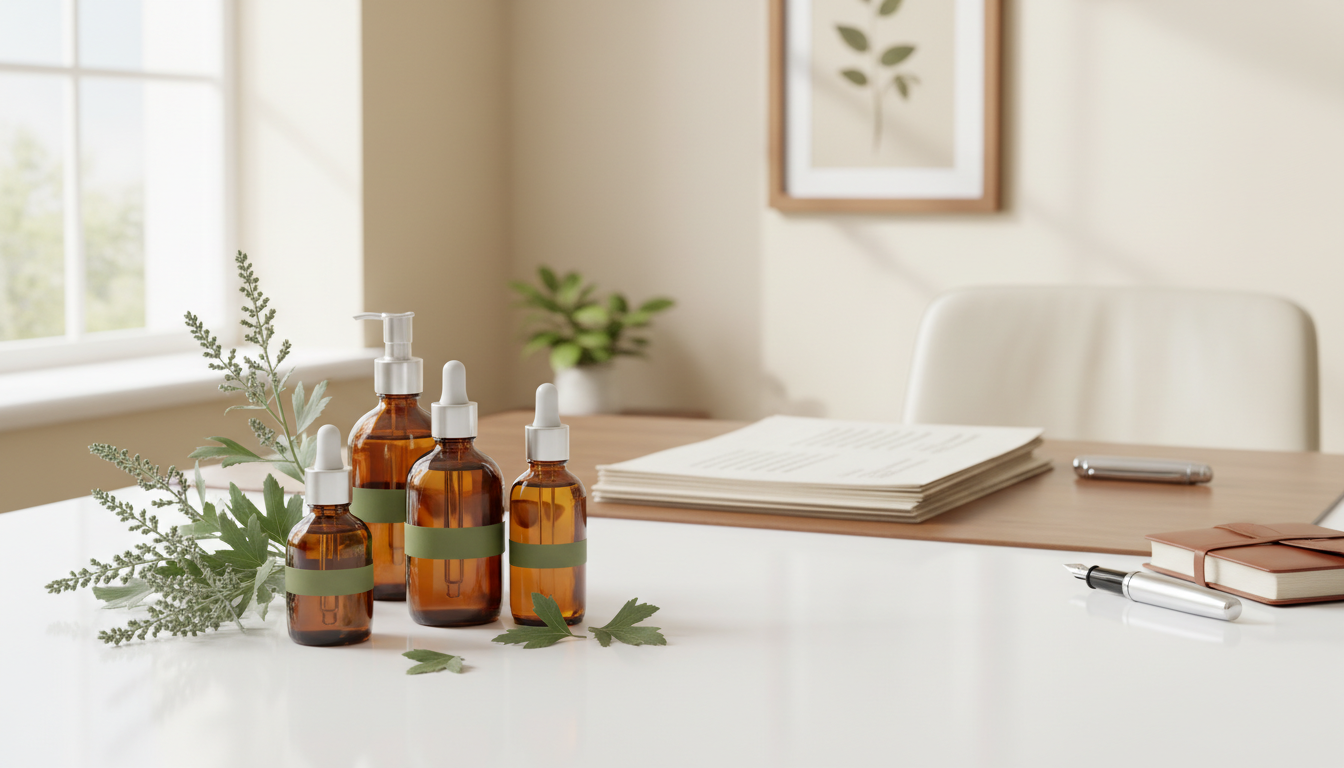
Best Mugwort Oil Bottle Sizes: Which One Should You Order First?
Picking the right bottle size is one of those decisions that sounds simple until you've overbought a 500ml jug of something you used twice, or run out of a precious 5ml sample mid-project. Mugwort essential oil sits in a genuinely interesting position in the aromatic market: it's niche enough that not every supplier carries it well, yet popular enough that size options have expanded considerably in recent years. This guide walks through what each size is realistically good for, what quality signals to look for before you click purchase, and where the value sweet spots tend to land.
Why Bottle Size Is a Real Decision, Not an Afterthought
Mugwort oil (distilled from Artemisia vulgaris or, less commonly, Artemisia argyi) has a short-to-medium shelf life compared to many other botanicals. Properly stored, a well-distilled batch typically stays at its aromatic peak for around 12 to 18 months. That window matters enormously when you're deciding between a small trial bottle and a bulk purchase. Buying more than you'll use within that window means you're paying for degradation, not quality.
Oxidation is the main culprit. As the bottle empties, air fills the headspace and begins breaking down the volatile compounds that give mugwort its distinctive character: that deep, green, slightly camphorous scent profile with its dry, herbaceous undertone. A half-empty 100ml bottle sitting on a shelf for six months is a very different product from a fresh, full one.
So the first question to ask yourself isn't "what's cheapest per milliliter?" It's "how much will I realistically use in the next year?"
Mugwort Oil Sizes: A Practical Breakdown
5ml and 10ml: The Trial Tier
These small bottles are the entry point, and for good reason. A 5ml bottle gives you roughly 100 drops. That's enough to run a diffuser session several times, blend a small batch of body oil, or work out whether you actually enjoy mugwort's bold, polarizing scent before committing to more.
The 10ml size extends that runway modestly. Serious blenders who use mugwort as an accent note (it's rarely used as a single-note oil because the scent is quite assertive) often find the 10ml perfectly sufficient for a full season of personal use.
Best for: First-time buyers, gift sets, blending trials, travel kits.
Price range: Expect to pay roughly $6 to $18 for a quality 5ml, and $10 to $28 for a 10ml. Prices above those ranges for small bottles deserve scrutiny; prices well below them deserve even more.
15ml and 30ml: The Everyday-Use Range
This is the sweet spot for most home users. A 30ml bottle of mugwort oil, used at typical dilution ratios in personal care blending, can last a dedicated user anywhere from six months to a full year. You get meaningful quantity without the oxidation risk that comes with larger volumes.
The 15ml sits between a trial and a commitment. It suits users who've already confirmed they like the oil and have a consistent but light use pattern, perhaps adding a few drops to a weekly scalp massage oil or a room spray blend.
Best for: Regular home aromatics users, small-batch cosmetic makers, hobbyist blenders.
Price range: Quality 30ml bottles typically run $18 to $45 depending on origin and extraction method. Steam-distilled Artemisia argyi from Hebei province, China, tends to command a premium over generic Artemisia vulgaris distillations.
100ml: The Serious Maker Tier
At 100ml, you're crossing into volume that makes sense for small cosmetic producers, candle makers incorporating botanical notes, or dedicated enthusiasts who go through oil steadily. The per-milliliter cost typically drops noticeably at this size, which is the obvious appeal.
The caveat: this volume only makes financial sense if you'll use it within 12 months. If you're purchasing a 100ml bottle of mugwort oil "to have on hand" without a clear project plan, the trial size will serve you better on total value.
Best for: Soap and lotion makers, small aromatics businesses, active blenders with regular formulation schedules.
Price range: $40 to $90 for a quality 100ml. Anything dramatically under $35 at this volume should prompt questions about sourcing and GC/MS verification.
500ml and 1L: The Bulk Tier
These volumes belong firmly in the wholesale and professional production category. If you're filling this out of a personal interest rather than a production need, pause. The economics only work at scale, and the shelf-life math gets demanding. A 500ml bottle of mugwort oil opened and partially used over 18 months is a diminishing-returns situation.
For small businesses scaling up, or cosmetic formulators running regular production batches, bulk buying makes clear sense. You'll want supplier relationships, not just retail purchases, at this level. Our bulk and wholesale mugwort oil buyer's guide covers that territory in detail.
Best for: Production formulators, wholesale resellers, commercial aromatics businesses.
What to Look for in Any Bottle Size: Quality Indicators
Bottle size only matters if the oil inside is worth buying. Mugwort essential oil has a documented adulteration problem in the broader market. Some suppliers blend it with cheaper Artemisia species, or cut it with carrier oils that won't be disclosed on the label. Here's how to protect yourself.
GC/MS Testing
A gas chromatography/mass spectrometry report is the gold standard for essential oil verification. It tells you exactly what chemical constituents are present in the batch you're buying. Reputable suppliers publish these reports, either by lot number on their website or provided on request. If a supplier can't or won't share GC/MS data, that's a significant concern regardless of how appealing the price looks.
Latin Name on the Label
"Mugwort oil" as a label tells you surprisingly little. Look for the full botanical name: Artemisia vulgaris or Artemisia argyi are the two you're most likely to encounter in legitimate essential oil commerce. Each has a distinct scent character. Artemisia argyi tends toward a stronger, more camphor-forward profile. Artemisia vulgaris is usually greener and slightly softer. Neither is inherently better, but knowing which you're buying lets you make intentional choices for your formulations.
Country of Origin and Plant Part
The label should state where the plant was grown and which part was distilled (typically aerial parts: leaves and flowering tops). Chinese and Eastern European sources are common and can both be excellent. Vague sourcing language is a yellow flag.
Packaging
Dark amber or cobalt glass is standard for good reason: UV light degrades volatile oils. Any essential oil sold in clear glass or plastic bottles is already at a disadvantage before you open it. Orifice reducers (the small insert that controls drop size) are a convenience feature, but tight-sealing caps matter more for preservation.
Key Features to Compare When Shopping
| Feature | What to Look For | Red Flag |
|---|---|---|
| GC/MS report | Batch-specific, available on request or online | "Available upon request" but never delivered |
| Botanical name | Full Latin name on label | "Mugwort blend" or genus only |
| Bottle material | Dark amber or cobalt glass | Clear glass, plastic, or unlabeled containers |
| Lot/batch number | Printed on label for traceability | No batch information anywhere |
| Distillation method | Steam distilled (listed on label or website) | Method not disclosed |
| Price relative to market | Within reasonable range for size and species | Dramatically below market average |
Red Flags to Avoid
Prices that seem too good to be true almost always are in the essential oil market. Mugwort is not a cheap oil to produce. It requires meaningful plant material per yield of oil, and quality distillation isn't free. A 30ml bottle at $6 should prompt serious skepticism about what's actually in it.
Watch out for health or lifestyle claims that go beyond scent and cosmetic use. Suppliers who use medicinal language to market their oils are often signaling that they prioritize marketing over accuracy. That pattern tends to extend to their sourcing and testing practices too.
Labels with no address, no botanical name, and no batch number suggest a supplier who isn't tracking their own inventory with much care. That's not a company you want to buy an oxidation-sensitive botanical oil from.
Finally, be cautious with marketplace listings from unknown sellers on large platforms. The economics of those platforms create pressure to cut corners. Our article on where to buy mugwort essential oil covers platform-specific risks in detail, if you want a fuller picture of the retail landscape.
Where to Buy: A Quick Orientation
Specialty essential oil retailers with transparent sourcing are consistently the most reliable option for mugwort oil at any size. Companies that publish GC/MS reports by batch, name their distillation partners, and stand behind a return policy are worth the slight premium they often charge over generic marketplace alternatives.
Independent aromatics suppliers, particularly those focused on the craft cosmetics and botanical blending community, often carry mugwort oil in the 10ml to 100ml range with solid documentation. They're also typically more knowledgeable about the specific character of their current stock.
For anything at 500ml and above, direct supplier relationships become important. Wholesale pricing structures, minimum order quantities, and documentation requirements all shift at that level. Our complete guide to buying mugwort oil goes deep on vetting suppliers at every scale, from small retail to bulk sourcing.
The First Order: A Simple Decision Framework
If you've never used mugwort oil before, start with a 5ml or 10ml from a supplier with published GC/MS data. Confirm you enjoy the scent, get a feel for how you want to use it in blends or diffusion, and let that experience guide your next order size.
If you're a regular blender who already knows mugwort's character and has consistent projects lined up, the 30ml is almost always the best value proposition: meaningful volume, manageable shelf-life window, and per-ml cost that makes sense without the risk of bulk degradation.
Scale up to 100ml only when your use rate justifies it, and go bulk only when production volume makes it genuinely economical. The most expensive mugwort oil you can buy is a large bottle you don't finish before it oxidizes.
Take your time with the first purchase. Mugwort oil rewards curiosity, and a small, well-sourced bottle is the best introduction to one of the more distinctive and interesting botanicals in the aromatic world.