
Where to Buy Mugwort Essential Oil: Smart Shopping for a Niche Botanical
Mugwort essential oil is not lavender. It does not sit on every drugstore shelf or fill the endcaps at big-box retailers. Finding a genuinely pure, well-sourced bottle requires a bit more groundwork, and that extra effort is worth it. Adulterated or mislabeled mugwort oil is surprisingly common in this market, and a poor purchase can leave you with something that smells nothing like the real herb.
This guide walks you through everything you need to know before you spend a dollar: quality signals, price expectations, trustworthy channels, and the red flags that should send you scrolling past a listing without hesitation.
Understanding What You Are Actually Buying
Mugwort (Artemisia vulgaris) essential oil is steam-distilled from the aerial parts of the plant, primarily the leaves and flowering tops. The oil contains notable concentrations of thujone and camphor, which give it that sharp, herbaceous, slightly woody scent profile that enthusiasts describe as cooling and distinctly green.
Because several Artemisia species exist, and because mugwort grows across different continents, the botanical source and the distillation region both matter enormously to scent quality. Chinese-distilled Artemisia vulgaris tends to read earthier and slightly more camphorous. European distillations can be brighter and more bitter-herbal. Neither is universally superior; they simply suit different applications and noses differently.
For a much deeper look at the sourcing landscape and what distinguishes one batch from another, see our full guide on how to buy mugwort oil: the ultimate quality and sourcing resource. The short version: botanical origin disclosure is not optional; it is a baseline expectation of any serious supplier.
Quality Indicators Worth Checking Before You Buy
Latin Name on the Label
The label should state the full Latin binomial: Artemisia vulgaris. Some suppliers sell Artemisia argyi (Chinese mugwort) or Artemisia herba-alba under a generic "mugwort" name. These are related plants with different chemical profiles. Neither is necessarily inferior, but you deserve to know what you are buying. If the Latin name is missing entirely, move on.
Gas Chromatography / Mass Spectrometry (GC/MS) Testing
Reputable essential oil suppliers publish GC/MS reports for each batch. This analytical test identifies and quantifies the chemical constituents in an oil. It catches adulteration, dilution with carrier oils, and even substitution with cheaper Artemisia species. If a supplier cannot or will not provide a batch-specific GC/MS report on request, that is a meaningful signal about their quality standards.
Distillation Date and Batch Number
Essential oils are perishable, and thujone-rich oils like mugwort can shift character as they age. A supplier who tracks distillation dates and batch numbers is operating with the kind of transparency that protects your purchase. No date anywhere on the product or listing? That alone warrants caution.
Packaging
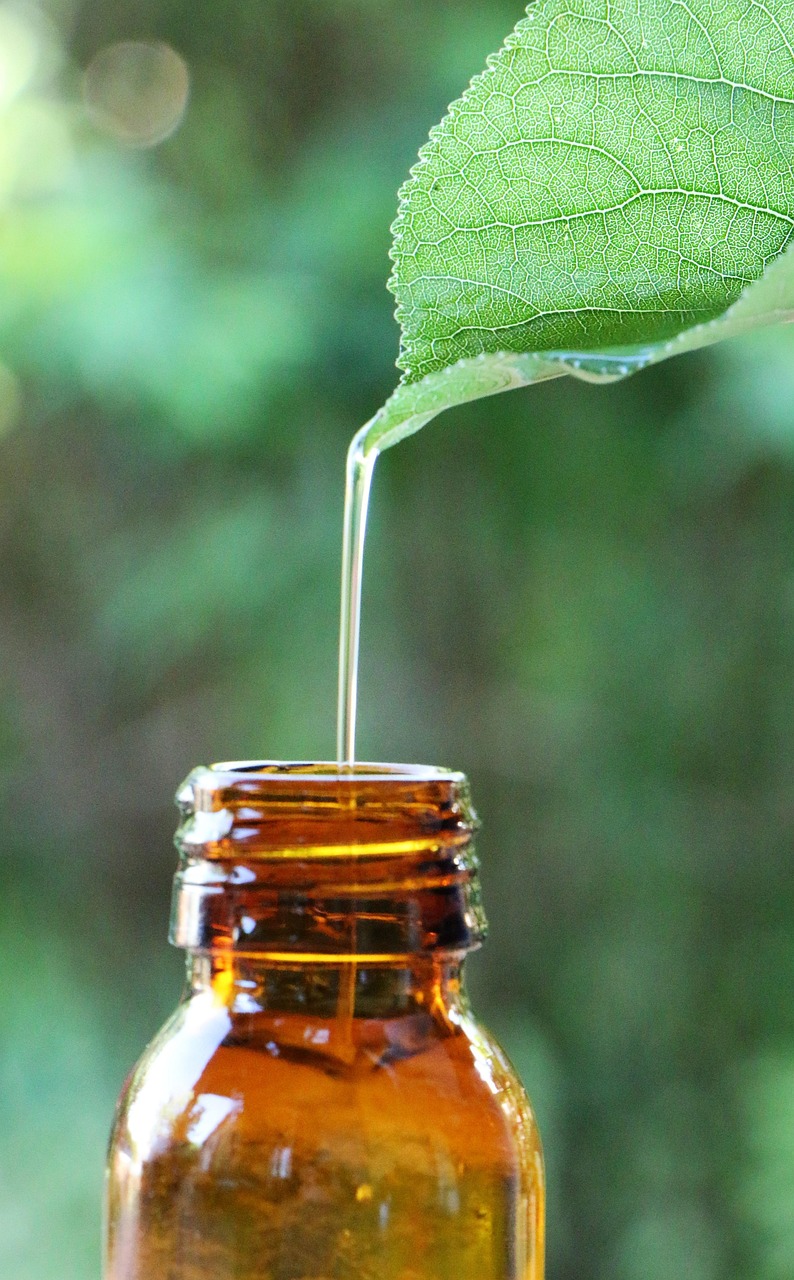
Dark amber or cobalt blue glass bottles are the standard. UV light degrades volatile compounds quickly. Any mugwort oil sold in clear glass or, worse, in plastic should raise immediate questions about how seriously the supplier takes preservation.
Country of Origin
China and Eastern Europe (particularly Hungary and Poland) are primary production regions. India and Morocco also produce Artemisia oils. Origin disclosure is not about one country being better than another; it is about the supplier being willing to tell you where the material came from.
Key Features to Compare Across Listings
| Feature | What to Look For | Red Flag |
|---|---|---|
| Latin name | Artemisia vulgaris (or declared variant) | "Mugwort oil" with no botanical name |
| GC/MS report | Batch-specific, publicly available or on request | No testing data, or a generic certificate only |
| Distillation method | Steam distillation disclosed | Method not mentioned at all |
| Packaging | Dark glass, orifice reducer, tamper-evident seal | Clear glass, plastic bottles |
| Origin disclosure | Country and ideally region listed | "Wildcrafted from pristine sources" with no location |
| Price per ml | $0.40 to $1.50 per ml for a quality product | Under $0.15 per ml (almost certainly diluted or adulterated) |
| Return / satisfaction policy | Clear policy, responsive customer service | No policy stated, no contact information visible |
Price Tiers: What to Expect at Each Level
Budget Range: Under $10 for 10 ml
At this price point, skepticism is warranted. Mugwort oil is not among the most expensive essential oils, but producing a clean, pure distillate still has real costs. Oils in this tier frequently turn out to be diluted in a carrier oil (often not disclosed), blended with cheaper Artemisia species, or simply old stock being cleared. Occasional gems do appear here, usually from smaller direct importers running promotional pricing, but they require careful vetting before purchase.
Mid-Range: $10 to $25 for 10 ml
This is where most reputable specialty essential oil retailers land for a quality 10 ml bottle. Suppliers in this range typically offer GC/MS reports, clear origin labeling, and dark glass packaging. For most buyers interested in diffusing, crafting, or personal aromatic rituals, this tier offers the best balance of quality and value.
Premium: Above $25 for 10 ml
Premium pricing usually reflects certified organic sourcing, small-batch artisan distillation, or rare geographic origin. Some buyers find these oils noticeably brighter and more nuanced in scent. If you are blending for a professional product line or have a particularly discerning nose, the premium tier may be worth exploring. If you are new to mugwort oil, starting in the mid-range is perfectly sensible.
If you are a maker buying in larger quantities for production purposes, the economics shift considerably. Our bulk and wholesale mugwort oil buyer's guide for makers covers minimum order quantities, supplier vetting at scale, and what to negotiate before signing a supply agreement.
Where to Buy Mugwort Essential Oil

Specialty Online Essential Oil Retailers
This is the most reliable channel for most buyers searching for mugwort oil. Retailers such as Eden Botanicals, Stillpoint Aromatics, and Plant Therapy carry or have carried mugwort oil at various times, with the transparency standards that informed buyers expect. Stock availability fluctuates because mugwort is a niche botanical, so signing up for restock notifications is a practical move.
When shopping any online retailer, look for their "about our testing" or "quality" page before adding anything to your cart. A retailer who explains their sourcing and testing process publicly is far more trustworthy than one whose product pages contain only marketing copy.
Aromatherapy Suppliers and Wholesale Distributors
Suppliers who primarily serve professional aromatherapists and cosmetic formulators tend to maintain high standards because their customers are knowledgeable and expect accountability. These companies often sell at slightly better per-milliliter prices than boutique retail sites, and their documentation tends to be meticulous. Examples include companies like Bulk Apothecary or Jedwards International for larger quantities.
Etsy and Small-Batch Distillers
Etsy hosts some genuinely excellent small-batch distillers who grow and distill their own material. The challenge is consistency: quality varies widely, and the platform itself does not vet sellers for analytical testing. When buying from an Etsy shop, message the seller directly and ask for their GC/MS report and botanical origin details before purchasing. Sellers who respond thoroughly and promptly are usually the ones worth trusting.
Amazon
Amazon carries mugwort oil listings, and a handful are from legitimate suppliers who also sell through their own direct sites. However, the platform's structure makes it easier for undisclosed dilutions and mislabeled products to slip through. If you do buy on Amazon, prioritize listings that link to an external GC/MS report, show the full Latin name in the product title or description, and have verified reviews that mention scent accuracy rather than only general satisfaction.
Local Options: Mugwort Oil Near Me
Searching for mugwort oil near me often turns up local health food stores, co-ops, and apothecary-style shops. These can be excellent sources because you can smell before you buy and ask the staff directly about their supplier relationships. The limitation is that smaller retail buyers sometimes have less leverage to demand testing documentation from their distributors. If a local shop carries it, ask which brand they stock, then look up that brand independently online to verify their quality standards.
Red Flags to Avoid
- No Latin name disclosed. A serious supplier always names the species. Vague common names alone suggest a lack of rigor or an intent to obscure.
- "100% pure" claims with no supporting documentation. This phrase is marketing copy without a GC/MS report to back it up. The claim by itself means nothing.
- Price that seems impossibly low. Mugwort oil is moderately priced in the essential oil world, but it still costs real money to produce cleanly. Suspiciously low prices almost always indicate dilution or substitution.
- No return policy or customer contact information. Legitimate businesses stand behind their products. Anonymous or contact-free storefronts carry real risk.
- Vague origin language. Phrases like "sourced from nature's finest regions" or "wildcrafted from pristine environments" without a named country should be treated with skepticism.
- No mention of distillation method. Steam distillation is the standard for mugwort. If a listing does not mention how the oil was extracted, that gap is worth questioning.
Before Your First Purchase: A Quick Pre-Buy Checklist
- Confirm the Latin name is Artemisia vulgaris or a disclosed variant.
- Locate or request the batch-specific GC/MS report.
- Check that the packaging is dark glass with a proper seal.
- Verify the country of origin is disclosed clearly.
- Calculate the price per milliliter and compare it against the mid-range benchmark.
- Read reviews for scent accuracy comments, not just general star ratings.
- Confirm the supplier has a visible return or satisfaction policy.
For a more granular breakdown of how to evaluate what is actually in a bottle before committing to a purchase, the article on how to spot pure mugwort oil: quality checks before you pay covers sensory evaluation, documentation review, and supplier communication in practical detail.
A Note on Buying Mugwort Oil for the First Time
Mugwort's scent is polarizing. It is sharp, herbaceous, and deeply aromatic in a way that some people find immediately compelling and others find overwhelming. Before committing to a large bottle, consider buying the smallest available size from a supplier you have vetted properly. A 5 ml or 10 ml bottle gives you enough to explore diffusion blends and formulation experiments without a significant financial commitment if the scent profile turns out not to suit you.
The best purchase is always an informed one. Take the time to compare a few suppliers side by side using the criteria in this guide, ask questions before you buy, and you will land on a bottle of mugwort oil that genuinely represents this fascinating and underappreciated botanical.