How to Spot Pure Mugwort Oil: Quality Checks Before You Pay
Mugwort essential oil sits in an interesting corner of the botanical market. It has genuine folkloric depth, a complex aromatic profile, and a growing following among people who appreciate heritage herbs. It also happens to be one of the easier oils to misrepresent. Diluted batches get sold as pure. Wormwood oil gets mislabeled. Carrier-oil blends get packaged to look like single-origin extracts. If you have spent any time searching for pure mugwort oil, you have probably already noticed how wildly prices and descriptions vary from one seller to the next.
This guide cuts through that noise. Below you will find a practical, step-by-step framework for evaluating mugwort oil quality before any money changes hands, plus an honest look at what different price points realistically deliver.
Why Mugwort Oil Is Worth Getting Right
Mugwort (Artemisia vulgaris) is steam-distilled from the leaves and flowering tops of a plant with roots in European, East Asian, and North American herbal traditions. The resulting oil is earthy, slightly camphoraceous, and layered with green, woody undertones that shift noticeably depending on the harvest region and plant part used.
Because the plant itself is relatively abundant and inexpensive to grow, genuine mugwort oil should not carry the extreme price tags of rose or neroli. That accessibility is actually part of the problem. Low barriers to entry attract sellers who cut corners, and buyers who do not know what authentic oil smells, looks, or reads like on a label can easily end up with something that barely resembles the real thing.
Before you spend a dollar, it helps to understand what you are actually shopping for. If you want a deeper look at the sourcing landscape, our guide on how to buy mugwort oil: the ultimate quality and sourcing resource covers botanical sourcing in more detail.
The Core Quality Indicators
1. Botanical Name on the Label
This is the single fastest quality filter available to you. A label that reads only "mugwort oil" without a Latin species name is an immediate concern. There are multiple Artemisia species, and they produce chemically distinct oils with different aromatic characters.
Look for:
- Artemisia vulgaris: The most common species in Western markets, with a camphor-forward, green-herbal scent.
- Artemisia argyi: The species prominent in East Asian traditions, sometimes labeled "Chinese mugwort." Its oil tends to be warmer, slightly more floral.
- Artemisia douglasiana: A North American species, occasionally seen in artisan distillations. Rarer and more regionally specific.
If a label only says "mugwort" and lists no Latin name, you have no way of knowing which plant was distilled, or whether it was truly Artemisia at all. Reputable suppliers always specify the species. This is non-negotiable for serious buyers.
It is also worth noting that mugwort and wormwood (Artemisia absinthium) are frequently confused, and occasionally sold interchangeably by less careful vendors. They are related but distinct, with different aromatic and chemical profiles. Our side-by-side comparison at mugwort oil vs. wormwood oil: two Artemisias compared honestly goes into those differences in detail.
2. Extraction Method
Genuine essential oil of mugwort is produced by steam distillation. The label should say so. If an "essential oil" does not list its extraction method, or if it says "cold pressed" (a method used for citrus rinds, not leafy herbs), something is off.
CO2 extraction is also legitimate and produces a slightly different aromatic result, typically richer and more complete than steam distillation. CO2 mugwort extracts are less common and usually priced higher. If you see this claim, verify it with the supplier.
3. Country of Origin
Reputable sellers disclose where the plant was grown. Common origins for commercially available mugwort oil include France, Hungary, India, China, and the United States. Each growing region produces oil with subtly different aromatic characters, partly due to soil, climate, and altitude, and partly due to differences in harvesting timing and plant chemotype.
"Country of origin" on a label does not guarantee quality on its own, but its absence suggests the seller either does not know or does not want you to know. Both are problematic.
4. GC/MS Testing and Batch Reports
Gas chromatography/mass spectrometry (GC/MS) testing is the gold standard for verifying essential oil composition. A GC/MS report for mugwort oil will show its primary constituents, typically including camphor, 1,8-cineole, thujone, borneol, and various sesquiterpenes, in proportions that vary by species and growing region.
Suppliers who invest in GC/MS testing and publish batch-specific reports are signaling several things at once: they understand what they are selling, they have accountability built into their supply chain, and they expect informed customers. Batch-specific reports matter because the report should match the lot number on your bottle, not simply be a generic report for that oil type.
If a company cannot produce a GC/MS report on request, or only offers a single generic report for an oil they have been selling for years, that is worth noting.
5. Packaging
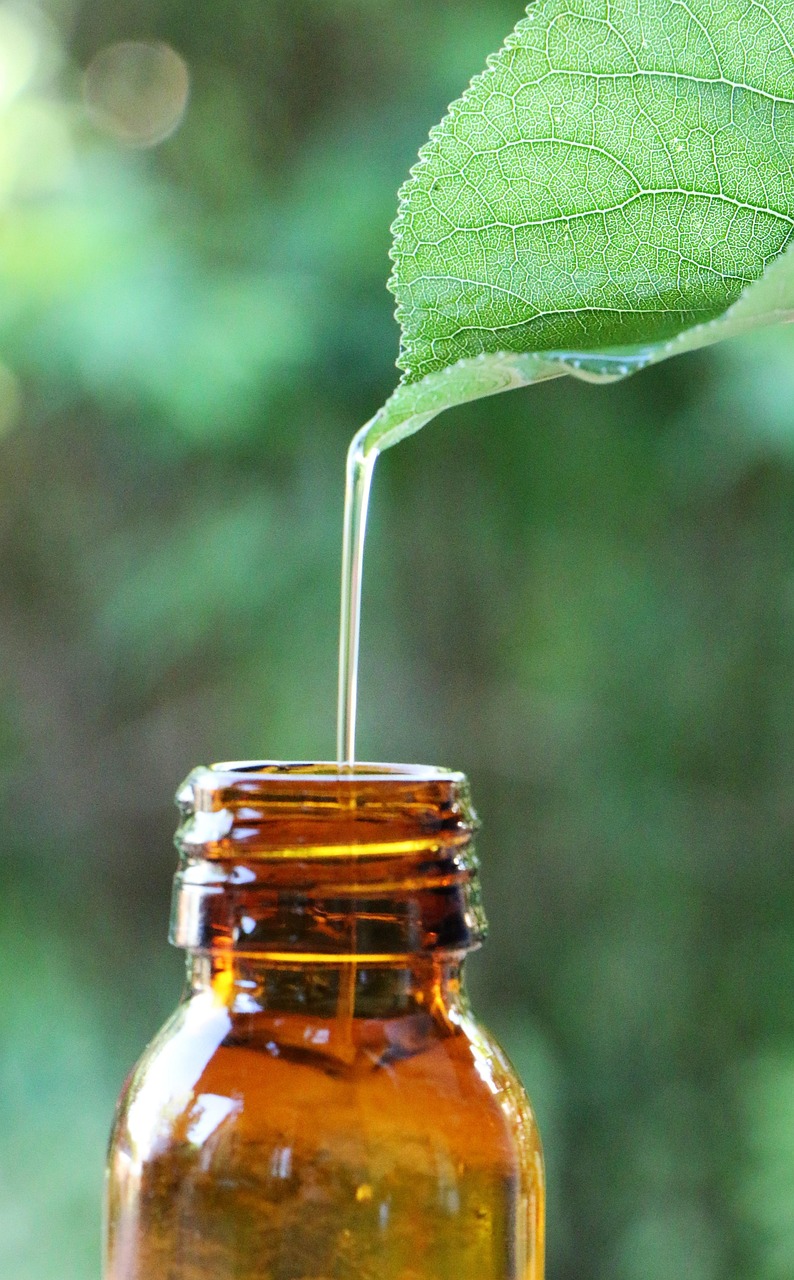
Essential oils are volatile and light-sensitive. Pure mugwort oil should be packaged in dark glass: amber, cobalt blue, or dark violet. Clear glass bottles are a red flag, as is plastic, which can interact with concentrated essential oils over time.
The bottle should have a reducer insert (the small orifice plug that slows the pour and limits air exposure) and a tight-sealing cap. An oil sold in a clear plastic dropper bottle at room temperature on an unshaded shelf has almost certainly suffered quality degradation, regardless of what the label claims.

Red Flags to Avoid
Some warning signs are obvious once you know to look for them. Others are subtler. Here is a consolidated list of what should prompt you to keep shopping.
- No Latin species name: Already covered above, but worth repeating. It is the first thing to check.
- Suspiciously uniform pricing: If every size variant is priced at a perfectly round number and there is no differentiation by batch, origin, or testing tier, the seller is likely not deeply engaged with their supply chain.
- "Blended" or "diluted" without clear disclosure: Some sellers blend essential oil into a carrier and sell the result in the same packaging context as pure oil. This is not inherently dishonest if clearly disclosed, but many sellers do not disclose it clearly. If an "essential oil" lists a carrier oil (jojoba, fractionated coconut, etc.) as an ingredient, it is a diluted product. Price it accordingly, and do not compare it to pure oil.
- Vague sourcing language: Phrases like "wildcrafted from pristine sources" without any specificity are marketing language, not supply chain transparency.
- No returns or no customer support: Reputable essential oil suppliers stand behind their products. A no-return policy on an oil you cannot smell before buying is a structural conflict of interest.
- Identical product listings across multiple brand names: On large retail marketplaces, it is common to find the same product repackaged under dozens of brand names. If listings share identical photos, descriptions, and weight specifications, they likely share the same source, and that source is optimizing for volume, not quality.
Essential Oil vs. Infused Oil: A Critical Distinction
This distinction deserves its own section because the confusion around it is genuinely widespread. Mugwort essential oil is a concentrated aromatic distillate obtained by steaming plant material and collecting the volatile compounds that emerge. Mugwort infused oil is made by steeping dried mugwort plant material in a carrier oil (like sunflower or olive) for an extended period, then straining it.
These are fundamentally different products with different aromatic intensities, different compositions, and different use cases in skincare and aromatherapy formulation. Neither is inherently superior; they simply do different things. The problem arises when labeling is unclear or when buyers expect one and receive the other.
If you are unsure which product suits your needs, our comparison piece on mugwort essential oil vs. mugwort infused oil: which should you choose walks through the practical differences.
What to Compare Across Price Points

Budget Range (under $15 for 10 ml)
Oils in this range exist, and some are legitimate. However, the category is where adulteration and mislabeling are most common. If you are shopping here, prioritize the following minimum checks: species name on the label, amber glass packaging, and at least one form of third-party verification (even a basic purity claim backed by a supplier contact you can reach).
Be especially cautious of budget listings on large third-party marketplaces where seller accountability is limited. The cost savings rarely outweigh the risk of receiving something that is not pure mugwort oil at all.
Budget-range oils can work well for people who are exploring mugwort's aromatic profile for the first time and want to invest modestly before committing to a higher-quality source. Use them in diffuser blends where absolute purity is less critical than in skin-contact applications.
Mid-Range ($15 to $35 for 10 ml)
This is where the market gets more interesting and more trustworthy. At this price point, you can reasonably expect: species specificity, disclosed country of origin, GC/MS testing with at least batch-type documentation, and proper dark glass packaging.
Several well-regarded specialty essential oil brands operate comfortably in this tier. Look for companies that publish their testing documentation publicly on their website rather than requiring you to request it. Accessibility of information is itself a quality signal.
Mid-range oils from reputable suppliers are appropriate for both aromatic use and properly diluted cosmetic applications. At this level, you are paying partly for sourcing integrity and partly for the quality control infrastructure behind it.
Premium Range ($35 and above for 10 ml)
Premium pricing in essential oils can reflect several things: rare chemotypes, small-batch or single-farm sourcing, artisan distillation (as opposed to industrial processing), certified organic growing practices, or exceptionally rigorous testing protocols.
For mugwort oil specifically, premium pricing is most justified when the supplier can articulate exactly what makes this batch distinct. For example, a small-batch steam distillation of Artemisia argyi harvested at peak flowering in a specific Chinese province, with full GC/MS documentation, represents a meaningfully different product from a commodity-grade industrial distillate. That difference has aromatic and sourcing integrity value, even if the practical performance in a candle or body oil blend is similar to a good mid-range option.
If you are formulating a high-end cosmetic product or want a reference-quality oil for aromatic evaluation, the premium tier is worth exploring. For everyday diffuser use, a solid mid-range oil from a transparent supplier is usually the better value.
Where to Buy Pure Mugwort Oil
Specialty Essential Oil Retailers
Companies that specialize exclusively in essential oils tend to offer the strongest sourcing transparency. They typically publish GC/MS reports, maintain direct supplier relationships, and have knowledgeable customer service. Names like Mountain Rose Herbs, Eden Botanicals, and Stillpoint Aromatics operate in this category. Availability of mugwort specifically varies by seller and season, so check current stock.
Directly from Distillers
A small number of small-scale distillers in the United States and Europe offer mugwort oil distilled from their own-grown or locally sourced plant material. These operations are typically found through farmers markets, craft distillation communities, or regional herb festivals. The aromatic character of these oils can be exceptional, and the sourcing story is as transparent as it gets. Supply is limited and irregular, but the quality ceiling is high.
Large Online Marketplaces
Platforms like Amazon and eBay list many mugwort oil products. Quality ranges enormously. The convenience is real, but so is the risk. If you buy here, apply every quality check in this guide with extra rigor: read the full ingredient list, look for the species name, research the brand independently, and check whether GC/MS documentation is available outside the marketplace listing itself.
Health Food and Natural Goods Stores
Brick-and-mortar natural food stores carry essential oils from established brands. The advantage here is that you can sometimes smell a tester before buying, which is the most direct quality check available. The selection of mugwort oil specifically tends to be limited compared to online specialty retailers.
A Quick Pre-Purchase Checklist
Before you complete any purchase of mugwort oil, run through this list:
- Does the label include the Latin species name (Artemisia vulgaris, Artemisia argyi, or another named species)?
- Is the extraction method listed as steam distillation or CO2 extraction?
- Is the country of origin disclosed?
- Is GC/MS testing documentation available, ideally batch-specific?
- Is the oil packaged in dark glass with a reducer insert?
- Does the ingredient list include only the essential oil (not a carrier, unless you are intentionally buying a diluted product)?
- Does the supplier have a clear return or satisfaction policy?
- Can you find independent reviews of this brand from sources outside their own website?
Eight questions. A reputable supplier should satisfy most or all of them before you spend a single dollar. If a listing fails four or more, keep looking.
One Final Note on Scent as a Quality Signal
If you have the opportunity to smell mugwort oil before purchasing, use it. Pure mugwort oil has a distinctive character: earthy, green, camphoraceous, and slightly sweet in its top notes, with a resinous depth that lingers. It is not a simple or one-dimensional scent.
Oils that smell flat, purely like camphor with no green complexity, or chemical in any way, are likely of lower quality, adulterated, or mislabeled. Oils that have no scent at all are almost certainly a carrier oil with trace botanical content at best. Developing your nose takes time, but even a first-time buyer can detect something that smells "off" if they trust their instincts.
Buying mugwort oil quality you can count on comes down to one principle: transparency travels with integrity. Suppliers who know their product and are proud of their sourcing will tell you everything you want to know. Suppliers who obscure the details rarely have a good reason for doing so.
Take your time, ask questions, and spend your money with sellers who can answer them.