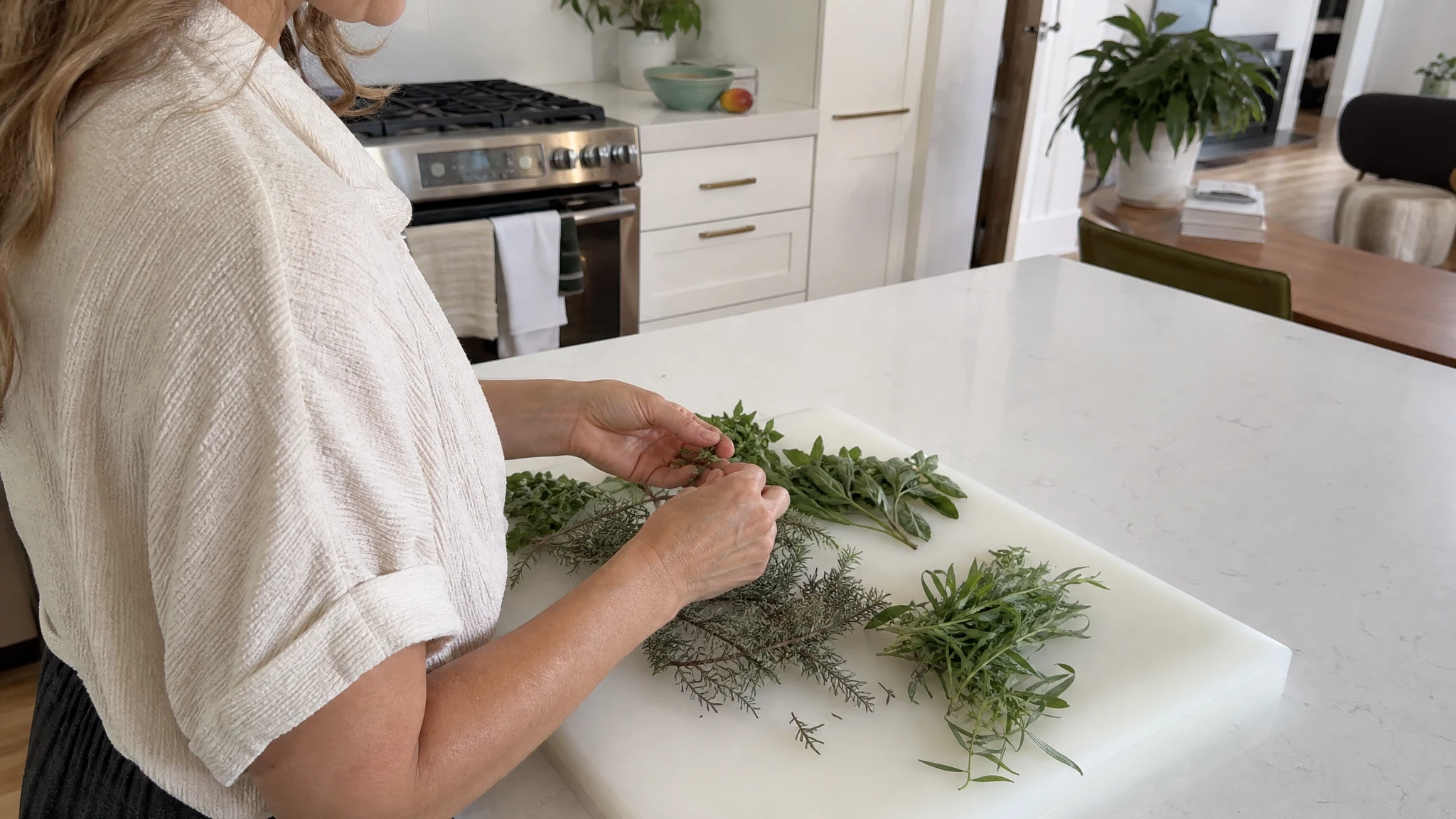
Green and Herbal Oils for Natural Perfume: Limits Decide
Rank green and herbal oils by what limits the dose, not by how green they smell. In a 10 g perfume concentrate used at 15%, an estragole-rich basil or tarragon oil is capped at a fraction of a drop, while clary sage, galbanum and linalool thyme have no standard under their own names in IFRA's compilation. This roundup covers six materials from published composition and IFRA status only; it is not a smell ranking and nobody here has smelled them side by side. We sell mugwort oil only. Every other oil below comes from a perfumery supplier, and there are no affiliate links.
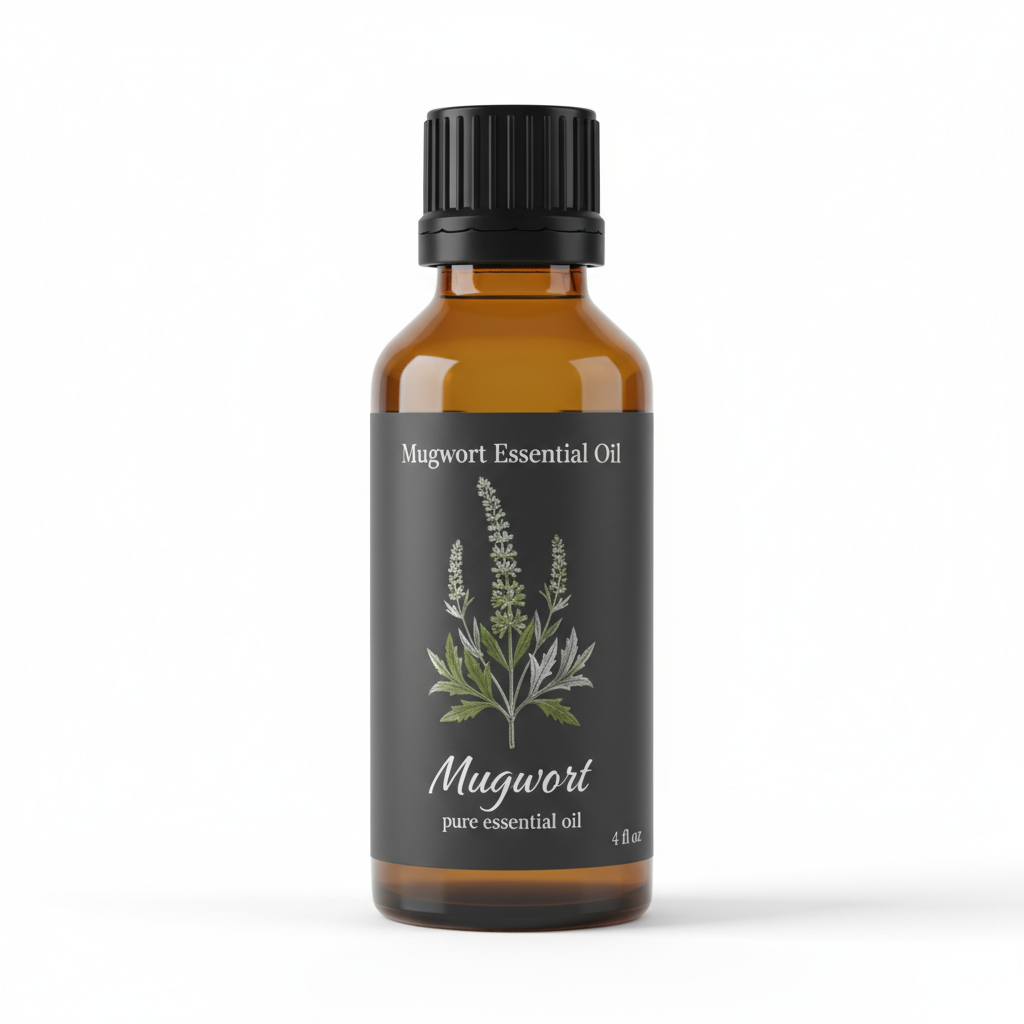
Mugwort Essential Oil
Our own Mugwort Essential Oil, in sizes from 0.5 oz to bulk.
From $16.99
Shop Now →The six, with the numbers that decide the dose
Composition figures are from single studies or one data sheet, not ranges for the species, and not our oil. The dose column is arithmetic from IFRA Category 4 (fine fragrance) caps in the IFRA Standards compilation, 51st Amendment (January 2024), with an assumed 15% concentrate: a material's maximum share of the concentrate is its finished-product cap divided by 0.15.
| Oil | Main molecules, one source | IFRA status | Ceiling per 10 g concentrate |
|---|---|---|---|
| Clary sage | Linalyl acetate 54 to 78%, linalool 6.5 to 24% (one supplier sheet) | No standard of that name; linalool is declared as an allergen | None by name; label threshold applies |
| Galbanum | Beta-pinene 21.8%, p-menth-2-en-9-ol 15.4%, delta-3-carene 8.2% (one hydrodistilled sample) | No standard of that name | None by name |
| Basil, methyl chavicol type | Methyl chavicol (estragole) 57.3%, linalool 18.0% | Estragole restricted: Cat 4 0.014% | About 0.016 g |
| Basil, linalool type | Linalool 68.0%, methyl chavicol 20.0% | Same estragole cap | About 0.047 g |
| Tarragon | Estragole 84.9%, linalool 5.09% (Armenia) | Same estragole cap | About 0.011 g |
| Thyme, linalool type | Linalool 76.15%, linalyl acetate 14.26% (one French oil) | No standard of that name | None by name |
| Mugwort oils | Varies by species and origin (see below) | No standard of that name; thujone standard applies | Cap divided by thujone share |
Sources: Golgemma data sheet B870, 2019 (clary sage); Meshkatalsadat et al., 2013 (galbanum); Avetisyan et al., 2017 (basil cultivars); Petrosyan et al., 2018 (tarragon); Satyal et al., 2016 (thyme). The estragole ceilings divide 0.014% by the estragole share (0.573, 0.20 and 0.849) and by 0.15; a drop is about 0.04 to 0.05 g, so the basil and tarragon ceilings are well under one drop. The same IFRA compilation restricts methyl eugenol at 0.011% in Category 4 (Amendment 51, 2023), relevant where a basil or tarragon oil carries it. A text search found no standard named for lavender, basil, galbanum, clary sage, thyme or labdanum, and the linalool entry is a specification, not a cap. IFRA's 52nd Amendment is expected to be notified in January 2027, so re-check before relying on any of this.
What each one is, and who should check first
Clary sage. The sheet gives density 0.890 to 0.908 and a 36-month shelf life for that oil, and declares linalool 6.5 to 24%, limonene up to 3% and geraniol up to 2% as allergens. At 1% oil in a leave-on product, linalool alone is 0.065 to 0.24%, which is 65 to 240 times the EU 10 ppm leave-on labelling level the sheet cites. The comparison with mugwort is in the clary sage article.
Galbanum. The one study read reports a hydrodistilled oil with 32 compounds identified, but gives the plant part inconsistently (aerial parts in the method, bark in the results), so treat the composition as one sample. Galbanum is sold as resin, oil and resinoid, which are different materials; ask which one you are buying. A perfumery writer describes it as an acrid, bitter note that is sharpest at first and moves to a balsamic drydown, with a light or heavy hand possible and no percentages given (Pearlstine, CaFleureBon, 2013).
Basil and tarragon. Basil is the clearest case for why the botanical name is not enough: the same species gave 57.3% methyl chavicol in one cultivar and 68.0% linalool with 20.0% methyl chavicol in another (Avetisyan et al., 2017). Tarragon is Artemisia dracunculus, in the same genus as mugwort, and one Armenian oil carried 84.9% estragole. The IFRA estragole entry names dermal sensitization and systemic toxicity as drivers. In a 10 g concentrate these are accent materials measured in hundredths of a gram.
Thyme, linalool type. A cluster analysis of 85 thyme oils found 20 chemotypes, with the thymol type the largest group (39 samples); the linalool-type oil quoted above is a different material from the thymol-type oils that share the name (Satyal et al., 2016). Specify the chemotype when you order.
Juniper berry and cypress were on the plan and are left out: no composition source was read for either, and nothing here should be taken as a statement about them.
Mugwort oil in this lineup
IFRA has no standard named for mugwort or any Artemisia oil, but its thujone standard applies to any oil that carries thujone: 1.4% of the finished product in Category 4 and 0.095% in Category 5A body products, a restriction driven by neurotoxicity (IFRA, 2024, Amendment 49). Literature thujone in mugwort oils runs from none to about a fifth: northern Lithuanian oils 0 to 20.2% trans-thujone (Ekiert et al., 2020) and 1.31 to 16.66% in three of seven Chinese oils of another species (Luo et al., 2022). The COA we publish has no thujone figure, so none can be assumed for our oil, and its dose limit is not something a roundup can give.
Our copy says to dilute to 0.5% to 2% in a carrier for skin and patch test first, and our standards page says dilutions should be very low indeed. IFRA's thujone cap puts a 2% oil in Category 5A at 4.75% thujone or less (0.095 divided by 2), a conditional figure lower than our copy; keep to a one-drop accent in a 10 g concentrate (about 0.067% of the finished perfume at 15%, using the COA batch's relative density of 0.895) unless the supplier provides thujone data in writing. No Tisserand figure for mugwort oil could be obtained. Our copy also says to avoid use during pregnancy and to keep the oil from children and pets; ask an obstetric clinician or a veterinarian, not a recipe. We state no flash point; request the SDS in writing.
For more on blending the bitter green note, see the pairing guide, the perfumery post and the fougère and chypre structures; the clary sage and cedar blend is in its own post.
Mugwort Essential Oil
Mugwort Essential Oil from our own shop, in sizes from 0.5 oz to bulk.
From $16.99
Shop Now →Sources & Further Reading
- IFRA, 2024. The complete IFRA Standards, 51st Amendment (Thujone, Estragole, Methyl eugenol). ifra-standards-51st-amendment.pdf
- Golgemma, 2019. Clary Sage France Organic Oil, technical data sheet B870. biolandes.com/fiche-technique-B870.pdf
- Meshkatalsadat et al., 2013. Chemical composition of volatile oil from Ferula gummosa. Orient J Chem 29(1). orientjchem.org/?p=25132
- Avetisyan et al., 2017. Chemical composition of essential oils from basil Ocimum cultivars. BMC Complement Altern Med 17:60. PMC5248495
- Petrosyan et al., 2018. Tarragon essential oil grown at high altitude in Armenia. Proc YSU B 52(2):116-121. journals.ysu.am
- Satyal et al., 2016. Essential oil characterization of Thymus vulgaris from various geographical locations. Foods 5(4):70. PMC5302419
- Pearlstine, 2013. Galbanum in perfumery: the queen of green. CaFleureBon. cafleurebon.com
- Ekiert et al., 2020. Significance of Artemisia vulgaris L. in the history of medicine. Molecules 25(19):4415. PMC7583039
- Luo et al., 2022. Seven Mugwort (Artemisia argyi) essential oils against Anopheles sinensis. Sci Rep 12:5337. PMC8964668