Can You Diffuse Mugwort Oil? What the Sources Cover
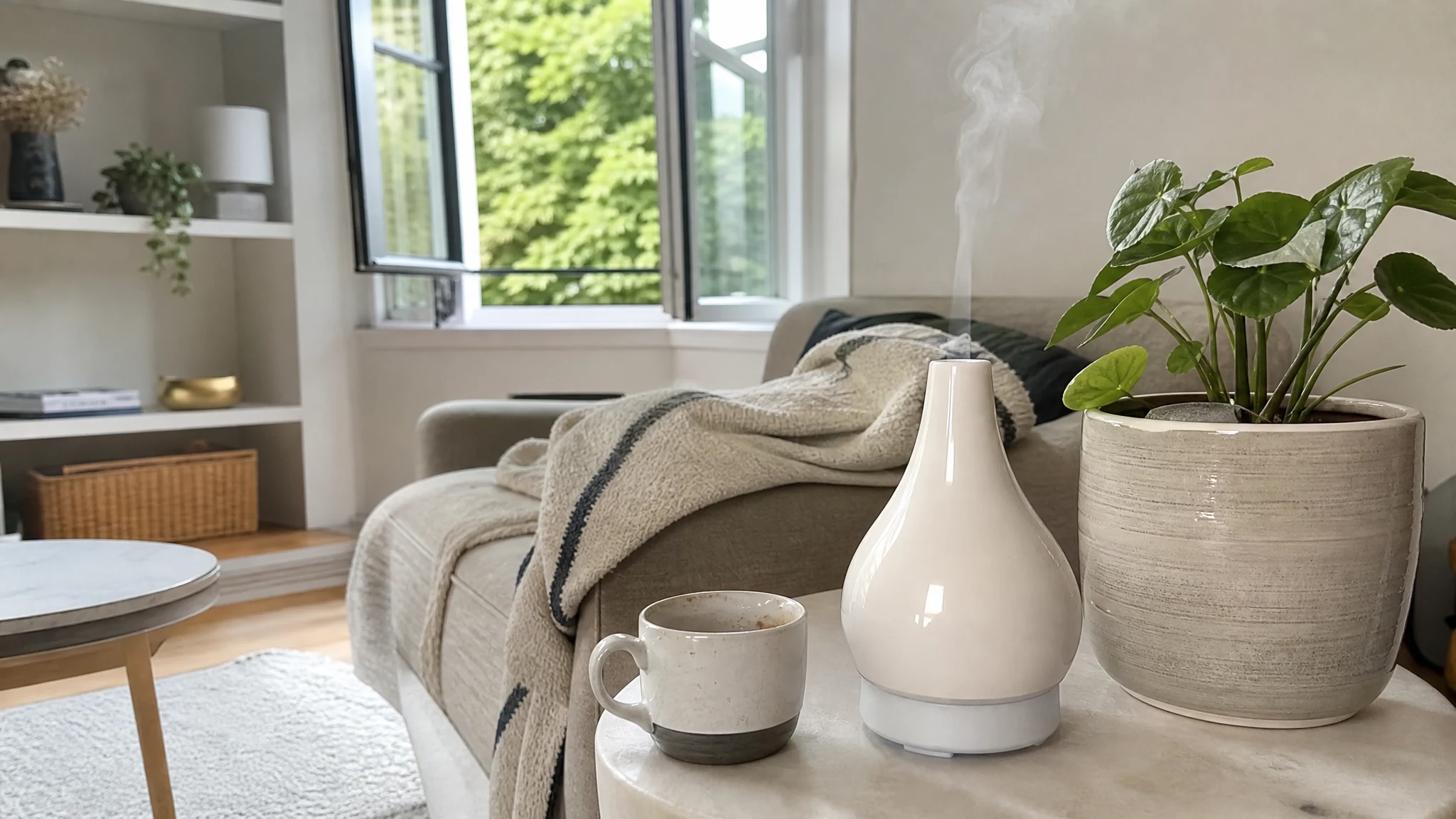
You can physically put mugwort oil in a diffuser, but we do not recommend it, and diffusing is the use we are least able to document. Our shop lists incense, candles, perfume accents and potpourri as uses, not diffusion, and our own standards page says to "diffuse it lightly if at all." The search for this article found no study of mugwort oil in a diffuser, so what follows is what diffuser studies on other oils measured, what the thujone literature says, and who to ask.
Mugwort Essential Oil
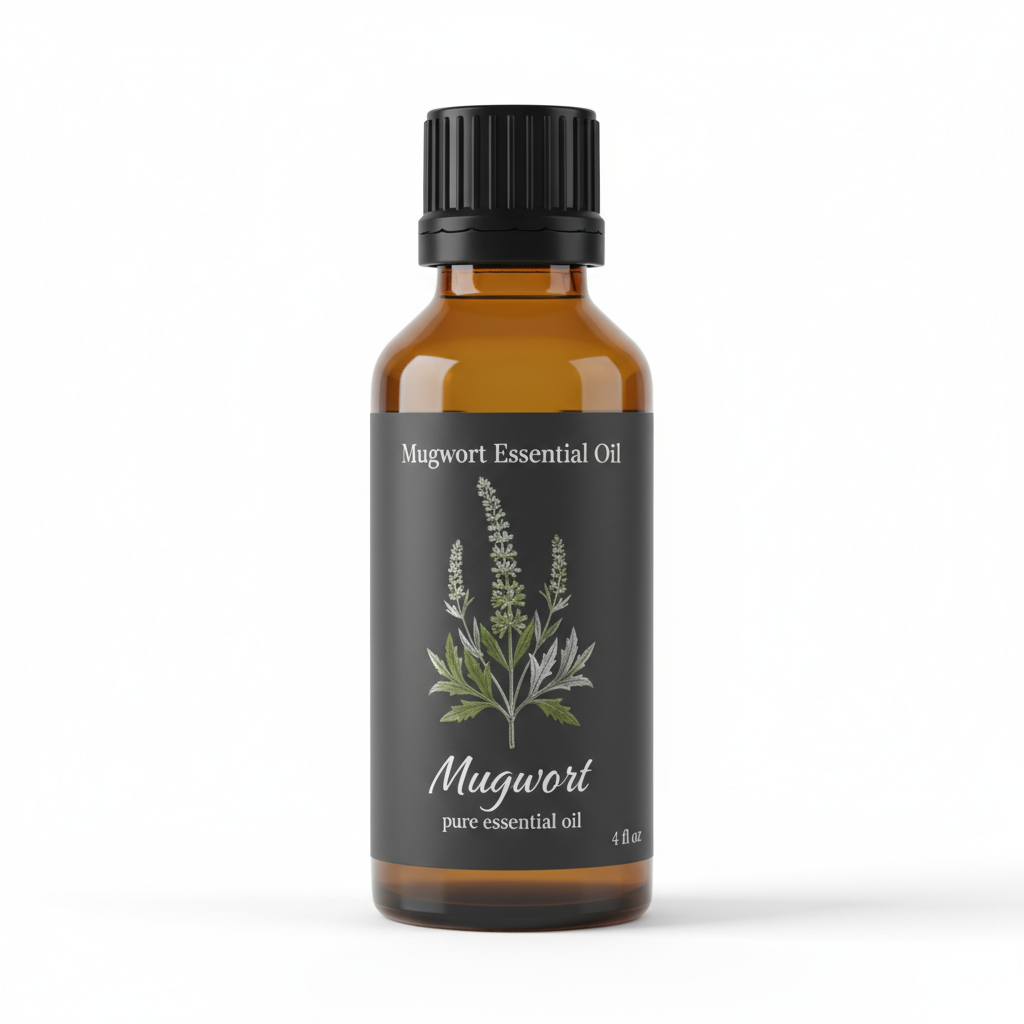
Our own Mugwort Essential Oil, in sizes from 0.5 oz to bulk.
From $16.99
Shop Now →What our copy says, and what it leaves out
Our copy calls the oil a potent, concentrated botanical material, says to avoid use during pregnancy and to keep it from children and pets, and says it is not for internal use. The standards page calls it a restrained perfumery and ritual material rather than a general-purpose oil. None of that is a diffusing instruction. We have no thujone, camphor or cineole figure for our oil (our published COA covers relative density, refractive index, steam distillation and best-by date only), so we cannot tell you how a drop in water compares with anything.
What diffuser studies on other oils found
Two studies sit on either side of the question. Schwartz-Narbonne, Du and Siegel (2021, Indoor Air) ran an ultrasonic diffuser in a chamber with lemon, lavender, eucalyptus and grapeseed oils. Over 15 minutes the most abundant volatile compounds released ranged from 0.2 to 3.5 mg per oil, and fine-particle (PM1) emission rates were about 0.1 to 3 mg per hour depending on the oil. Filling the diffuser with tap water instead of deionized water raised PM1 emission fivefold for eucalyptus oil. Their modeling concluded that reasonable use "can contribute substantially" to indoor particles, depending on oil and water.
Itoh and colleagues (2022, International Journal of Environmental Research and Public Health) measured room air near a commercial ultrasonic diffuser (350 ml tank, 0.5 ml of oil) 500 mm from the unit at 0, 30 and 60 minutes. Total volatiles were 39 to 75 parts per trillion for lavender, 17 to 55 for melissa, 272 falling to about 31 for tea tree and 555 falling to about 100 for eucalyptus. The authors judged the levels low enough even with repeated use but wrote that a more detailed inhalation study is needed for a formal safety assessment.
These do not contradict each other so much as measure different things: one counts mass released in a chamber and the particles that follow, the other counts volatile concentration at one distance in one office. Neither tested mugwort, neither measured thujone, and neither reported a health outcome. For scale against smoke, the incense chamber study in burning mugwort indoors reported PM2.5 of 154 to 255 mg per hour, orders of magnitude above these PM1 rates, though the size fractions and instruments differ.
The arithmetic of Itoh's dose for our oil, as illustration only: 0.5 ml is about 10 drops at 20 drops per ml, and about 0.45 g at the 0.895 relative density on our COA. That is not a recommended dose and no authority was found that gives one for mugwort oil. Our dilution article has diffuser drop counts for another purpose; we do not repeat them.
Why thujone is a reason to hesitate
Thujone is the compound that makes some Artemisia oils a concern. Hold and colleagues (2000, PNAS) reported that alpha-thujone is toxic to mice and suppresses GABA-activated currents in rat neurons; the study used animals and tissue, not inhalation by people. How much thujone a mugwort oil holds varies: in the Pandey and Singh (2017) review, two Lithuanian Artemisia vulgaris oils had trans-thujone at 8.9% and 10.9%, other A. vulgaris and Artemisia argyi rows list none, and wormwood reached 66.4%. The Missouri Poison Center says mugwort oil "contains irregular amounts of toxic compounds such as Thujone, Camphor, and Eucalyptol." Irregular means two bottles labeled mugwort oil can differ, and a label that names the Latin species should match the batch paperwork (see reading a mugwort oil label).
IFRA has no standard naming mugwort oil (a search of the 51st Amendment compilation, January 2024, found none), but its thujone standard (Amendment 49, driven by neurotoxicity) counts natural thujone in an oil. Its caps are for finished products and are set by category, not for diffused air. The IFRA guidance (June 2023) puts plug-in and automated air fresheners and incense in Category 12 (thujone cap 9.5%) and reed diffusers and liquid refills in Category 10A (thujone cap 0.13%). No category for an ultrasonic water diffuser appears in the passages read, so no IFRA figure applies to it directly. For the nearest analogy, at an assumed 10% thujone the 10A cap would allow about 1.3% oil in a reed diffuser liquid; at 20% about 0.65%. That is arithmetic on an assumed share, not a limit for our oil.
The same caps are lower than our 0.5% to 2% skin copy for some skin categories, depending on thujone share; the full comparison is in the allergy article.
Who should not, and who to ask
The EPA names people with heart or lung disease, children and older adults as more affected by fine particles. A diffuser adds some, according to Schwartz-Narbonne; so someone with asthma or heart or lung disease should ask a physician, someone who is pregnant should ask an obstetric clinician (our copy says to avoid use in pregnancy), and a parent should ask a pediatrician. For animals, the Merck Veterinary Manual (March 2025) says active diffusers pose "an extra risk beyond inhalation exposure, especially for cats and birds," because droplets settle on fur and feathers; see mugwort oil and pets.
What this does not claim
Nothing here says mugwort oil in the air changes mood, sleep, dreams or a room, or helps any condition. FDA's aromatherapy page (current as of 9 September 2023) says claims such as relieving pain, treating anxiety or helping you sleep are drug claims, and that plant origin does not prevent a product from being regulated as a drug. For the uses we do list, see our safety article.
So the plain answer to the title is that no source read for this post documents diffusing mugwort oil, our own copy says "lightly if at all," and we would put a written thujone figure, a physician's view and a veterinarian's view ahead of the first drop.
Mugwort Essential Oil
Mugwort Essential Oil from our own shop, in sizes from 0.5 oz to bulk.
From $16.99
Shop Now →Sources & Further Reading
- Schwartz-Narbonne, Du and Siegel, 2021. Volatile organic compound and particulate matter emissions from an ultrasonic essential oil diffuser. Indoor Air 31(6):1982-1992 (University of Toronto summary). hab.civmin.utoronto.ca
- Itoh et al., 2022. Examination of VOC concentration of aroma essential oils and their major VOCs diffused in room air. Int J Environ Res Public Health 19(5):2904. PMC8910502
- Hold et al., 2000. Alpha-thujone: GABA type A receptor modulation and metabolic detoxification. PNAS 97(8):3826-3831. PMC18101
- Pandey and Singh, 2017. The genus Artemisia: a 2012-2017 literature review. Medicines 4(3):68. PMC5622403
- Missouri Poison Center. Mugwort. missouripoisoncenter.org
- IFRA, 2024. The complete IFRA Standards, 51st Amendment (Thujone, pp. 309-311). ifrafragrance.org
- IFRA, 2023. Guidance for the use of IFRA Standards. ifra guidance pdf
- US EPA, 2026. Indoor particulate matter. epa.gov/indoor-air-quality-iaq
- Merck Veterinary Manual, 2025. Toxicoses from essential oils in animals. merckvetmanual.com
- FDA, 2023. Aromatherapy. fda.gov/cosmetics