DIY Mugwort Cleansing Oil: A K-Beauty Inspired Recipe You Can Make at Home
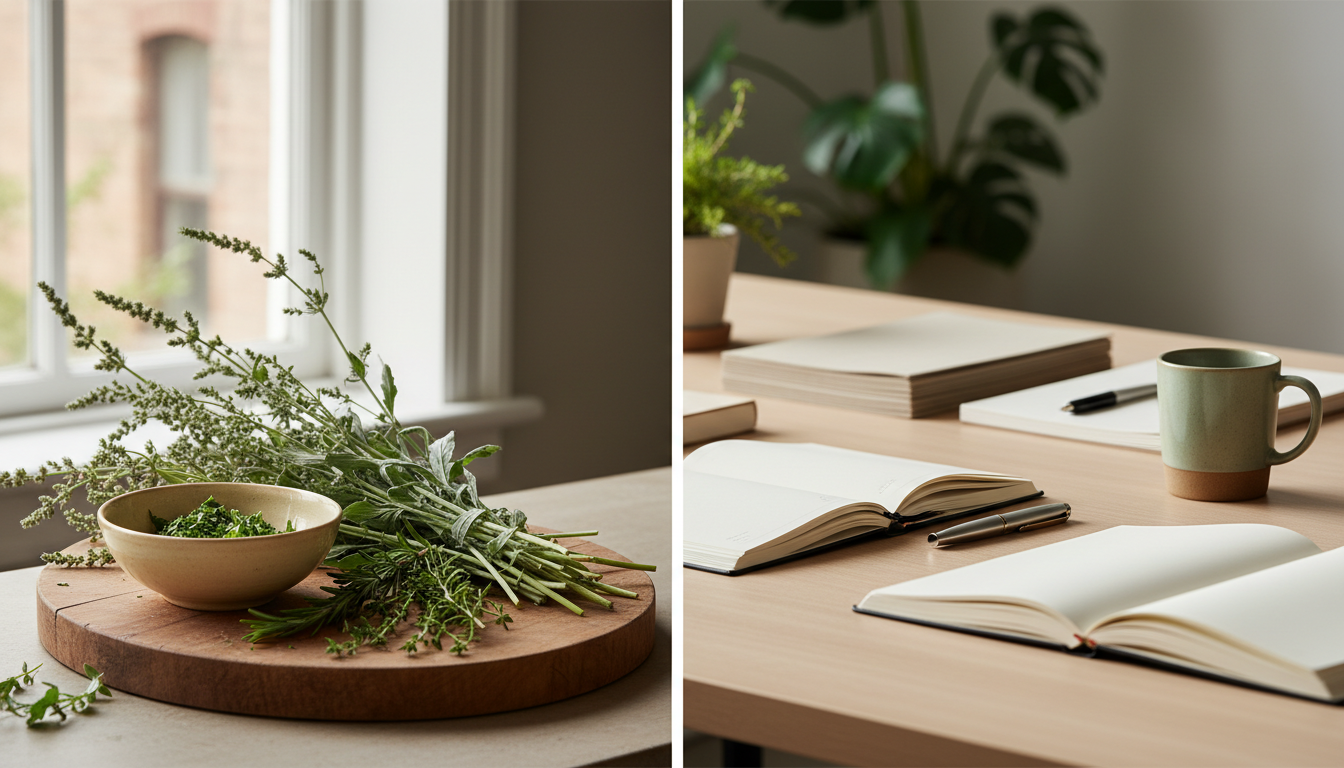
Mugwort has been a quiet fixture in Korean skincare for centuries, and recently it has found its way into the global conversation around botanical beauty. Walk through the skincare aisle of any Seoul department store and you will spot it: ssuk, the Korean word for mugwort, listed prominently on toners, essences, and cleansing balms. The appeal is sensory as much as anything else. Mugwort brings a distinctive herbal, almost smoky-green scent that feels grounding and deliberate, a real contrast to the synthetic floral notes that dominate mass-market cleansers.
This DIY mugwort oil cleanser leans into that tradition. It is built around the double-cleansing method popularized by K-Beauty: an oil-based first cleanse that lifts away makeup, sunscreen, and the day's accumulation, followed by a water-based second cleanse. The result is a ritual that feels considered rather than rushed. And because you are making it yourself, you control exactly what goes into the bottle.
Before You Begin: A Note on Mugwort Essential Oil
Mugwort essential oil (Artemisia vulgaris) is potent. It contains thujone, a naturally occurring compound that requires careful handling and proper dilution in any leave-on or rinse-off cosmetic formula. The concentration used in this recipe is intentionally conservative, sitting well within standard cosmetic usage guidance. Do not increase the essential oil quantity beyond what is specified here.
Mugwort essential oil is also not the same product as a mugwort-infused carrier oil. Infused oils are made by steeping dried mugwort herb in a carrier oil over time, which produces a much milder product. This recipe uses a small measured amount of true mugwort essential oil combined with a jojoba base. If you are exploring other ways to work with this plant's aroma, the article on how to use mugwort oil in fragrance and craft covers the full range of application methods.
Who This Recipe Is For
Difficulty level: Beginner to Intermediate
Active prep time: 15 minutes
Total time (including cooling if applicable): 20 minutes
Yield: Approximately 100 ml (a 3.4 oz bottle)
This recipe is suitable for anyone who enjoys botanical cosmetics and wants a fragrant, oil-based first cleanse. It is a good starting project if you are new to DIY skincare because it requires no heat and no emulsification chemistry.
Ingredients
All measurements are by volume unless otherwise noted.
| Ingredient | Amount | Percentage of Formula | Purpose |
|---|---|---|---|
| Jojoba oil (golden or clear) | 70 ml | 70% | Primary carrier; lightweight, long shelf life |
| Sunflower seed oil (refined) | 20 ml | 20% | Emollient; adds slip and spreadability |
| Polysorbate 80 (cosmetic grade) | 9 ml | 9% | Emulsifier; allows the oil to rinse cleanly with water |
| Mugwort essential oil (Artemisia vulgaris) | 0.5 ml (approx. 10 drops) | 0.5% | Botanical aroma; signature K-Beauty herb note |
| Lavender essential oil (Lavandula angustifolia) | 0.3 ml (approx. 6 drops) | 0.3% | Aromatic softener; rounds out the herbal scent |
| Rosemary extract (ROE, antioxidant) | 0.2 ml (approx. 4 drops) | 0.2% | Natural preservative booster; extends shelf life |
Total: 100 ml
Sourcing Notes
Jojoba is technically a liquid wax rather than an oil, which gives it an unusually stable structure and a longer shelf life than most plant oils. Golden jojoba has a faint nutty scent; clear (refined) jojoba is nearly odorless and will let the mugwort aroma come forward more cleanly. Either works.
Polysorbate 80 is the ingredient that makes this formula behave like a proper cleansing oil rather than a plain face oil. Without an emulsifier, oil cleansers leave a residue unless you use a cloth. With polysorbate 80, a splash of water turns the formula milky and it rinses away completely. Purchase cosmetic-grade polysorbate 80 from a reputable supplier.
For the mugwort essential oil itself, prioritize quality. Look for a supplier that provides a GC/MS report (gas chromatography/mass spectrometry) with each batch. This document confirms the chemical profile of the oil and verifies that what you are buying is genuine Artemisia vulgaris and not a diluted or adulterated product. The difference in scent between a quality mugwort oil and a poor one is immediately noticeable.
Equipment
- 100 ml dark glass bottle with pump or disc-top cap (amber or cobalt)
- Small glass measuring beaker or graduated cylinder
- Pipettes or dropper for measuring essential oils
- Digital kitchen scale (optional but recommended for accuracy)
- Small glass stirring rod or chopstick
- Isopropyl alcohol (70%) for sanitizing equipment
- Labels and a permanent marker
Step-by-Step Instructions
- Sanitize your workspace and equipment. Wipe down your beaker, stirring rod, and bottle with 70% isopropyl alcohol. Let everything air dry fully before you begin. This step protects your finished product from contamination.
- Measure the jojoba oil. Pour 70 ml of jojoba oil into your glass beaker. If you are working by weight rather than volume, jojoba has a density close to 0.86 g/ml, so 70 ml is approximately 60 grams.
- Add the sunflower seed oil. Pour 20 ml of refined sunflower oil into the same beaker. Stir gently to combine.
- Add the polysorbate 80. Measure 9 ml and add it to the carrier oil blend. Polysorbate 80 is viscous and pours slowly. Stir until fully incorporated. The mixture will look slightly cloudy at this stage, which is normal.
- Add the rosemary extract. Drop in 4 drops of rosemary antioxidant extract and stir well. This goes in before the essential oils so it disperses evenly through the base.
- Add the essential oils. Using a clean pipette, add 10 drops of mugwort essential oil and 6 drops of lavender essential oil. Stir gently for about 30 seconds. Do not shake vigorously; gentle stirring is sufficient and avoids introducing air bubbles.
- Transfer to your bottle. Pour or pipette the finished blend into your dark glass bottle. Attach the pump or cap securely.
- Label immediately. Write the product name, date of manufacture, key ingredients, and "For external cosmetic use only" on your label. Do not skip labeling even for personal use. Knowing what is in a bottle and when you made it matters.
- Perform a patch test before first use. See the safety section below for details.
How to Use Your Mugwort Cleansing Oil
Apply 2 to 3 pumps to dry hands and massage gently onto a dry face using circular motions. Work across the forehead, nose, cheeks, and chin. Take about 60 seconds with this step. The sunflower oil and jojoba create a cushioned glide that feels deliberate rather than slippery.
Add a small amount of water to your fingertips and continue massaging. The polysorbate 80 will activate: the oil turns milky and emulsifies against the skin. Rinse thoroughly with lukewarm water. Follow with your regular water-based cleanser as the second step of a double-cleanse routine.
The herbal scent of the mugwort is most present during application and fades as you rinse. It is a genuinely pleasant aromatic experience: green, slightly woody, with the lavender providing a softer background note that keeps the formula from smelling medicinal.
Safety Warnings and Contraindications
Please read this section fully before making or using this recipe.
Dilution Ratio
This formula uses mugwort essential oil at 0.5% of the total volume. This is a conservative cosmetic usage rate appropriate for a rinse-off product. Do not increase the mugwort essential oil quantity. Higher concentrations of Artemisia vulgaris oil are not suitable for leave-on use and are not recommended in rinse-off formulas above 1% in cosmetic applications. The 0.5% rate used here provides aroma without unnecessary exposure.
Patch Testing (Required)
Before applying this product to your face, perform a patch test. Apply a small amount (a few drops) to the inside of your elbow or wrist. Leave it on for 24 hours without washing. If you notice redness, itching, or any reaction, do not use the product on your face. Discontinue use and consult a qualified healthcare provider if a reaction occurs.
Contraindications
- Pregnancy and nursing: Mugwort essential oil is not recommended for use during pregnancy or while nursing. Consult your healthcare provider before using any essential oil product during this time.
- Ragweed or chrysanthemum sensitivities: Mugwort is a member of the Asteraceae family. People who are sensitive to related plants in this botanical family should approach this oil with caution and patch test carefully.
- Children: This formula is intended for adult use only. Keep essential oil products away from children.
- Eye area: Avoid direct contact with eyes. If the product enters your eyes, rinse thoroughly with clean water.
This product is for external cosmetic use only. Consult a qualified healthcare provider before use if you have any concerns about ingredient suitability for your individual circumstances.
Storage Instructions and Shelf Life
Store your mugwort diy cleansing oil in a cool, dark location away from direct sunlight. A bathroom cabinet or a drawer works well. Avoid storing near heat sources.
The rosemary antioxidant extract helps slow oxidation of the carrier oils, but it is not a broad-spectrum preservative. Because this formula contains no water, it does not require a traditional cosmetic preservative system. Oil-only formulas do not support microbial growth in the same way water-containing products do. However, the sunflower seed oil will oxidize over time.
Expected shelf life: 6 to 8 months when stored correctly. If you notice any off or rancid smell (similar to old cooking oil), discard the product. Trust your nose here.
Dark glass bottles extend shelf life meaningfully compared to clear plastic. UV light degrades both carrier oils and essential oils faster than almost any other storage factor.
Variations and Substitutions
Carrier Oil Variations
Squalane instead of jojoba: Squalane (plant-derived, typically from sugarcane or olives) gives a very lightweight, fast-spreading feel. Substitute it 1:1 for the jojoba if you prefer a less waxy texture.
Sweet almond oil instead of sunflower: Sweet almond oil has a slightly richer feel and a mild, pleasant scent of its own. Use the same 20 ml volume. Note that sweet almond oil is not suitable for anyone with tree nut sensitivities.
Fractionated coconut oil for the base: Fractionated coconut oil (also called caprylic/capric triglyceride) is completely liquid at room temperature and has a very neutral scent. It can replace part or all of the jojoba for a lighter consistency.
Essential Oil Variations
Skip the lavender: If you want the mugwort scent to stand alone, simply omit the lavender. Replace those 6 drops with an additional 6 drops of a neutral carrier oil to keep the volume consistent.
Add a drop of vetiver: One or two drops of vetiver essential oil deepen the earthy, grounding character of the mugwort and give the formula a more complex aromatic base. Keep the total essential oil load at or below 1% of the formula's total volume.
If you enjoy working with mugwort beyond skincare formulas, the guide to DIY mugwort dream pillows and sachets is a natural next project for exploring its aromatic qualities in a completely different context. And if you want to work with the dried herb itself, the article on DIY mugwort incense and herb bundles covers that craft in detail.
A Few Final Thoughts on This Recipe
What makes this mugwort oil cleanser worth making yourself is the combination of ingredient transparency and sensory intention. Commercial cleansing oils often use fragrance blends that approximate an herbal feel. This formula uses actual mugwort essential oil at a responsible cosmetic concentration, so the scent is genuine.
The K-Beauty philosophy behind double-cleansing is about taking time with a step that most Western routines rush. An oil cleanse done well is slow, unhurried, and aromatic. Having a bottle you mixed yourself, with ingredients you sourced and measured, adds another layer of intention to that ritual. That is the appeal of botanical DIY at its best: the making is part of the experience, not just a means to an end.
Start with one batch of 100 ml, see how the formula works for your skin, and adjust from there. Good sourcing, proper dilution, and a dark glass bottle are the three pillars of a successful homemade cleansing oil. Get those right and everything else follows.