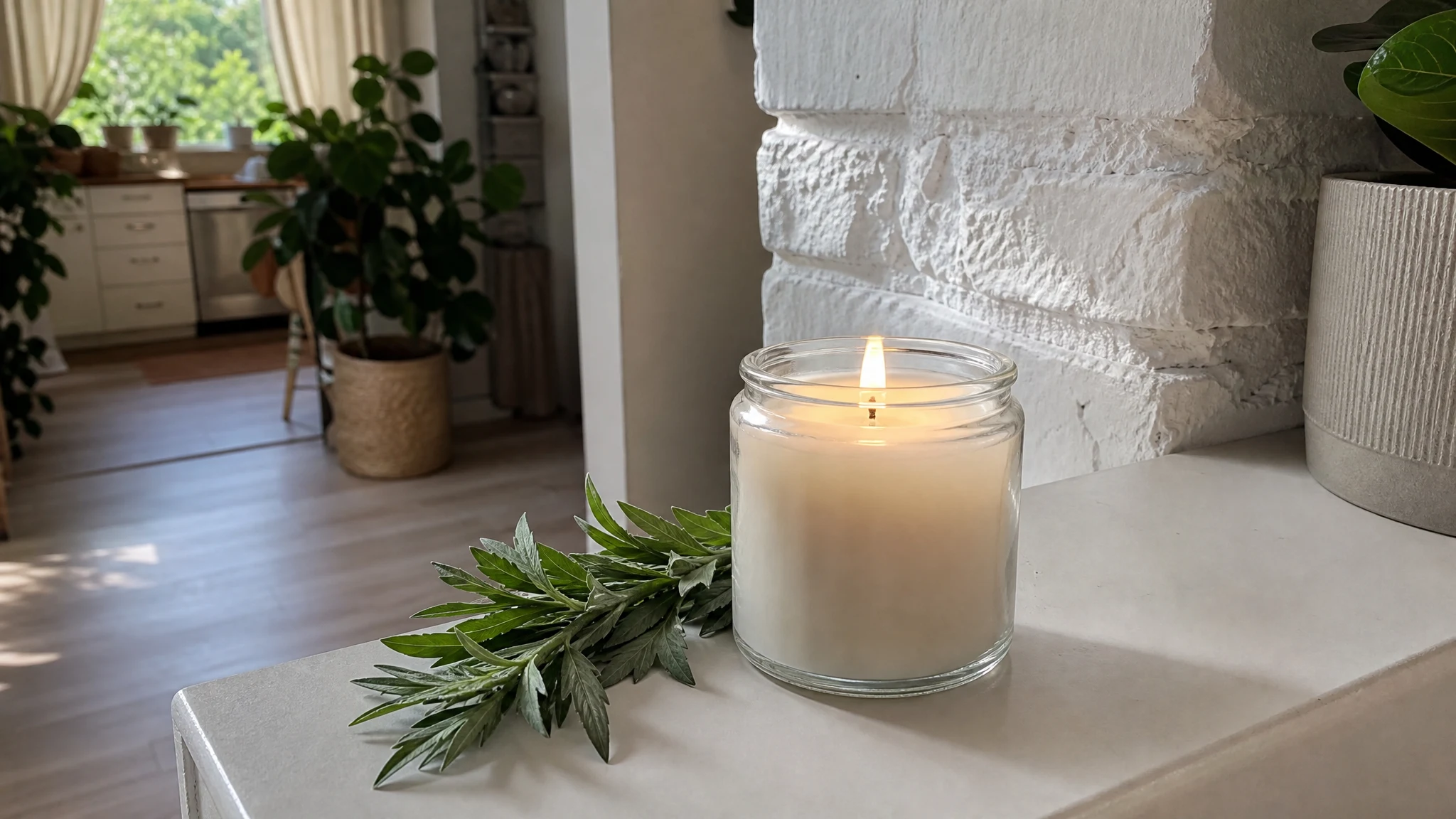
Mugwort Essential Oil vs Fragrance Oil for Candles
If you want a green, herbal candle that behaves predictably in wax, a fragrance oil made for candles is usually the lower-effort choice, and we say that as sellers of the essential oil only. Mugwort essential oil is a different kind of purchase: a single distilled plant material that comes with variable composition, its own safety limits and paperwork you have to ask for. This comparison sets out the documented differences, does the load arithmetic, and ends with who should buy which.
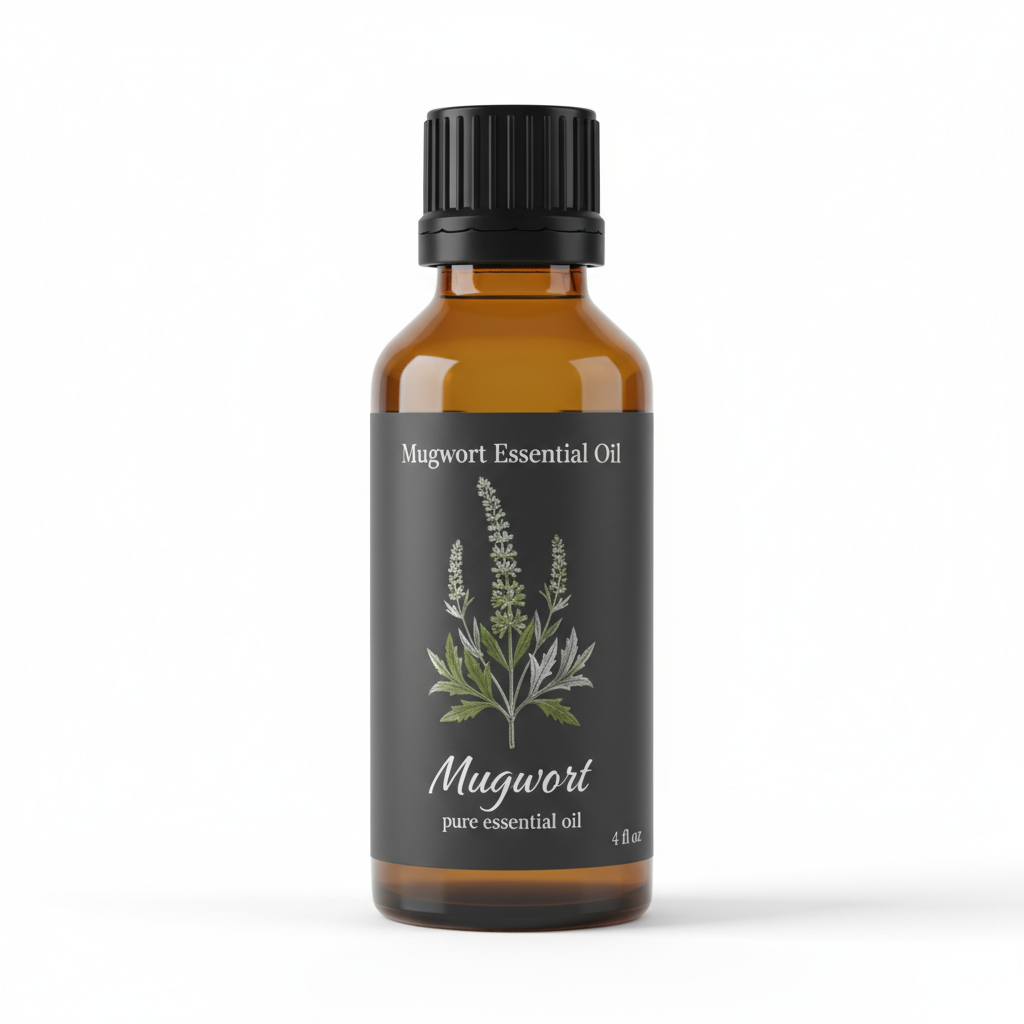
Mugwort Essential Oil
Our own Mugwort Essential Oil, in sizes from 0.5 oz to bulk.
From $16.99
Shop Now →What each product is
A mugwort essential oil is the volatile fraction of a plant, in our case sold neat and steam distilled according to the shop page. A product called "mugwort fragrance oil" is something else: a compounded mixture. The FDA's fragrance page (content current as of 28 February 2022) describes fragrance formulas as complex mixtures of many natural and synthetic chemicals, and a candle-supply retailer's 2025 guide describes fragrance oils as synthetic blends made from a mix of aroma compounds (Wholesale Supplies Plus, 15 December 2025). So a fragrance oil is not always fully synthetic, and nothing in the sources read defines what "mugwort" in a fragrance-oil name has to contain. It is whatever that supplier compounded to suggest the scent.
| Question | Essential oil | Fragrance oil |
|---|---|---|
| What is it? | One distilled plant material; composition follows species, origin, plant part and method (see the composition article) | A compounded mixture; composition is the supplier's formula |
| What does the label disclose? | Name of the oil; FDA's page says there is no regulatory definition of "essential oils" | May be listed simply as "Fragrance" |
| Where do the constituents appear? | On a GC-MS report you request | On the SDS and the supplier's IFRA certificate of conformity |
| Candle guidance | No wax maker ceiling written for it; start from the wax's stated limit and test | The one wax data sheet read for this article recommends fragrance developed for the wax |
| Batch-to-batch | Varies with the crop and distillation | Fixed by the formula, as far as the supplier holds it |
Disclosure: what a label must and need not say
On the FDA's page, fragrance and flavor ingredients can be listed collectively as "Fragrance" under the Fair Packaging and Labeling Act, because the law cannot be used to force disclosure of trade secrets; the page also says there is no regulatory definition for "essential oils" and that the law treats ingredients from plants the same as those from any other source. It adds that FDA does not have the same legal authority to require allergen labeling for cosmetics as for food (FDA, content current 2022). That page does not mention the Modernization of Cosmetics Regulation Act, so check current FDA text if you sell a finished cosmetic.
The practical consequence is that the label of a finished candle or fragrance oil tells you very little. The documents that tell you more are different for the two products. IFRA's guidance says a fragrance supplier issues a Certificate of Conformity stating that a specific fragrance mixture, up to a stated concentration, can be used in a specified product type under a named Amendment, and that it does not replace a safety assessment. Where IFRA has a Standard on a raw material, the supplier should not issue a certificate as such; instead, the important information to pass on for an essential oil is which IFRA-restricted materials it contains, because that governs the maximum use (IFRA, 2023). For mugwort the restricted compound in question is thujone, covered in our safety article. A buyer who needs a composition report from us should ask for it in writing before ordering; the COA we publish lists a relative density of 0.895 and a refractive index of 1.4750 for its batch and no constituents.
Candles: where the wax maker's sheet decides
For one soy container wax, the technical data sheet (version 5.0, revised 26 August 2020; the sheet does not name its manufacturer) says the wax "may be used with fragrance at levels up to 10-12%, however fragrance which is specifically developed for use with natural waxes is highly recommended". It warns that some fragrances can cause bleeding, poor surface finish or poor flame quality, that wick choice is "paramount", that test burning should follow 48 hours after pouring, and that users must make their own tests. That sheet is about one wax and says nothing about mugwort. A 2026 candle-retailer guide gives flash points of roughly 40 to 60 C for essential oils and 80 C and above for fragrance oils (seller claim, general figures); it also gives a 6% to 10% candle load. We hold no flash point for our oil: a buyer who needs one should request the SDS in writing, and the candle buying guide covers what to ask.
Worked arithmetic, assuming the percentage is of wax weight and using the 0.895 relative density from the COA batch: 1 lb of wax is 453.6 g. At 6% that is 27.2 g of oil (about 30 ml, roughly 600 drops); at 10% it is 45.4 g. One ounce of oil is about 26.5 g, so a 1 oz bottle falls just short of a pound of wax at 6% and covers about 0.58 lb at 10%. A 250 g pour at 6% needs 15 g, a little over half an ounce. These loads come from fragrance oils; whether a mugwort essential oil should go in at those percentages is not something any source we read says, and we do not recommend starting at the top. The IFRA row for candles (Category 12) rests on negligible skin exposure and sets no restriction on most ingredients, though the thujone Standard still lists 9.5% for the finished product (IFRA, 2024); IFRA's candle row does not address burn quality or inhalation, so do not read it as a clearance for any load. We have not poured or burned a candle with this oil, and the dilution calculator article works the same sums by container size.
When the fragrance oil is the better choice
- You need the same scent in every pour across a year of production: a compounded formula is fixed in a way a crop-dependent distillate is not.
- You want a wax maker to have recommended the fragrance for the wax; essential oils usually have no such recommendation.
- The finished candle must carry a single, simple fragrance declaration and your supplier will issue a certificate for your product category.
- Budget decides: a retailer's 2026 guide rates essential oils as high cost depending on crop yields and fragrance oils as low to moderate (seller claim).
When the essential oil is the better choice
- You want one botanical material on the ingredient list and will accept a weaker or less predictable throw.
- You are blending a perfume accord and want a single identifiable raw material (see perfumery with mugwort).
- You are prepared to request the GC-MS and SDS, and to run your own wick and burn tests.
Our copy says to avoid use during pregnancy, keep the oil away from children and pets, and not for internal use; fragrance oils carry their own SDS warnings, so read them before anyone else handles the material. If your question is a legal one about labelling a candle, take it to a product-safety attorney or regulatory consultant.
Mugwort Essential Oil
Mugwort Essential Oil from our own shop, in sizes from 0.5 oz to bulk.
From $16.99
Shop Now →Sources & Further Reading
- US Food and Drug Administration. Fragrances in cosmetics (content current 28 February 2022). fda.gov/cosmetics/cosmetic-ingredients/fragrances-cosmetics
- IFRA, 2023. Guidance for the use of IFRA Standards, 51st Amendment (sections on candles, certificates and natural complex substances). IFRA guidance PDF
- IFRA, 2024. Standards, 51st Amendment compilation, Standard "Thujone", pp. 309-311. ifrafragrance.org 51st Amendment standards
- Soy container wax technical data sheet, version 5.0, revised 26 August 2020 (manufacturer not named on the sheet). cdn.shopify.com Soy_Wax_Container_Technical_Data_Sheetv5.0.pdf
- Wholesale Supplies Plus, 15 December 2025. Fragrance vs essential oil (retailer guide, seller claims). wholesalesuppliesplus.com/blogs/articles/fragrance-vs-essential-oil
- NI Candle Supplies, 7 July 2026. Fragrance oils vs essential oils, the maker's guide (retailer guide, seller claims). nicandlesupplies.com fragrance-oils-vs-essential-oils guide