Essential Oil Candle Labels: What You Must Include
The fire-safety warning that most candle makers print on their labels is not the part of candle labeling that federal law spells out. What the rules do require is more ordinary: what the product is, who made it, how much is in the container, and a lead limit for metal-cored wicks. If you are making candles scented with an essential oil such as mugwort, it helps to sort your label into what is required, what is conditional and what is simply good practice.

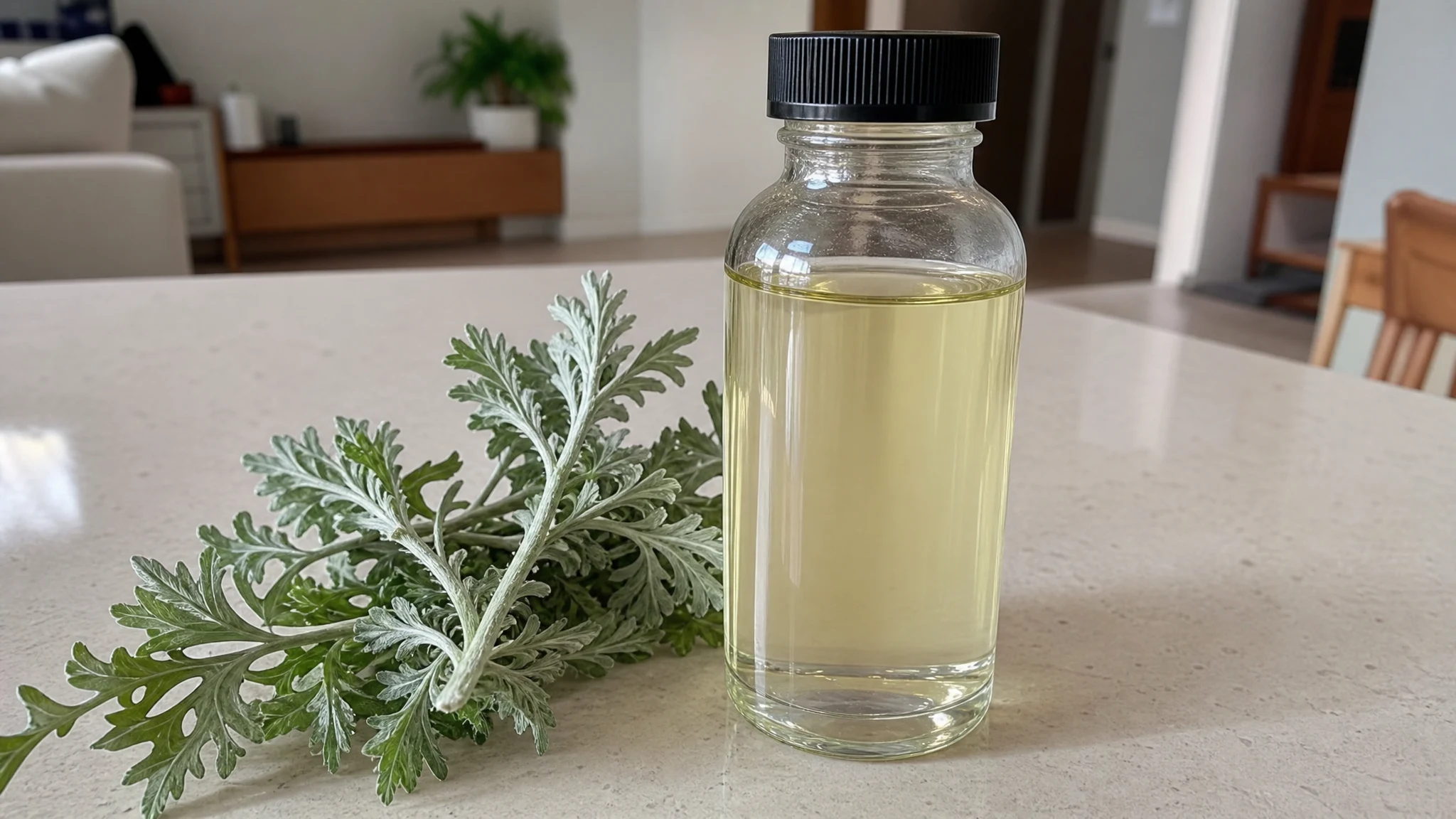
Mugwort Essential Oil
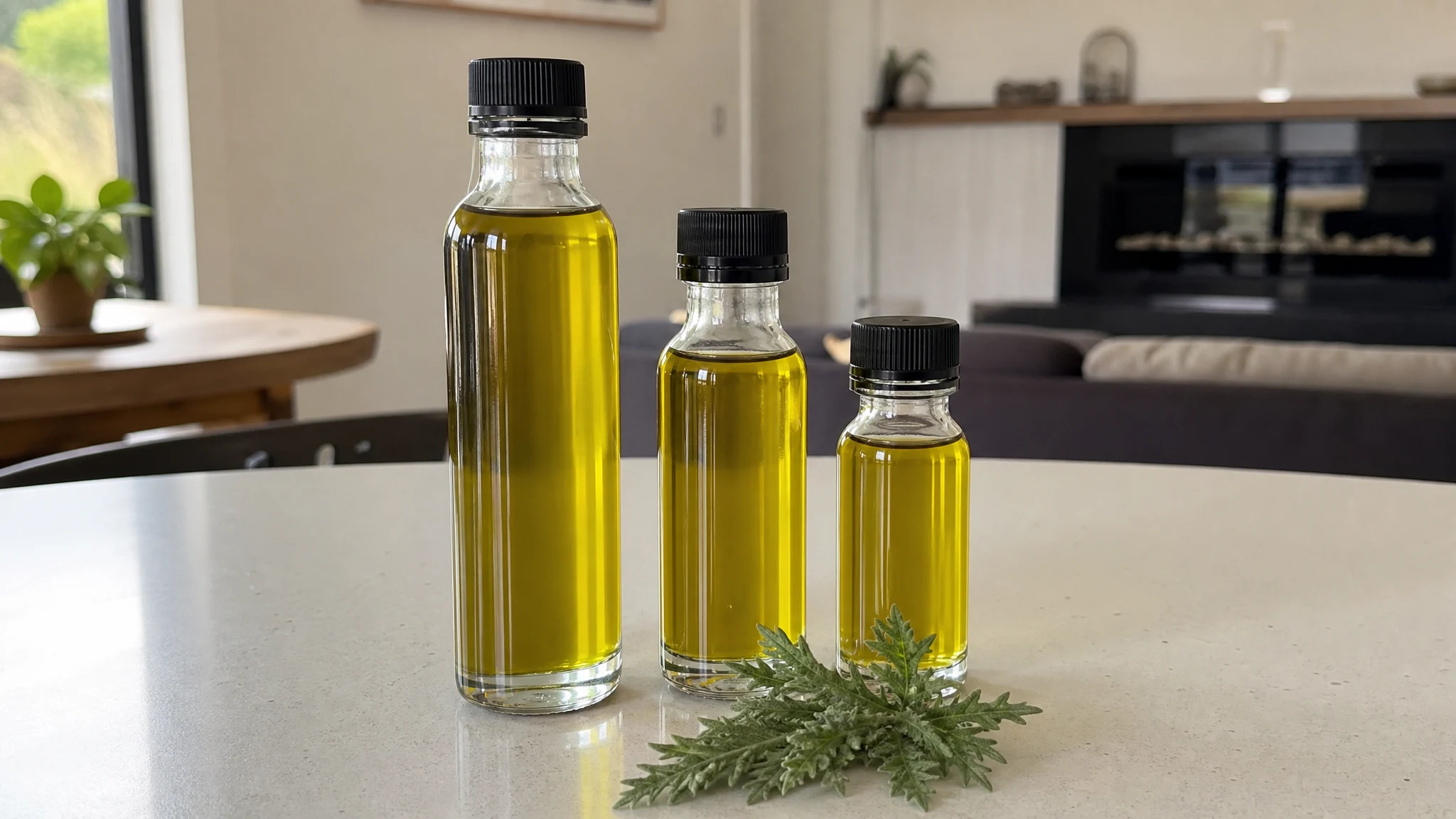
Our own Mugwort Essential Oil, in sizes from 0.5 oz to bulk.
From $16.99
Shop Now →What the rules require
The Fair Packaging and Labeling Act covers consumer commodities other than food, drugs, therapeutic devices and cosmetics. Under it, a label shows the identity of the product, the name and place of business of the maker, packer or distributor, and the net quantity of contents (Federal Trade Commission). We read a candle as one of those commodities, which is an inference rather than a quote, so confirm it with someone who handles product compliance. The detail lives in the regulations. The name and place of business have to be specified conspicuously (16 CFR 500.5), and the net quantity has to sit as its own item on the principal display panel, in the bottom 30 percent of it, with a different rule for very small panels (16 CFR 500.6).
Wicks are the other firm requirement. The Consumer Product Safety Commission says metal-cored candlewicks, and candles that use them, must not contain more than 0.06% lead by weight in the core if they were made or imported on or after 15 October 2003. Manufacturers and importers issue a general certificate of compliance for those, citing 16 CFR 1500.17(a)(13), and candles with nonmetal wick cores have no certification requirement (CPSC, Candles Business Guidance). Watch the paragraph number: in the regulation text, (a)(13) is the wick provision.
What depends on the candle
CPSC adds that candles containing a hazardous substance as the Federal Hazardous Substances Act defines it must carry cautionary labeling. Whether a particular scented candle crosses that line is not something the guidance answers, and it does not mention essential oils at all. The oil's safety data sheet is the place to start, and a product-safety attorney or an accredited lab is the right person to make the call for your finished candle. We publish a Certificate of Analysis rather than a safety data sheet, so if you need one for mugwort oil, please ask us in writing through the contact page. US hazard communication rules expect manufacturers and importers to provide one to distributors and employers with a first shipment and on request, so you will find asking is routine.
The warning label everyone expects
ASTM F2058 is the standard specification for candle fire safety labeling, and CPSC lists it among the voluntary standards for candles. Its published abstract says the warning goes on the unit of sale where the consumer can see it at the point of sale, and it must not be covered or removed by the maker, distributor or retailer. The text version pairs the safety alert symbol with the word WARNING in uppercase boldface, and a version with pictograms is also described. The standard states that it does not address any other labeling requirements. The full text is sold by ASTM, so the exact artwork, type sizes and wording for each hazard live there.
Our view is that you should follow it even though it is called voluntary. Shoppers have come to expect it, it states the basics in a form people recognise (burn within sight, keep away from things that can catch fire, keep away from children and pets) and it takes a few minutes to get right.
Claims are the place essential oils attract attention
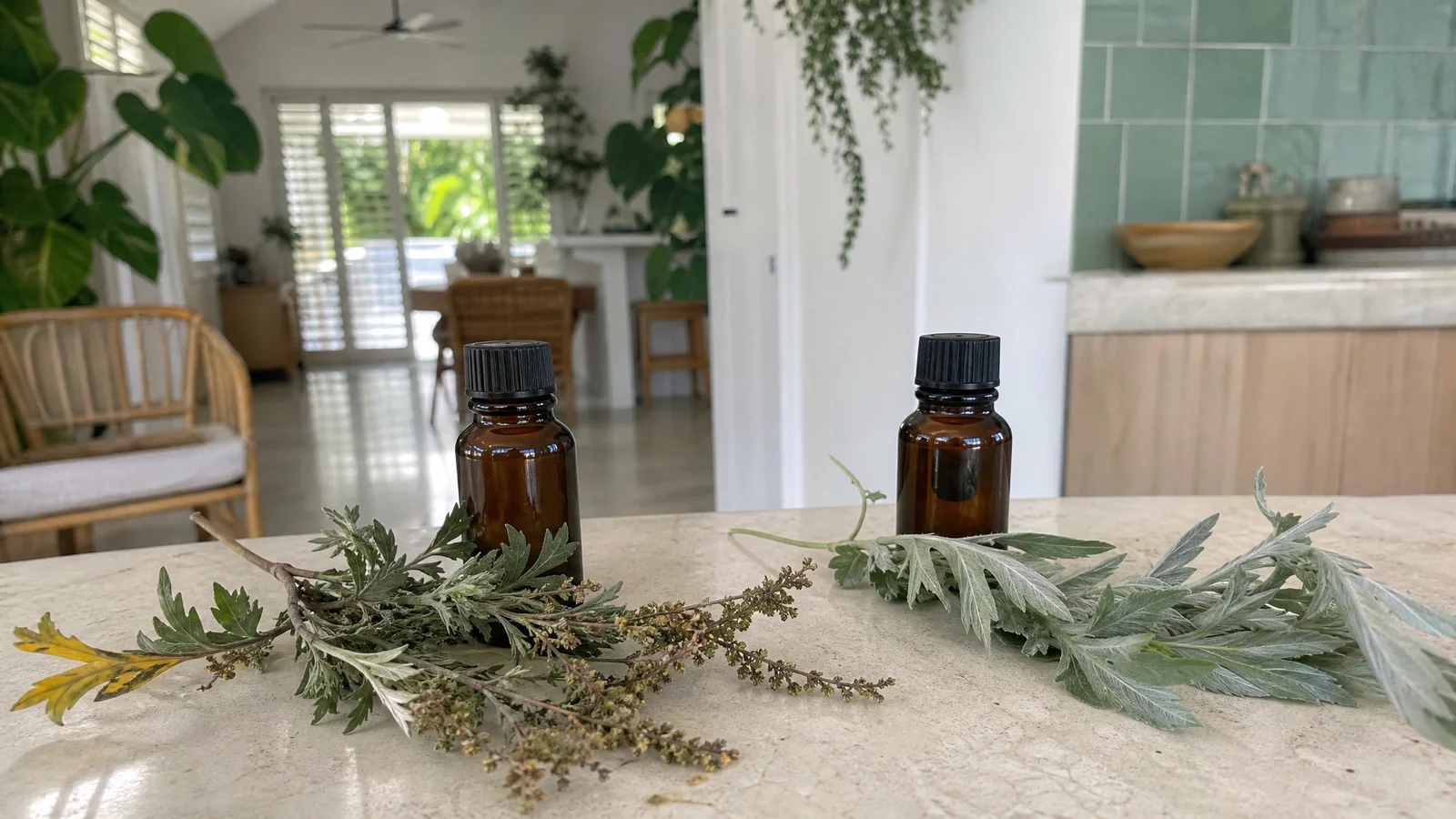
Mugwort carries a lot of folklore, and it is tempting to write words like "cleansing", "protective" or "for restful sleep" on a label. FDA explains that whether an aromatherapy product is regulated as a cosmetic or a drug depends mainly on how it is intended to be used, and intent is judged from claims, advertising and what consumers expect. It also notes that some fragrance products, scented candles among them, fall under CPSC rather than FDA. A label that describes what the object is does the most for you: a scented candle, the wax, the scent name, the net weight and the burn instructions. The plant's history can live on your website, with a link to a source, rather than as a promise on the jar. That is how we treat our own mugwort oil too: we describe its aroma and its craft uses, and make no outcome claims.
Where the oil supplier comes in
The Certificate of Analysis for the batch we publish gives a relative density of 0.895, a refractive index of 1.4750, the extraction method and a best-by date. It is a handy reference when you are keeping a record of your materials. If your candle formula needs more, such as a flash point or constituent data, ask in writing before you order and keep the reply with your batch records. Your wax maker's data sheet is the source for how much scent the wax will carry; our candle-making guide and the article on choosing a wax take that further. If you plan to make candles to sell, the wholesale page describes sample bottles for testing the oil in your own product.
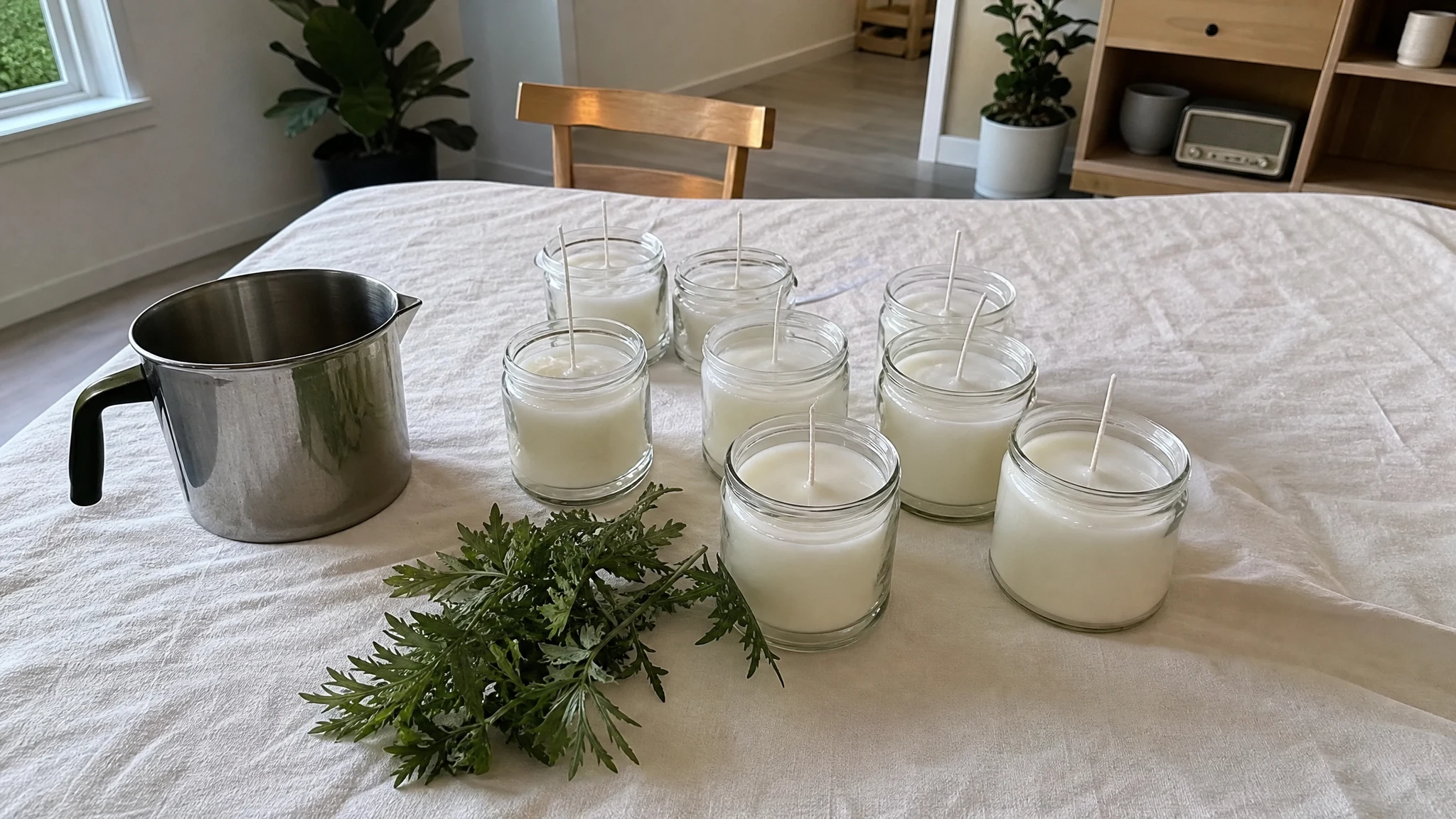
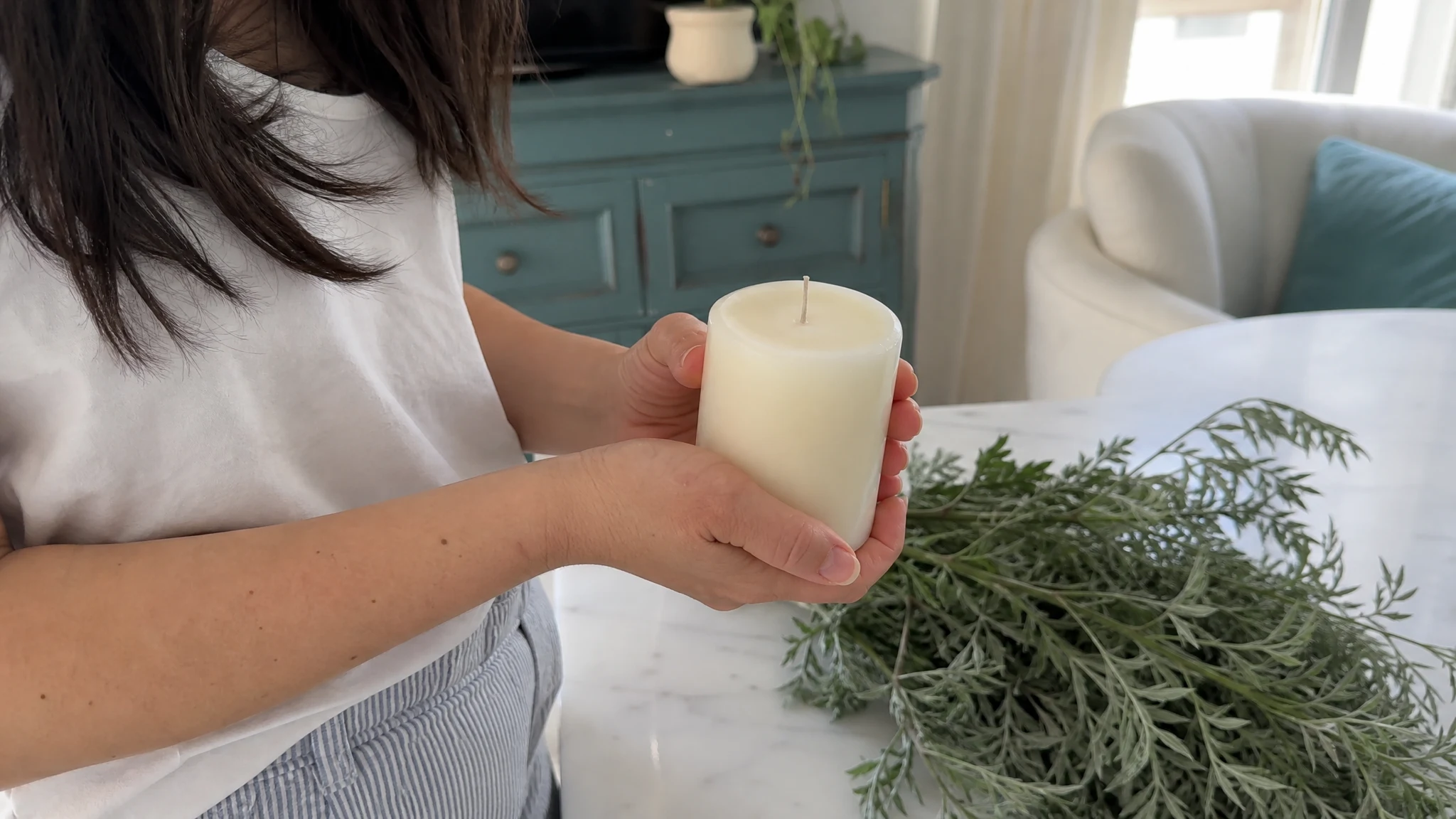
A practical way to start is to lay a plain candle in front of you with its jar, lid and wick, and draw a rough rectangle on paper for each surface you can print on. Decide which side faces the shopper first, because that is your principal display panel, and put the product name and the net weight there before anything decorative goes on. Then walk around the jar and decide where the maker's name, the burn instructions and the scent name live. A paper mock-up with real words is much easier to fix than a printed run.
Sort your label by those three groups before you design it: the required items first, then whatever applies to your particular candle, then the warning and the careful wording. Anything left over goes to an attorney who handles consumer product safety, and that conversation is far easier when the label is already tidy.
Mugwort Essential Oil
Mugwort Essential Oil from our own shop, in sizes from 0.5 oz to bulk.
From $16.99
Shop Now →Sources & Further Reading
- Fair Packaging and Labeling Act | Federal Trade Commission. www.ftc.gov
- 16 CFR § 500.5 - Name and place of business of manufacturer, packer or distributor. Legal Information Institute. www.law.cornell.edu
- 16 CFR § 500.6 - Net quantity of contents declaration, location. Legal Information Institute. www.law.cornell.edu
- 16 CFR § 1500.17 - Banned hazardous substances. Legal Information Institute. www.law.cornell.edu
- Candles Business Guidance | CPSC.gov. www.cpsc.gov
- F2058 Standard Specification for Candle Fire Safety Labeling. ASTM International. store.astm.org
- Aromatherapy | FDA. www.fda.gov
- 29 CFR § 1910.1200 - Hazard communication. Legal Information Institute, Cornell Law School. law.cornell.edu