Diffusing Mugwort Oil: Why We Point You Elsewhere
It is a fair question, because most of us own a diffuser and most essential oils end up in one sooner or later. Our straight answer is that we do not list diffusing among the uses of our mugwort oil, and we would steer you to the uses that suit it better: candles, incense, potpourri and a drop or two as an accent in a perfume. Here is the reasoning, so you can decide for yourself.

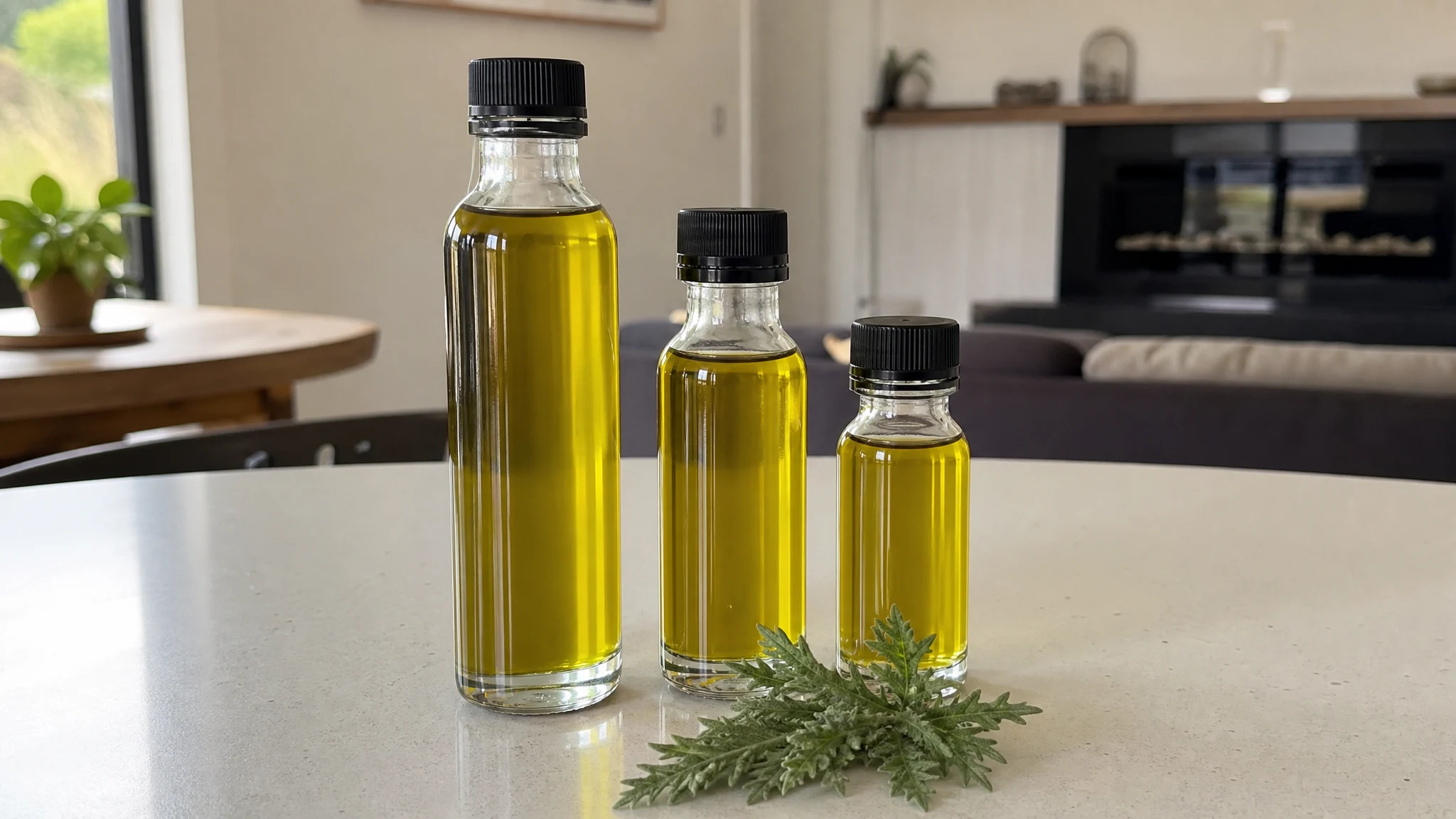
Mugwort Essential Oil
Our own Mugwort Essential Oil, in sizes from 0.5 oz to bulk.
From $16.99
Shop Now →What mugwort oil is good at
Mugwort oil is a strong character. We describe the aroma as green, bitter and camphoraceous, with sage-like, herbaceous facets and a curious sweet undertone. That intensity is a gift in a candle or an incense blend, where a small amount goes a long way and the other ingredients shape the result. In a diffuser, the oil is released as a fine mist into a room people sit and sleep in, and it has no other ingredients to soften it. That is a different situation from a candle, and not one we have a use to recommend.
What the diffuser research covers
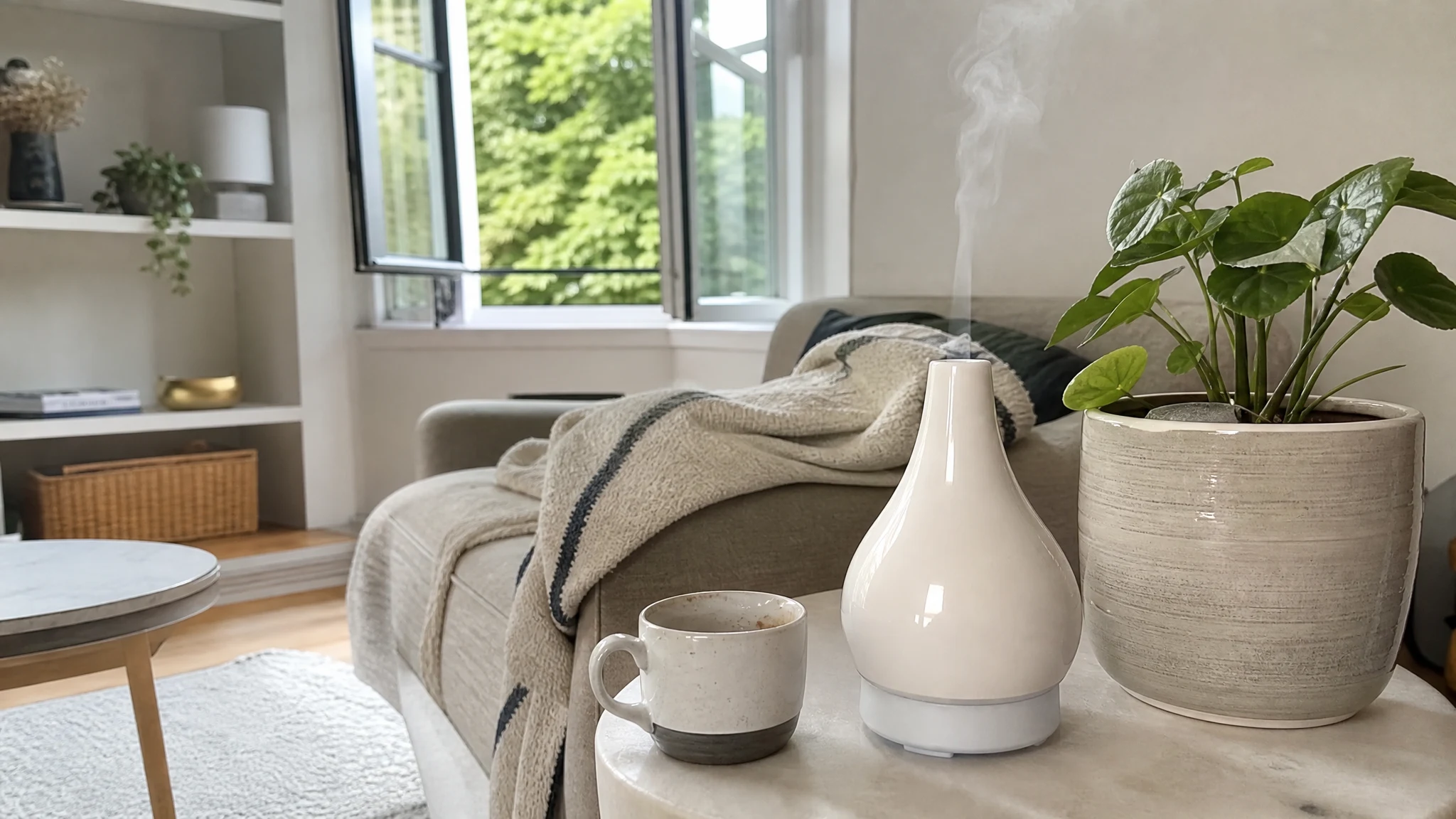
There is no published study of mugwort oil in a diffuser that we could find, so the nearest evidence concerns other oils. A Japanese team measured the air about half a metre from a commercial ultrasonic diffuser running 0.5 ml of oil in 350 ml of water. Volatile compounds from lavender, melissa, tea tree and eucalyptus oils were in the tens to hundreds of parts per trillion. The authors considered that low enough for repeated use, but noted a more detailed inhalation study would be needed for a formal safety assessment (Itoh et al., 2022).
It is a useful snapshot and it deserves to be read as one. It measured four oils in one office with one machine, not mugwort, and it did not look at thujone or at any health outcome. What it cannot do is tell us how a thujone-bearing oil behaves in the air of a bedroom.
Why thujone makes us cautious
Thujone is the compound that sets some Artemisia oils apart. In laboratory work, alpha-thujone was toxic to mice and reduced GABA-activated currents in rat neurons (Höld et al., 2000). That research used animals and cell tissue, not breathing people, and it is a reason for care rather than a prediction. How much thujone an oil carries varies enormously. A leaf oil of Artemisia argyi had around 10% combined thujones (Guan et al., 2019), while a cultivated Artemisia vulgaris oil from Brazil listed none (Malik et al., 2019). Without a report for your specific bottle, you simply do not know where you are on that range.
The fragrance industry's thujone standard is written for finished products, not for diffused air, and sets different caps by category: 9.5% for candles and incense, 0.13% for the liquid in a reed diffuser (IFRA, 51st Amendment Standards compilation, Thujone Standard). Nothing in it addresses an ultrasonic water diffuser. As arithmetic only, if an oil were 10% thujone, 0.13% thujone would allow about 1.3% oil in a reed-diffuser liquid. That is a sum on an assumed number, not a limit for ours. The spread between candles and diffuser liquid is the helpful part: it shows why we send mugwort toward the former.
Households with pets, children or anyone pregnant
This is where we are firm. We recommend keeping our oil away from children and pets, and avoiding it during pregnancy. The Merck Veterinary Manual points out that active diffusers, the ultrasonic and nebulizing kind, put droplets into the air that settle on fur and feathers, adding an exposure beyond simple inhalation, especially for cats and birds (Toxicoses From Essential Oils in Animals - Toxicology - Merck Veterinary Manual). Our pets article goes through that in more detail. Anyone with asthma or a heart or lung condition should ask their physician before putting any oil into room air.
A note on strong-smelling oils
Some oils are easy to love at arm's length and a lot to live with in a closed room. Mugwort is one of them. Open the bottle and take one slow sniff from a hand's width away, and you will notice how much character comes out of a single breath: the green edge, the bitterness, that camphor-like lift. Now imagine that same character filling a bedroom for an hour. A plain sniff from the bottle is usually all you need to feel why we point people elsewhere.
What we would do instead
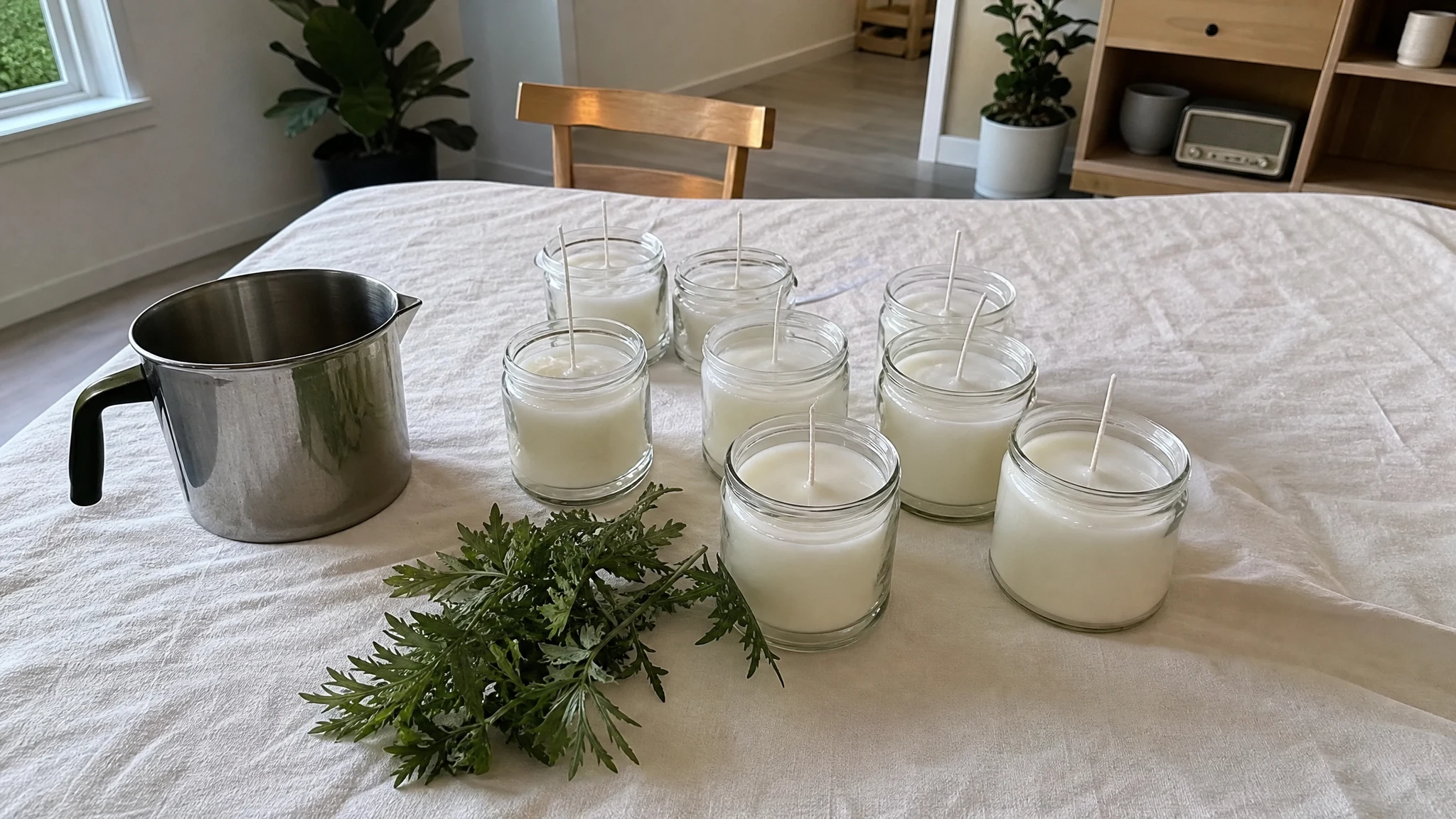
- Enjoy the scent in a candle you pour yourself, using the loads we work through in how to make mugwort candles.
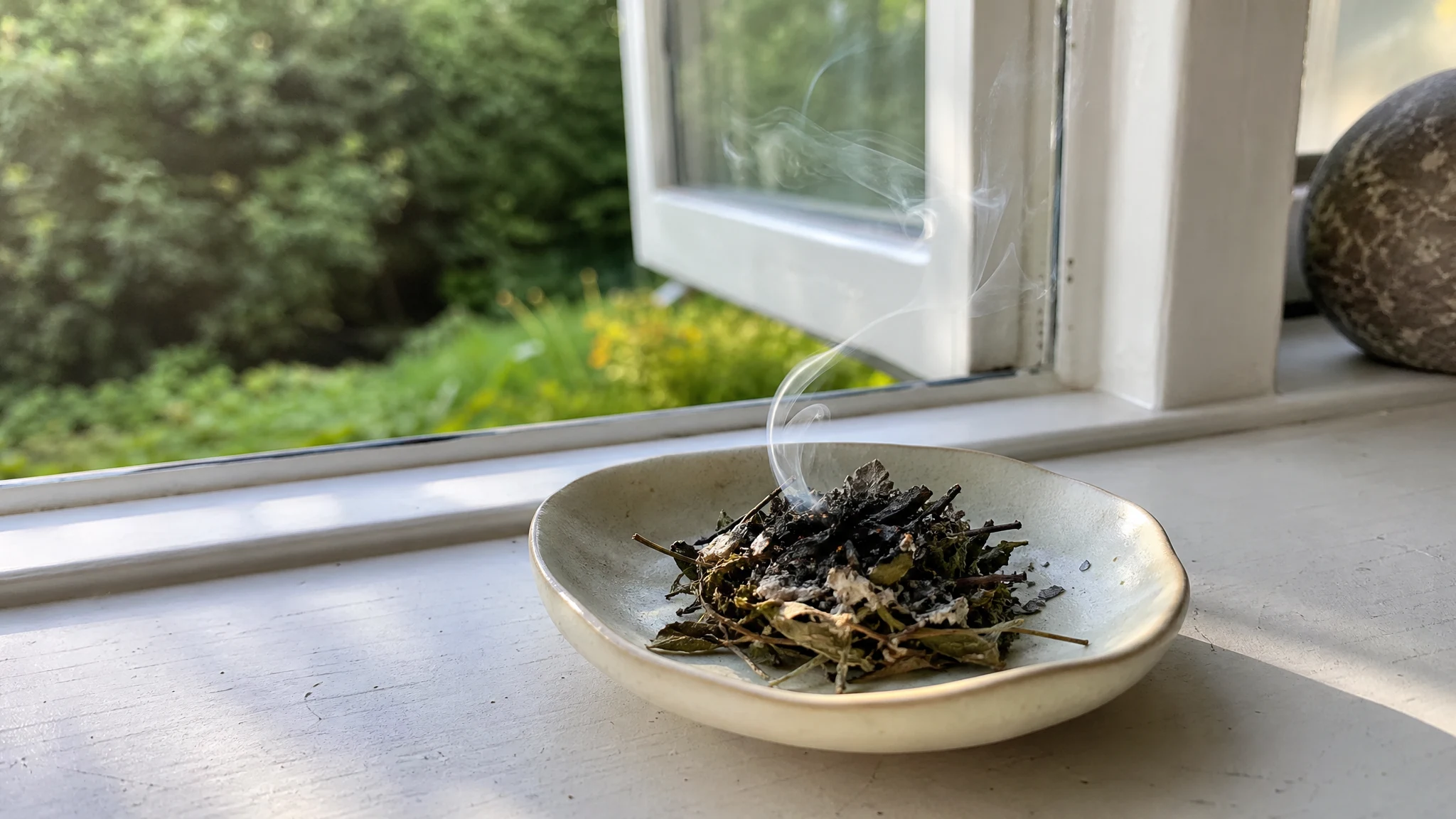
- Build a loose incense or potpourri blend, such as the ones in mugwort potpourri.
- Smell it on a blotter strip, diluted, when you are deciding what it pairs with.
We also steer clear of what a diffuser tempts people to claim. The FDA is clear that claims such as helping you sleep or easing anxiety are drug claims, and that coming from a plant does not exempt a product (Aromatherapy | FDA). We sell an external cosmetic oil for fragrance craft and make no such claims. Our safety article covers the handling side.
If what you love is the herbal character of a room, there are quieter ways to get close. A candle or a jar of potpourri gives off scent slowly and stays where you put it, and you can move it to another room, or put it out, in a second. That kind of control is exactly what a diffuser lacks when it has been running for an hour in a closed bedroom. Whatever you choose, keep the bottle capped between uses, because a mugwort aroma that escapes into a cupboard has a way of reaching everything else on the shelf.
If you still want mugwort in the air of a particular room, a physician and, where relevant, a veterinarian are the people to ask first, and a written thujone figure for your bottle is worth having in hand before the first drop.
Mugwort Essential Oil
Mugwort Essential Oil from our own shop, in sizes from 0.5 oz to bulk.
From $16.99
Shop Now →Sources & Further Reading
- Itoh T, et al. 2022. Examination of VOC Concentration of Aroma Essential Oils and Their Major VOCs Diffused in Room Air. PMC8910502
- Höld KM, et al. 2000. Alpha-thujone (the active component of absinthe): gamma-aminobutyric acid type A receptor modulation and metabolic detoxification. PMC18101
- Guan X, et al. 2019. Chemical Composition and Antimicrobial Activities of Artemisia argyi Lévl. et Vant Essential Oils Extracted by Simultaneous Distillation-Extraction, Subcritical Extraction and Hydrodistillation. PMC6384757
- Malik S, et al. 2019. Chemical Profile and Biological Activities of Essential Oil from Artemisia vulgaris L. Cultivated in Brazil. PMC6631396
- IFRA, 51st Amendment Standards compilation, Thujone Standard. IFRA Standards
- Toxicoses From Essential Oils in Animals - Toxicology - Merck Veterinary Manual. merckvetmanual.com
- Aromatherapy | FDA. fda.gov