Mugwort Candle Oil: Does Flash Point Really Matter?
Open a few fragrance spec sheets and the flash point jumps out, a tidy number in degrees that looks like it ought to decide everything. For a mugwort candle it decides less than you would think, and the questions that do matter are ones you can put to any seller in a single email.

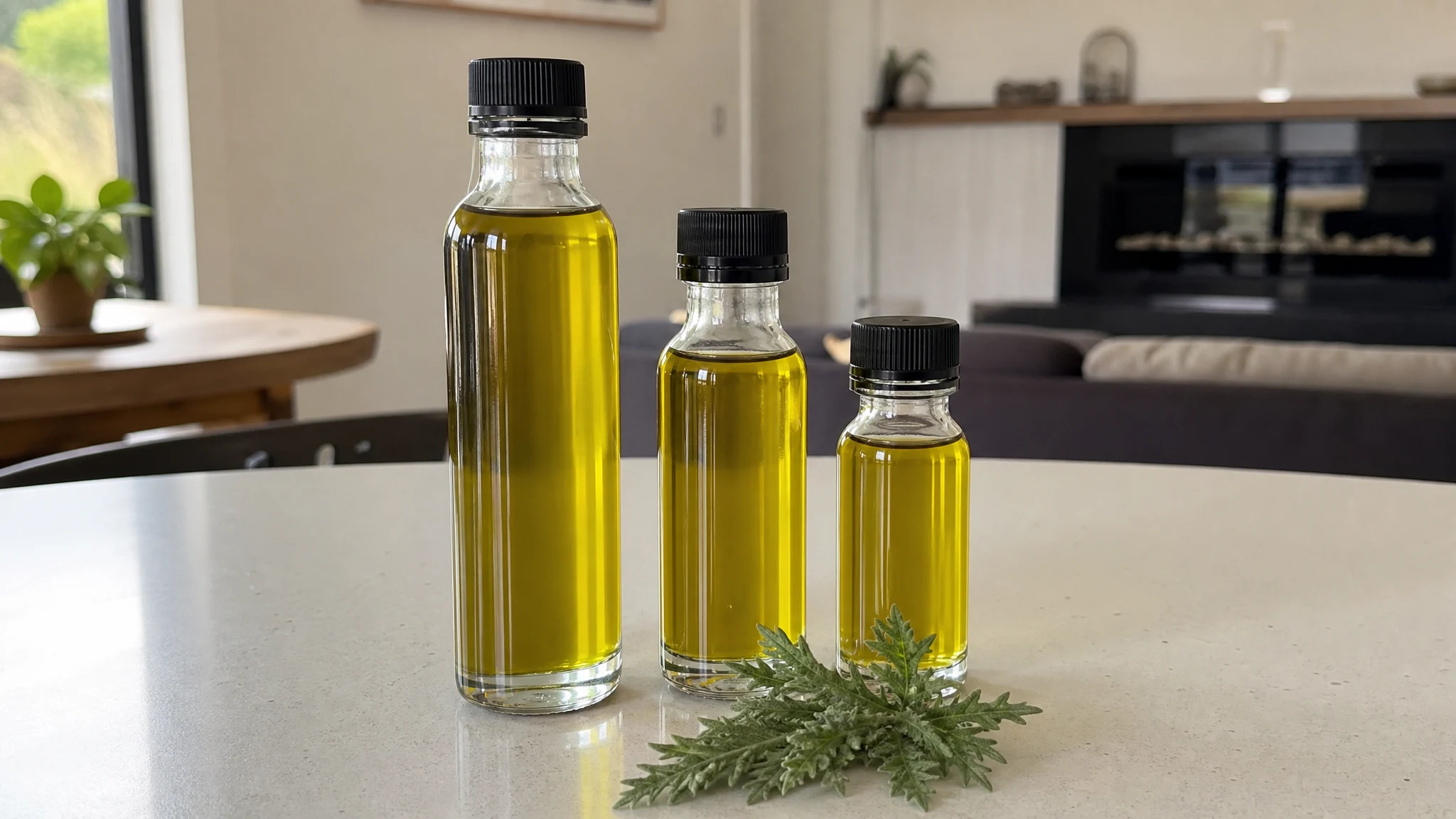
Mugwort Essential Oil
Our own Mugwort Essential Oil, in sizes from 0.5 oz to bulk.
From $16.99
Shop Now →What a flash point is, and what it is not
A flash point is a laboratory measurement: the lowest temperature at which a sample gives off enough vapor for a test flame to ignite it under set conditions. The US Consumer Product Safety Commission's flashpoint method, written for aerosol-type containers, defines it in just those terms. It tells you how readily vapor ignites near a flame. It does not tell you how fast an oil evaporates from warm wax.
That second point is the one candle makers tend to mix up. A candle supplier's guide puts it plainly: flash point is about ignition from an open flame, and a fragrance does not "burn off" at its flash point, because scent loss follows boiling point and evaporation. So a low number on the sheet is not a prediction that your candle will smell thin.
Where the number does earn its place
Gel candles are the exception. The same supplier says its gel wax holds up to 6% fragrance and that only non-polar fragrances with a flash point above 77 C belong in it. If you are making gel, a written flash point is a precondition. For container and pillar waxes, which are far more common, the same retailer's advice is that most hold no more than 12% fragrance oil and that 10% is a sensible working figure for fragrance oils. Those are candle-supplier figures for fragrance oils in general, so treat them as the outer frame rather than a mugwort recipe. Wax, wick and vessel set the real limits, and our guides to the best wax for mugwort candles and making them go through those choices.
What we can tell you about ours
We sell one mugwort oil, steam-distilled and sold neat. The Certificate of Analysis we publish for one batch lists a relative density of 0.895 and a refractive index of 1.4750 at 20 C. Density is the useful one for candle work: it is the reason to weigh the oil in grams rather than count drops. We do not state a flash point, a candle load rate or a burn behavior for the oil, so if your process depends on any of them, ask us in writing through the contact page and have the answer in writing before you pour a batch.
Four questions for any seller, in order
- Does the Latin name on the label match the batch paperwork? Mugwort oils are sold under more than one Artemisia name, and the two documents should name the same plant. Our label-reading article shows how to line them up.
- Is there a thujone figure for this lot? Published analyses vary widely. One hydrodistilled Chinese leaf oil had alpha-thujone at about 8% and beta-thujone at about 2%, while a cultivar study reported thujone at 57% in one cultivar and eucalyptol at 26% in another. Those are other oils, but they show why a lot-specific number is worth asking for.
- Is there a safety data sheet, and does it name the flash point method? OSHA's list of the sixteen sections of a data sheet puts the flash point in section 9, so it is a normal thing to find there. A number without a method is hard to compare with anyone else's.
- What is the density? Ours is 0.895 on the batch certificate. It is what lets you turn a percentage into grams.
Where thujone sits in a candle
The fragrance industry's IFRA Standard on thujone caps it at 9.5% of a finished candle (Category 12). The cap is on thujone in the finished product, so the sum is oil load times the oil's thujone share. As arithmetic only, take the roughly 9.9% combined thujones in that Chinese leaf oil and a generous 10% oil load: the candle would carry about 1% thujone, comfortably under the cap. Even a very thujone-rich oil would stay within it at ordinary loads, because the wax runs out of capacity long before the thujone cap does. Skin products and diffusers are a different story, which is why our dilution rate article sets the categories side by side.
Before you pour a first batch
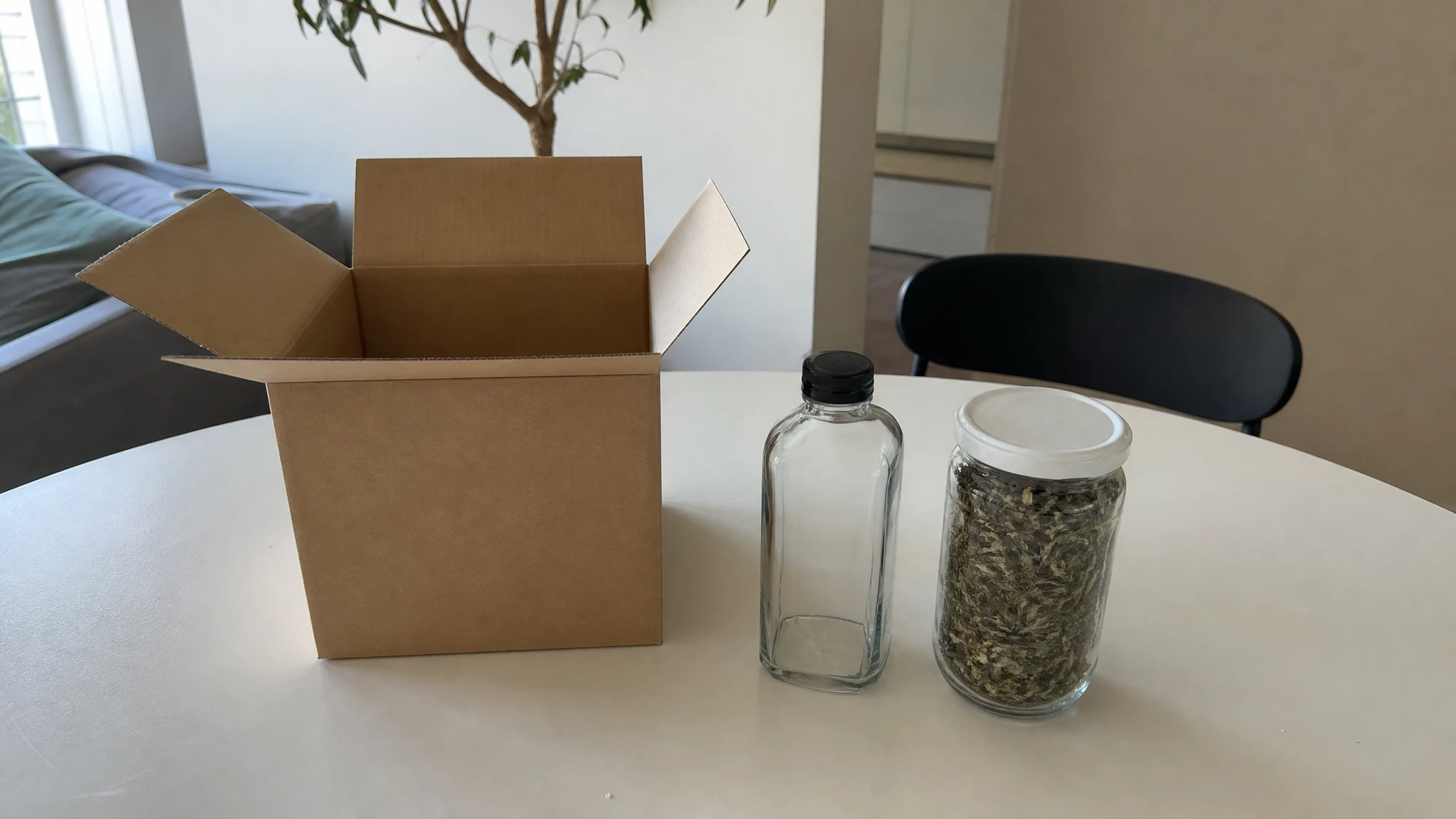
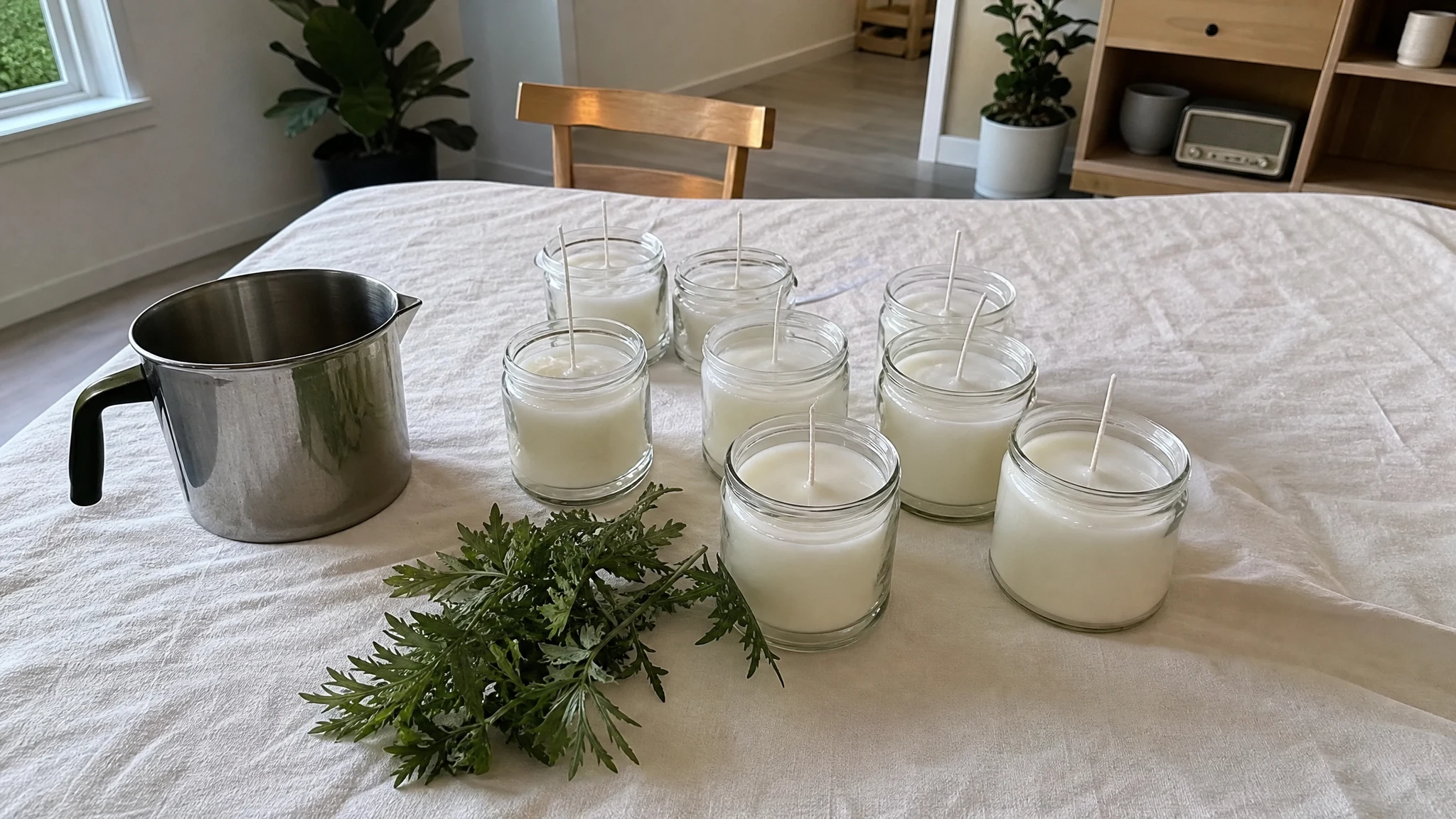
Clear the table and lay out everything you need before the wax is hot: a heatproof surface, your scale, a labelled jar for each trial and a notebook. Weigh the oil in grams, write the number down, and make one small candle before you commit to a dozen. Let it cool where nobody will bump it, then light it in a room where you can keep an eye on it. A single test candle teaches you more than a week of reading, and it costs you a few minutes.
Keep it a careful fire
Essential oils are flammable, and the Tisserand Institute advises keeping them away from open flame. That is a good habit around a pouring station: cap the bottle, pour on a heatproof surface and watch the first small candle burn before you make a dozen. If the candle will be sold, labeling essential oil candles in the US comes before the first sale, and if the throw disappoints, our scent throw notes cover the usual suspects.
In the end, the best preparation is a short list of written answers. A seller who can name the plant, the lot and the data sheet has told you most of what the flash point could.
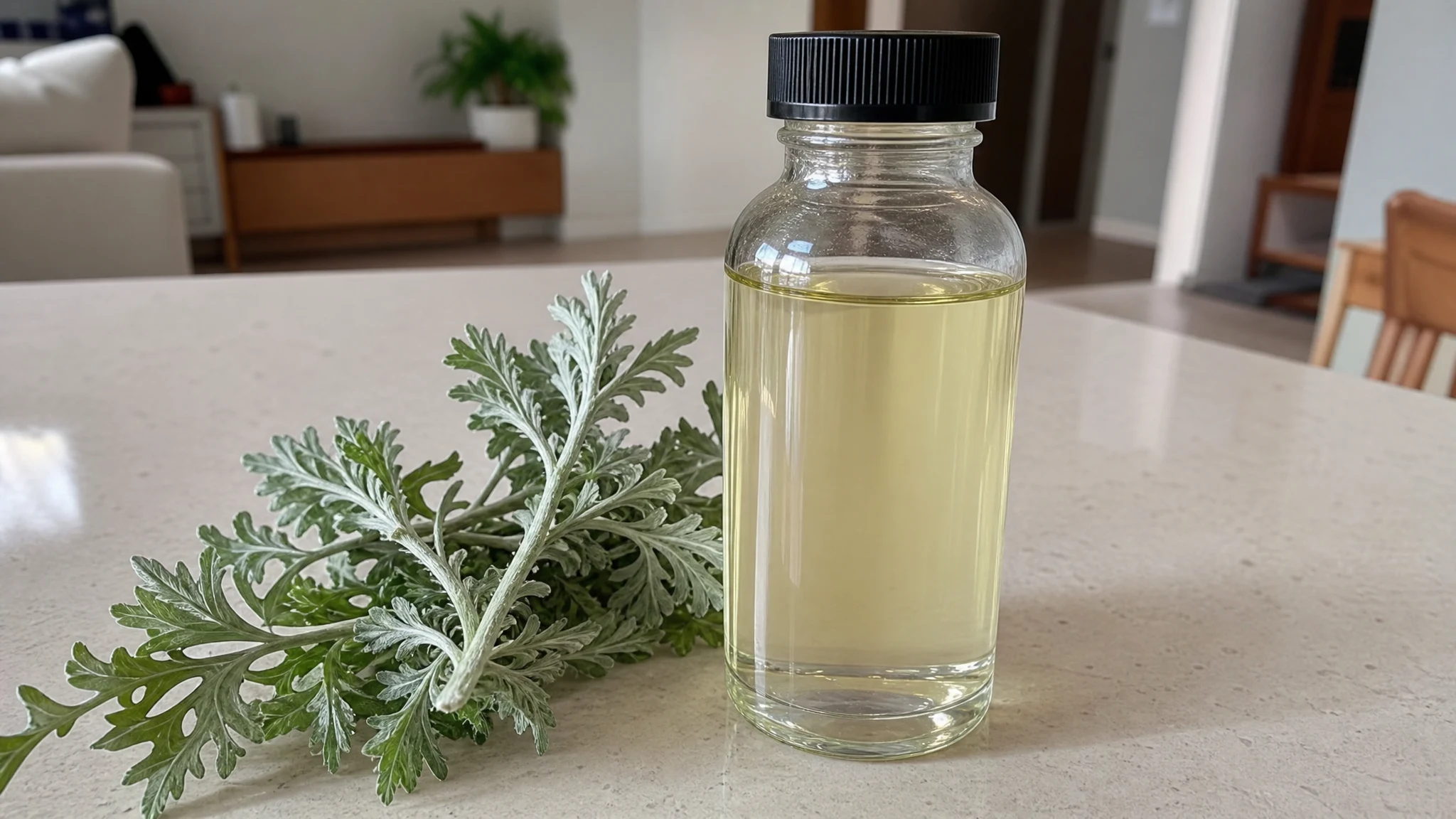
Mugwort Essential Oil
Mugwort Essential Oil from our own shop, in sizes from 0.5 oz to bulk.
From $16.99
Shop Now →Sources & Further Reading
- US Consumer Product Safety Commission, 16 CFR 1500.43a: Method of test for flashpoint of extremely flammable contents of self-pressurized containers
- Supplies For Candles: Understanding Fragrance Oil Flash Points
- Supplies For Candles: How Much Fragrance To Add To Candles
- OSHA, 29 CFR 1910.1200 Appendix D: Safety Data Sheets
- Chemical Composition and Antimicrobial Activities of Artemisia argyi Lévl. et Vant Essential Oils Extracted by Simultaneous Distillation-Extraction, Subcritical Extraction and Hydrodistillation
- Effects of drying methods on phenolic acids, flavonoids, and essential oils in three cultivars of Artemisia Argyi
- IFRA Standards, 51st Amendment (January 2024), Thujone Standard
- Tisserand Institute: How to Use Essential Oils Safely