Mugwort Candle Blends: 5 Structures to Build From
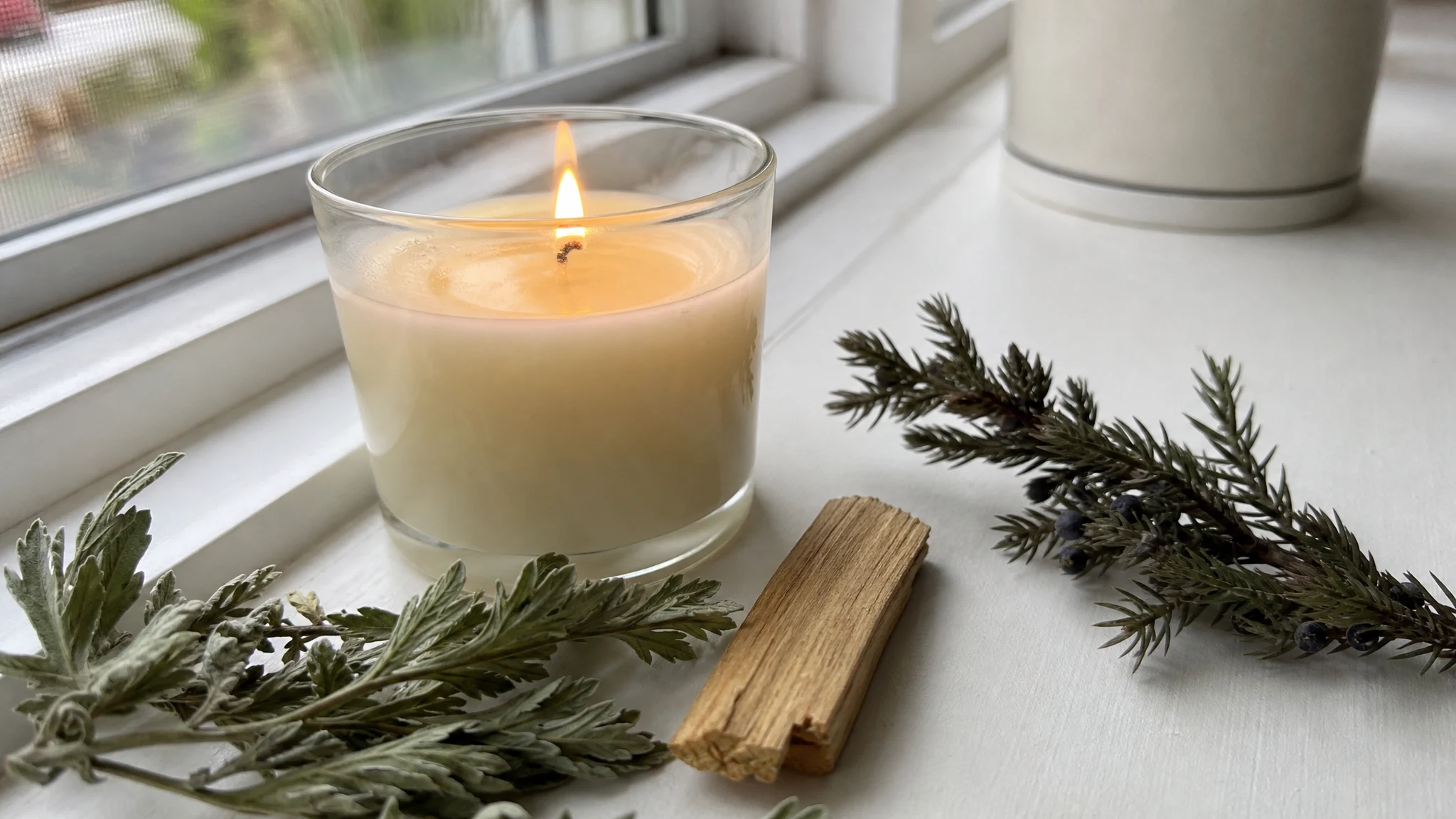
A mugwort candle is a candle with an opinion. The oil is green, bitter and camphoraceous, with sage-like facets, so the real craft is deciding what keeps it company. Here are five ways to build a blend, written as parts of one total oil load so they scale to any wax weight.
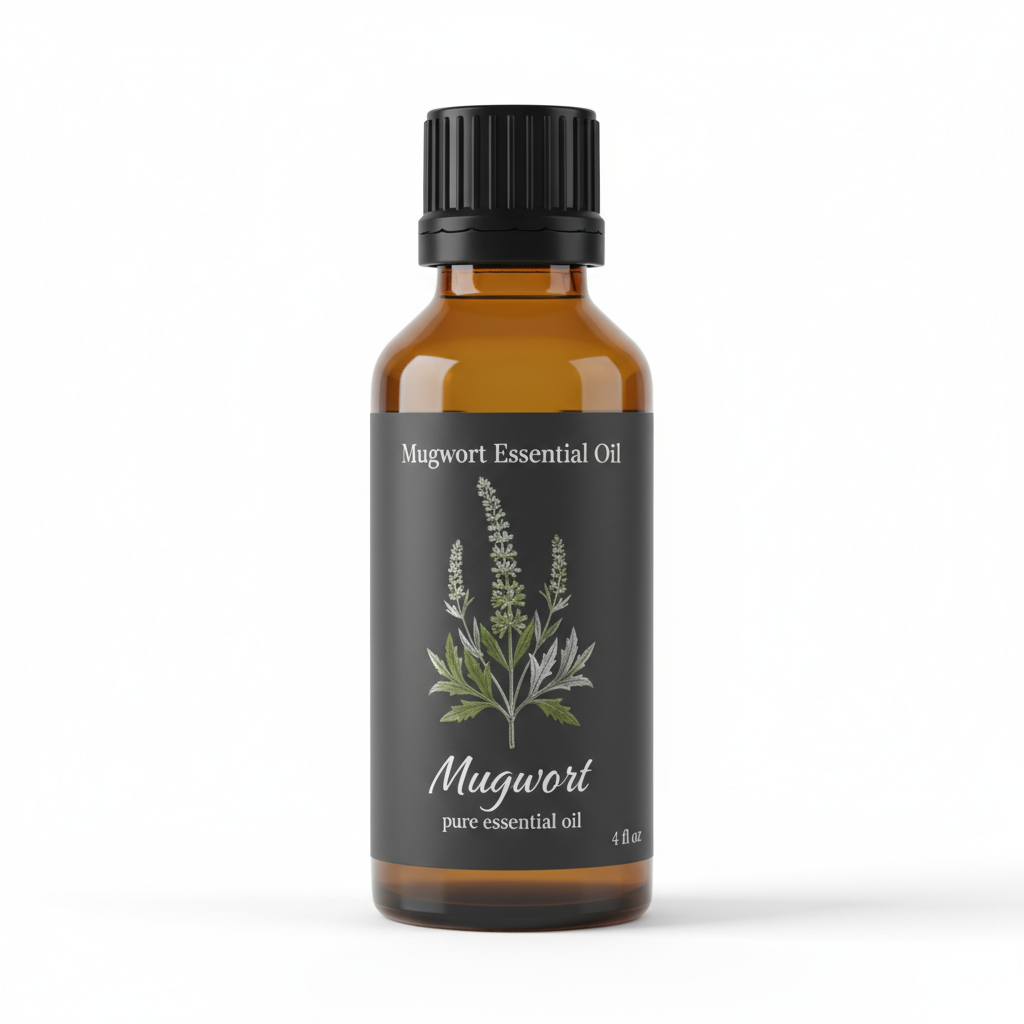
Mugwort Essential Oil
Our own Mugwort Essential Oil, in sizes from 0.5 oz to bulk.
From $16.99
Shop Now →Set the total load first
Start from your wax's data sheet, which gives the ceiling for fragrance in that wax. One candle supplier says most waxes hold no more than 12% fragrance oil, advises 10% for scent throw, and tells makers to measure by weight in grams (that advice is about fragrance oil in general, not mugwort). Our pilot figure sits well under both (How Much Fragrance To Add To Candles, Supplies For Candles). We suggest 4% for a first pilot, our own number rather than a rule, and the how-to guide explains the reasoning. In 200 g of wax, 4% is 8 g of oil, and each of ten parts is 0.8 g. At another load, one part is wax weight times load, divided by ten.
Five structures
The names are our labels for what each is aiming at, not measured results. The partner oils are the ones we list as blending well with mugwort: cedarwood, clary sage, juniper, frankincense, cypress and vetiver. We sell mugwort only, so those come from a candle-supply or craft shop. These are formulations built from arithmetic, ready to adjust in a small pilot batch.
| Structure (10 parts) | Mugwort | Partners | Mugwort per 200 g candle at 4% |
|---|---|---|---|
| 1. Green and cool | 4 | 3 juniper, 3 cypress | 3.2 g |
| 2. Dry woods and root | 3 | 3 cedarwood, 3 vetiver, 1 frankincense | 2.4 g |
| 3. Apothecary | 3 | 2 cedarwood, 3 clary sage, 2 frankincense | 2.4 g |
| 4. Woods-led, mugwort edge | 2 | 5 cedarwood, 2 cypress, 1 vetiver | 1.6 g |
| 5. Mugwort as accent | 1 | 6 cedarwood, 2 clary sage, 1 frankincense | 0.8 g |
The gram figures use the 0.895 relative density on the batch in our published certificate of analysis. A 0.5 oz bottle holds about 13.2 g, so it stretches across roughly four candles of structure 1 and sixteen of structure 5. That is a useful reason to lean on the accent end if you want one bottle to go far. Resins and woods are thick, so weigh them straight into the pouring pitcher.
To choose, pick the structure closest to the room you imagine and make it at 2%, 4% and 6% in the same wax, jar and wick. Keep whichever smells right at the lowest load. The pairing guide covers blending for other uses, and the scent throw guide helps if a result falls flat.
When you imagine a candle blend, it helps to picture a room first. A room with the window open on a damp morning wants something green and cool, while a winter evening by the fire suggests dry woods and resin. Pick the structure that matches that picture, not the one with the cleverest name, and you will be much happier with the result. Smell each oil on its own strip and then together on one, so you can tell which partner is doing which job.
Scaling up
Ten 200 g candles is 2,000 g of wax, so at 4% you need 80 g of oil, 8 g per part. For structure 3 that is 24 g mugwort, 16 g cedarwood, 24 g clary sage and 16 g frankincense. One 1 oz bottle holds about 26.5 g, so that batch uses most of a bottle. It also shows why the wax sheet's ceiling is a ceiling and not a target: ten candles at 10% would need 200 g of oil.
What the safety record says
IFRA's thujone standard, the one that matters for mugwort oils, caps thujone at 9.5% of a finished candle (Category 12). Even the biggest mugwort share in the table, 1.6% of the candle, could not reach that if the oil were entirely thujone (IFRA Standards, 51st Amendment). IFRA's candle category reflects how little skin contact candles involve and is not a finding about burning or air quality. The guidance also says that for essential oils, the useful information to exchange with a supplier is which IFRA-restricted materials the oil contains (Guidance for the use of IFRA Standards, 51st Amendment). So with any partner oil, ask for the Latin name, the safety data sheet and written restricted-constituent information. For ours, ask us in writing through our contact page for the document you need, and get the answer in writing before ordering.
We would keep a first mugwort candle to two or three oils, which is the range of every structure above. Each added oil brings its own flash point and paperwork. Our safety copy says to avoid mugwort oil in pregnancy and keep it from children and pets, so anyone who is pregnant or keeps animals should ask an obstetric clinician or a veterinarian before burning scented candles.
One small organising habit: label each pilot jar on the bottom with the structure number, the load and the date. When you come back to them in two weeks, the labels let you compare like with like, and you will remember why you made each one.
Weigh a small pilot, write the grams on the label, and keep the notes with the data sheets. The second candle is where a blend starts to feel like yours.
Mugwort Essential Oil
Mugwort Essential Oil from our own shop, in sizes from 0.5 oz to bulk.
From $16.99
Shop Now →Sources & Further Reading
- IFRA. IFRA Standards, 51st Amendment (Thujone). IFRA Standards PDF
- IFRA. Guidance for the use of IFRA Standards, 51st Amendment. ifra-51st-amendment-guidance
- Supplies For Candles. How Much Fragrance To Add To Candles. suppliesforcandles.co.uk