Mugwort Cleansing Oil: What Thujone Limits Allow
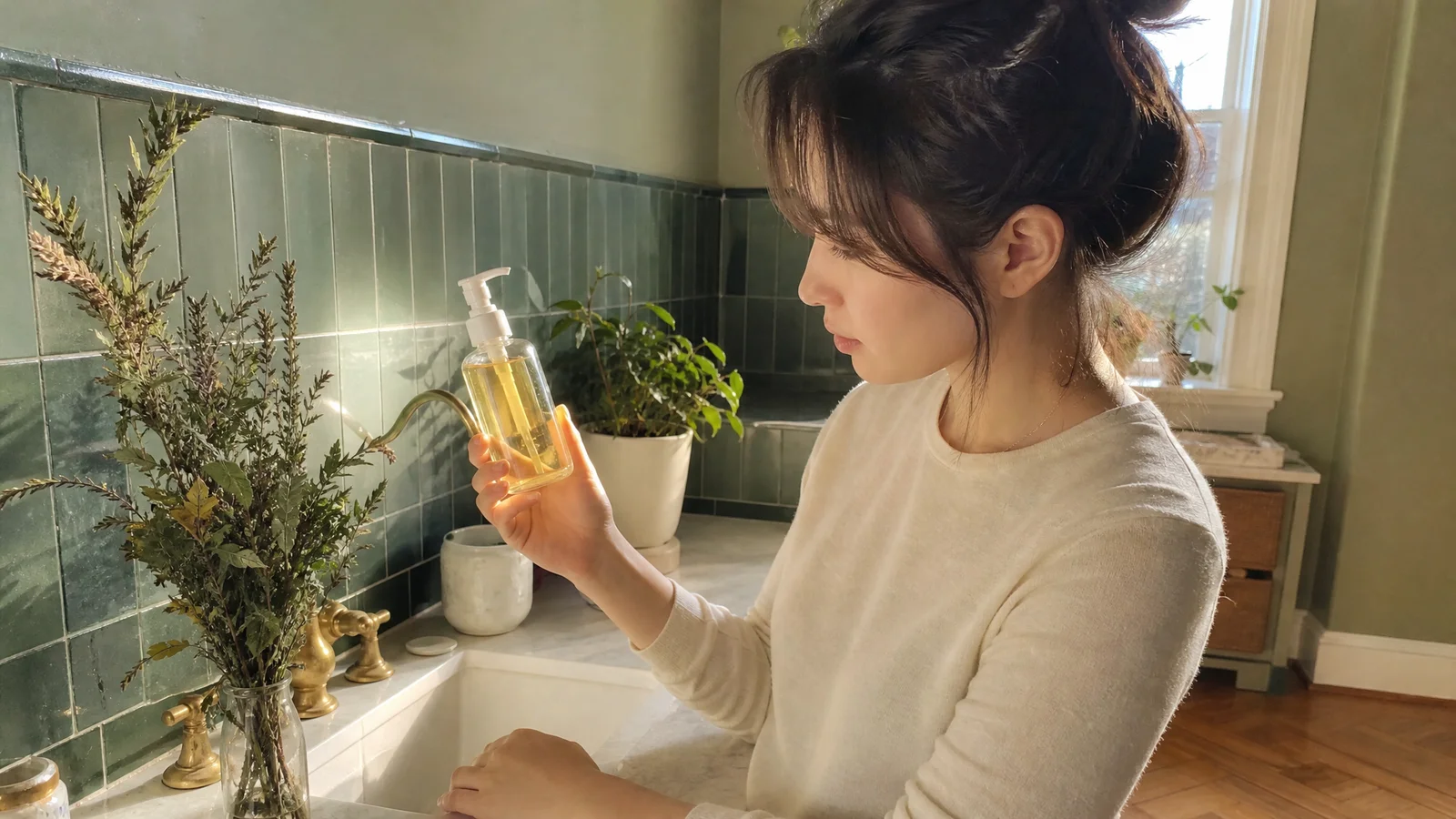
Search for mugwort cleansing oil and you will find a lot of Korean-style skincare, but very little of it involves a distilled essential oil. Our mugwort oil is a fragrance-craft oil, with a green, bitter, camphoraceous aroma, so the interesting question is not "what is the recipe" but "what would a face product need to be true before this oil belonged in it".

Mugwort Essential Oil
Our own Mugwort Essential Oil, in sizes from 0.5 oz to bulk.
From $16.99
Shop Now →What "mugwort" means on a skincare label
Most of the laboratory work behind the trend used extracts, not oil. One widely cited study looked at a water extract of Artemisia princeps, a Japanese relative: dried plant simmered in water, then spray-dried to a powder. Researchers added it to cultured human skin cells at 0.01% and 0.03%, and cell viability dropped once the concentration went above 0.3% (Hirano et al., 2017). That is a cell-culture result for a water extract, so it says nothing about a distilled oil on a face, and we do not read it as support for ours. Our piece on mugwort in Korean skincare goes deeper on that gap, and the cleansing oil products comparison explains how to read a finished product's ingredient list.
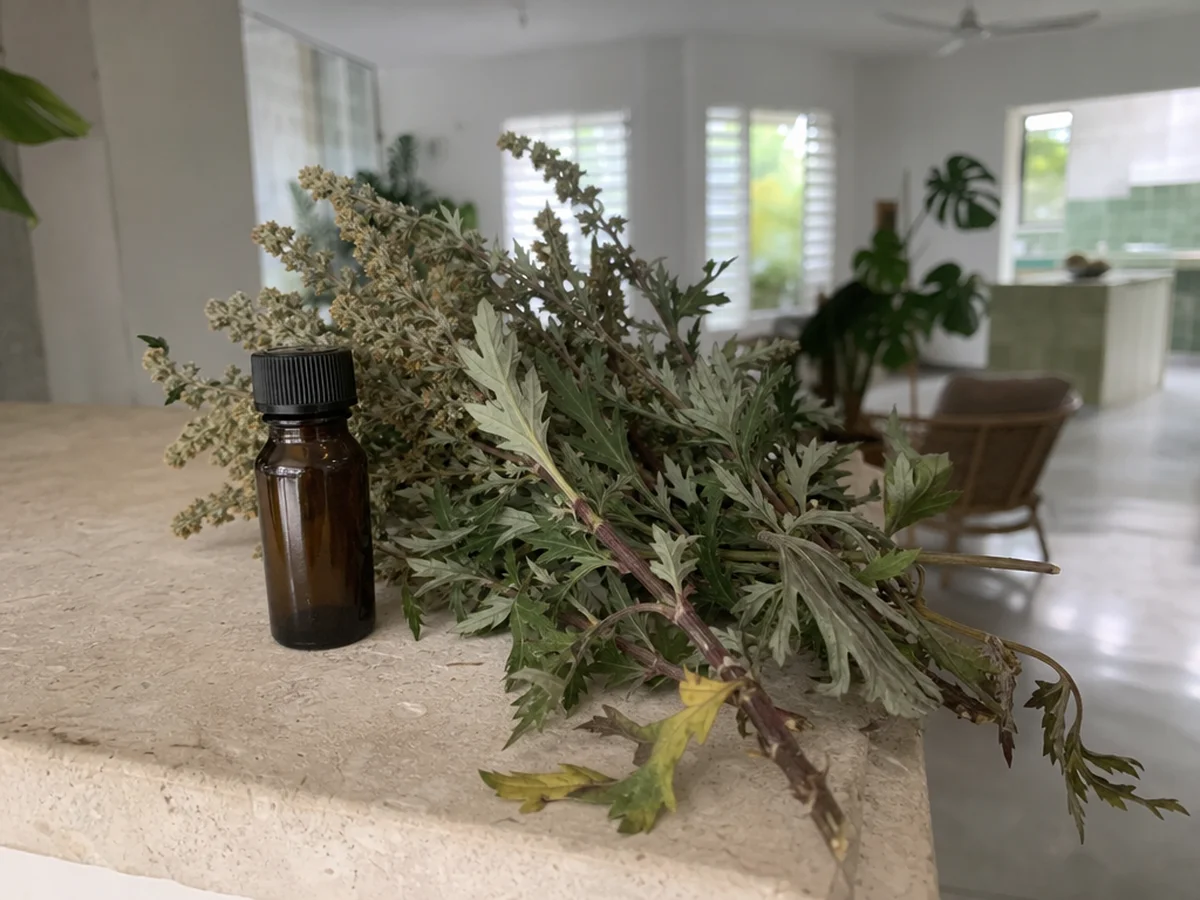
It is easy to get swept up by a pretty bottle with a leaf on the label. Korean-style cleansing oils are lovely things to look at, with their soft textures and gentle colours, and it is natural to wonder whether a bottle of mugwort oil could join them. We understand the pull of that idea, and that is exactly why we would slow down and look at the page of numbers before the shopping basket.
The number that matters: thujone
Some mugwort oils contain thujone, a compound the fragrance industry's standards body, IFRA, limits by product type. A cleansing oil is not named in IFRA's guidance, so a formulator picks the closest entries: rinse-off face cleansers sit in Category 9, and make-up remover for face and eyes in Category 3. When a product could fit several, the stricter rule applies (Guidance for the use of IFRA Standards, 51st Amendment). The thujone caps for the finished product are 0.032% for Category 3 and 0.13% for Category 9 (IFRA Standards, 51st Amendment).
Those caps are for thujone, not oil, so the allowed oil share is the cap divided by how much of the oil is thujone. Published mugwort oils vary enormously. A cultivated Brazilian Artemisia vulgaris oil listed no thujone at all (Malik et al., 2019), while a hydrodistilled Artemisia argyi leaf oil carried about 10% thujones combined (Guan et al., 2019). Here is the arithmetic for three illustrative oils:
| Thujone share of the oil | Most oil in a make-up remover (Cat 3) | Most oil in a rinse-off cleanser (Cat 9) |
|---|---|---|
| 1% | 3.2% | 13% |
| 10% | 0.32% | 1.3% |
| 40% | 0.08% | 0.33% |
Our general skin guidance for mugwort oil is 0.5% to 2% in a carrier oil, and we say to avoid it in pregnancy. For anything near the eyes, the table shows why we would begin well below the bottom of that range: at 0.5%, an oil that is 10% thujone already overshoots the make-up remover cap. We publish no thujone figure for our oil, and a buyer who needs one can ask us in writing through our contact page and get the answer in writing before relying on it.
So where does our oil fit?
The table also shows something less obvious. The same oil can be fine in one product and over the line in another, simply because the category changes. Rinse-off products get a looser ceiling than leave-on ones, and anything near the eyes gets the strictest of all. When a product could fit more than one category, a careful maker works to the tightest number, and that is the habit we would borrow even for a home project.
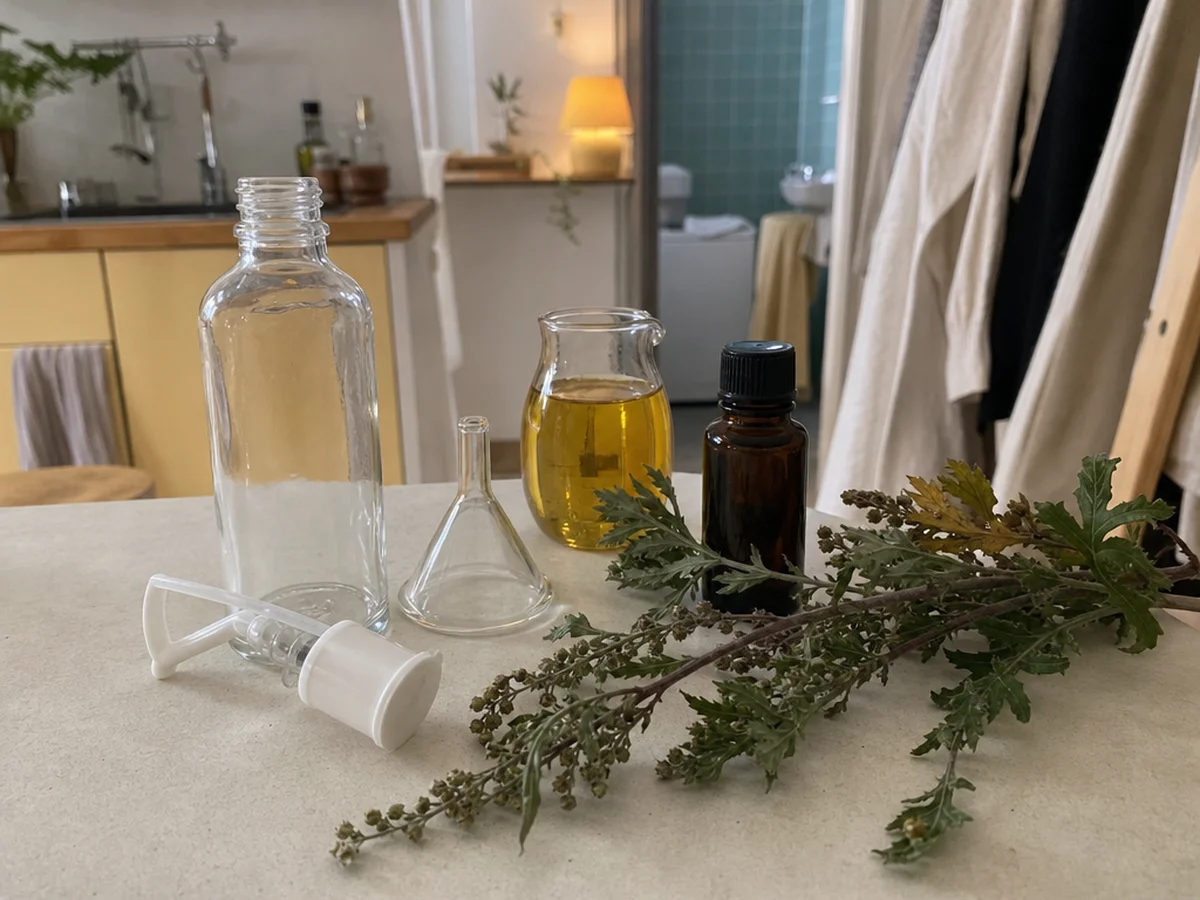
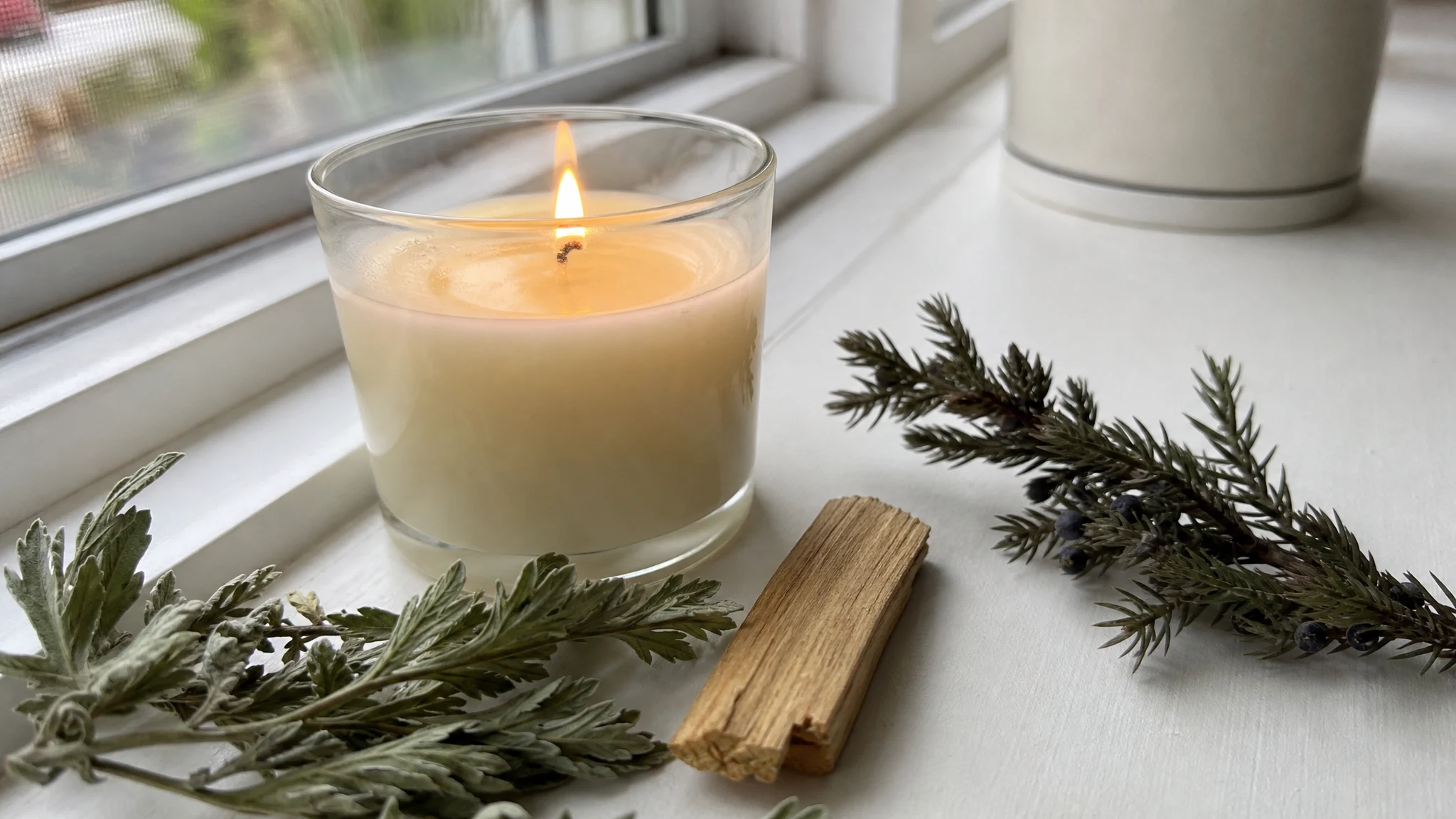
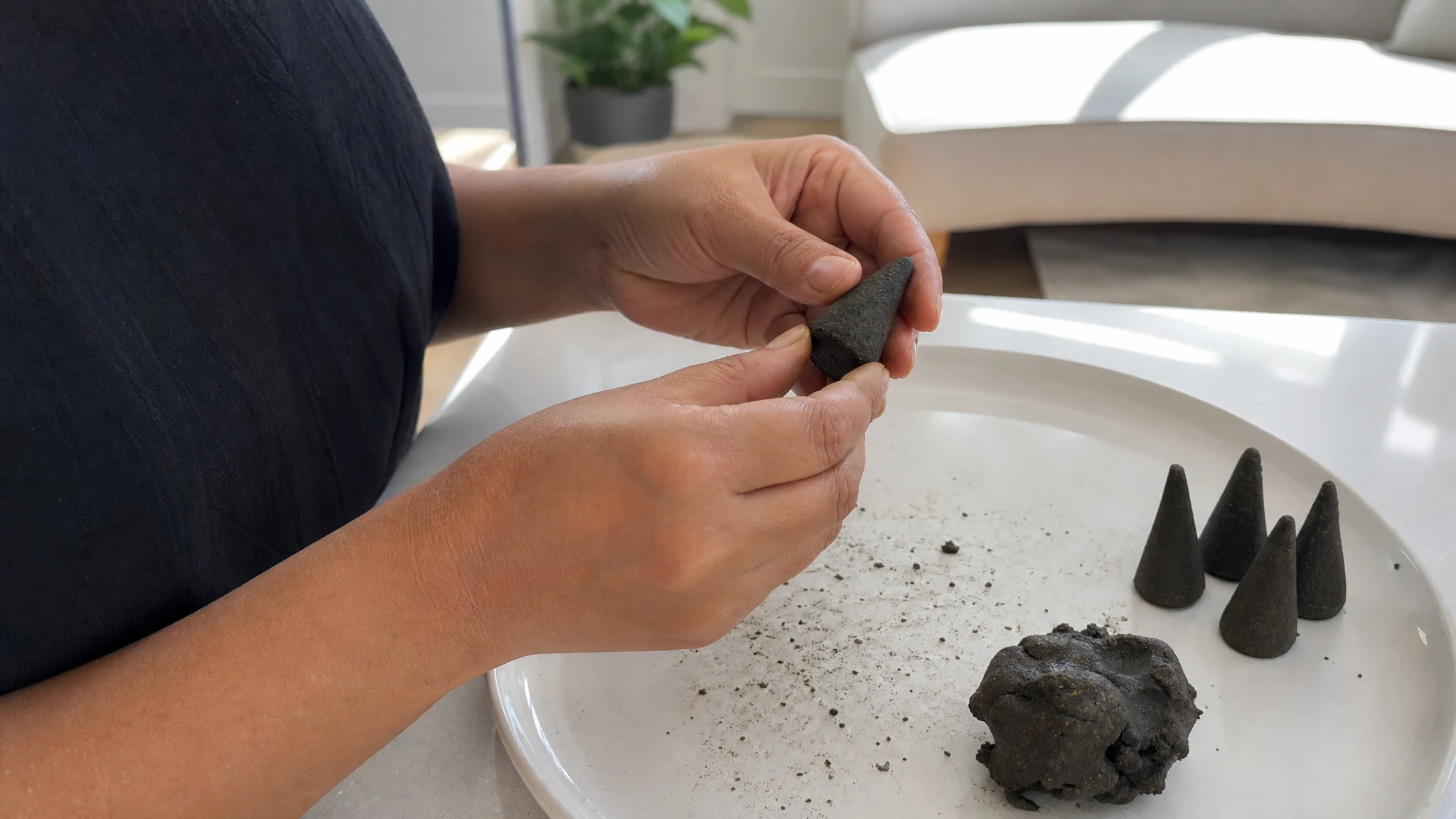
Our oil fits best where its character is the point. A drop or two works as an accent in perfume accords, in candles, incense and sachets, and as a middle note it sits comfortably with cedarwood, clary sage and juniper. See where mugwort oil fits in fragrance craft for the full map. A homemade cleansing oil would also need a carrier, an emulsifier and a preservation plan, none of which we sell, and a cosmetic chemist is the right person to advise on them.
If the mugwort idea appeals, a finished product from a cosmetics maker is the simplest route. US labelling rules list ingredients in descending order, with anything at 1% or less allowed in any order (21 CFR 701.3), so the label tells you roughly where the mugwort sits.
If you love the idea of mugwort in your routine, there is a gentler way to enjoy the plant's character. Smell a drop of the oil on a paper strip, held a little way from your nose, and notice how green, bitter and camphor-like it is. That sharp, herbal edge is lovely in a candle or a sachet, and it will tell you quickly whether it is a scent you want near your face at all. For most people the answer is that it belongs on the shelf with the craft supplies.
Who should sit this one out
Anyone pregnant should avoid mugwort oil, and the same goes for anyone who is nursing, has a history of seizures, or has a daisy-family allergy. One review of the genus records contact dermatitis from several Artemisia species, which it links to sesquiterpene lactones (Sharifi-Rad et al., 2022). Our allergy article sorts out the three different problems that share the mugwort name. Ask a physician or allergist if any of this applies to you.
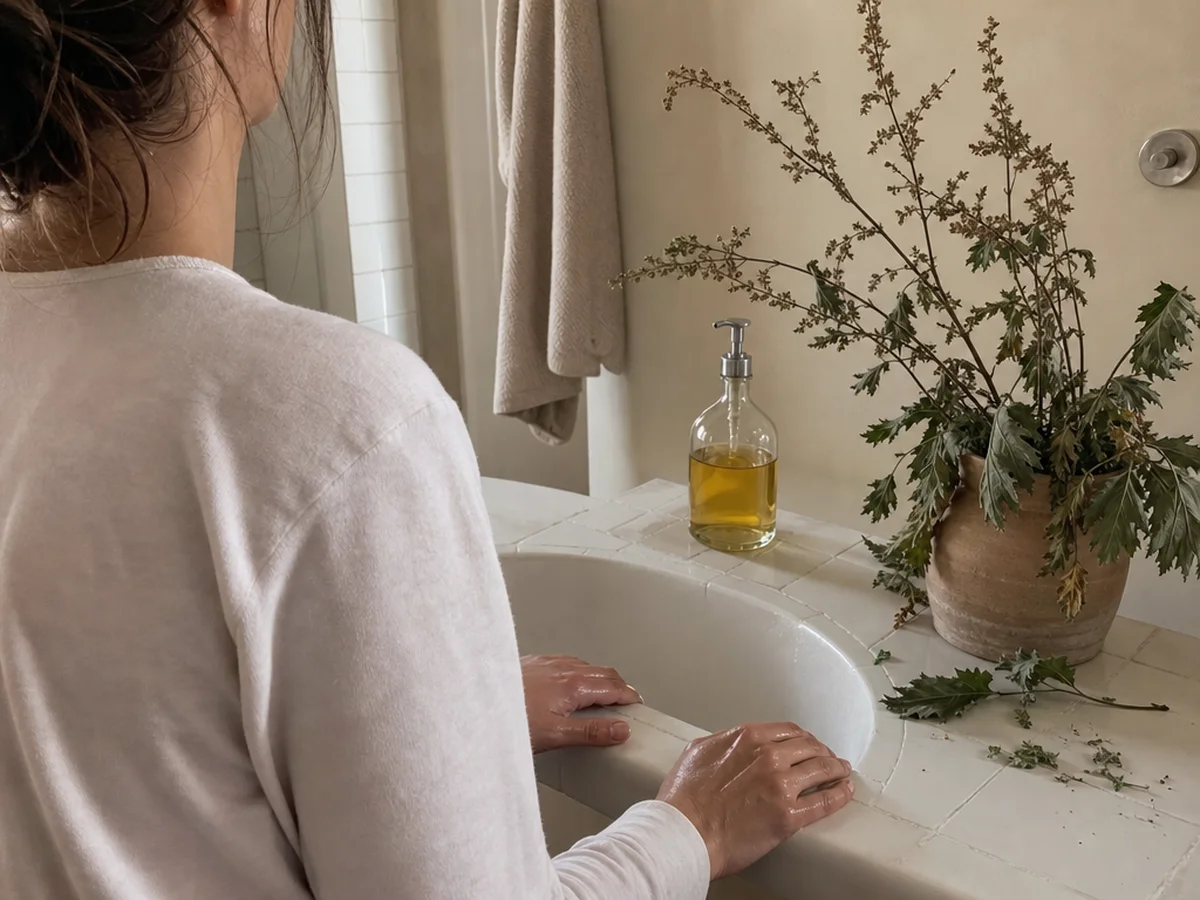
If you are shopping for a cleansing product instead, read the ingredient list the way you would read a label on a food you had never tried. Look at the first five items, find where the mugwort appears, and ask the maker for the form and amount if the label does not say. A good brand is glad to answer.
Mugwort rewards the craft that suits it, and a face product is a different job from the one our oil was made to do.
Mugwort Essential Oil
Mugwort Essential Oil from our own shop, in sizes from 0.5 oz to bulk.
From $16.99
Shop Now →Sources & Further Reading
- Hirano et al., 2017. Antioxidant Artemisia princeps Extract Enhances the Expression of Filaggrin and Loricrin via the AHR/OVOL1 Pathway. Int J Mol Sci. PMC5618597
- IFRA. Guidance for the use of IFRA Standards, 51st Amendment. ifrafragrance.org
- IFRA. IFRA Standards, 51st Amendment (Thujone). IFRA Standards PDF
- Malik et al., 2019. Chemical Profile and Biological Activities of Essential Oil from Artemisia vulgaris L. Cultivated in Brazil. Pharmaceuticals. PMC6631396
- Guan et al., 2019. Chemical Composition and Antimicrobial Activities of Artemisia argyi Lévl. et Vant Essential Oils Extracted by Simultaneous Distillation-Extraction, Subcritical Extraction and Hydrodistillation. Molecules. PMC6384757
- Sharifi-Rad et al., 2022. Artemisia spp.: An Update on Its Chemical Composition, Pharmacological and Toxicological Profiles. Oxid Med Cell Longev. PMC9467740
- Cornell Law School. 21 CFR 701.3, Designation of ingredients. law.cornell.edu