Mugwort Incense Cones: Makko Ratios and Oil Dosing
Before you think about mugwort at all, a makko cone starts with a question about the binder: how much of the mix should be makko? The two incense-making guides we read give very different answers, and the right oil dose only makes sense once you have settled that. What follows is a 30 g test batch worked out by weight, so you can find your own answer.

Mugwort Essential Oil
Our own Mugwort Essential Oil, in sizes from 0.5 oz to bulk.
From $16.99
Shop Now →What makko does
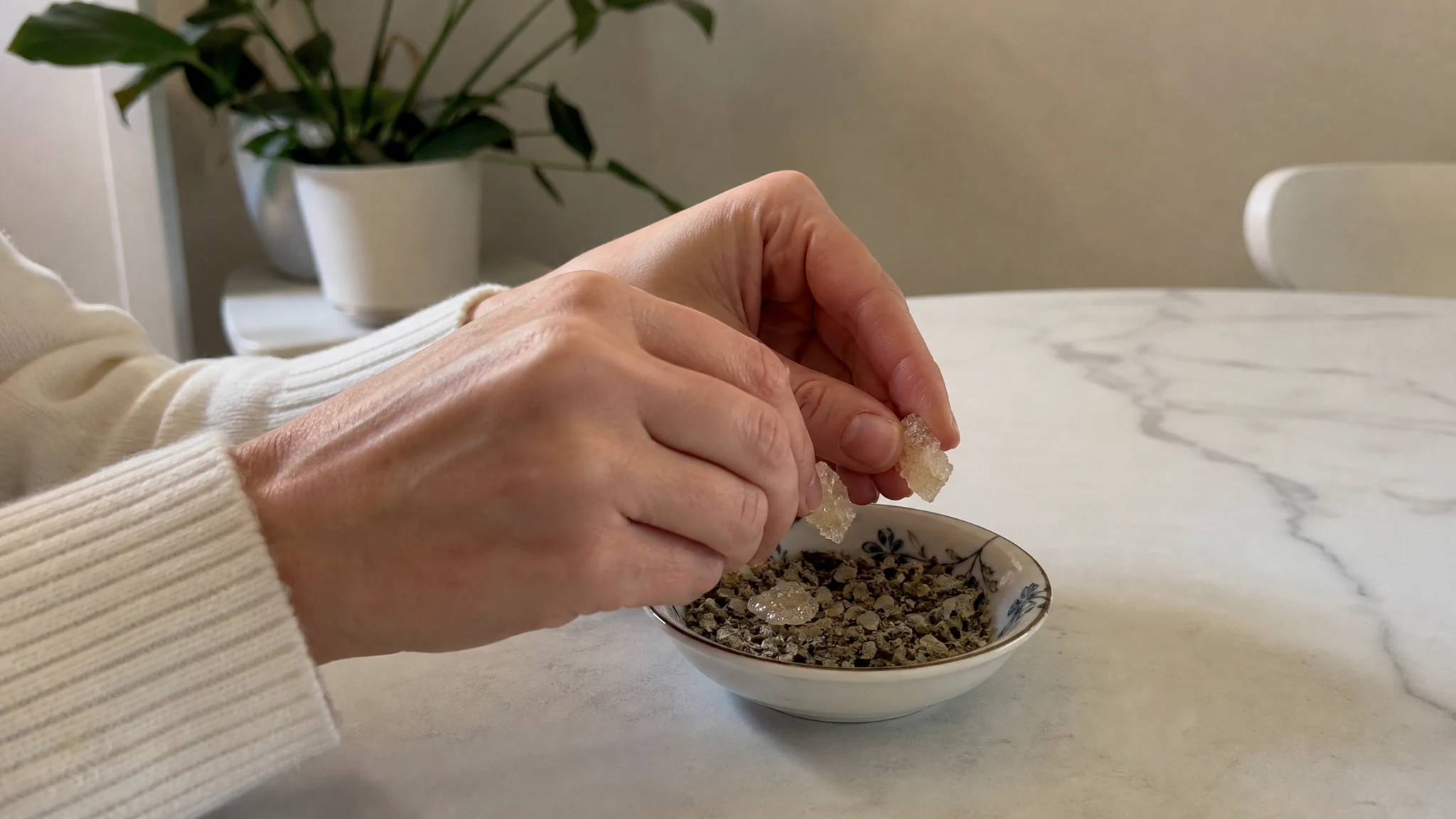
Makko is the bark powder of the Machilus thunbergii tree, called tabu no ki in Japanese. Baieido describes it as having water-soluble adhesive properties and an almost odorless character, and notes it comes in four grades, with higher grades carrying less aroma of their own (Makko, Baieido). It holds the cone together and helps it burn. We do not sell makko, so look for it at an incense supply or herb shop, and ask which grade you are getting.
Bracketing the binder share
David Oller's guide on Baieido's site says "at least 10% makko should be used", and that more may be needed for proper combustion depending on the other ingredients (Making Incense By David Oller, Baieido). A Kohgen guide gives a basic ratio of aromatic ingredients to tabu powder of 4:6 to 5:5, which means 50% to 60% makko (How to make incense, Kohgen). Neither mentions mugwort or essential oil. A plausible reading is that a leafy base sustains a burn less readily than a pure wood powder, so we suggest bracketing the range with three small batches.
| Test batch | Makko share of 30 g | Makko | Other dry powder |
|---|---|---|---|
| A | 20% | 6.0 g | 24.0 g |
| B | 35% | 10.5 g | 19.5 g |
| C | 50% | 15.0 g | 15.0 g |
The steps are our choice, sitting inside and just under the two sourced figures. "Other dry powder" means finely ground dried mugwort leaf or a wood powder. Label each bag with its weights.
The oil dose
We found no published oil load for makko cones, so treat the dose as a starting point to adjust by test. The arithmetic uses the relative density of 0.895 on the batch in our published certificate of analysis, and about 20 drops per ml, so weigh if you can:
| Oil share of dry mix | In 30 g | About how many drops |
|---|---|---|
| 1% | 0.30 g | 7 |
| 2% | 0.60 g | 13 |
We would run batch B at 1% first and judge the burn before going higher. Change one thing at a time, because a sputtering cone could be the binder share, the water or the oil. Mixing the oil through the dry powders before any water goes in lets you weigh a precise dose; soaking finished cones makes the dose depend on how much each cone absorbs. Our preference for a first test is the dry mix. Wear gloves while kneading, since the oil is sold neat.
Set up your table first
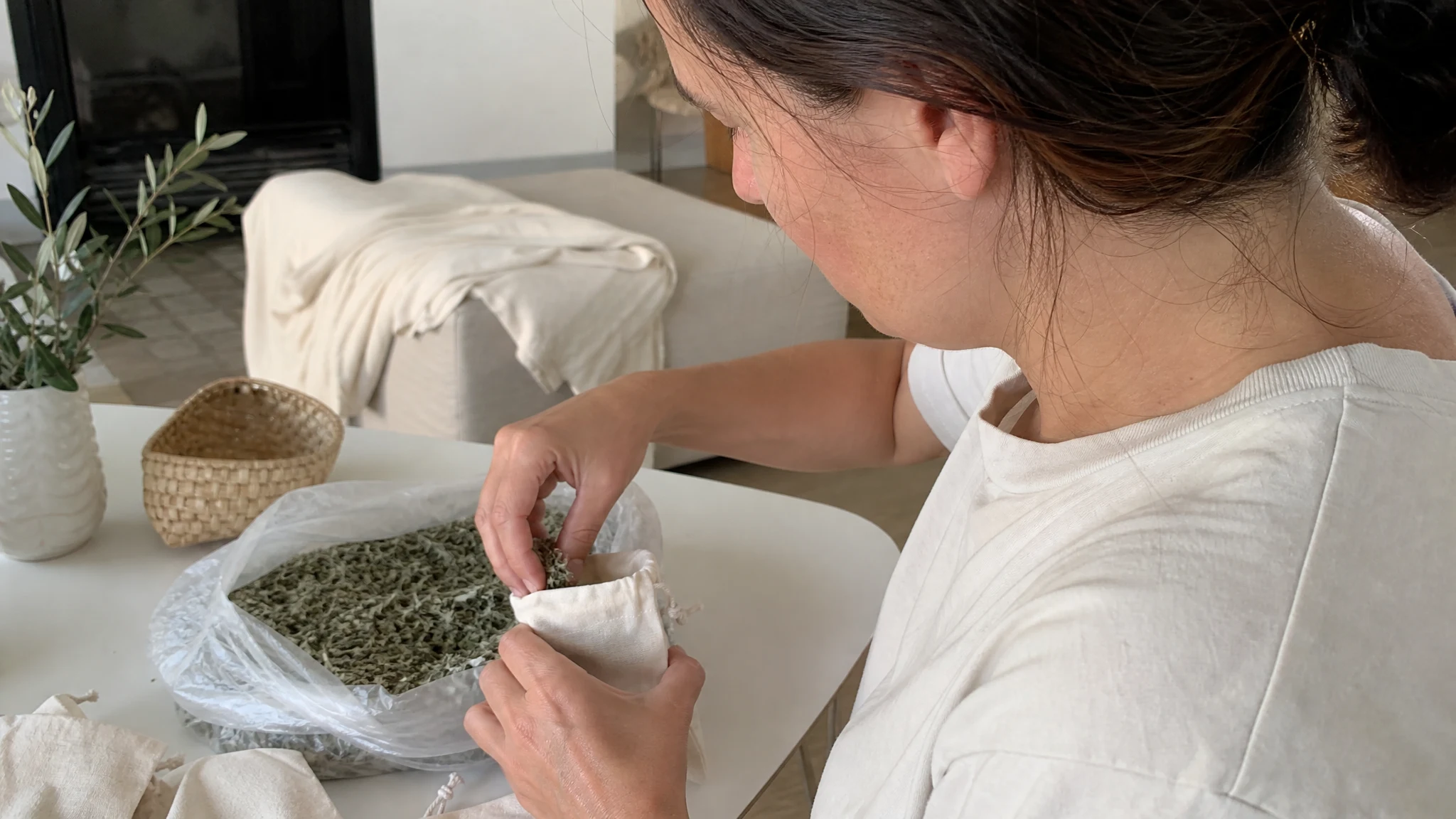
Incense making is easier when everything is within reach before your hands are covered in dough. Put down a sheet of baking paper or a tray you do not mind getting dusty, and set out your scale, a small bowl of water with a spoon, a few labelled bags and a board or plate for the finished cones. Fine powders drift, so close the window while you weigh and open it again when you are done.
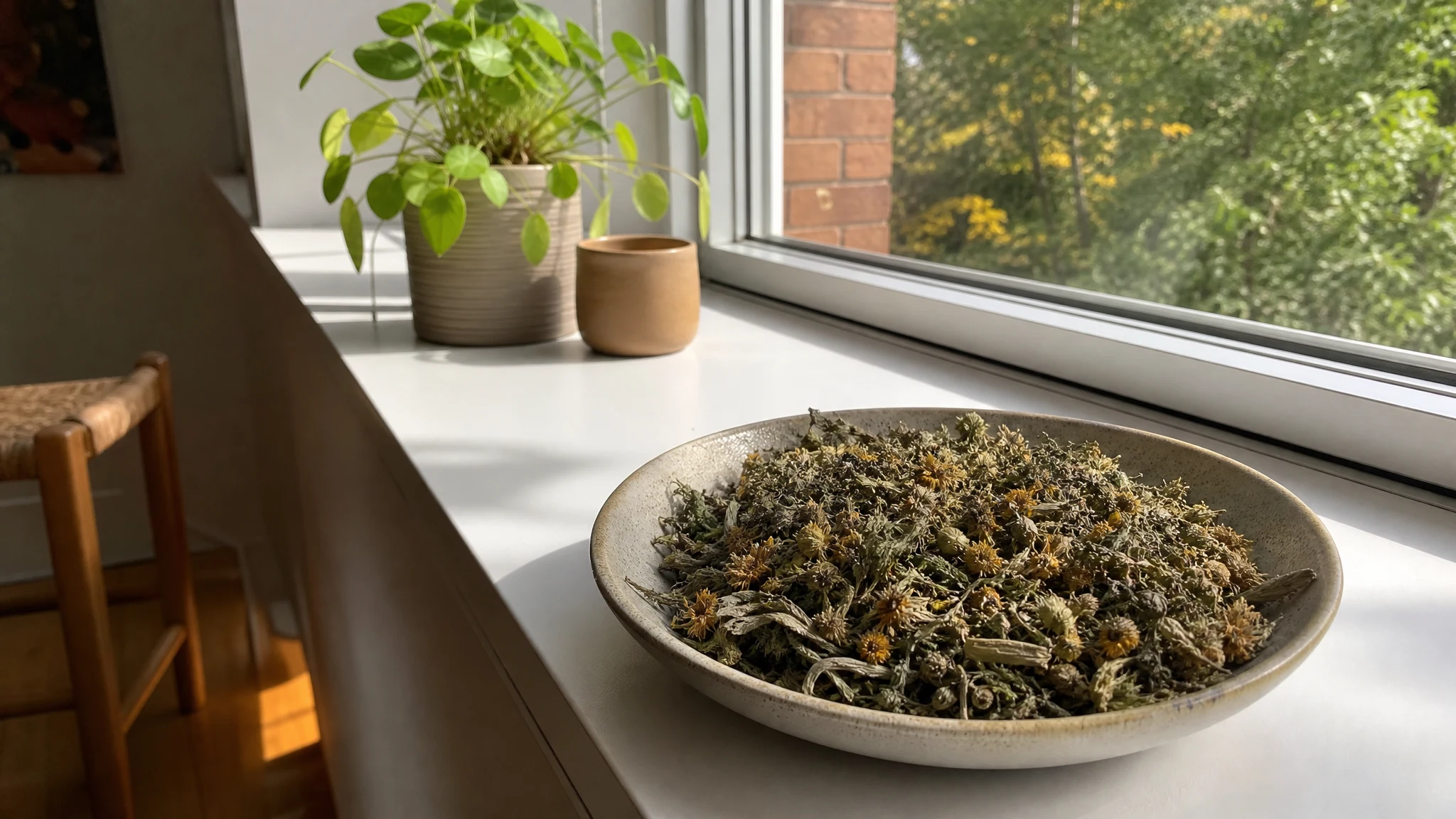
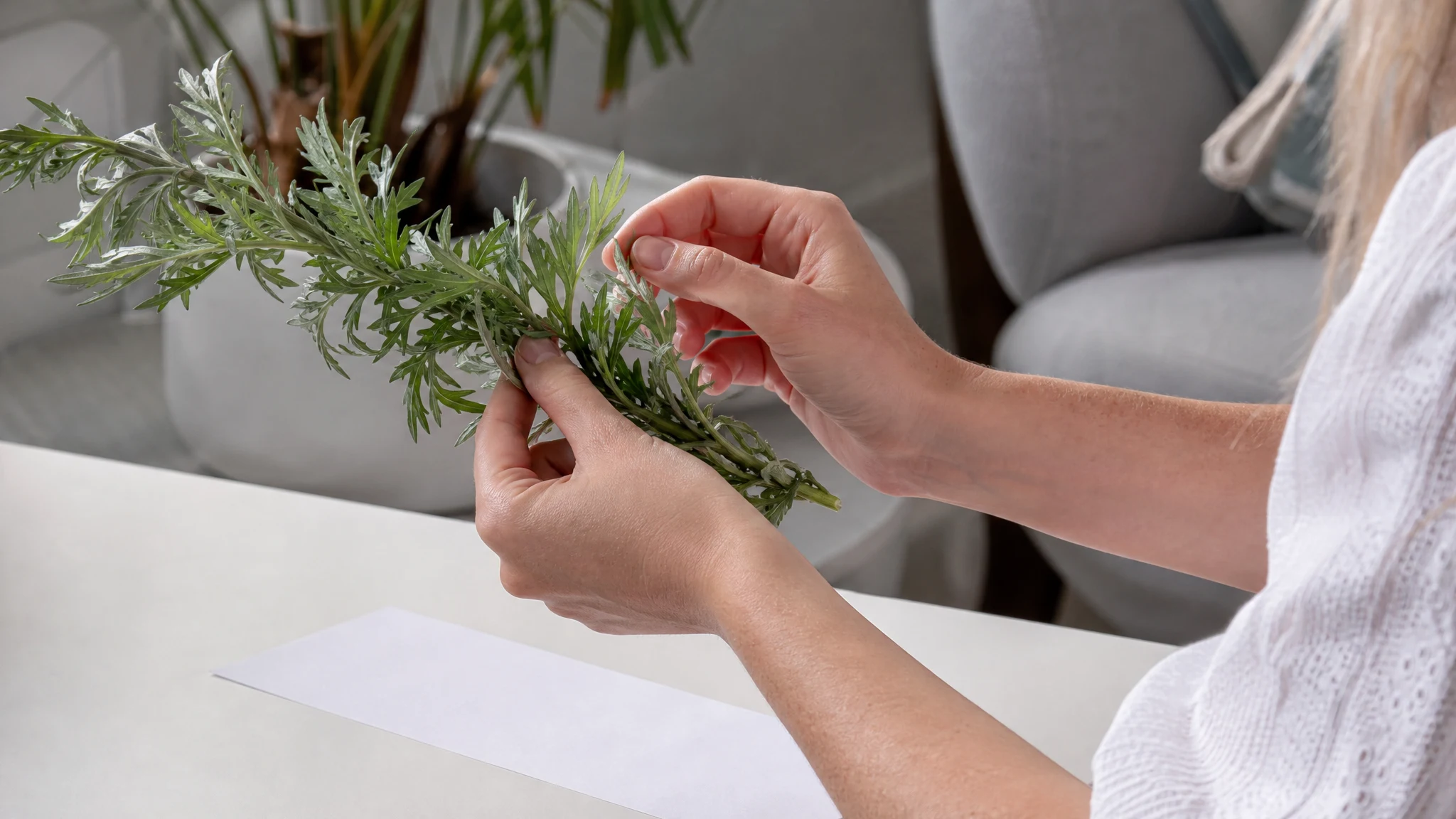
Smell the dry mugwort powder by itself before any oil goes in. It gives you a baseline, and when you open the first batch a week later you will know what the herb was already doing and what the oil added.
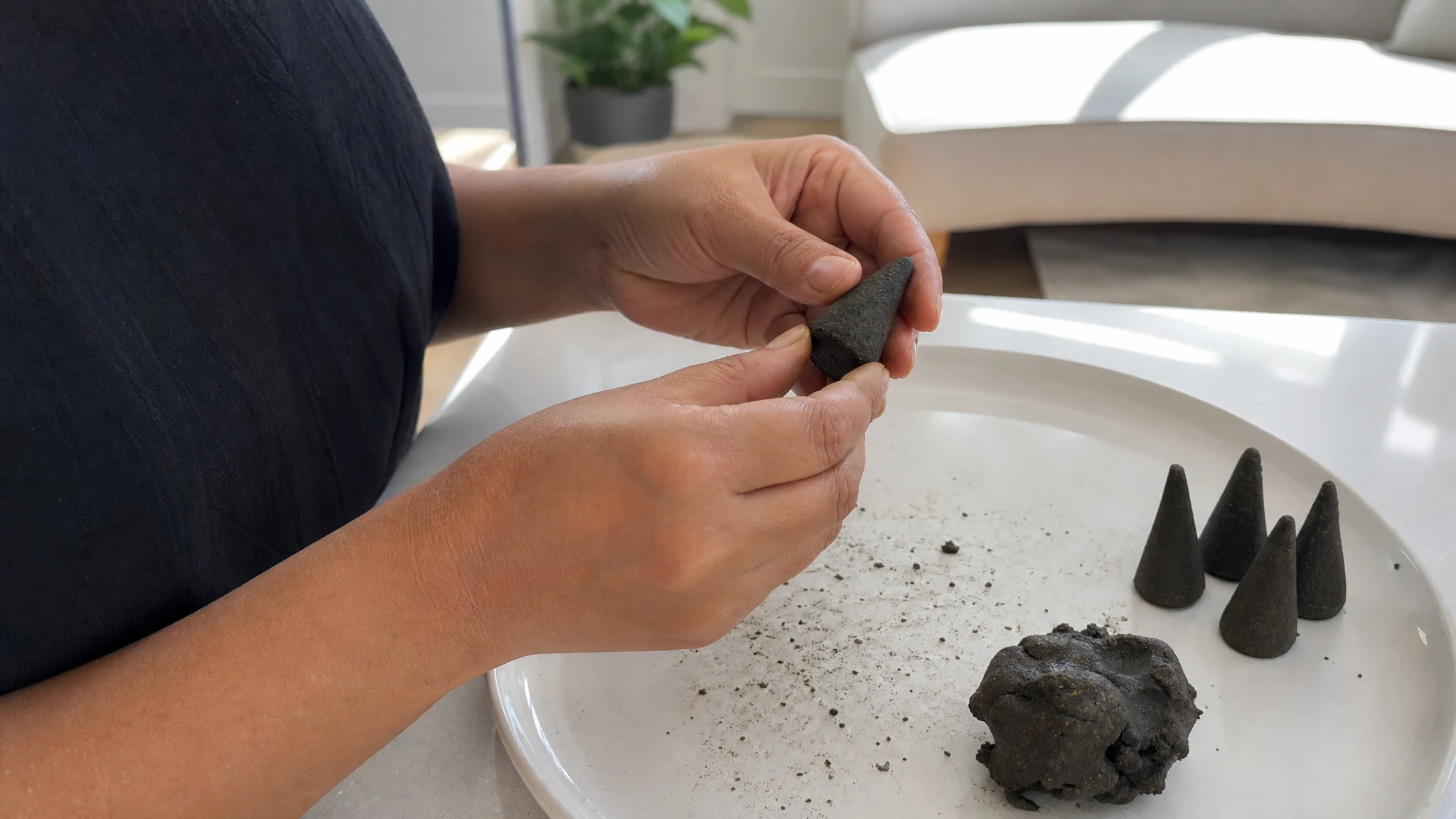
Both guides agree on the method. Water goes in little by little while you knead. Kohgen says there is no set amount, and warns that too much water makes the dough crack as it dries. For cones, it advises a pointy tip and a small size, since larger pieces dry less well inside and may go out mid-burn. Drying takes patience: Baieido says about a week in summer and ten days in winter, and Kohgen suggests about a week on cardboard. Do not test-burn a cone that is still soft in the middle.
Smoke and safety
A cone is a small fire in a closed room. A review of incense research reports that incense on average gives off more than 45 mg of particulates per gram burned, against 10 mg per gram for cigarettes, along with volatile organic compounds, and advises ventilating the house when you burn it (Incense smoke: clinical, structural and molecular effects on airway disease). That review covers commercial incense, so a mugwort cone may differ, but the practical advice is the same: crack a window and never leave a lit cone unattended. Our indoor burning article has the wider picture.
IFRA, the fragrance industry's standards body, puts incense in Category 12 and caps thujone at 9.5% of the finished product (IFRA Standards, 51st Amendment). Even an oil that was entirely thujone would give only 2% in a cone made at 2% oil, so at these loads the burn and the smoke set the limit. We publish no thujone figure, and we state no flash point, so a buyer who needs thujone, GC-MS or safety data sheet information can ask us in writing through our contact page and get the answer in writing before relying on it.
Our safety copy says to avoid mugwort oil in pregnancy, keep it from children and pets, and never take it internally. If you are pregnant or nursing, have asthma, or share your home with birds or other pets, ask your doctor or a veterinarian before burning anything. Our pets article collects what vets report. Check the Latin name on any mugwort oil against its paperwork too, as reading a mugwort oil label explains. For burning the plant alone, see working with the dried plant.
If a batch works, scale by weight and not by drops. A 0.5 oz bottle holds about 13.2 g, which is plenty for a lot of small test batches.
Mugwort Essential Oil
Mugwort Essential Oil from our own shop, in sizes from 0.5 oz to bulk.
From $16.99
Shop Now →Sources & Further Reading
- Baieido. Makko. baieido-usa.com/makko-
- Baieido. Making Incense By David Oller. baieido-usa.com
- Kohgen. How to make incense. shop.kohgen.com
- Lin, Krishnaswamy and Chi, 2008. Incense smoke: clinical, structural and molecular effects on airway disease. Clin Mol Allergy. PMC2377255
- IFRA. IFRA Standards, 51st Amendment (Thujone). IFRA Standards PDF