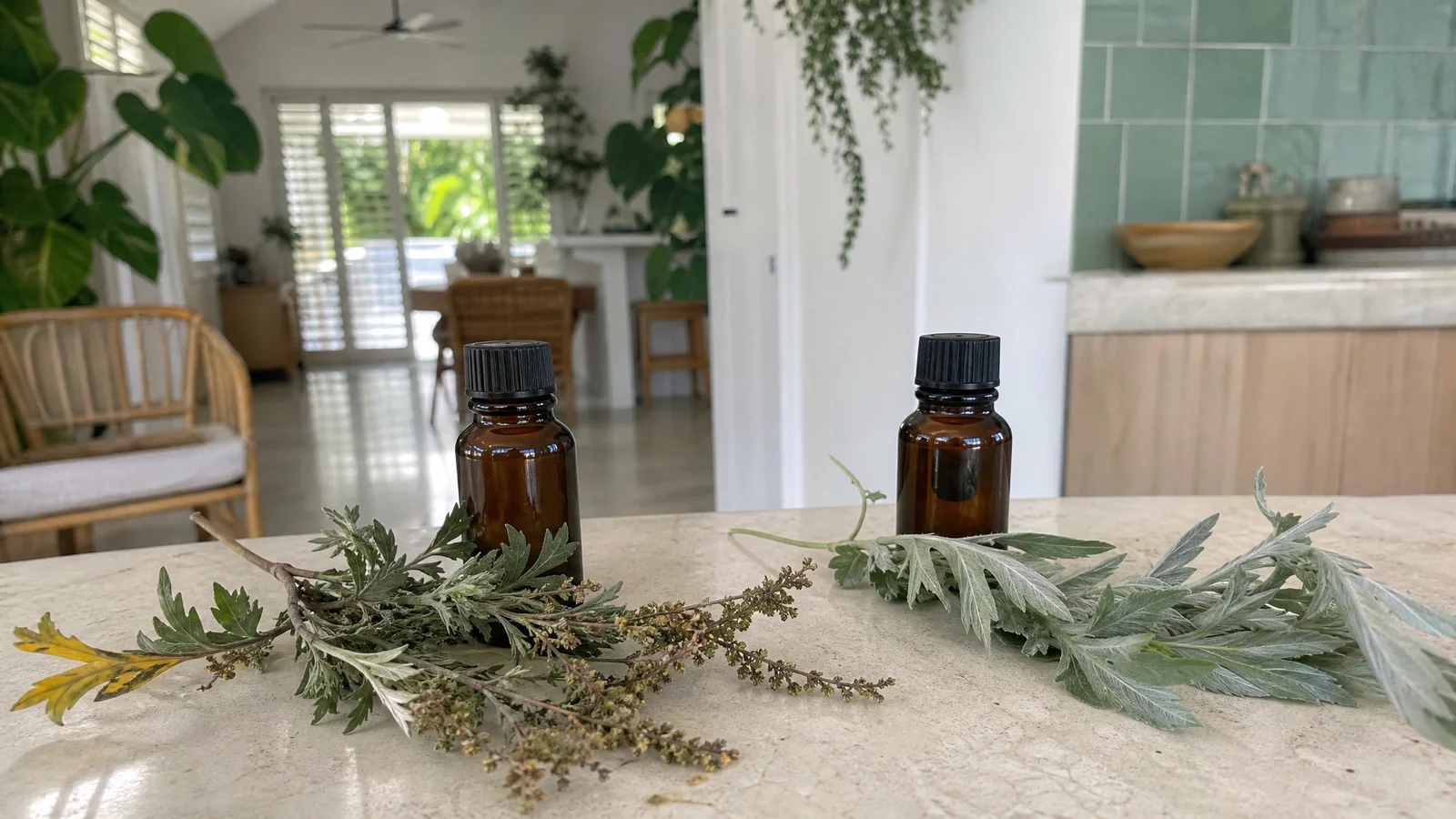
How to Read a Mugwort Oil Label: Five-Minute Audit
"Mugwort essential oil" on a bottle is a promise with a lot of room inside it. The name is shared by more than one plant, and two bottles carrying the same words can hold oils led by different compounds. The label is where a seller can tell you which one you have, and learning to read it is the quickest way to buy with confidence.

Mugwort Essential Oil
Our own Mugwort Essential Oil, in sizes from 0.5 oz to bulk.
From $16.99
Shop Now →The Latin name is where you start
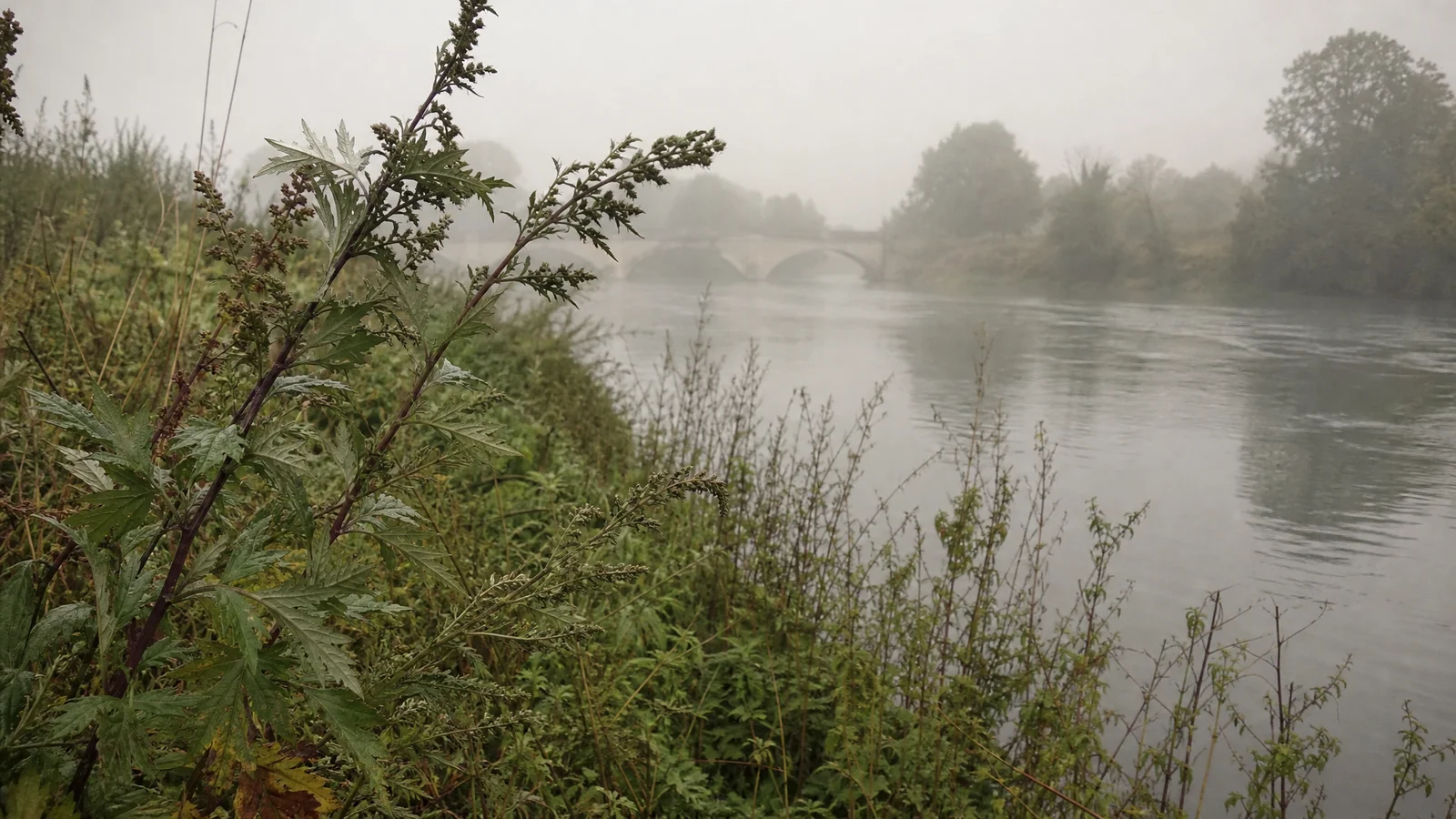
"Mugwort" is a common name, and the trade applies it to more than one Artemisia. A label with no Latin name leaves you guessing which plant is in the bottle, so look for one. Then look at what it gets you. Published analyses show composition does not simply follow the name. A cultivated Artemisia vulgaris from Brazil was led by caryophyllene and listed no thujone (Malik and colleagues, 2019). Artemisia argyi leaves from Qichun, China, held alpha-thujone at close to 8% when hydrodistilled (Guan and colleagues, 2019), and a different argyi study led with cineole and did not mention thujone (Li and colleagues, 2024). So the species is useful but does not tell you the thujone level.
The practical habit is to check that the label's Latin name and the batch paperwork name the same plant. If they ever differ, that is a question to put to the seller in writing before you buy. The armoise article covers the same naming puzzle from the perfumery side.
Plant part and method make a bigger difference than you would expect
The same three studies used different inputs: aerial parts cut before flowering in one, leaves alone in another, leaves and stems in the third, with distillation times from 3 to 8 hours. A label that says leaves, aerial parts or flowering tops is telling you something real about the oil, and one that says nothing leaves you to guess.
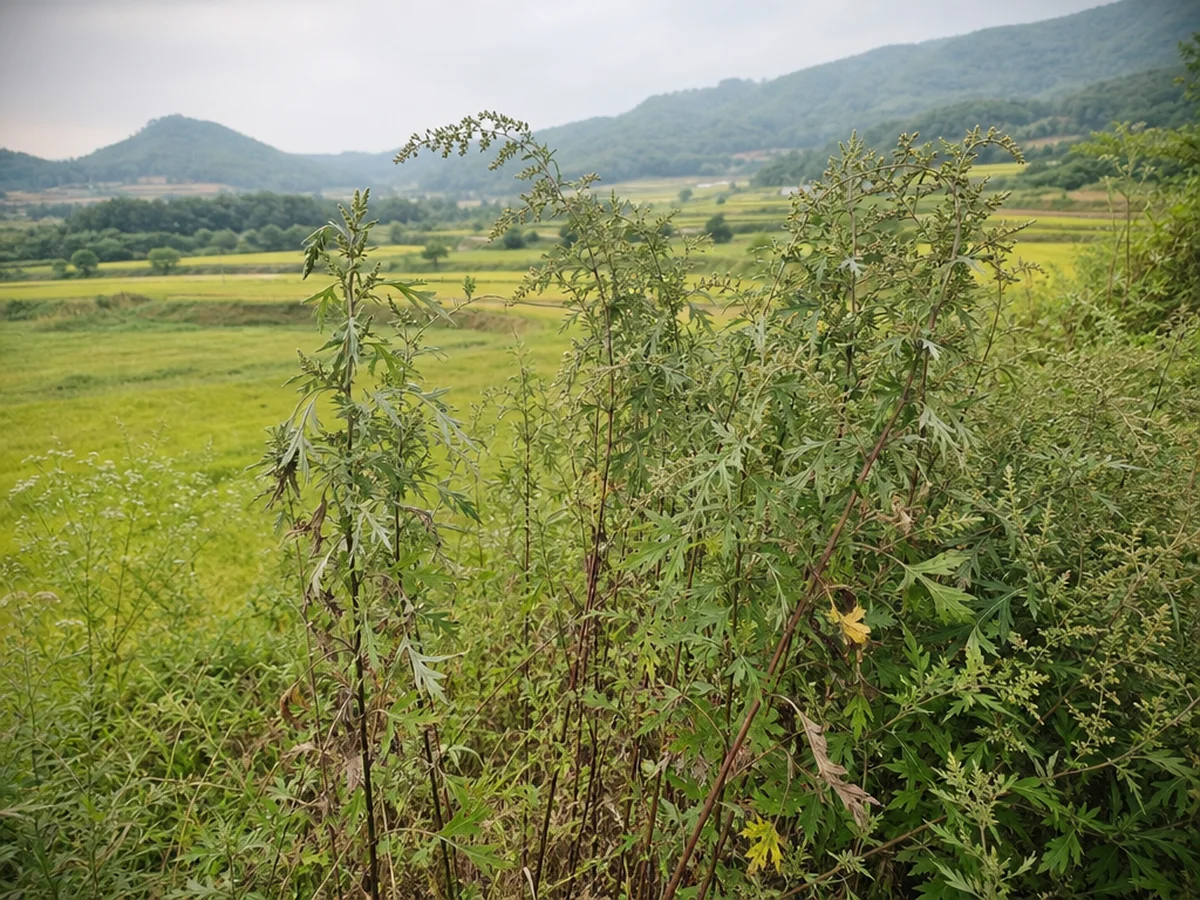
Method matters just as much. Guan and colleagues extracted one batch of ground leaves three ways, and caryophyllene oxide made up 8.7% of the hydrodistilled oil but only 0.13% of the subcritical one, while beta-caryophyllene went from about 7.5% to 20%. A bottle that says "essential oil" without saying how it was made could be any of several materials, so we like to see the method stated. Steam distillation, the method we list for our oil, is one of them.
What "chemotype" does and does not mean
A chemotype is a population within a species with a characteristic chemistry, and some labels use the word as if it were a grade. It is not a grade, and it only means something with numbers behind it. A claim such as "low thujone" or "high camphor" is promising a figure, and the figure should come from a GC-MS report for that batch. If the report is missing, the claim is something to ask about. We do not state a chemotype for our oil. The Certificate of Analysis we publish for one batch lists density and refractive index, so if you need constituent data, please ask us in writing through the contact page and get the answer in writing before you order.
Words that sound like quality but are not
We did not find a regulatory definition of "100%" or "natural" for an essential oil, and the FDA notes there is no regulatory definition of "essential oils" at all, so we treat these as marketing phrases rather than documentation. "Lab tested" means something only if you can see the report, see the batch it covers and see what was measured. A 2024 review sorts quality testing into sensory, physical and chemical property, and chemical composition methods (Yang and colleagues, 2024), which gives you a tidy question to ask: which of the three was it?
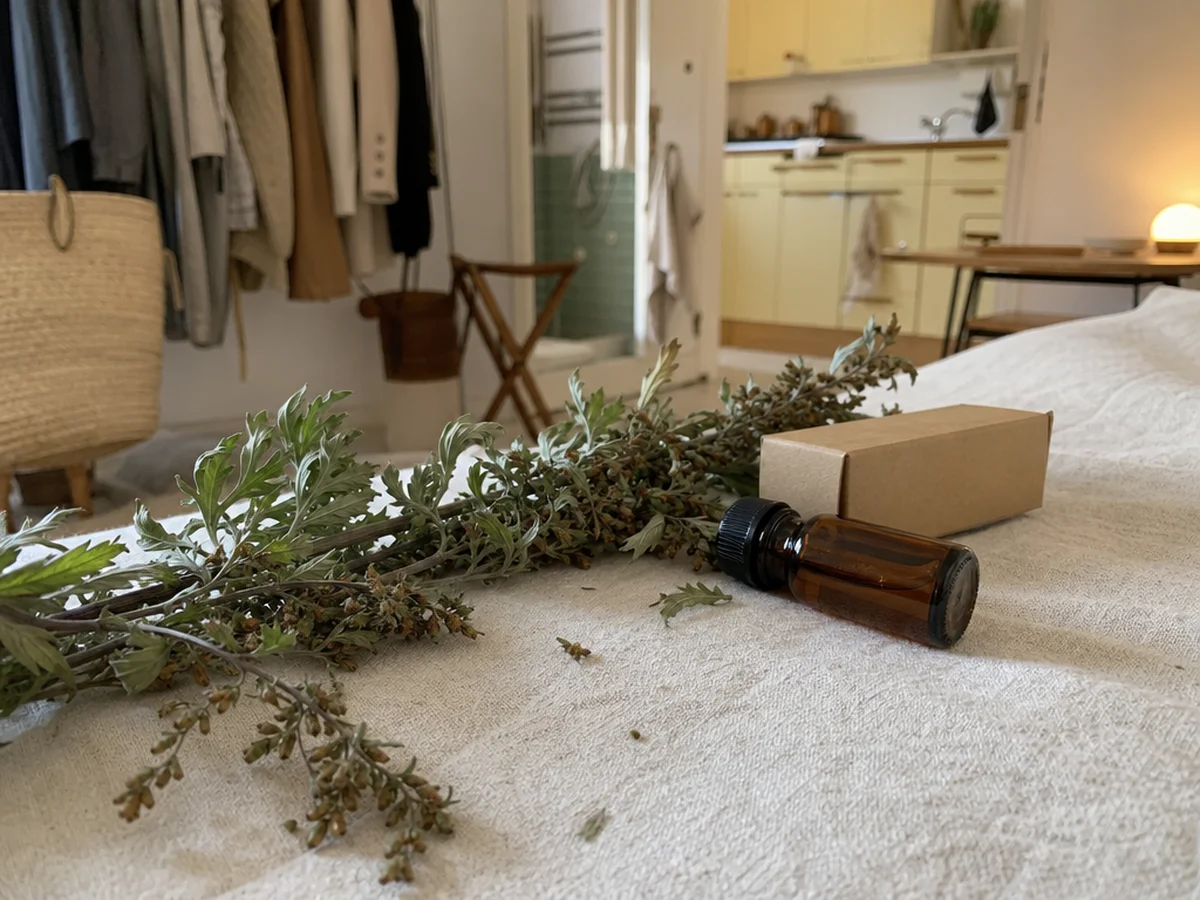
Finished cosmetics follow their own labeling rules: in the US, ingredients are declared in descending order of predominance and "fragrance" may be declared as such (21 CFR 701.3). Those rules do not require a species, plant part or thujone figure on a bottle of oil sold as a craft material, which is how we sell ours. Our cleansing oil article shows how a finished product's label reads.
Safety wording next to the label
Mugwort oils can contain thujone, and a label does not tell you how much. The IFRA Standards (51st Amendment) limit thujone in finished products by category: 1.4% for fine fragrance (Category 4), 0.095% for body creams and oils (Category 5A) and 0.016% for Category 5C. The standard names thujone and no mugwort oil, so the working number is the cap divided by the oil's thujone share; at 10% thujone, a Category 5A product could hold 0.95% oil. That is illustration, not a figure for our oil.
For skin use our guidance is to dilute to 0.5% to 2% in a carrier oil and patch test first, and we keep dilutions minimal, treating the low end as the sensible place to start. We also say to avoid use during pregnancy, keep it from children and pets, and never take it internally. A label that gives a dilution but no thujone figure has not told you the ceiling, so ask.
A five-minute label audit
- Is a Latin name printed, and does the paperwork name the same plant?
- Are plant part and method stated?
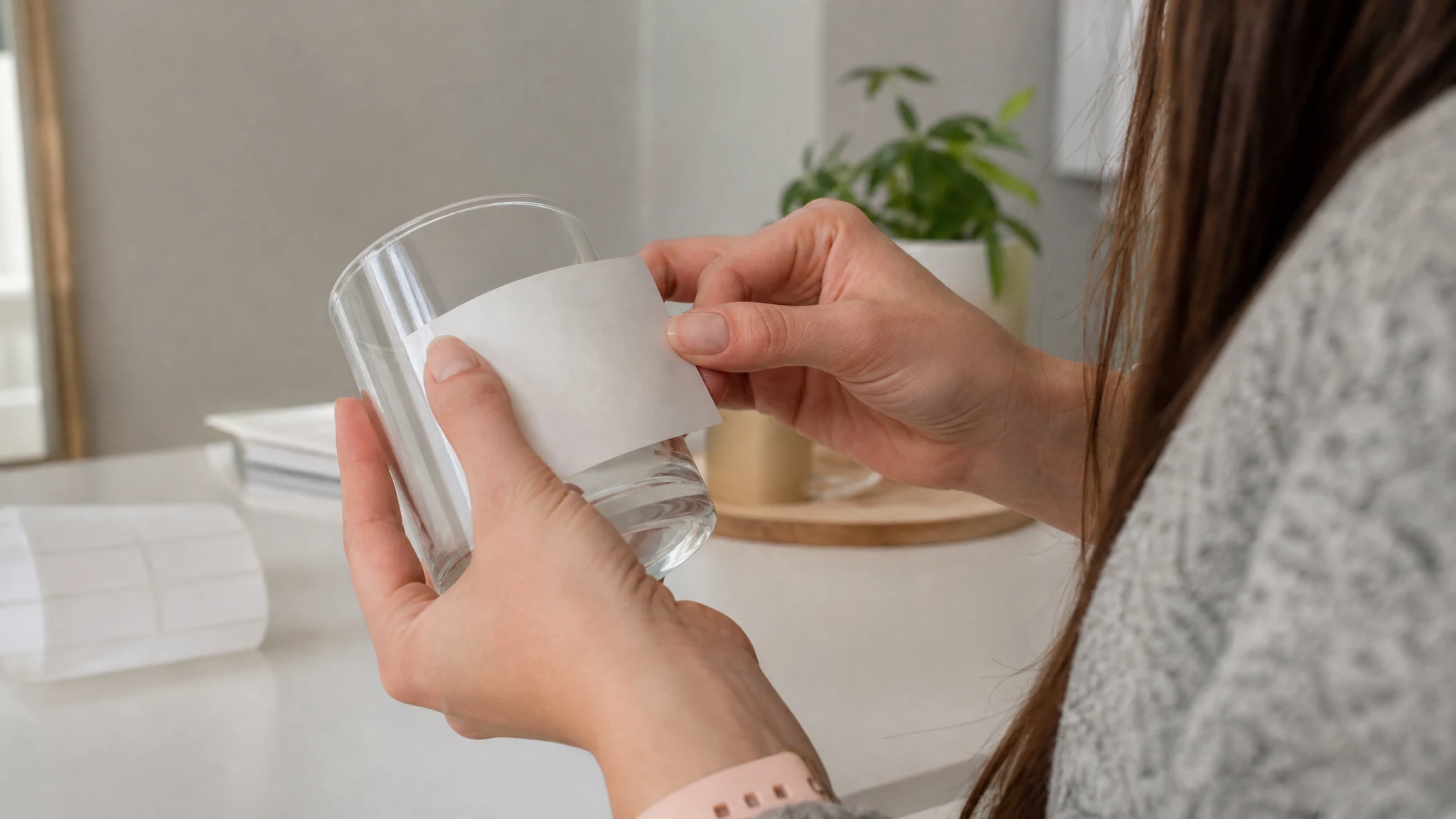
- Does the batch number on the bottle match the certificate?
- Is any composition claim backed by a GC-MS table for that batch?
- Will the seller put origin and testing claims in writing?
Keep the label and the certificate together in one folder, even if you only own a single bottle. When you come back to the oil months later, the answers will be where you left them.
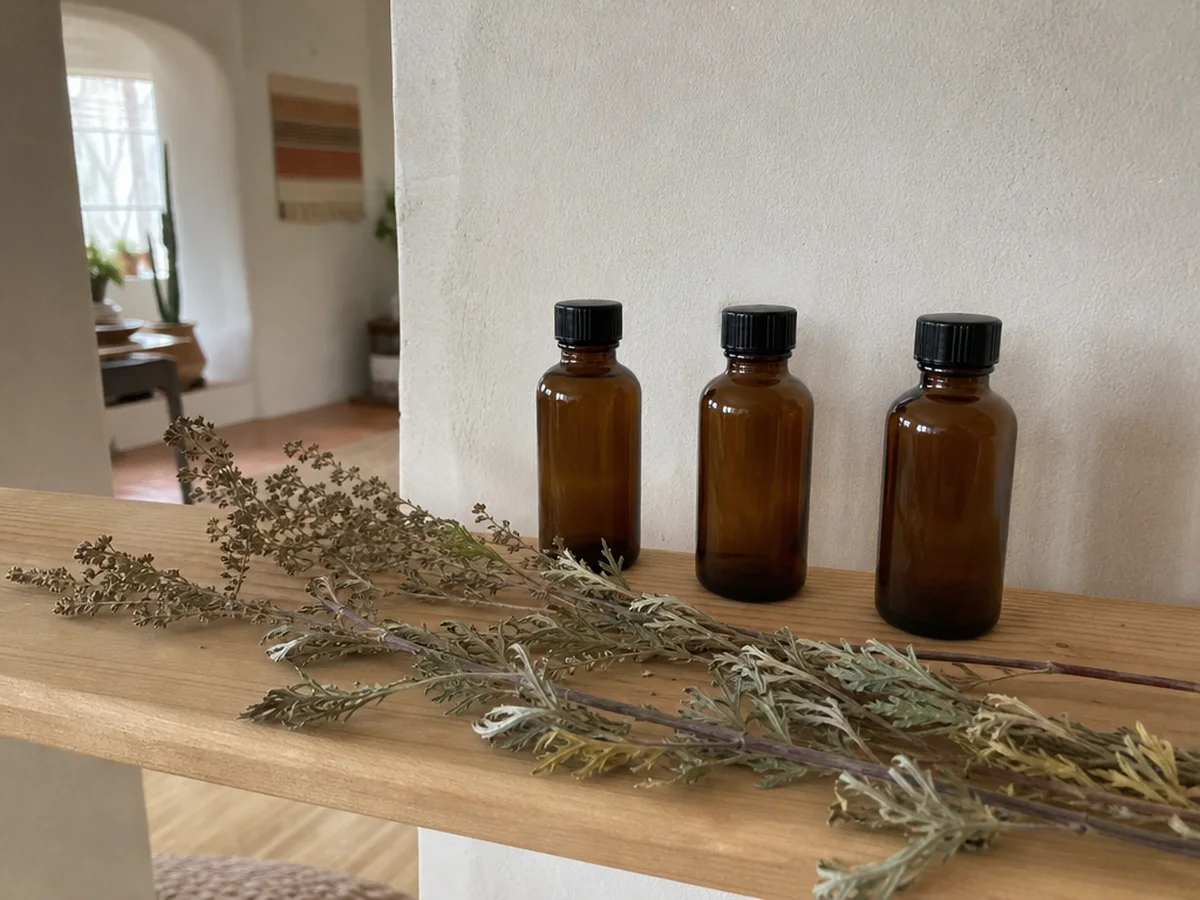
Every "no" is a question to send before you order. Our article on organic and wildcrafted claims pairs well with this one, as does the composition overview, and a seller who answers plainly is one worth coming back to.
Mugwort Essential Oil
Mugwort Essential Oil from our own shop, in sizes from 0.5 oz to bulk.
From $16.99
Shop Now →Sources & Further Reading
- Chemical Profile and Biological Activities of Essential Oil from Artemisia vulgaris L. Cultivated in Brazil. Pharmaceuticals 2019;12(2):49. PMC6631396
- Chemical Composition and Antimicrobial Activities of Artemisia argyi Lévl. et Vant Essential Oils Extracted by Simultaneous Distillation-Extraction, Subcritical Extraction and Hydrodistillation. Molecules 2019;24(3):483. PMC6384757
- The antimicrobial effect and mechanism of the Artemisia argyi essential oil against bacteria and fungus. Brazilian Journal of Microbiology 2024;55. PMC10920523
- Advanced analytical techniques for authenticity identification and quality evaluation in Essential oils: A review. Food Chemistry 2024;451:139340. Europe PMC
- 21 CFR § 701.3 - Designation of ingredients. Legal Information Institute, Cornell Law School. law.cornell.edu
- Fragrances in Cosmetics | FDA. fda.gov
- The complete IFRA Standards, up to and including the 51th Amendment (January 2024), Standard "Thujone" (Amendment 49). IFRA. IFRA Standards, 51st Amendment