Mugwort Oil Prices: Compare by Batch, Not by Bottle
Two mugwort oil listings can be priced the same per bottle and be nothing alike once you do the sums. One is in millilitres, another in grams, a third in ounces; one names a plant and a plant part, another says only "mugwort". A bottle price can hide all of that, so the most useful price comparison is one worked out per batch of whatever you plan to make. We do not quote prices in articles, and our shop page always shows the current price for each size, but we can show you how to do the comparison.

Mugwort Essential Oil
Our own Mugwort Essential Oil, in sizes from 0.5 oz to bulk.
From $16.99
Shop Now →Put everything in the same unit
Start by converting each listing to millilitres. For a listing in grams you need the oil's density. The batch on our published Certificate of Analysis has a relative density of 0.895 at 20 C, so one millilitre weighs about 0.895 g, and a pound (453.6 g) is about 507 ml. Other oils have other densities, so ask a seller for theirs when the listing is by weight and you plan to measure by volume.
Then divide: price over millilitres gives cost per ml, and a further division by about 20 gives cost per drop, since a typical dropper delivers around 20 drops to the millilitre. That tells you which listing costs less per unit of liquid and nothing more, which is exactly why it is only the first step.
Then price the batch, not the bottle
What matters is the cost of what you make. Take a 30 ml batch of carrier oil. Our skin guidance is 0.5% to 2% in a carrier with a patch test, and that range works out to roughly 0.15 to 0.6 ml of oil, or about 3 to 12 drops. If your cost per ml is C, a batch costs between 0.15C and 0.6C. For a perfume accent, "a drop or two" is about 0.05 to 0.1 ml, so a 0.5 oz bottle (14.8 ml) gives a few hundred accents, and the gap in price per ml between two listings shrinks to pennies per accent.
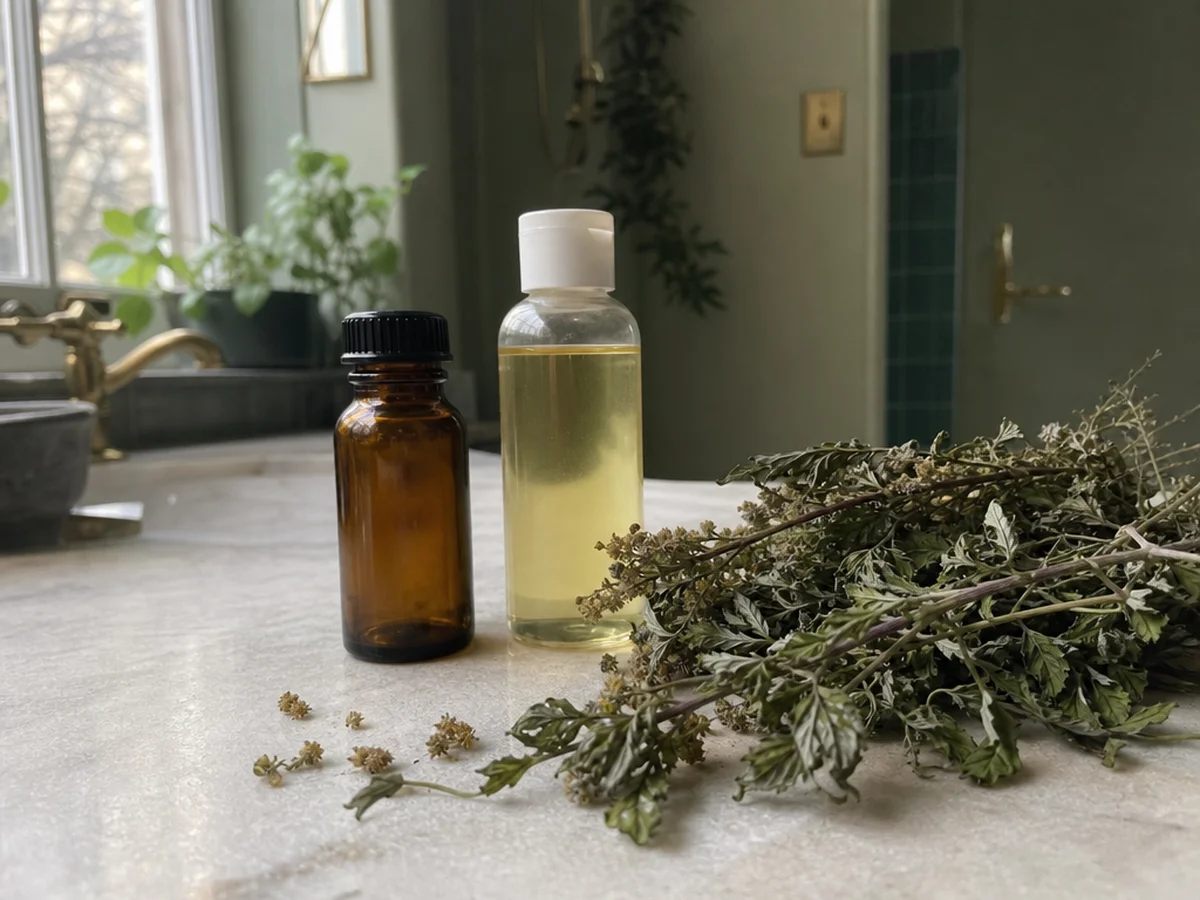
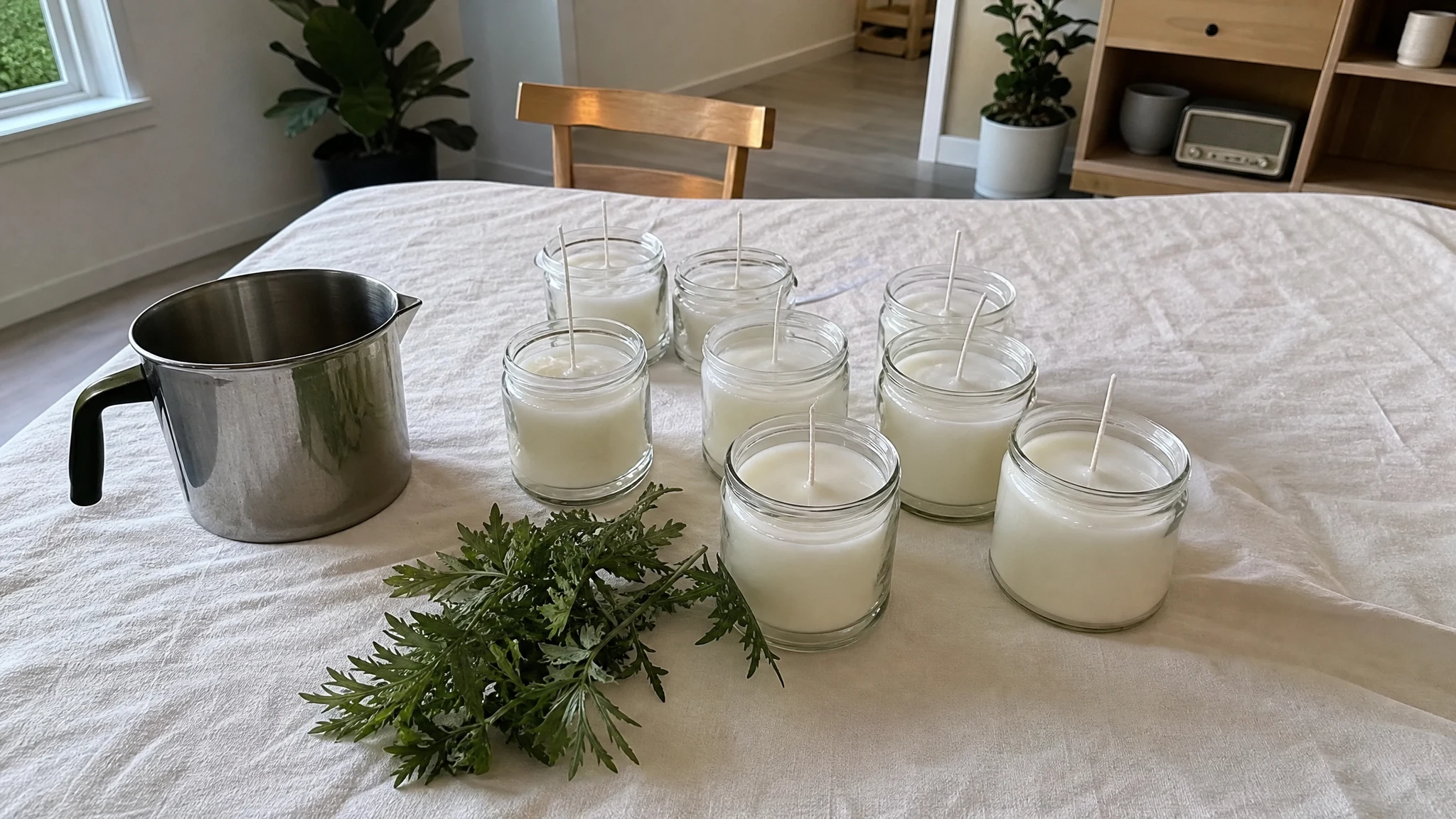
That arithmetic suggests something we would genuinely recommend: if you are buying a small amount, pay attention to the species named, the paperwork and the seller's willingness to answer questions before you chase the lowest cost per ml. Larger buyers, such as a candle maker who pours many batches, should compare cost per ml carefully, but only once the load question below is settled. Our bottle-size guide turns these numbers into a size recommendation.
Why listings differ in the first place
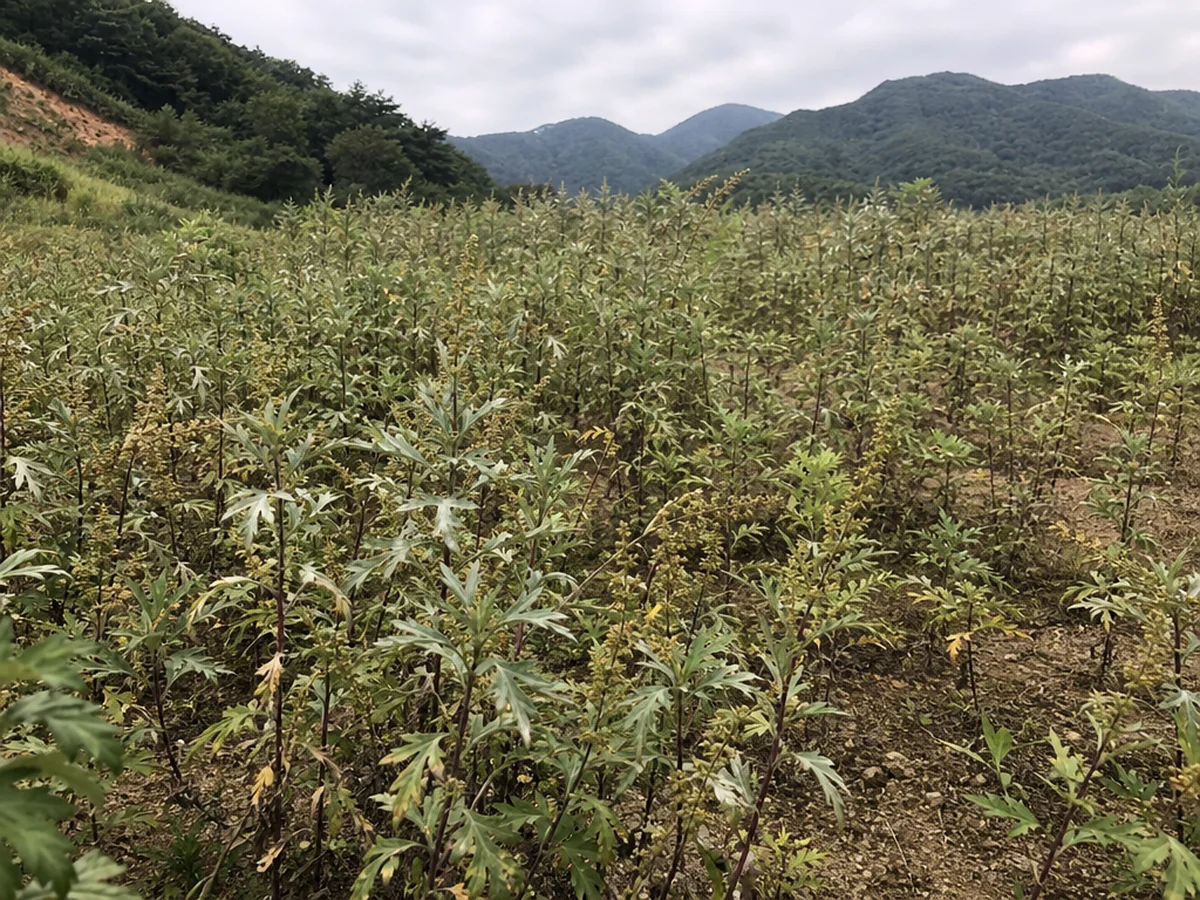
Plants give up very little oil. In one study, ground Artemisia argyi leaves from a farm in Qichun, China, yielded 0.50% of dry weight by hydrodistillation over 240 minutes, 1.00% by subcritical extraction and 1.20% by simultaneous distillation-extraction (Guan and colleagues, 2019). At half a percent, you would need about 200 g of dry plant for each gram of oil, before any losses. These are laboratory figures and say nothing certain about commercial production. They do show that raw material per gram of oil is a real cost, and that species, plant part and method change both the amount and the character of the oil. Honest price differences follow from that.
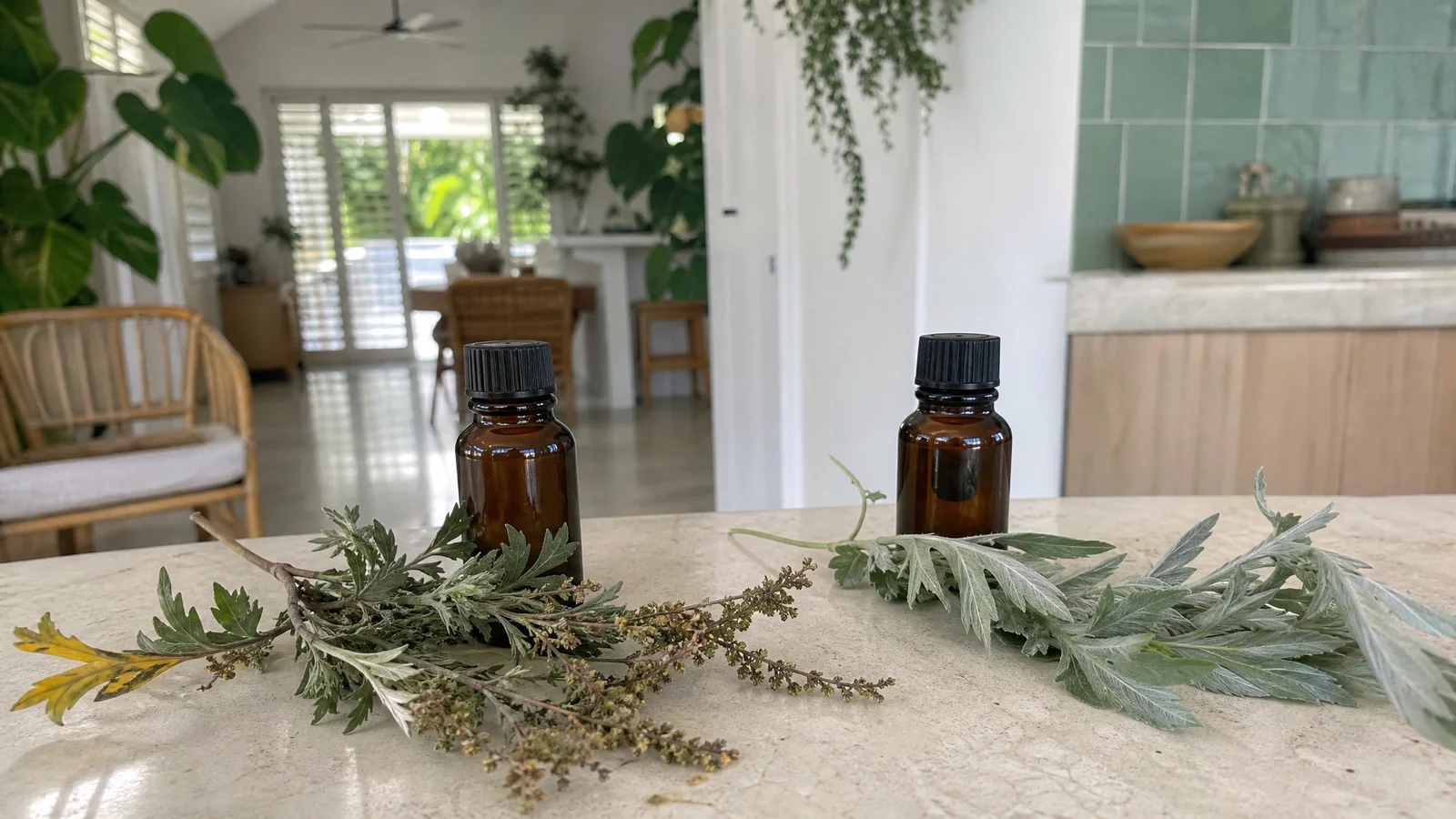
It also explains why we suggest comparing only listings that name the same plant and plant part. A listing that names neither is a different product for comparison purposes, and it is fair to ask the seller for more detail first.
A very low price is a reason to ask questions
We will not set a number below which an oil is "too cheap", because we have no sourced figure to base it on. A 2024 review of authenticity methods in essential oils notes that their high economic value has led to widespread adulteration, and describes sensory, physical and chemical property and composition-based testing (Yang and colleagues, 2024). It does not rank mugwort, so we will not either. What it supports is simple: price alone cannot tell you what is in the bottle, while documents can. Our quality-checks article lists what to ask for.
The load limit can change the ranking
The IFRA Standards (51st Amendment) restrict thujone in finished products by category, for example 1.4% for fine fragrance (Category 4), 0.095% for body creams and oils (Category 5A) and 9.5% for candles (Category 12). The most oil a product can hold is the cap divided by the oil's thujone share. Published analyses of mugwort oils range from no thujone mentioned to alpha-thujone near 11% in one extraction (Guan and colleagues, 2019), so the share varies a great deal. An oil with a higher share has a lower ceiling, which can turn a bargain per ml into a poor value per usable batch.
We do not publish a thujone figure for our oil, and the Certificate of Analysis for the batch we publish lists density and refractive index. If your formulation depends on a thujone figure, please ask us in writing through the contact page and get the answer in writing, and ask any other seller the same. We keep dilutions minimal and think the low end of our 0.5% to 2% range is the sensible place to start. We also say to avoid use during pregnancy, around children and pets, and never to take the oil internally.
A comparison sheet you can copy
- Species and plant part named on the listing?
- Volume or weight converted to ml, with the seller's density?
- Cost per ml, then per drop?
- Dose from your formula, then cost per batch?
- Documents offered in writing: GC-MS, thujone figure, safety data sheet, batch number?
- Shipping and minimums, which change small-order costs?
Treat every blank as a gap to ask about rather than a verdict. For per-pound questions on larger quantities, our wholesale page is the place to start, and a worked comparison on paper is far easier to live with than a bargain you cannot use.
Whatever you end up choosing, keep your worked sums in a notebook. Next time you compare, you will start from your own numbers instead of from a listing.
Mugwort Essential Oil
Mugwort Essential Oil from our own shop, in sizes from 0.5 oz to bulk.
From $16.99
Shop Now →Sources & Further Reading
- Chemical Composition and Antimicrobial Activities of Artemisia argyi Lévl. et Vant Essential Oils Extracted by Simultaneous Distillation-Extraction, Subcritical Extraction and Hydrodistillation. Molecules 2019;24(3):483. PMC6384757
- Advanced analytical techniques for authenticity identification and quality evaluation in Essential oils: A review. Food Chemistry 2024;451:139340. Europe PMC
- The complete IFRA Standards, up to and including the 51th Amendment (January 2024), Standard "Thujone" (Amendment 49). IFRA. IFRA Standards, 51st Amendment