Armoise Oil: Is It the Same as Mugwort Oil?
Open a perfumer's supplier catalogue and you will find armoise, a word that sounds like a grade of mugwort. It is not. Armoise is simply the French name for the Artemisia family, and what sits behind it can be a different plant from the mugwort an English-speaking buyer has in mind. The good news is that three questions put to any supplier sort it out.
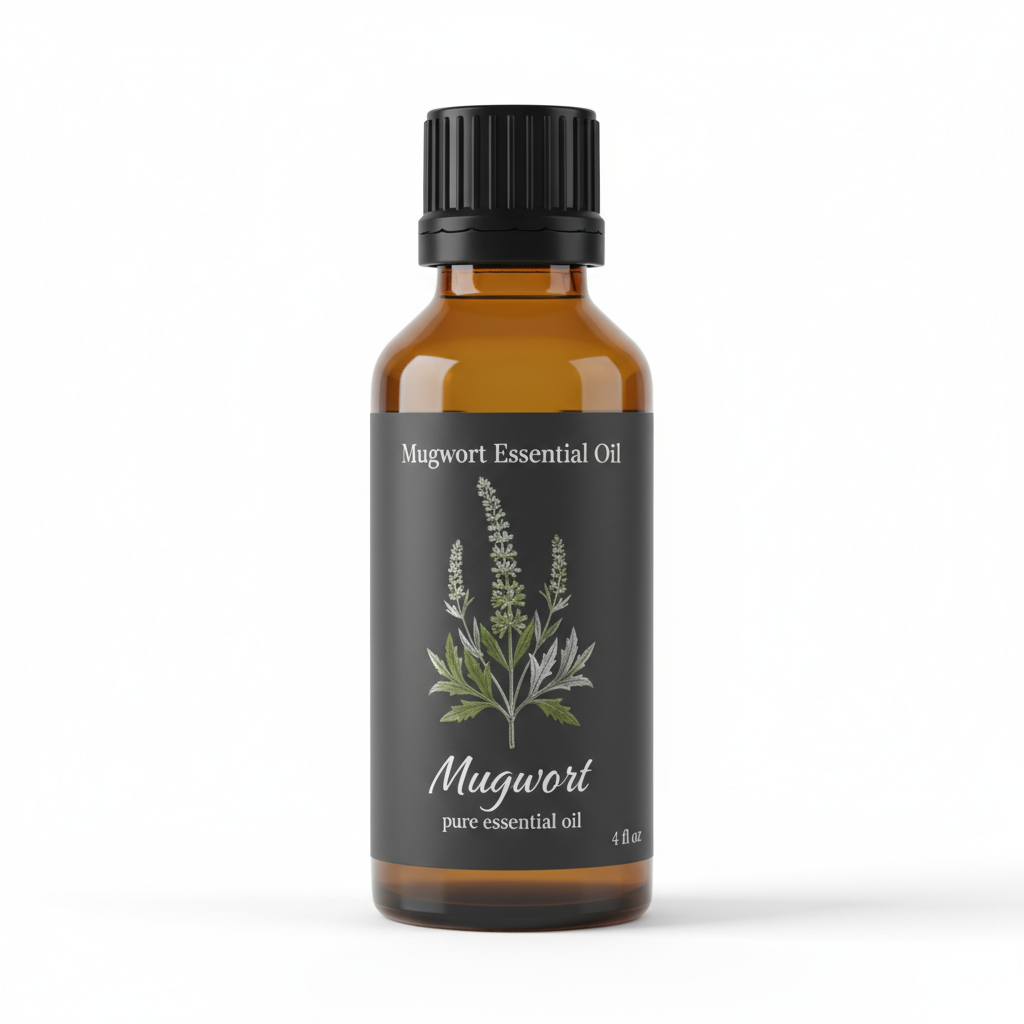
Mugwort Essential Oil
Our own Mugwort Essential Oil, in sizes from 0.5 oz to bulk.
From $16.99
Shop Now →Armoise and mugwort are cousins, not twins
Look at how three suppliers list their armoise and the pattern shows up fast. Eden Botanicals headlines its page "Armoise (Mugwort)" and then gives the botanical name as Artemisia herba-alba Asso, steam-distilled leaves from wild plants in Morocco (Armoise (Mugwort) - Wild EO | Eden Botanicals). Biolandes, a raw-material house, also lists Artemisia herba-alba, and says it is harvested in the High Atlas of southeastern Morocco under government concessions, noting that several armoise species are used in perfumery primarily for their thujone content (ARMOISE - Biolandes). The Fraterworks page for its Moroccan armoise gives the same species (Armoise Oil, Morocco - Fraterworks).
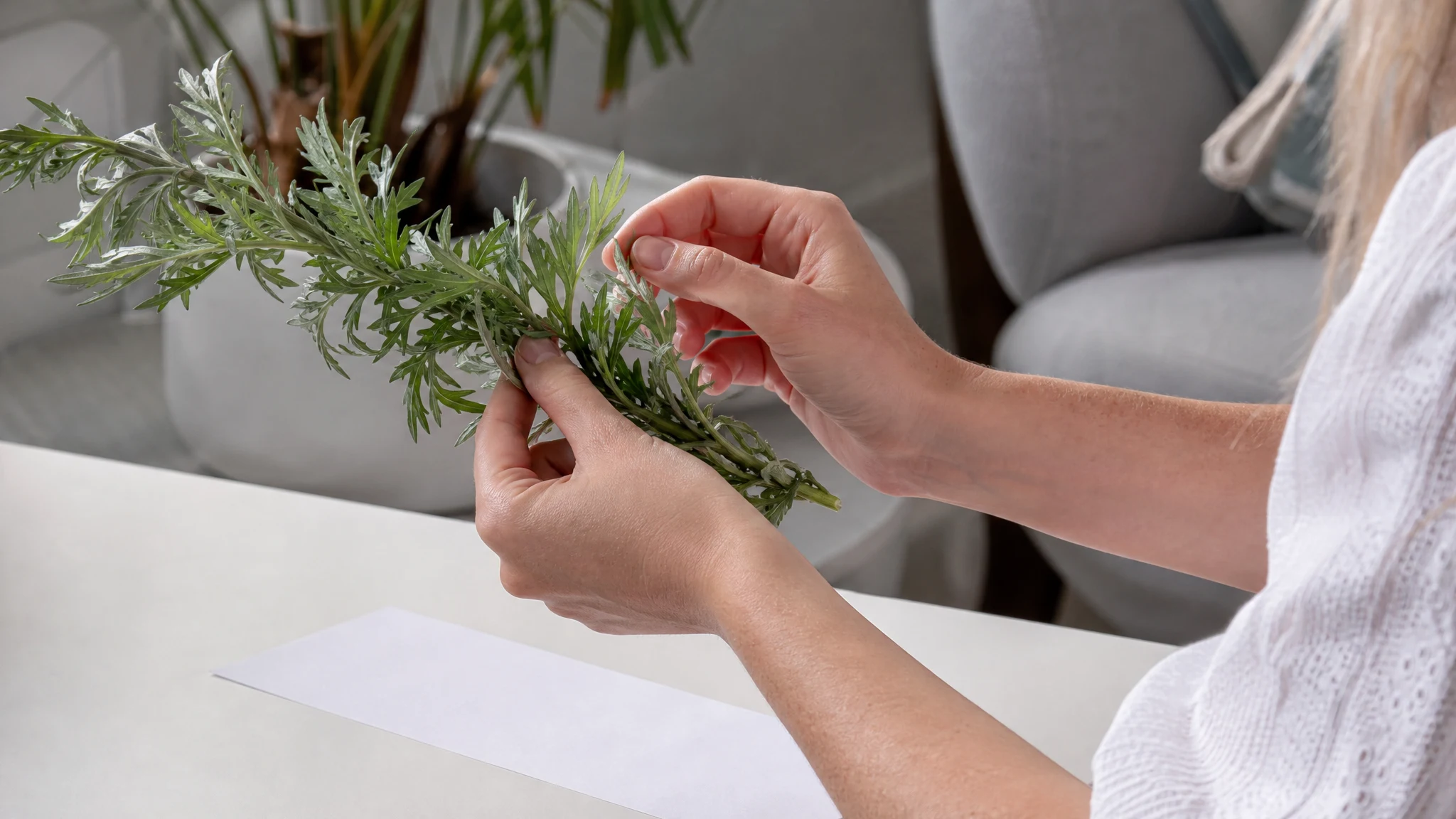
That is a different species from Artemisia vulgaris, the plant most English-language pages mean by mugwort. All of them are in the same genus, which is why the names slide into each other, but a perfumer who orders "armoise" and expects the oil of common mugwort may be in for a surprise. The reverse is true too. If a mugwort oil is what you are after, a quote that says only "armoise" does not tell you enough yet.
Why perfumers like it so much
Armoise earns its place on the bench. Biolandes describes sweet, fresh, slightly mentholated top notes with a camphor lift, and suggests it for fougère and cologne structures. Fraterworks calls it a "bridge note" that joins fresh tops to woody hearts. Even the note position is a matter of the supplier's view: Eden lists top and middle, Fraterworks a heart note, and Biolandes talks of top notes. We find that a pleasing reminder that these are descriptions of a living material and not a fixed rank. Our own mugwort oil, as we describe it, is green, bitter and camphoraceous with sage-like, herbaceous facets and a curious sweet undertone, and we list it as a middle note.
The three-line check before you compare quotes
- The Latin name, with its authority. "Asso" after herba-alba and "L." after vulgaris are small letters that tell you which plant you are buying.
- The plant part and the form. Leaves, aerial parts and whole herb give different oils, and an absolute or concrete (a solvent extract) is a different product from a steam-distilled oil.
- A gas chromatography report for the lot, with alpha-thujone and beta-thujone on separate lines. This is the number that decides what you can do with the oil.
Reading a catalogue like a perfumer
Supplier catalogues are written to sell, so a little patience pays. The short description at the top of a page is usually the marketing; the botanical name and the form are further down, and those are the lines to read first. If a page leaves out the Latin name altogether, treat that as a question to put to the supplier before you put anything in a basket.
It also helps to keep a simple notebook page for each material, with the name as sold, the Latin name, the plant part and the date you smelled it. A year from now, when two bottles on your shelf both say "armoise", you will be glad to have it.
Where the thujone arithmetic comes in
IFRA, the fragrance industry's standards body, has no standard named for armoise or mugwort oil. What it has is a standard on thujone itself, which limits the amount that may end up in a finished product, from 1.4% in fine fragrance to 0.095% in body oils and lotions (IFRA, 51st Amendment Standards compilation, Thujone Standard). So the allowed share of an oil depends on its thujone content, which is why lot-specific analysis matters so much. The name on the raw-material sheet, the name on the label and the name on the analysis should all point to the same plant.
One supplier shows the working. Fraterworks lists a maximum of 2.641% of its armoise in a fine-fragrance product. Divide the 1.4% fine-fragrance thujone cap by 2.641% and you get about 0.53, so the supplier appears to have assumed an oil of around 53% thujone. That is our back-calculation, not a number the supplier states, and the page itself says such figures do not replace analysis of an individual lot. It does show how far apart oils in this family can be, and how much room there is between an oil with a large share of thujone and one with little or none.
Eden Botanicals adds a caution of its own for its armoise: no more than 0.25% for short-term or occasional topical use, and not for children, the elderly, people with epilepsy, or during pregnancy and nursing. That is a retailer's guidance for a herba-alba oil and we would not carry it across to another oil, but it is a fair illustration of why we keep our own skin dilutions to the low end and recommend our oil for fragrance craft.
Putting it to work
When you do smell them side by side, use fresh blotter strips and label each one in pencil before you dip it. Smell the strips right away, then again after ten minutes, then after an hour. Green, bitter oils tend to change as the sharpest top facets lift away, and you may notice the sweeter, drier part settling in behind them. Take notes as you go, because noses tire quickly, and come back to the strips after a break with fresh air.
If you are weighing armoise against mugwort for a green, herbal accord, treat them as two separate materials and smell them side by side on strips. For ideas on where mugwort sits in a perfume, mugwort in fougère and chypre accords is a good next stop, mugwort vs wormwood covers the neighbouring species, and reading a mugwort oil label goes through the label line by line. If your formula needs paperwork beyond the Certificate of Analysis, ask us in writing through the contact page and get the answer in writing before you build on it.
Mugwort Essential Oil
Mugwort Essential Oil from our own shop, in sizes from 0.5 oz to bulk.
From $16.99
Shop Now →Sources & Further Reading
- Armoise (Mugwort) - Wild EO | Eden Botanicals. edenbotanicals.com
- ARMOISE - Biolandes. biolandes.com
- Armoise Oil, Morocco - Fraterworks. fraterworks.com
- IFRA, 51st Amendment Standards compilation, Thujone Standard. IFRA Standards