How Mugwort Oil Is Made: Steam, Leaf and Yield
Pick up a small bottle of mugwort oil and it is easy to forget that it began as a leafy plant. Getting from one to the other takes steam, patience and a surprising amount of plant. Here is how the process works, and why the details of the run matter to anyone buying or using the oil.

Mugwort Essential Oil
Our own Mugwort Essential Oil, in sizes from 0.5 oz to bulk.
From $16.99
Shop Now →Steam, then a cool-down
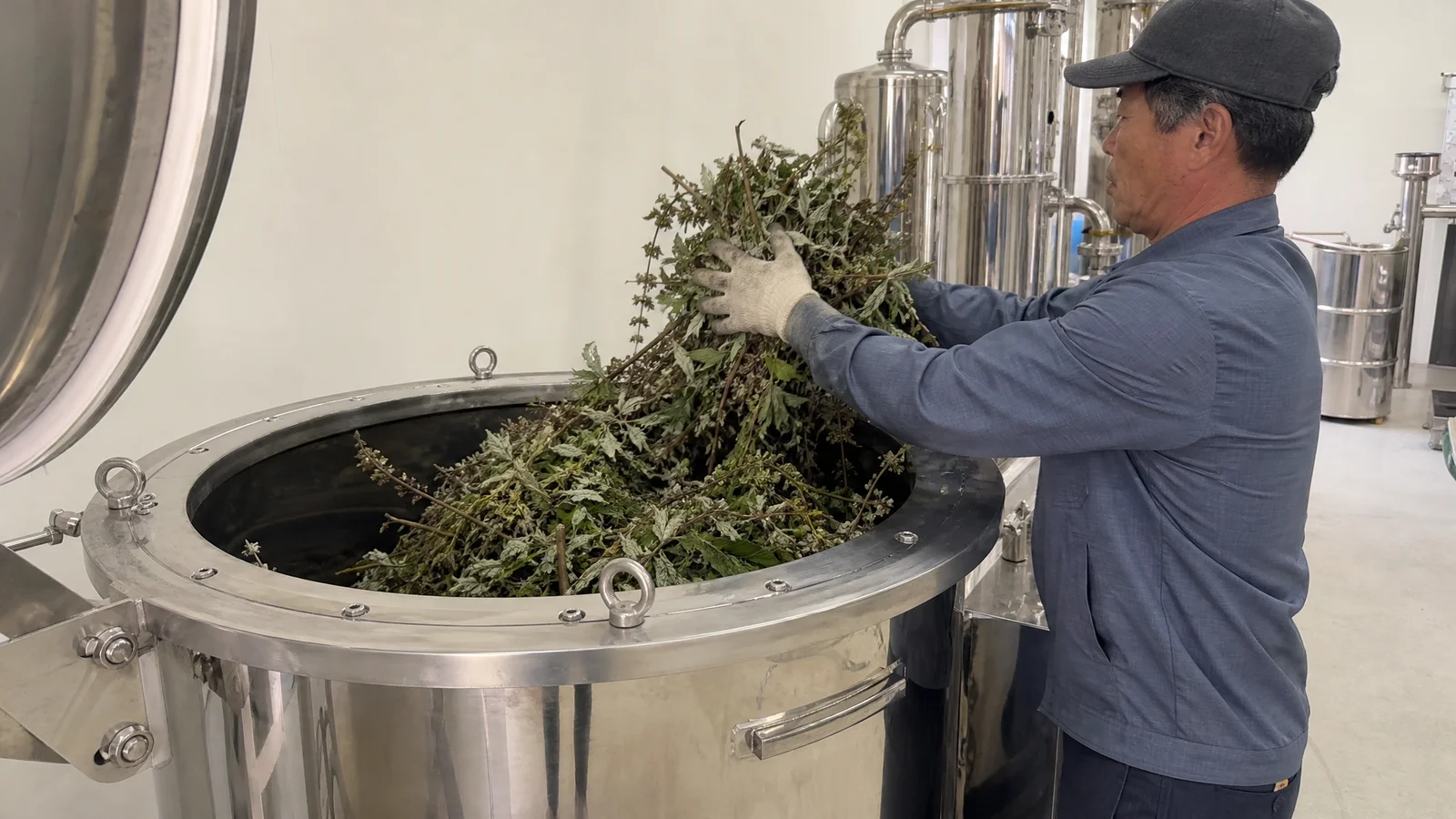
The idea behind steam distillation is simple and rather elegant. Steam is passed through the plant material, the heat breaks down the plant cells, and the steam carries the aromatic molecules away as vapor. That vapor is cooled back into liquid, and because oil and water do not mix, the oil can be lifted off the water. An engineering chapter on extraction describes it just this way, and notes that a run can take anywhere from one to ten hours depending on temperature, pressure and the type of material (Essential Oil Extraction Process, Souiy, IntechOpen).
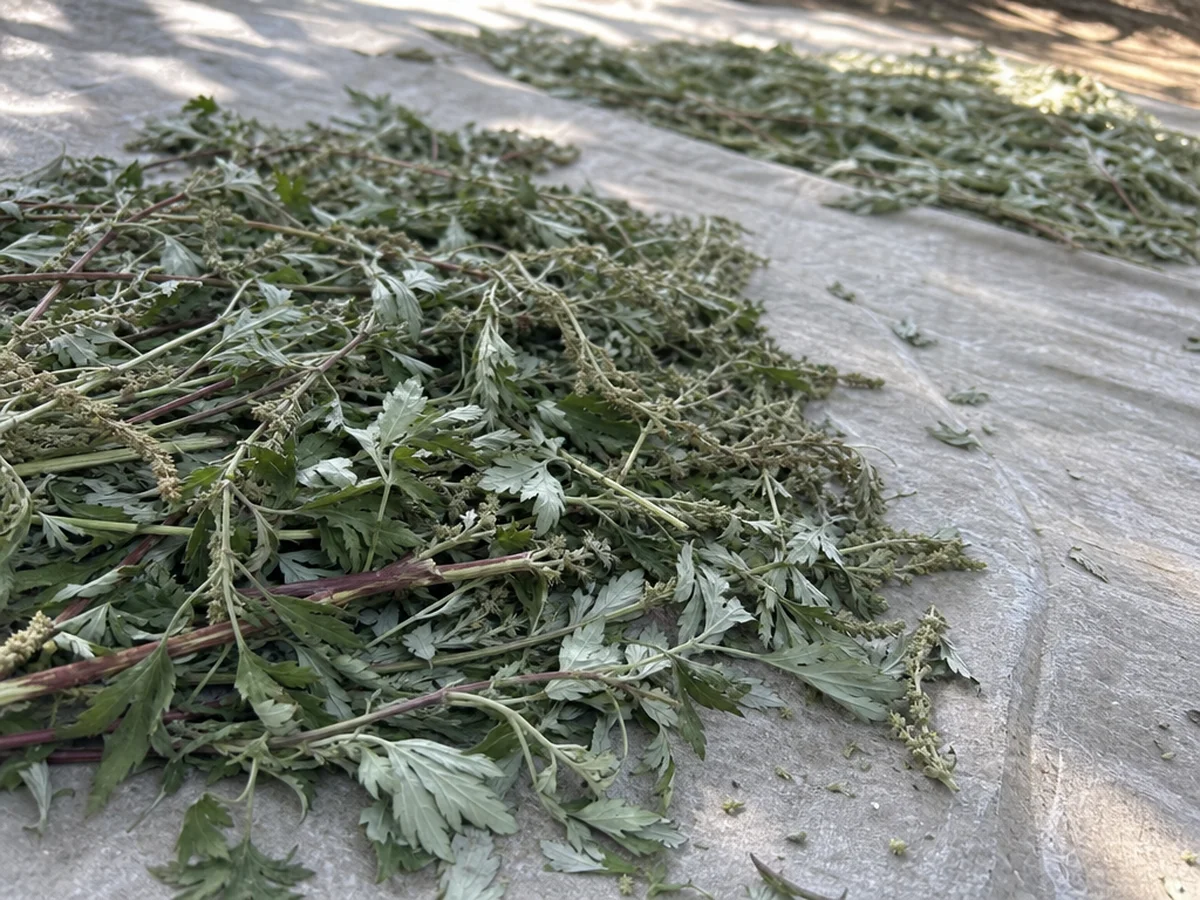
The oil we sell is steam-distilled and sold neat, with nothing added. The chain behind a bottle runs from harvest at the right point of growth, through sorting to remove stems and debris, to distillation and bottling stored away from heat and light. It is a short list, and each step shapes what ends up in the bottle.
Steam distillation versus boiling in water
Here is a detail that explains why oils with the same name differ. In true steam distillation, steam passes through the plant. In hydrodistillation, the plant sits in boiling water. The extraction chapter notes that long exposure to boiling water can break down delicate esters and that woody parts need longer runs than leafy ones. Both methods are called "distillation" in everyday talk, and a lot of the published mugwort research uses the second.
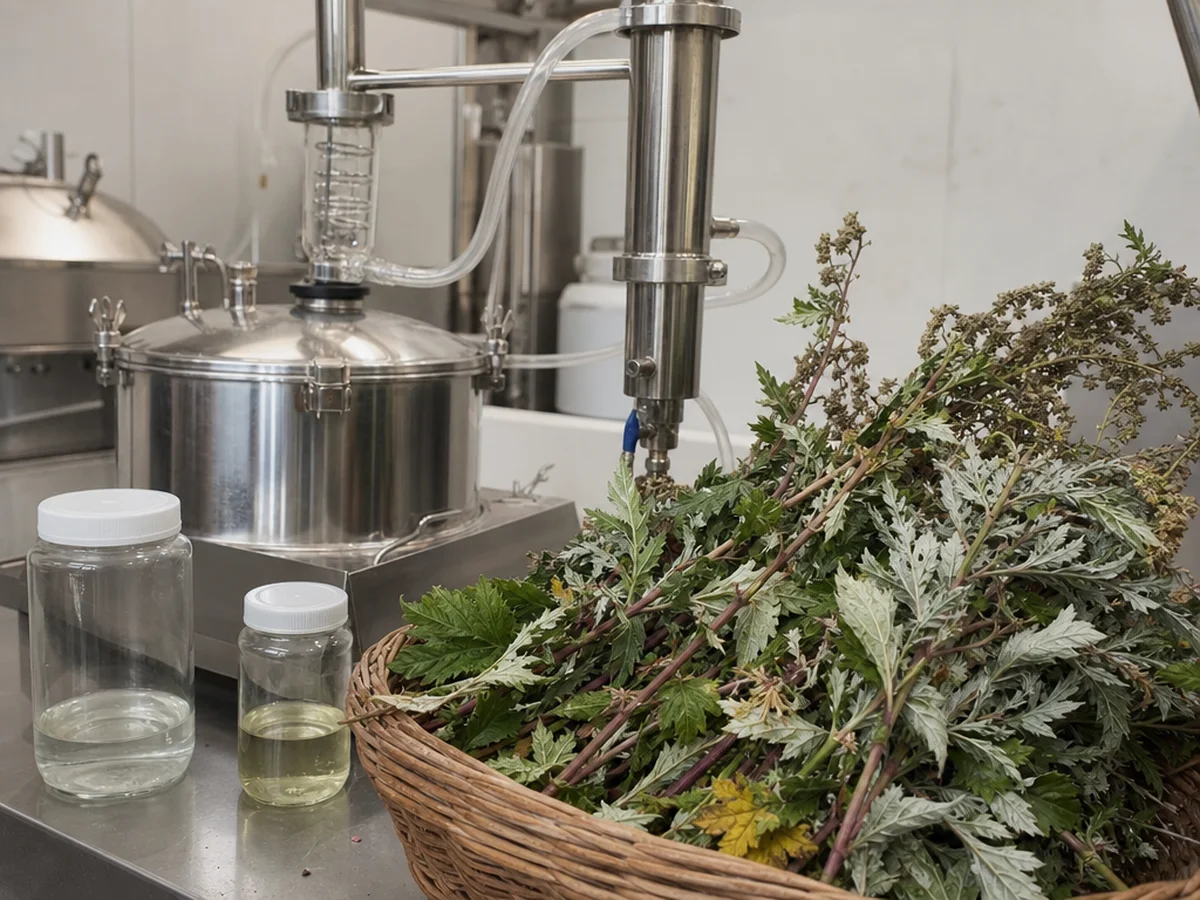
One study ground 100 g of Artemisia argyi leaves with 1,500 mL of water and ran a Clevenger apparatus for four hours, which is hydrodistillation, and collected a dark green oil at 0.50% of the plant's weight (Guan et al., 2019). Another team used 250 g of dried leaf and stem powder in an extractor for eight hours and described it as steam distillation (Li et al.). A third distilled cultivated Artemisia vulgaris for three hours and reported 0.5% by volume (Malik et al., 2019). Different plants, plant parts and run times, all producing something called mugwort oil.
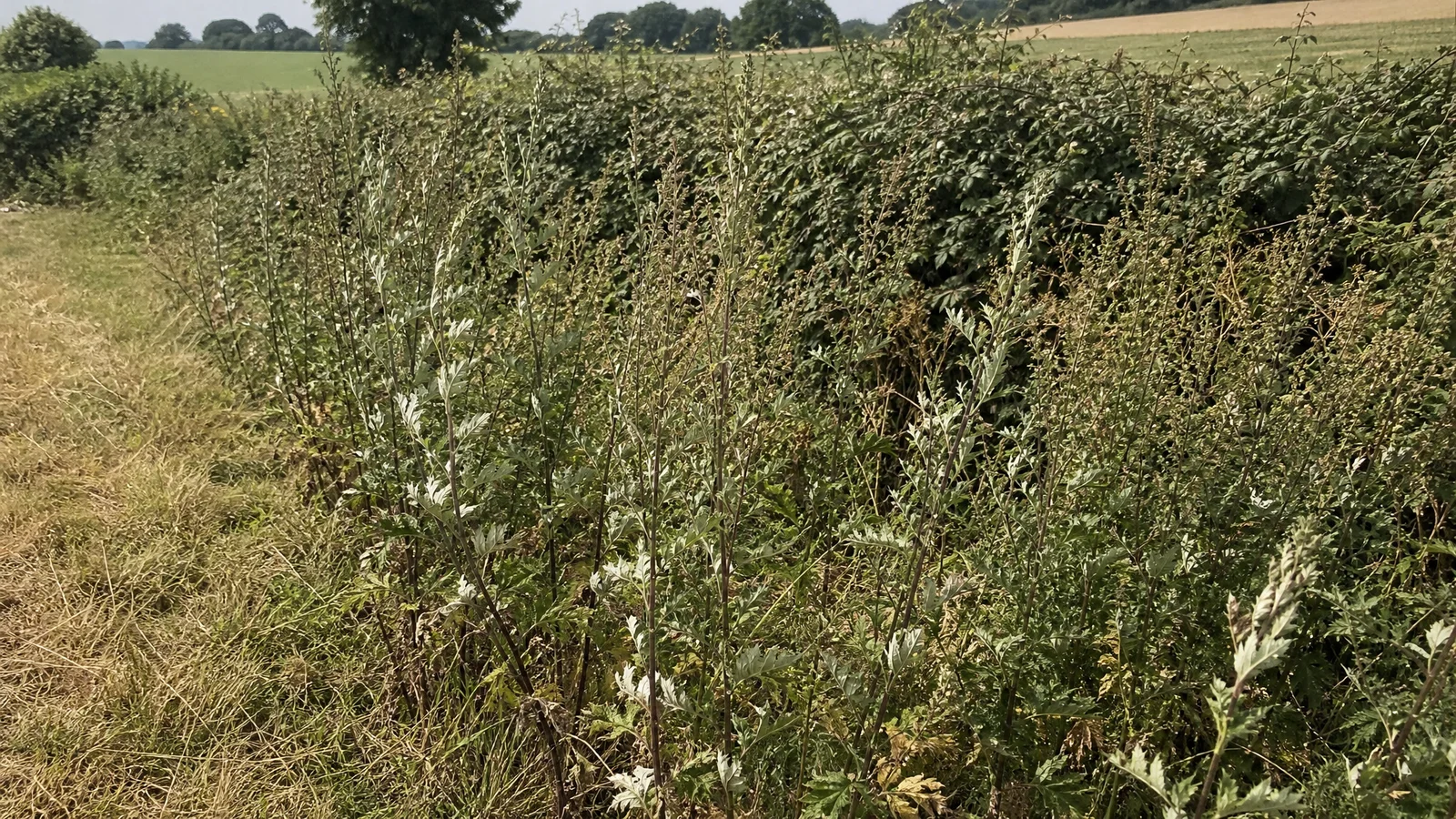
If you have ever walked through a patch of mugwort in late summer, you know the plant has a smell of its own: crush a leaf between your fingers and a green, bitter, slightly camphor-like scent comes off at once. It is a good way to get a feel for what a distiller is trying to capture, and a gentle reminder that the oil in your bottle is a concentrated cousin of that crushed-leaf smell, not an exact copy of it.
How much plant is in one bottle?
A yield of 0.50% means 5 g of oil from each kilogram of plant. That is a small return, and a little arithmetic makes it vivid. Using the relative density of 0.895 on the Certificate of Analysis we publish for one batch, a 0.5 oz bottle holds about 13.2 g of oil, which at a 0.50% yield would take around 2.6 kg of leaf. A pound of oil would need on the order of 90 kg. These are sums built on one published yield, not figures from our own run, but they explain why a niche oil is a special thing, and why it is so concentrated that a drop or two goes a long way.
How the method shapes the oil
The same Qichun leaves were also extracted two other ways, which makes a neat experiment. Hydrodistillation gave a dark green oil. Subcritical butane extraction gave a yellow oil at twice the yield, 1.00%, and a simultaneous distillation-extraction gave a pale yellow one at 1.20%. Alpha-thujone came out at about 8% in the first and about 11% in the second, and caryophyllene oxide fell from roughly 8.7% to 0.1%. The authors conclude that compound contents varied markedly with the extraction method. For readers, the message is friendly rather than frightening: a description of the method is part of knowing the oil, and any single "typical composition" is an average of several different things.
Why we like knowing the steps
We are fond of the unglamorous parts of a bottle's story: the sorting, the waiting, the careful bottling. They are not the parts that make it onto a label, yet they are the parts that decide whether a batch is clean and consistent. When you read about any oil, ask yourself whether the maker can describe each stage in plain words. If they can, that is a good sign. If every answer is a slogan, keep asking.
Questions worth asking any supplier
- Which plant part was distilled, and does the Latin name on the batch paperwork match the label?
- Was it steam distillation or hydrodistillation, and for how long?
- Is there a gas chromatography report for the batch that lists thujone?
- Does the paperwork belong to the batch you are buying?
We apply that last one to ourselves. The Certificate of Analysis we publish describes one batch, giving a relative density of 0.895 and a refractive index of 1.4750 at 20 C, and it does not claim to describe every lot. If you need a gas chromatography report, a thujone figure or a safety data sheet, ask us in writing through the contact page or the wholesale page and get the answer in writing before you rely on it.
Where to go next
Because the profile varies so much, our composition article is the natural next read, and our workshop checklist covers handling once the bottle is on your bench. If you would like the mugwort scent without any oil at all, working with the dried plant is a pleasant project.
A good habit when you open any new oil is to smell it from a little distance first, then closer, and to write down a few words about what you notice. Over time that tiny notebook becomes one of the most useful tools you own.
Next time you open a bottle, spare a thought for that mound of leaves. It is a lot of plant for a very small, very fragrant amount of oil.
Mugwort Essential Oil
Mugwort Essential Oil from our own shop, in sizes from 0.5 oz to bulk.
From $16.99
Shop Now →Sources & Further Reading
- Souiy Z. Essential Oil Extraction Process. IntechOpen, DOI 10.5772/intechopen.113311. IntechOpen chapter
- Guan X, et al. 2019. Chemical Composition and Antimicrobial Activities of Artemisia argyi Lévl. et Vant Essential Oils Extracted by Simultaneous Distillation-Extraction, Subcritical Extraction and Hydrodistillation. PMC6384757
- Li D, et al. The antimicrobial effect and mechanism of the Artemisia argyi essential oil against bacteria and fungus. PMC10920523
- Malik S, et al. 2019. Chemical Profile and Biological Activities of Essential Oil from Artemisia vulgaris L. Cultivated in Brazil. PMC6631396