Mugwort Plant Guide: Identify, Harvest and Dry It
In much of North America you do not have to go looking for mugwort. It is already growing along the roadside, in waste ground and at the edge of the woods, a silvery plant that most people walk straight past. Knowing what it looks like, why gardeners think twice before planting it and what a handful of its dried leaf has to do with a bottle of oil makes it a more interesting plant.

Mugwort Essential Oil
Our own Mugwort Essential Oil, in sizes from 0.5 oz to bulk.
From $16.99
Shop Now →Turn the leaf over
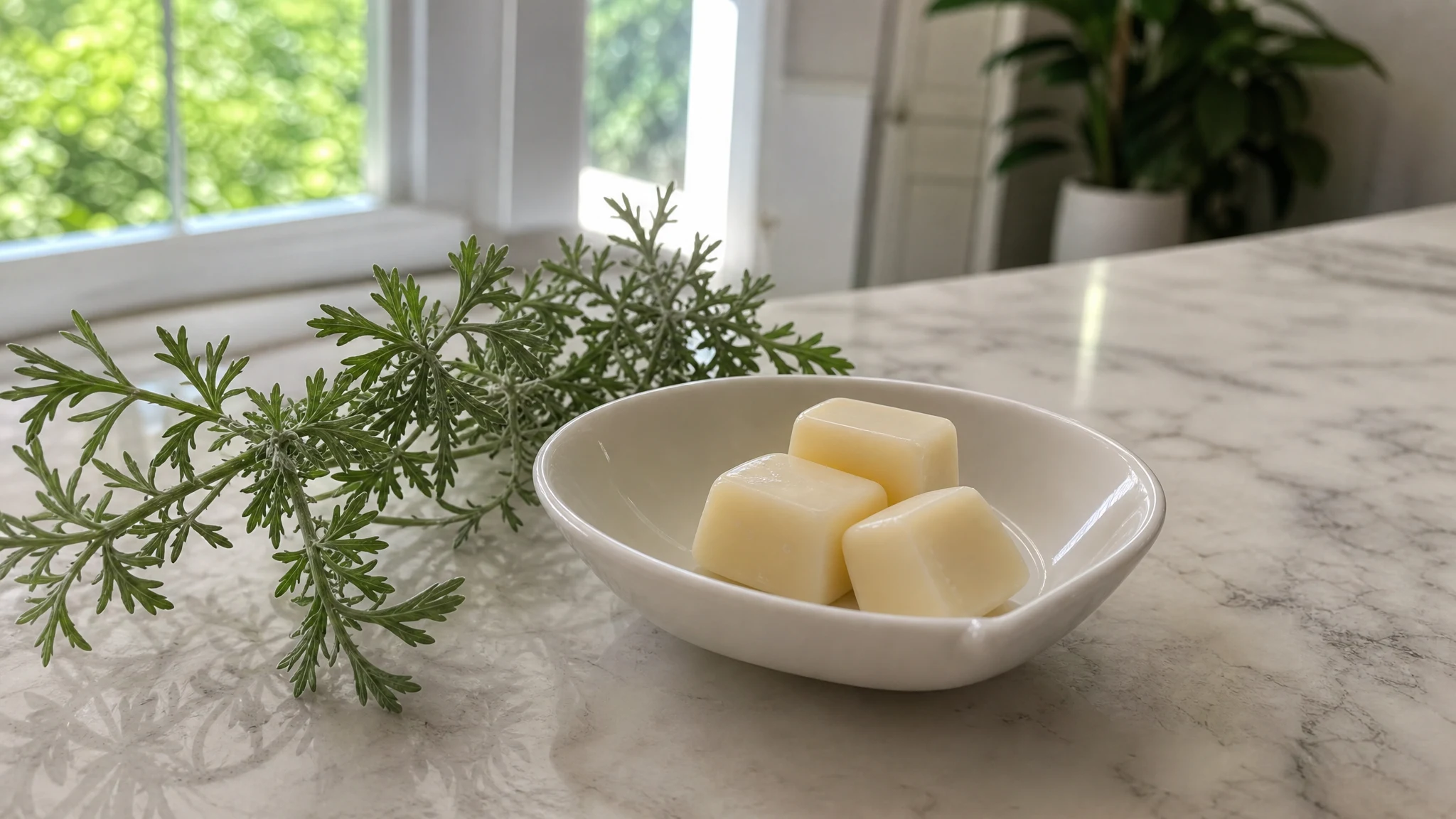
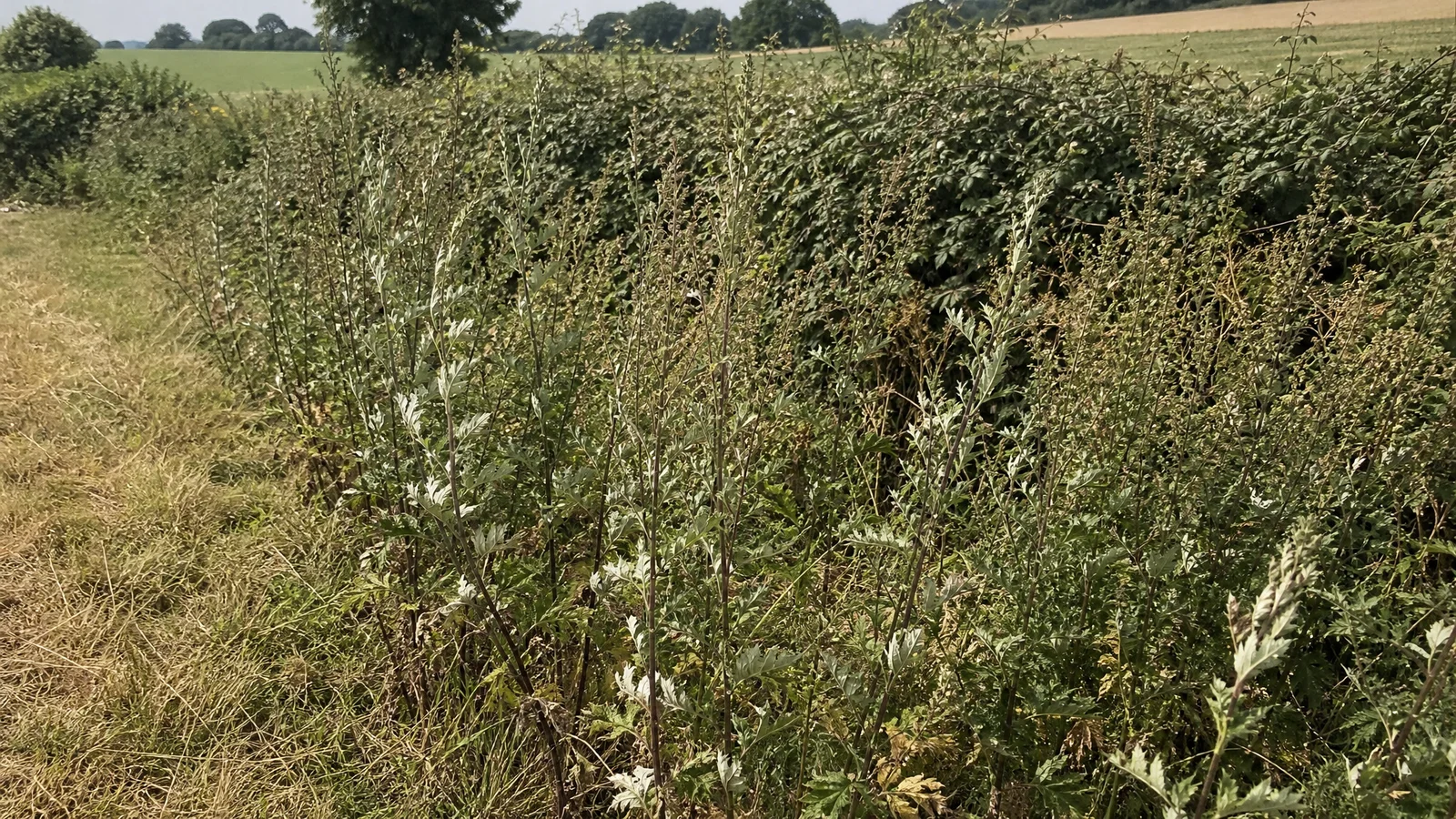
New York's invasive species information service gives the most useful field marks. Mugwort leaves are alternate on the stem and densely covered with woolly, silver-white hairs on the underside, while the upper surface is only slightly hairy. Lower leaves have stalks and are coarsely toothed and lobed, and upper leaves are stalkless and lance-shaped. Adult stems are smooth and ridged lengthwise, branching toward the top, and the small green flower clusters at the tips appear from July to late September.
The underside is the mark to trust. Silver-white and felted is mugwort. Green is a different plant, and the usual suspect is common ragweed, the look-alike people worry about because of hay fever. A German paper on ragweed notes that the leaf underside is white in mugwort and green in ragweed, and that the two flowering periods are almost identical, so the calendar will not tell them apart. It also says ragweed pollen cross-reacts with mugwort, so anyone with a known pollen allergy should ask an allergist before handling either plant.
One more thing about names: "mugwort" covers more than one species. The research on mugwort oils is split between Artemisia vulgaris, native to Europe and Asia and now widespread worldwide, and Artemisia argyi, a Chinese species. Which plant is in a particular bottle is a paperwork question rather than a field-guide one, and our label-reading article shows how to check.
Think before you plant it
Mugwort is a vigorous perennial. According to the New York page it is widespread across North America, with a shallow but extensive root system of branching rhizomes up to 1 cm across that reach about 20 cm deep, and it spreads mainly by those rhizomes. Plants can regenerate from rhizome fragments as small as 2 cm, while the wind-blown seed matters much less.
The practical reading is that a garden bed is not a boundary. Digging out a clump and tilling the soil cuts rhizomes into pieces, and any 2 cm fragment left behind can start again, so a pot or sunk container you can lift out whole is the sensible choice, or a spot where spread does not matter. It may also be listed as invasive or restricted where you live, and your state extension service can tell you how it is treated before you plant or move any rooted material.
If you would rather pick it where it grows, ask the landowner and ask what has been sprayed. Roadsides and waste ground are the plant's favourite habitat and also places where soil and air carry things you do not want in a sachet. That is a precaution on our part, not a measurement.
Harvesting and drying
The National Center for Home Food Preservation's guidance is general rather than mugwort-specific, but it is the best-sourced method we found. It says the best time to harvest most herbs for drying is just before the flowers open, in the early morning once the dew has evaporated, handling the leaves gently. Sturdy herbs can hang in small bundles, and large bunches of tender herbs can mold. In a dehydrator, 95 to 115 F takes one to four hours, herbs are dry when they crumble and the stems snap, and they should be stored airtight in a cool, dry, dark place.
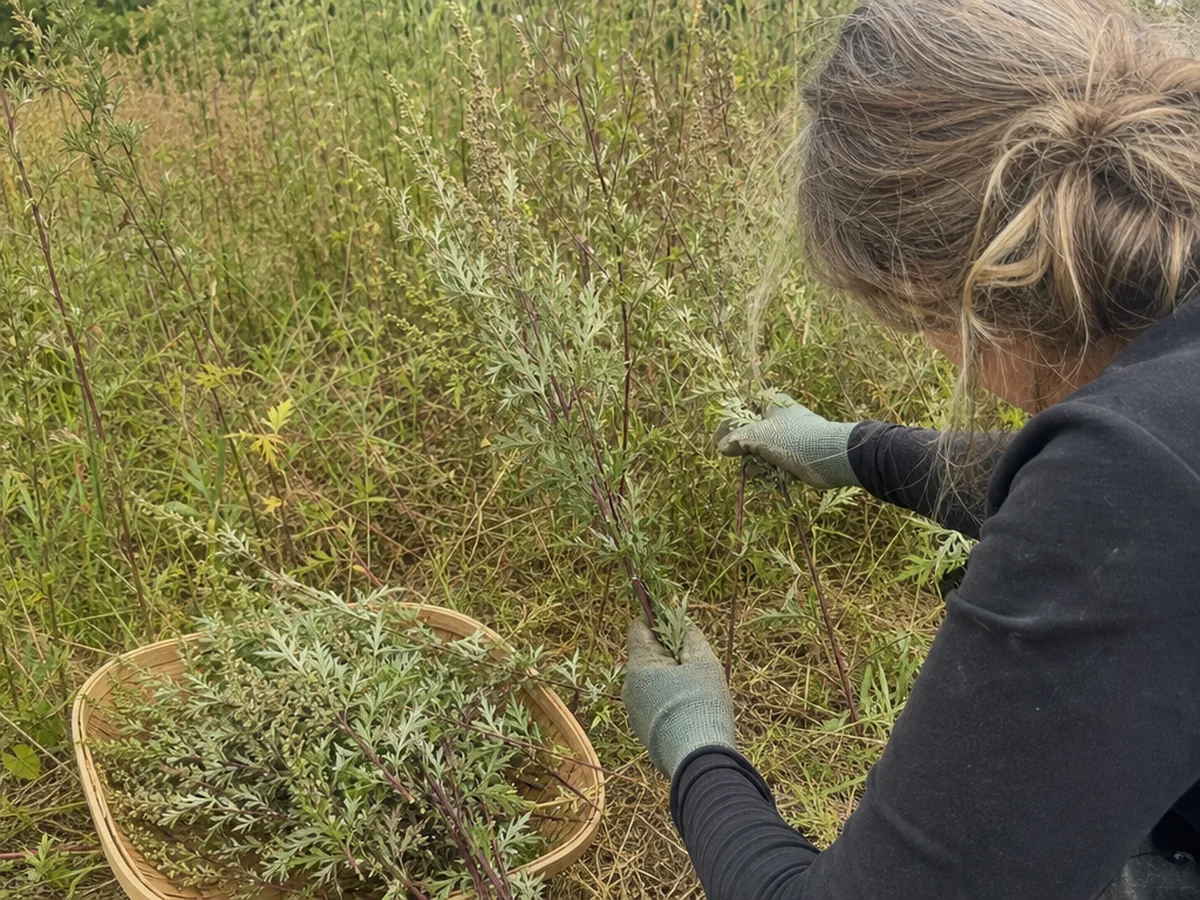
Putting that beside the flowering window gives a reasoned suggestion, not a sourced one: cut before the July to September bloom. It follows the herb-drying rule, and it keeps flowering tops and their pollen out of your workroom. Mugwort pollen carries allergens, and a review of edible Artemisia species attributes contact dermatitis to sesquiterpene lactones and lists A. vulgaris among the species to avoid in pregnancy. Gloves are cheap, and a pregnant reader should ask her midwife or obstetrician before working with the plant. Our allergy article, three problems, one name, separates pollen from oil.
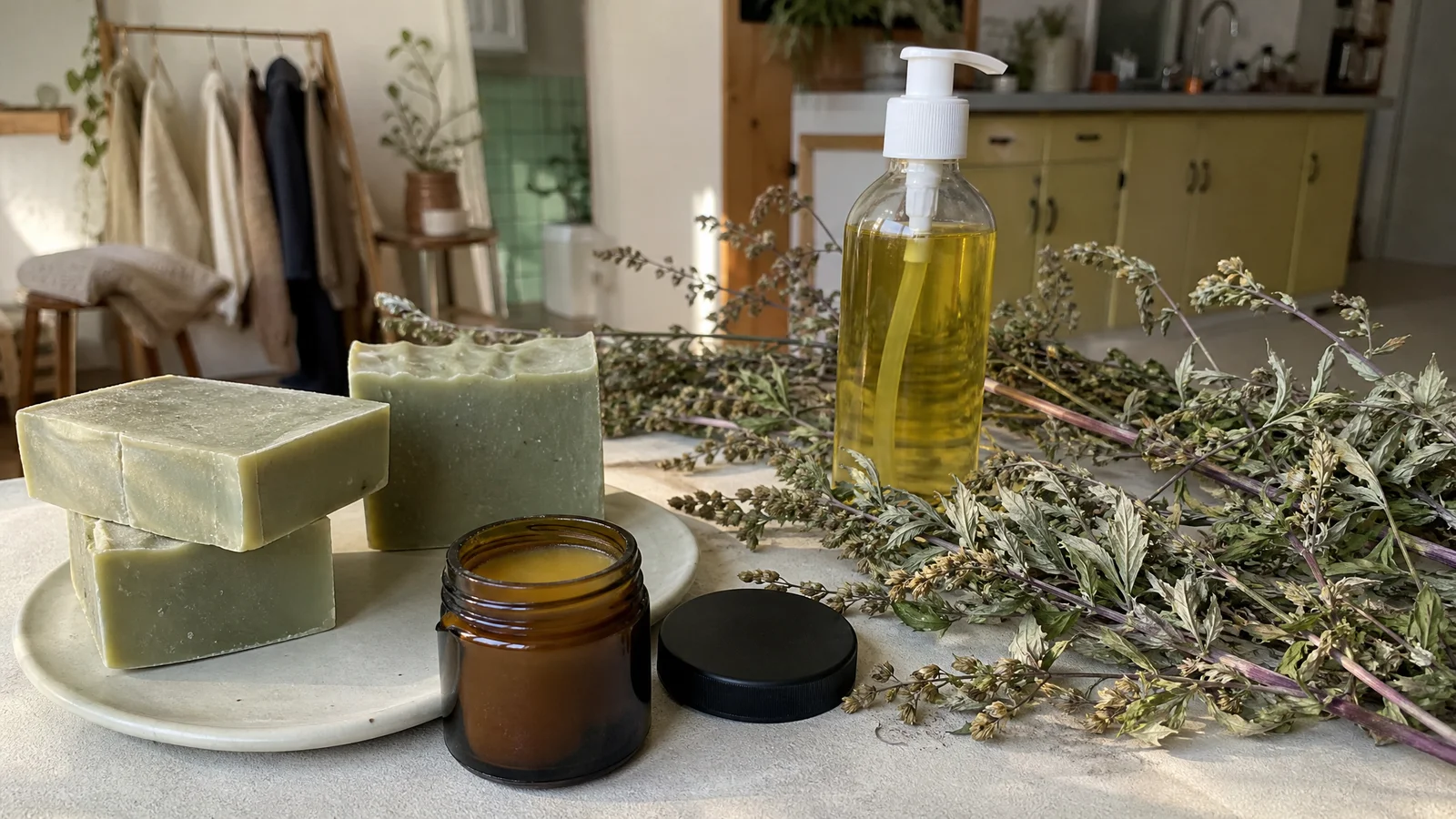
The dry leaf has its own uses: incense and herb bundles, sachets and the folklore in mugwort and St John's Eve.
Do not expect oil from the patch
Here is the arithmetic that surprises people. In one study, researchers hydrodistilled 100 g of dried leaf powder in 1,500 ml of water for four hours and got 0.50 percent of the dry weight as oil. That is 5 g of oil per kilogram of dry leaf. Even a full kilogram would give about 5.6 ml at the 0.895 relative density on our Certificate of Analysis for one batch, a little over a teaspoon. The same paper found the chemistry of the oil varied markedly with the extraction method, including its thujone content, which is why a home-made oil cannot borrow the dilution advice or published safety ceilings we discuss in our safety article. How commercial oil is made is the subject of our distillation article.
Getting to know it on a walk
The friendliest way to learn mugwort is to look rather than pick. Next time you pass a patch, turn a single leaf over with a fingertip and note the silvery underside, then look again a month later and again when the flower clusters appear. A few dated photographs give you a field notebook for free, and they make the identification stick far better than a description does.
The plant is worth knowing and the dried leaf is a good craft material. The oil is a separate, concentrated thing, and the paperwork behind a bottle, not the plant outside the window, tells you what is in it.
Mugwort Essential Oil
Mugwort Essential Oil from our own shop, in sizes from 0.5 oz to bulk.
From $16.99
Shop Now →Sources & Further Reading
- Mugwort - NYIS
- Ambrosia artemisiifolia (ragweed) in Germany - current presence, allergological relevance and containment procedures.
- Research Advances on Health Effects of Edible Artemisia Species and Some Sesquiterpene Lactones Constituents.
- Herbs - National Center for Home Food Preservation
- Chemical Composition and Antimicrobial Activities of Artemisia argyi Lévl. et Vant Essential Oils Extracted by Simultaneous Distillation-Extraction, Subcritical Extraction and Hydrodistillation.