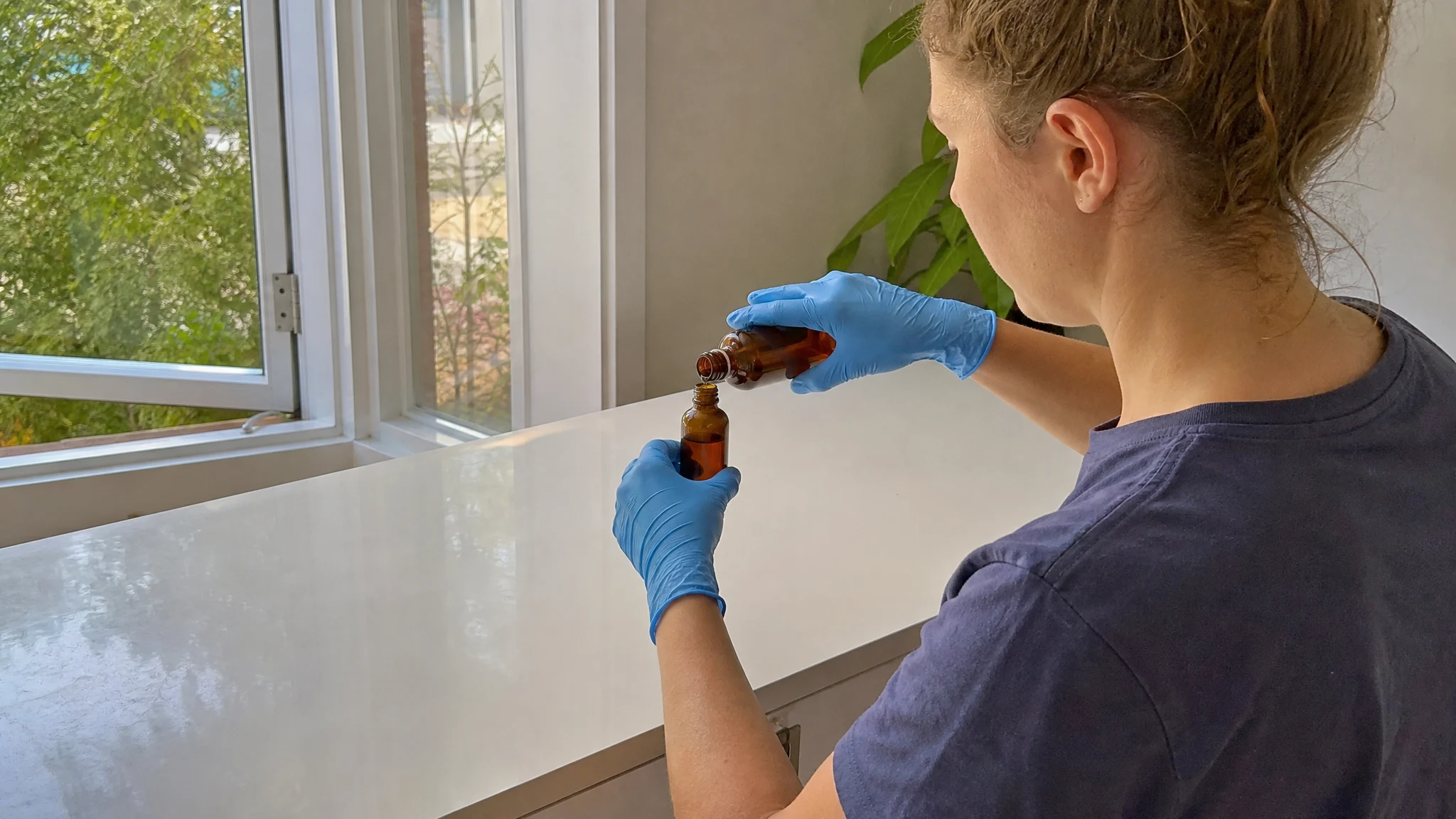
Mugwort Oil Bench Safety: A Maker's Handling Checklist
A bench with a jar of mugwort oil on it is a lovely thing, and a little planning keeps it that way. Think of the oil the way a careful maker thinks of any concentrated botanical: a combustible liquid, and something to keep off eyes, away from swallowing and out of reach of children and pets. Here are the steps in the order a small shop meets them.

Mugwort Essential Oil
Our own Mugwort Essential Oil, in sizes from 0.5 oz to bulk.
From $16.99
Shop Now →1. Ask for the document before the order
A safety data sheet is the supplier's own handling instruction for a material, and it is the place where the flash point, the glove material to wear and the spill and first aid advice live. In the United States, OSHA's Hazard Communication Standard has employers keep a sheet for each hazardous chemical where workers can reach it on every shift, and the same rule has its own list of sixteen sections. A sole maker with no employees may not be covered, and an EHS professional or your state OSHA office can say, but the sheet is worth reading regardless. Our Certificate of Analysis gives a relative density of 0.895 for the batch it describes, but not a flash point, so if your process depends on a safety data sheet figure, ask us in writing through the contact page before ordering and get the answer in writing.
2. Treat it as combustible until the sheet says more
OSHA defines a flammable liquid as one with a flash point at or below 93 C (199.4 F) and sorts them into categories. Category 3 runs from 23 C to 60 C, and Category 4 from above 60 C up to 93 C. A candle supplier's guide puts the flash points of common candle-making essential oils at roughly 50 to 75 C, so many sit in those bands even though they do not behave like gasoline. The check is simple: compare the flash point on the sheet with the hottest your process gets, whether that is a warm decanting spot, a wax pot or a heat gun nearby. Where the two approach each other, keep hot plates, flames and other ignition sources out of the area.
3. Storage, and what the volumes really are
We recommend keeping the oil tightly capped in a cool, dark place away from heat and light, and for larger containers, decanting working amounts into a smaller airtight bottle. Our storage article goes further. It helps to picture the volume. At the 0.895 relative density on our certificate for one batch:
| Size | Mass | Volume |
|---|---|---|
| 1 oz | about 26.5 g | 29.57 ml |
| 16 fl oz | about 423 g | 473 ml |
| 25 lb | 11.34 kg | about 12.7 L (3.3 US gal) |
| 100 lb | 45.4 kg | about 50.7 L (13.4 US gal) |
| 400 lb | 181.4 kg | about 203 L (53.6 US gal) |
At drum scale, one failed container is roughly 200 liters on a floor, so decide where it sits and what is underneath before delivery. Your fire marshal or insurer can tell you about quantity limits and cabinets for your building. Our bulk page lists the larger sizes.
4. Decant over a tray, and label what you decant
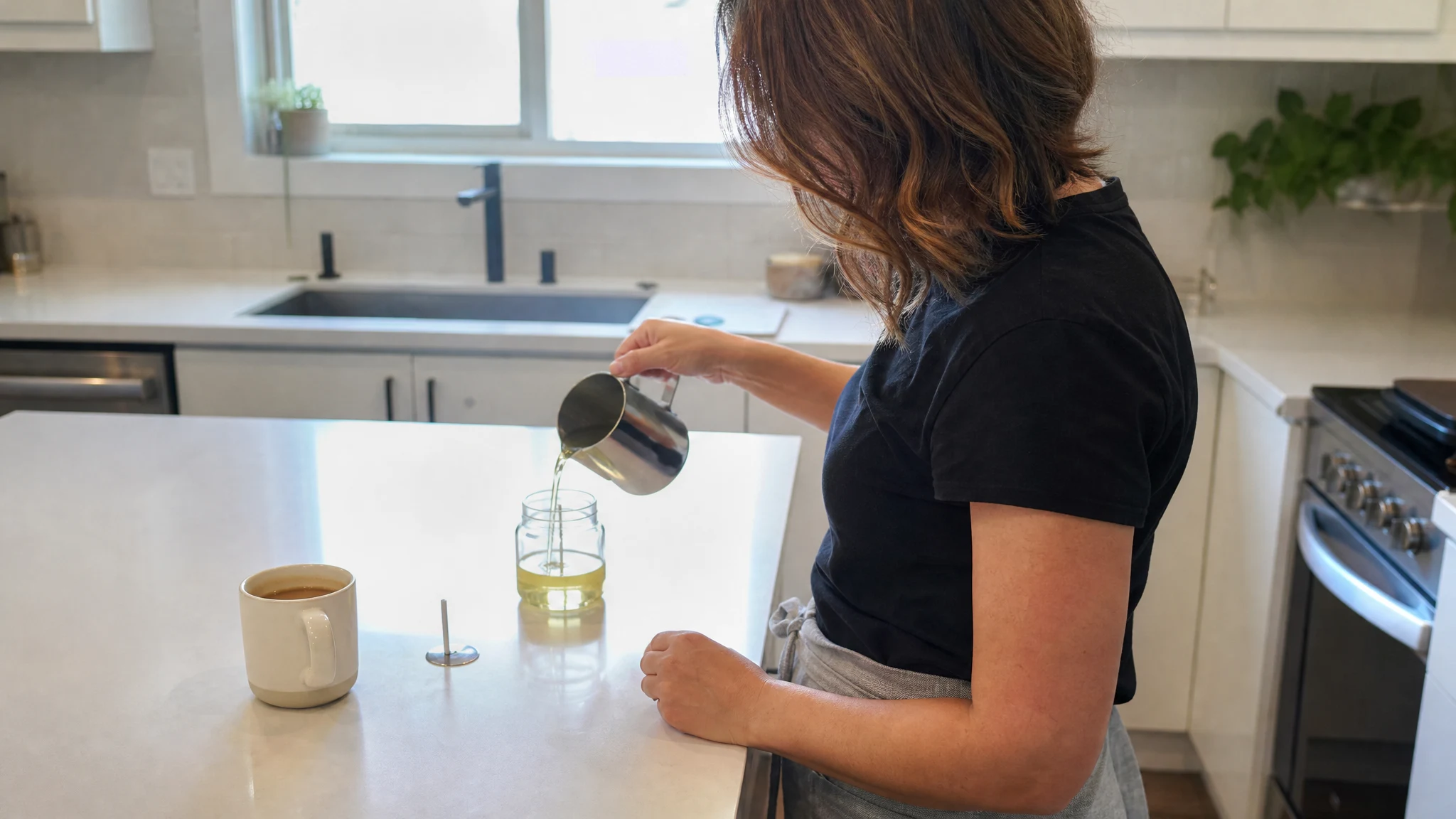
Work with the ventilation the sheet describes, over a tray, with the cap and funnel ready. OSHA's rule also asks that each workplace container of a hazardous chemical carry either the full shipped label information or a product identifier plus words or symbols giving general hazard information. The exemption for portable containers covers only the person who filled it, for immediate use, so a working bottle left on a shelf overnight should be labelled.
A tidy bench is half the battle: set out only what the project needs, put the cap back after each pour and wipe up drips as they happen rather than at the end of the day.
5. Skin, eyes and swallowing
Neat oil is a different exposure from a dilution, and handling it by the ounce means contact on hands and forearms, so pick gloves by the material the sheet names. Keep it away from eyes, and do not taste it. The Missouri Poison Center describes mugwort oil as containing irregular amounts of compounds such as thujone, camphor and eucalyptol, and says swallowing it could cause vomiting, confusion, respiratory distress, coma and seizures. Poison Control adds that breathing an essential oil into the lungs while swallowing can cause pneumonia. So: no mouth pipetting, no food or drink at the bench and nothing stored in a food or drink container. Skin dilution is its own topic, set out in our thujone safety article.
6. Spills and who shares the room
The sheet's accidental release section names the absorbent and disposal route, so read it before delivery and not during the first spill. Think about who else uses the space. A cat on a bench or a child in a shared studio is a good reason for a closed cupboard, and the veterinary side is in our pet safety article. Our guidance is to avoid use in pregnancy, so anyone pregnant or with a seizure history working in the room should ask their physician first.
7. If something goes wrong
MedlinePlus advises, for chemical contact, to flush skin with cool running water for 15 minutes or more after removing contaminated clothing, and to flush eyes with running water and get medical help right away. In the United States, Poison Control is 1-800-222-1222. The sheet's first aid section is the supplier's own instruction and takes precedence for that material; post it and the number where people work.
This checklist is a starting point, not a substitute for your fire marshal or an industrial hygienist, and none of the sources address mugwort oil in a workshop specifically. The order of work is easy to remember: ask for the sheet, compare its flash point with your process, label and cap every container, and keep the poison number in sight.
Mugwort Essential Oil
Mugwort Essential Oil from our own shop, in sizes from 0.5 oz to bulk.
From $16.99
Shop Now →Sources & Further Reading
- 29 CFR § 1910.1200 - Hazard communication.
- 29 CFR § 1910.106 - Flammable liquids.
- Candle Making Essential Oil: The Complete Guide to Natural Scenting | Village Craft and Candle
- Mugwort - Missouri Poison Center
- Essential oils: Poisonous when misused | Poison Control
- Chemical burn or reaction: MedlinePlus Medical Encyclopedia