How to Dress a Candle With Mugwort Oil Safely
Dressing a candle means rubbing a little oil onto the outside of it before it is lit, and for people who do it, it is part of the ritual as much as the burning. Mugwort oil is a natural candidate, with its green, bitter, camphor-edged aroma. If you want to dress a candle with it, you can, as long as you take two things seriously: the flame and your own hands.

Mugwort Essential Oil
Our own Mugwort Essential Oil, in sizes from 0.5 oz to bulk.
From $16.99
Shop Now →A custom with a long tail
Dressing is a craft custom with no measured outcome, and we treat it as one. One of the clearest published descriptions comes from a supplier of conjure and hoodoo spiritual goods, whose instructions for a prayer candle say to carve a name into it, dress it with oil and speak a petition aloud as you do (Love Me Spiritual Supplies, Lucky Mojo Curio Co.). That is one tradition's practice, and we offer it here as background to what people do, not as a claim about what any oil achieves. We sell mugwort oil for fragrance craft, and the plant's long place in folklore makes a good read in our folk magic article.
What dressing looks and feels like
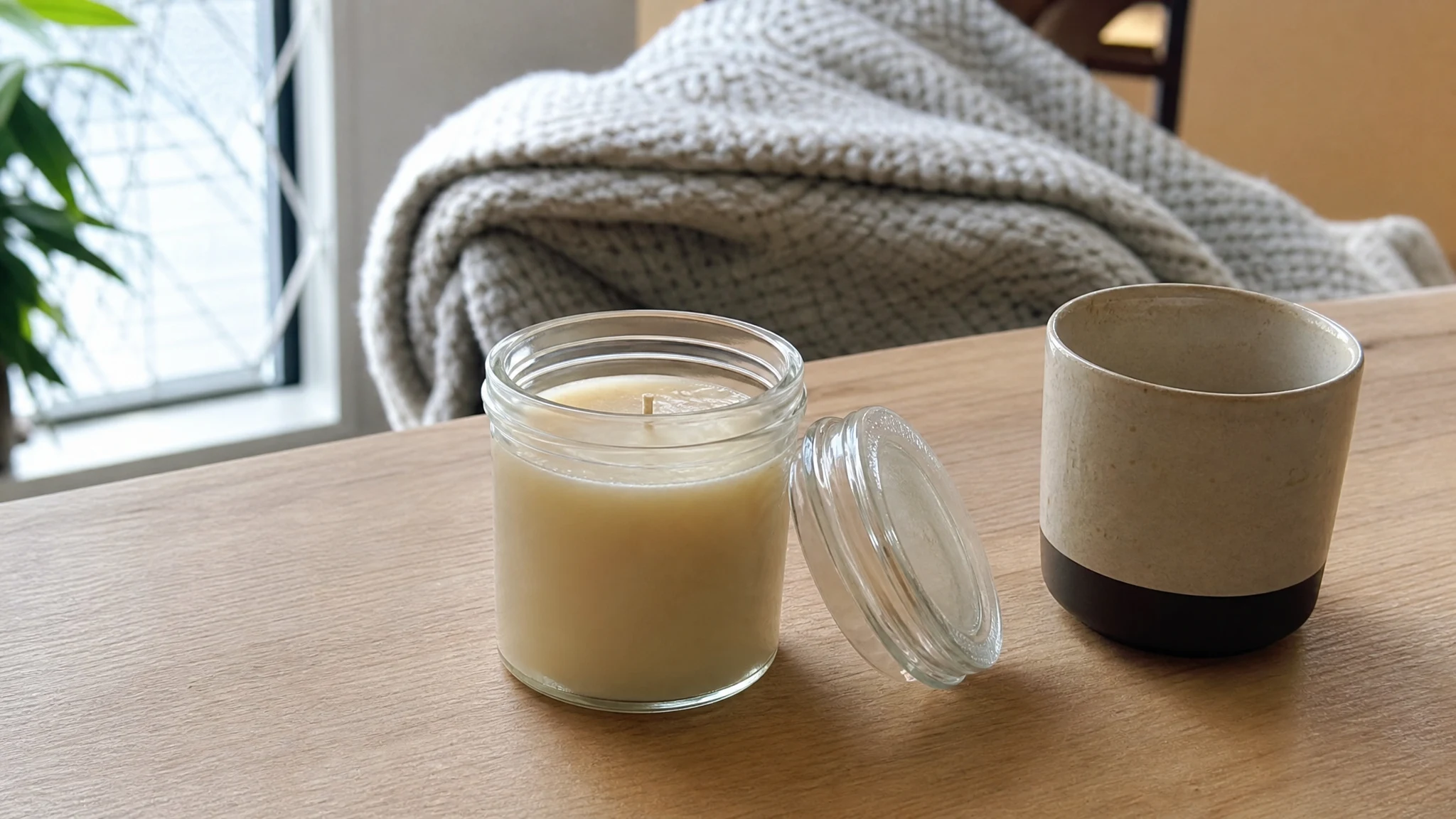
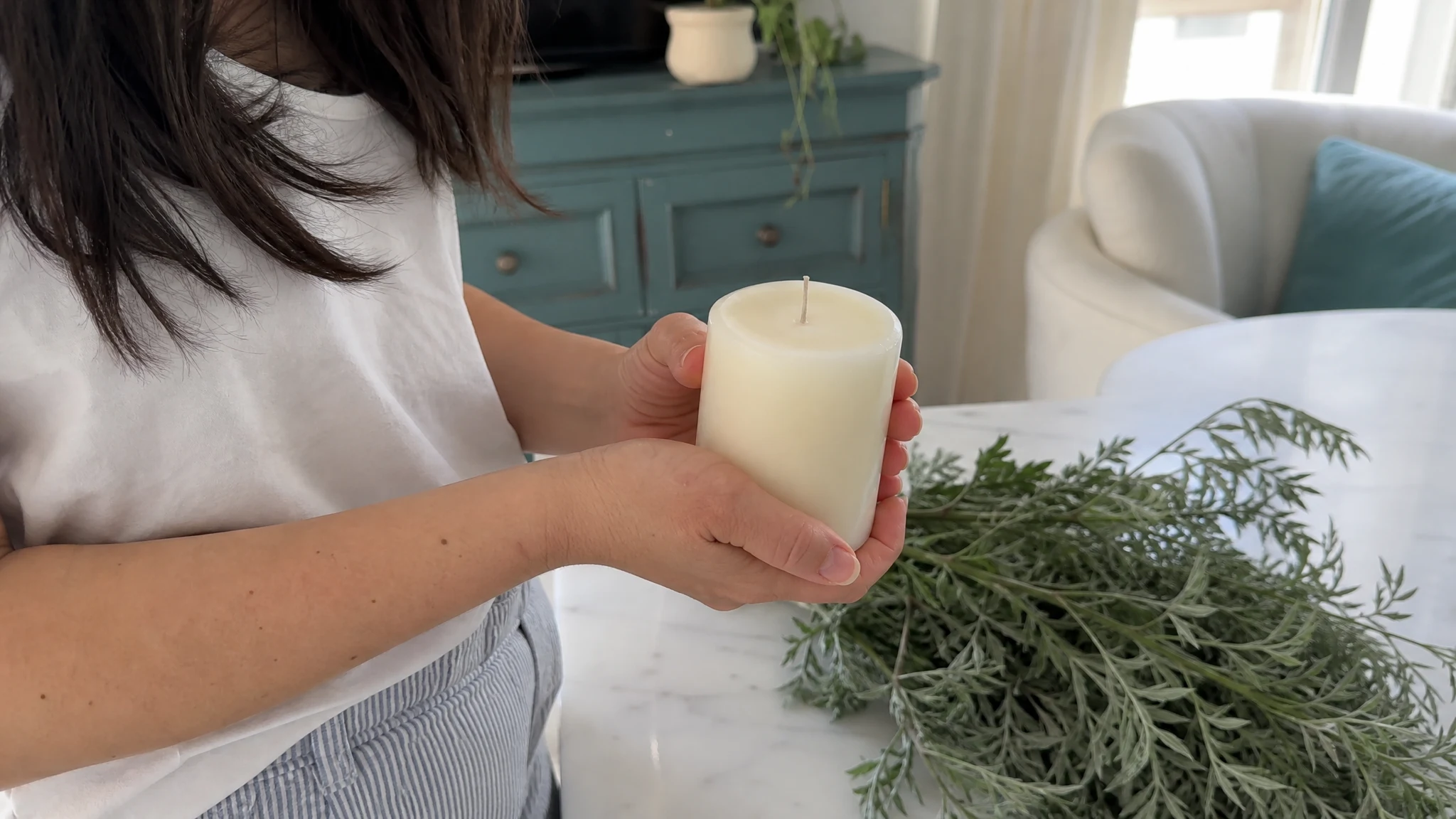
If you have never dressed a candle, picture a quiet two-minute pause before lighting it. You settle a pillar candle on a clean plate, put a few drops of your diluted oil on a gloved fingertip, and stroke it along the candle in one direction, from the middle toward the top, and then from the middle toward the base. Some people like to do it slowly and say a word or two as they go. You will notice the surface turn slightly glossy, and a faint green, bitter scent rise from the wax as soon as your fingers pass over it.
Start with the flame
A candle is a carefully balanced machine: the wick draws melted wax upward to a small flame. Oil smeared onto the outside, particularly near the top, around the wick or on the rim of a jar, is extra fuel the design never planned for. That is our reasoning from how candles work, not a tested result, and it leads to some easy habits.
- Dress only the lower two thirds of a freestanding pillar or taper, and leave the top inch and the wick untouched.
- Use a thin film that you can wipe on, not a coating that runs.
- Skip container candles, where the oil gathers at the walls and rim.
The ordinary rules for burning any candle matter even more here. The National Candle Association advises trimming the wick to a quarter inch before lighting, standing candles on a stable, heat-resistant surface, and keeping them at least 12 inches from curtains, bedding and books (Candle Safety Tips - National Candle Association). The Illinois State Fire Marshal, quoting National Fire Protection Association figures, reports about 20 home candle fires a day, with three in five starting when something flammable was too close, and falling asleep a factor in one in ten (Candle Safety, Illinois Office of the State Fire Marshal). Its advice is to blow candles out when you leave the room or go to bed. A candle burned for ritual deserves the same attention.
Keep the plate and the cloth for this job only, and wipe your fingers with paper towel before you touch anything else. A dressed candle should sit a little while before it is lit, so the film settles and any extra can be blotted off with a tissue.
If you would rather skip the dressing
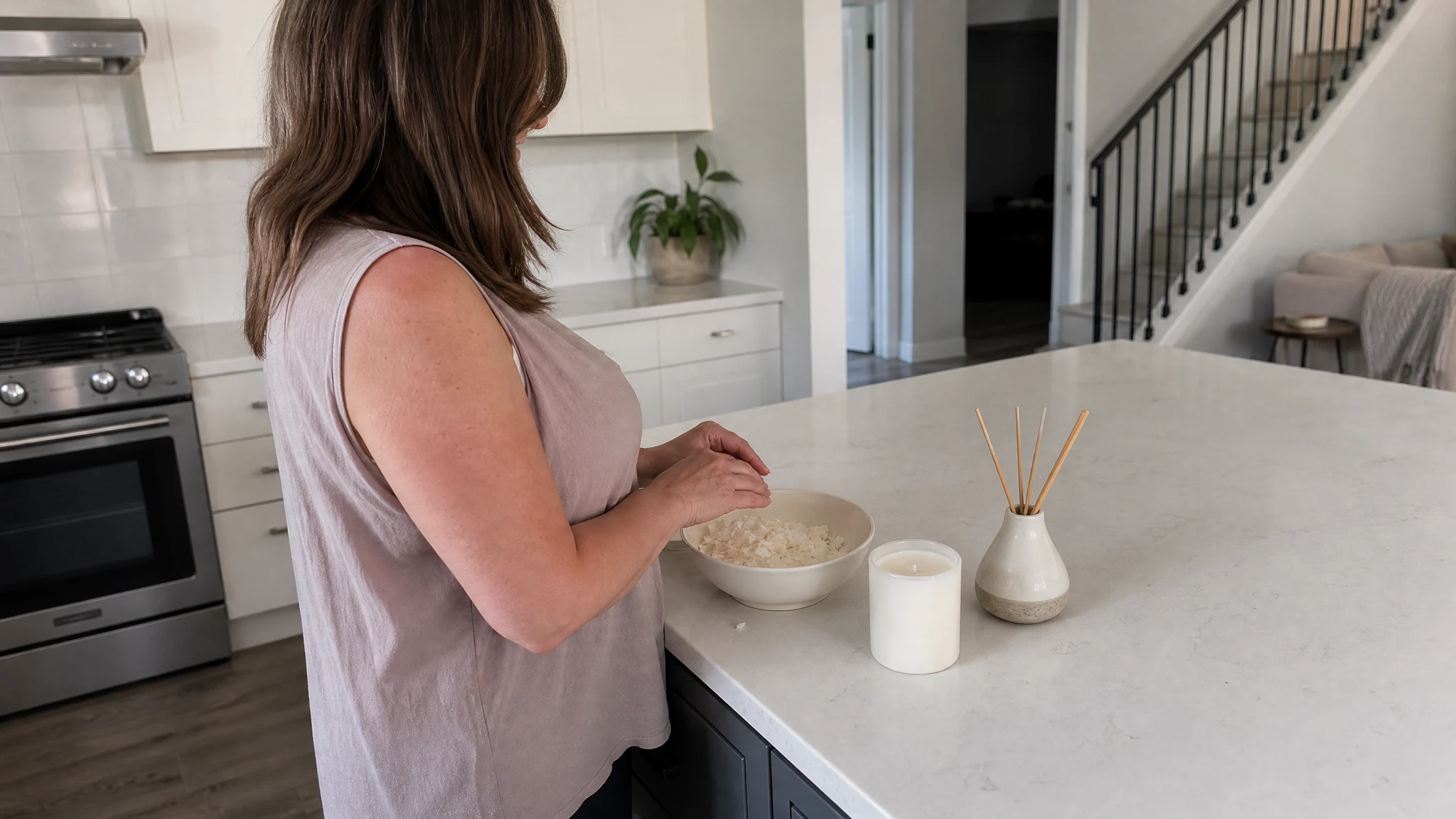
The easiest way to get mugwort's scent into the room is to put it in the wax. You get the aroma without a layer of oil on the surface, and how to make mugwort candles and the wax guide cover that route.
Then your hands
Dressing is done by hand, often repeatedly, so the oil meets your skin. Our guidance for any skin contact is a 0.5% to 2% dilution in a carrier oil with a patch test first, keeping it away from eyes, children and pets, and avoiding it in pregnancy. We would start at the low end, and here is why. IFRA limits thujone, a compound in some mugwort oils, to 0.095% in body oils and lotions (IFRA, 51st Amendment Standards compilation, Thujone Standard). IFRA has no category for a candle-dressing oil, so that is a guidepost rather than a rule for you. Published mugwort oils vary from no thujone to roughly 10% combined thujones in one leaf oil (Guan et al., 2019). As arithmetic, a 2% dressing oil made with a 10% thujone oil would hold about 0.2% thujone, around twice that body-oil figure, while a 0.5% blend would hold about 0.05%. Lower is the comfortable direction.
A dressing oil worked out by weight
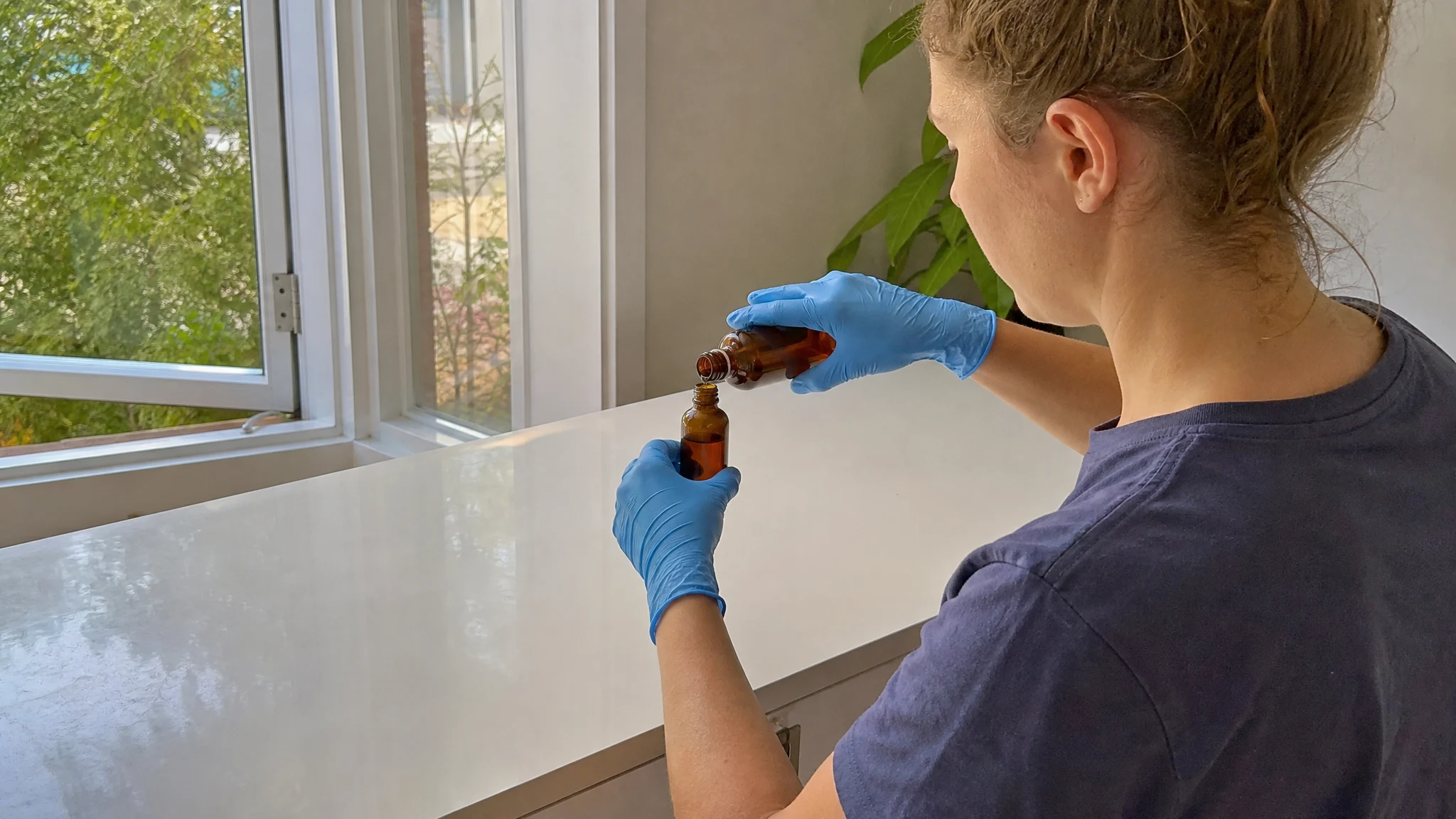
This is a formulation from the arithmetic above, offered as a suggestion. Use a carrier oil from a craft or soap-supply shop, since we do not sell one. We would keep mugwort at 0.5% or below, and nearer 0.25% if you do not know your bottle's thujone share. One ounce of carrier is 29.57 ml. At 0.5% that is about 0.15 ml of mugwort oil, roughly 3 drops at 20 drops to the millilitre, and at 0.25% roughly 1.5 drops. Droppers vary, so a small scale is more reliable than counting. Mix a very small amount, label it, wear nitrile gloves to apply it, patch test as we suggest, and wash your hands afterward.
If you plan to sell dressed candles, labeling and product-liability rules apply, and labeling essential oil candles in the US is the place to begin. For flash point or safety data sheet information about our oil, ask us in writing through the contact page.
Think of the small details as part of the craft: a clean surface, a dry cloth, a snuffer within reach, and a candle holder that is wider than the candle. None of it costs anything, and all of it makes the little ritual smoother to carry out.
The wick, the wax and the room do the real work of a candle. A light hand with the oil and a watchful eye on the flame let the custom sit comfortably on top.
Mugwort Essential Oil
Mugwort Essential Oil from our own shop, in sizes from 0.5 oz to bulk.
From $16.99
Shop Now →Sources & Further Reading
- Love Me Spiritual Supplies, Lucky Mojo Curio Co. luckymojo.com
- Candle Safety Tips - National Candle Association. candles.org
- Candle Safety, Illinois Office of the State Fire Marshal. sfm.illinois.gov
- IFRA, 51st Amendment Standards compilation, Thujone Standard. IFRA Standards
- Guan X, et al. 2019. Chemical Composition and Antimicrobial Activities of Artemisia argyi Lévl. et Vant Essential Oils Extracted by Simultaneous Distillation-Extraction, Subcritical Extraction and Hydrodistillation. PMC6384757