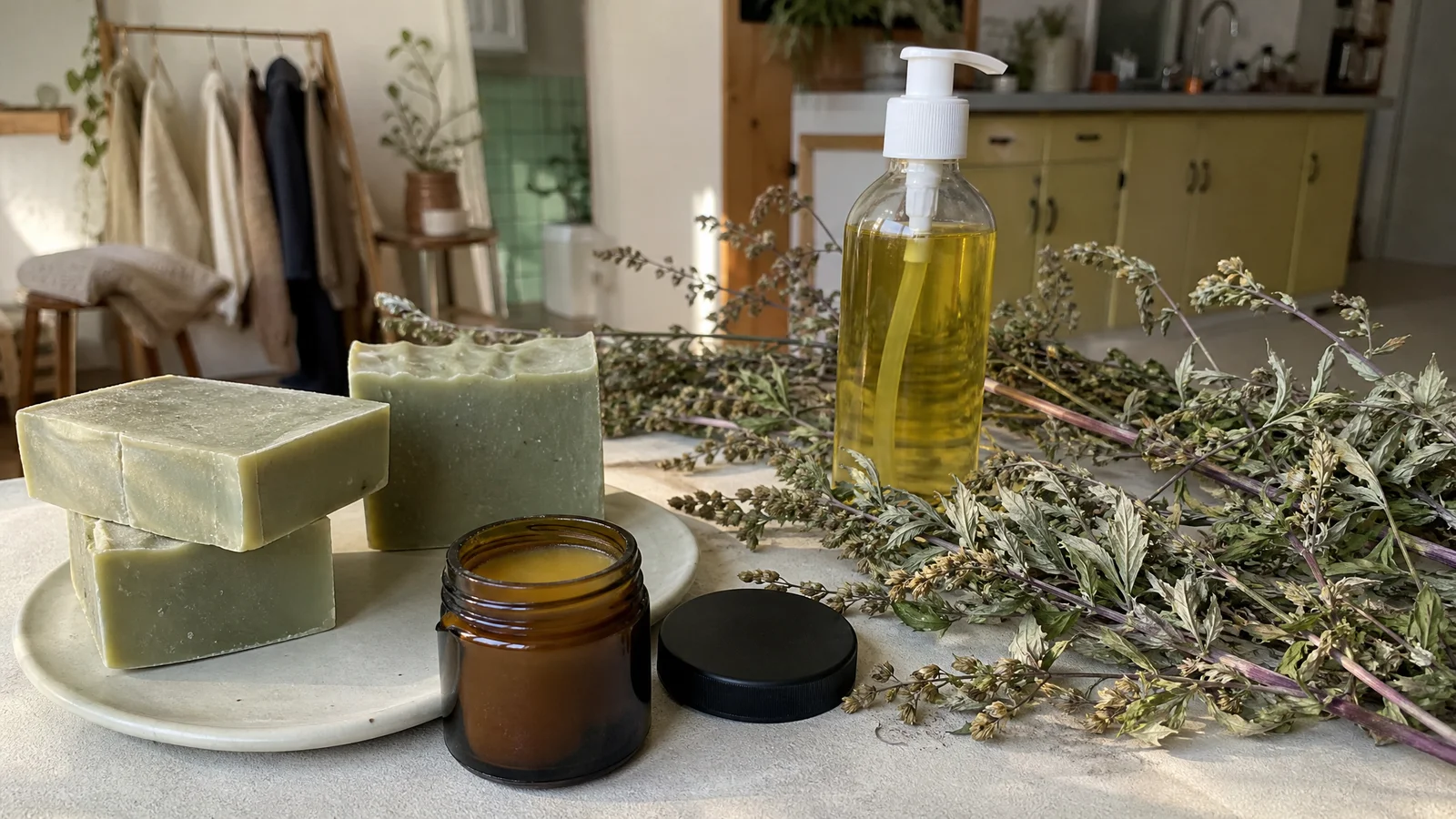
Mugwort Oil in Balms, Cleansers and Soap: Where It Fits
Soap, cleansing oil, balm, solid perfume: all of them sound like natural homes for a botanical oil, and mugwort oil does fit some far better than others. The deciding factor is rarely the recipe. It is which product category your finished product falls into, because each category carries its own published ceiling on thujone, a compound found in some mugwort oils.

Mugwort Essential Oil
Our own Mugwort Essential Oil, in sizes from 0.5 oz to bulk.
From $16.99
Shop Now →How the fragrance industry sorts products
IFRA, the fragrance industry's standard-setter, files finished products by how they touch skin, and its thujone standard sets a maximum for each. Its guidance lists examples: bar soap, liquid soap, body wash and face cleanser in Category 9, body creams, oils and lotions in Category 5A, lip products including balms in Category 1, make-up remover for face and eyes in Category 3, solid perfume in Category 4 and candles in Category 12. The caps on thujone in the finished product are 0.13 percent for Category 9, 0.095 for 5A, 0.11 for Category 1, 0.032 for Category 3, 1.4 for Category 4 and 9.5 for Category 12.
The cap is on thujone, not on oil, so the oil percentage you can use depends on how much thujone the oil carries. This table gives the highest thujone share of the oil that stays under each cap at three oil loads.
| Product (IFRA category) | Cap | Oil at 0.5% | Oil at 1% | Oil at 2% |
|---|---|---|---|---|
| Bar soap, face cleanser (9) | 0.13% | 26% | 13% | 6.5% |
| Lip balm (1) | 0.11% | 22% | 11% | 5.5% |
| Body balm or oil (5A) | 0.095% | 19% | 9.5% | 4.75% |
| Make-up remover, face and eyes (3) | 0.032% | 6.4% | 3.2% | 1.6% |
| Solid perfume (4) | 1.4% | any | any | 70% |
For a sense of scale, one analysis of a hydrodistilled Artemisia argyi leaf oil from Qichun, China found about 9.9 percent thujones combined (alpha 7.989 and beta 1.916 percent). That is one published oil and not ours, and the same paper found contents varied markedly with the extraction method. Our Certificate of Analysis lists density, refractive index and optical rotation, not constituents, so we cannot place our oil in the table ourselves. If you need a thujone figure for the lot you hold, ask us in writing through the contact page and get the reply in writing before you rely on it.
Soap and rinse-off cleansers
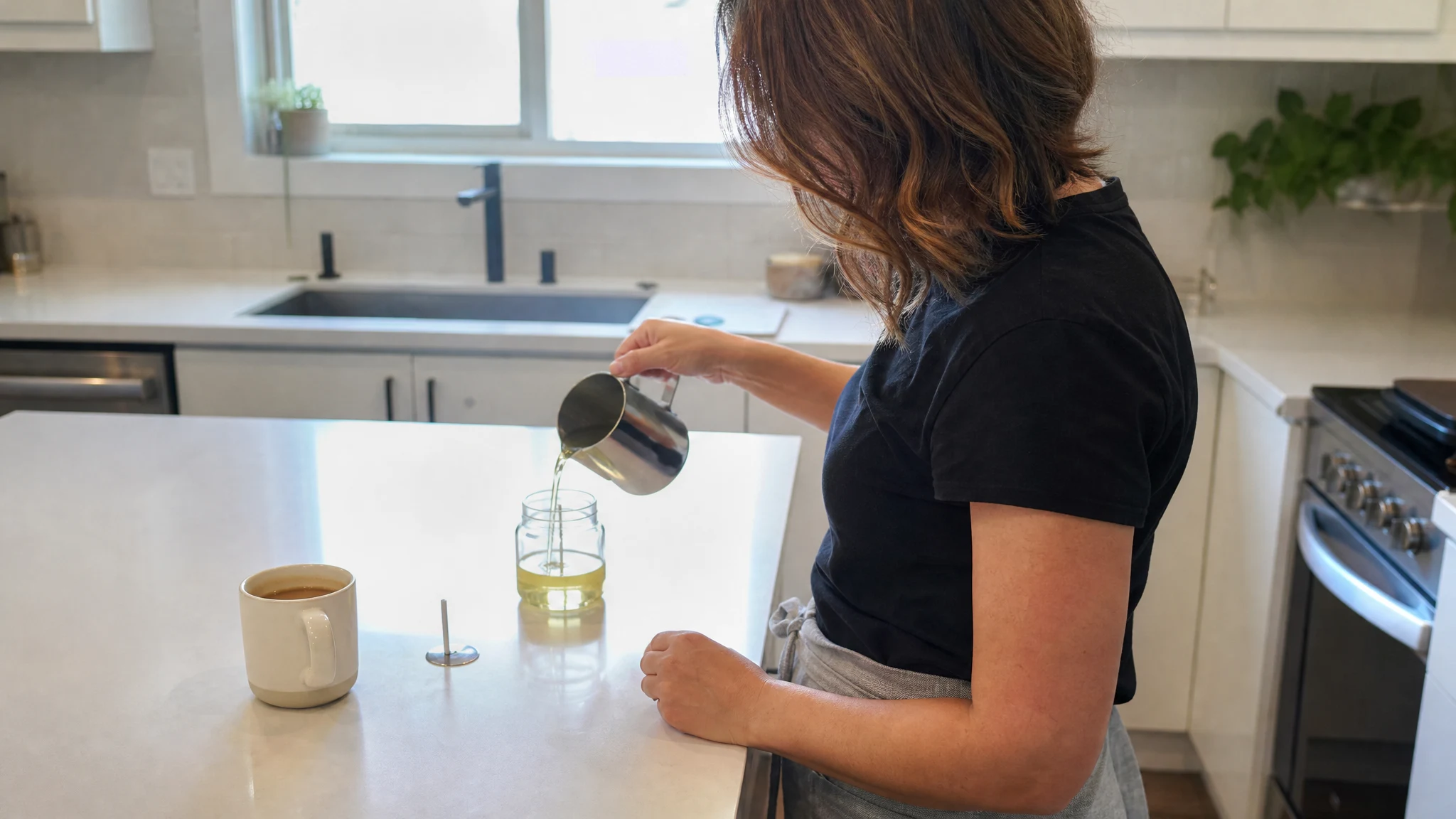
Rinse-off products get the roomiest skin cap, because contact is brief. It applies to the finished bar, so work by weight: 1 percent oil in a 100 g bar is 1 g of oil, about 1.1 ml at the 0.895 relative density on our certificate for one batch. Because the number you cannot see is the one the cap uses, we would get a thujone figure before putting any mugwort oil in soap. Scent retention through saponification is a question for your soap supplier, and our cold process soap article covers the handling side.
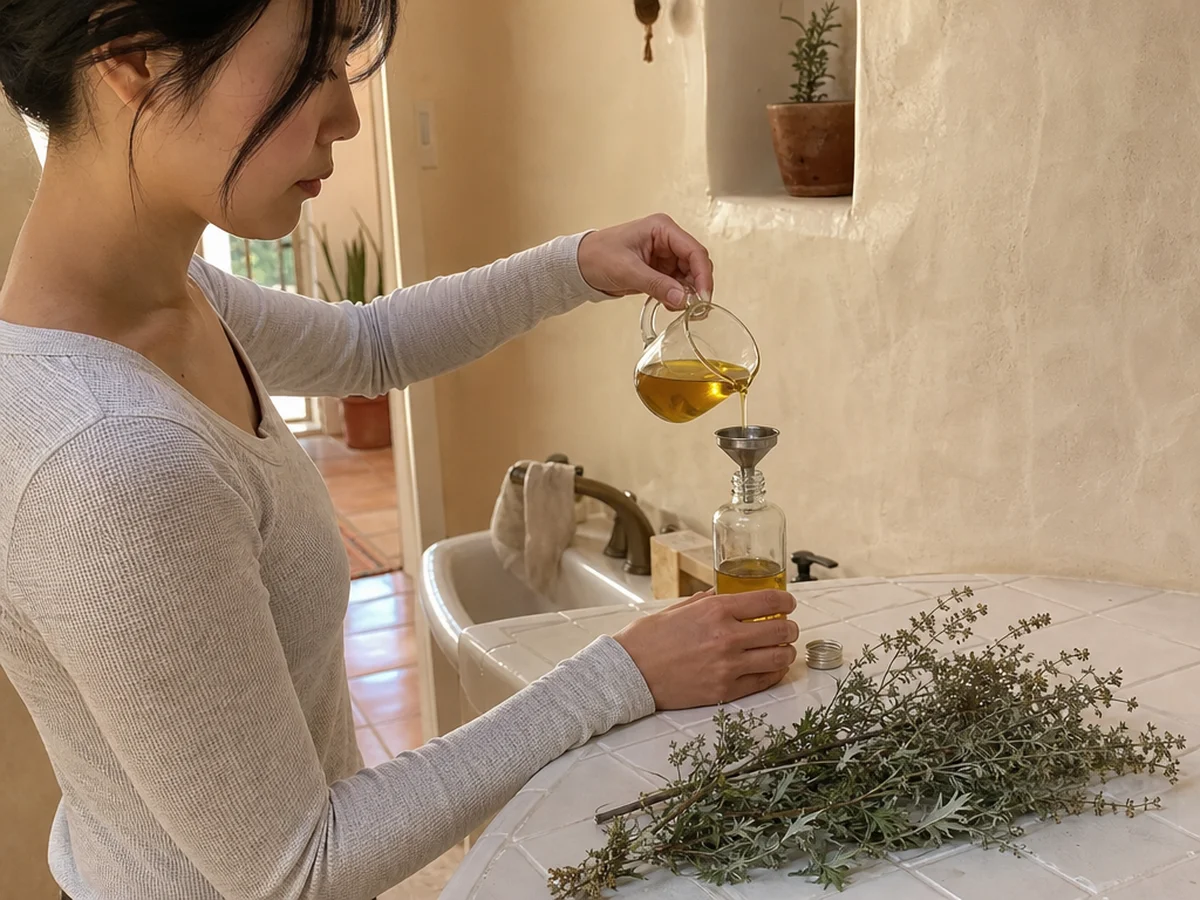
Cleansing oils: the label picks the category
A cleansing oil is both a rinse-off face cleanser (Category 9) and a make-up remover for face and eyes (Category 3), and the caps differ by a factor of four. IFRA's guidance says a product marketed for several uses should follow the most stringent restriction, so a cleansing oil sold as an eye make-up remover belongs on the Category 3 row. At 0.5 percent oil, the oil would need to carry no more than 6.4 percent thujone. Our articles on the DIY cleansing oil, on cleansing oil products and on mugwort in K-beauty go further.
Balms and body oils
A body balm sits in Category 5A at 0.095 percent. Take a 100 g anhydrous balm of oils and wax at 0.5 percent oil: that is 0.5 g of mugwort oil, about 0.56 ml. Using the 9.9 percent illustration, it contains about 0.05 percent thujone, under the cap, while the same balm at 1 percent comes to 0.099 percent, just over. Face balms (5B, 0.032 percent) and lip balms (Category 1) have their own rows. We keep to anhydrous examples because a product containing water is a preservation job for a cosmetic chemist.
Where the oil fits best
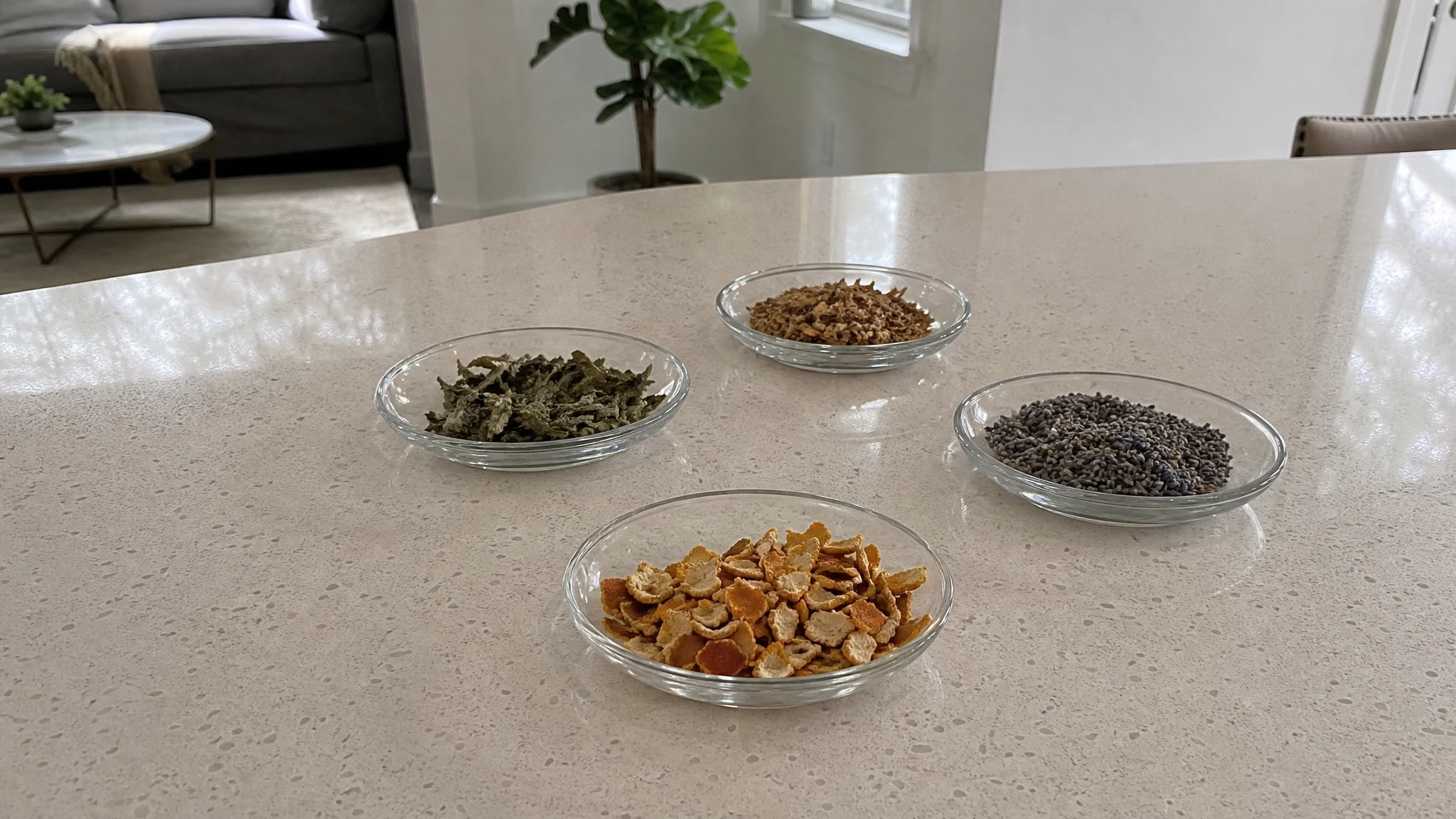
On the numbers, solid perfume is the skin product that suits mugwort oil best. Category 4 allows 1.4 percent thujone, so even at 2 percent oil an oil up to 70 percent thujone fits, and we list "a drop or two" as an accent in perfume accords. Our solid perfume article works one tin out by weight. Candles, incense and potpourri sit even further from the limits, since skin contact there is minimal, which is why we call this an oil for fragrance craft rather than body care.
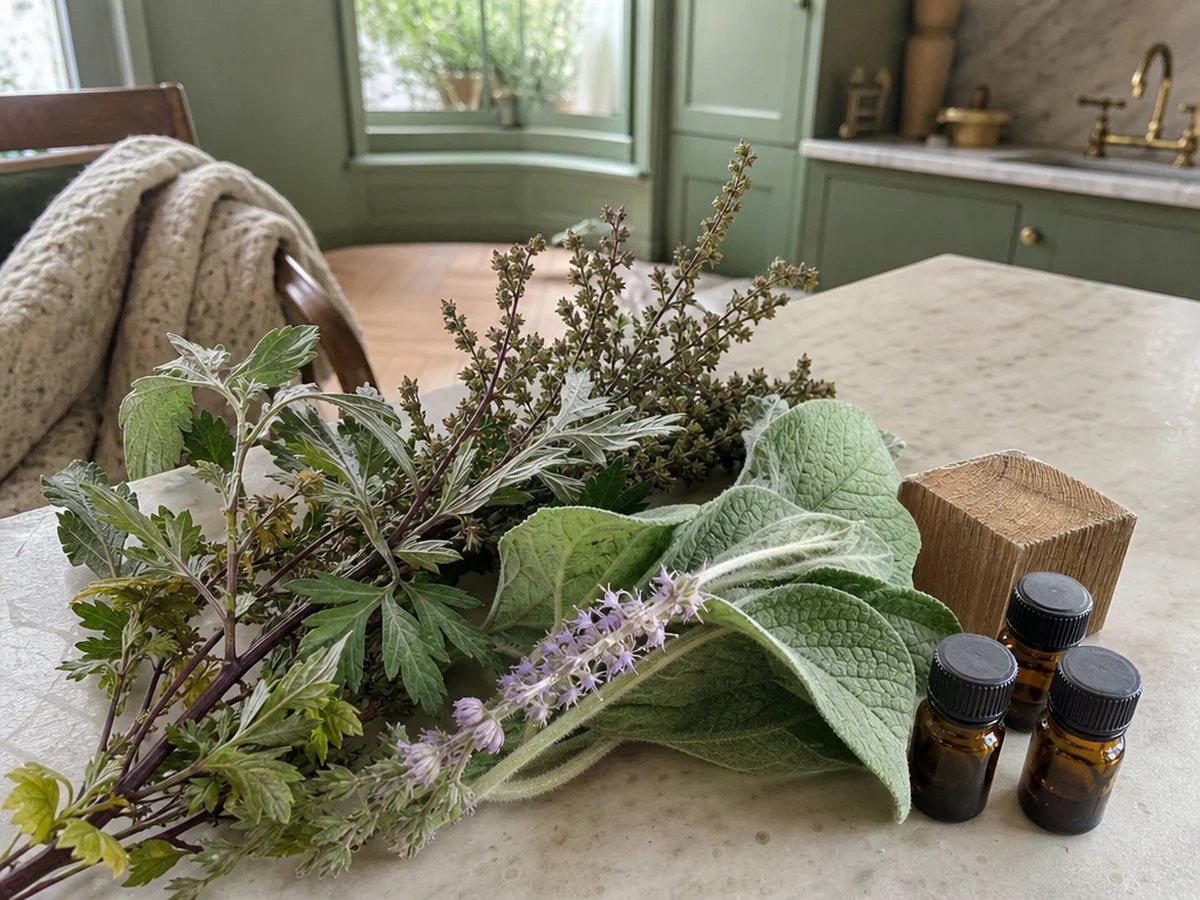
Our own guidance is to avoid use in pregnancy and to keep the oil away from children and pets, and our safety article explains the reasoning. If you plan to sell what you make, labelling and safety assessment belong to the maker, and a cosmetic chemist or regulatory consultant is the person to ask.
Choosing where to begin
If you are new to the oil, start with the format that asks the least of you. A tin of solid perfume or a small jar of potpourri is far more forgiving than a rinse-off cleanser, and it lets you get to know the aroma before you take on the paperwork of a skin product. Write the product category on the first line of your notebook before you measure anything, because that one decision tells you which row of the table you are working from.
And give yourself time. A bitter, camphor-edged oil can seem loud at first, so smell your test pieces again after a few days before you decide what to change.
Sort the product first, get the number second, and the recipe nearly writes itself.
Mugwort Essential Oil
Mugwort Essential Oil from our own shop, in sizes from 0.5 oz to bulk.
From $16.99
Shop Now →Sources & Further Reading
- IFRA, Guidance for the use of IFRA Standards (30 June 2023)
- IFRA Standards, up to and including the 51st Amendment (January 2024), Thujone Standard
- Chemical Composition and Antimicrobial Activities of Artemisia argyi Lévl. et Vant Essential Oils Extracted by Simultaneous Distillation-Extraction, Subcritical Extraction and Hydrodistillation.