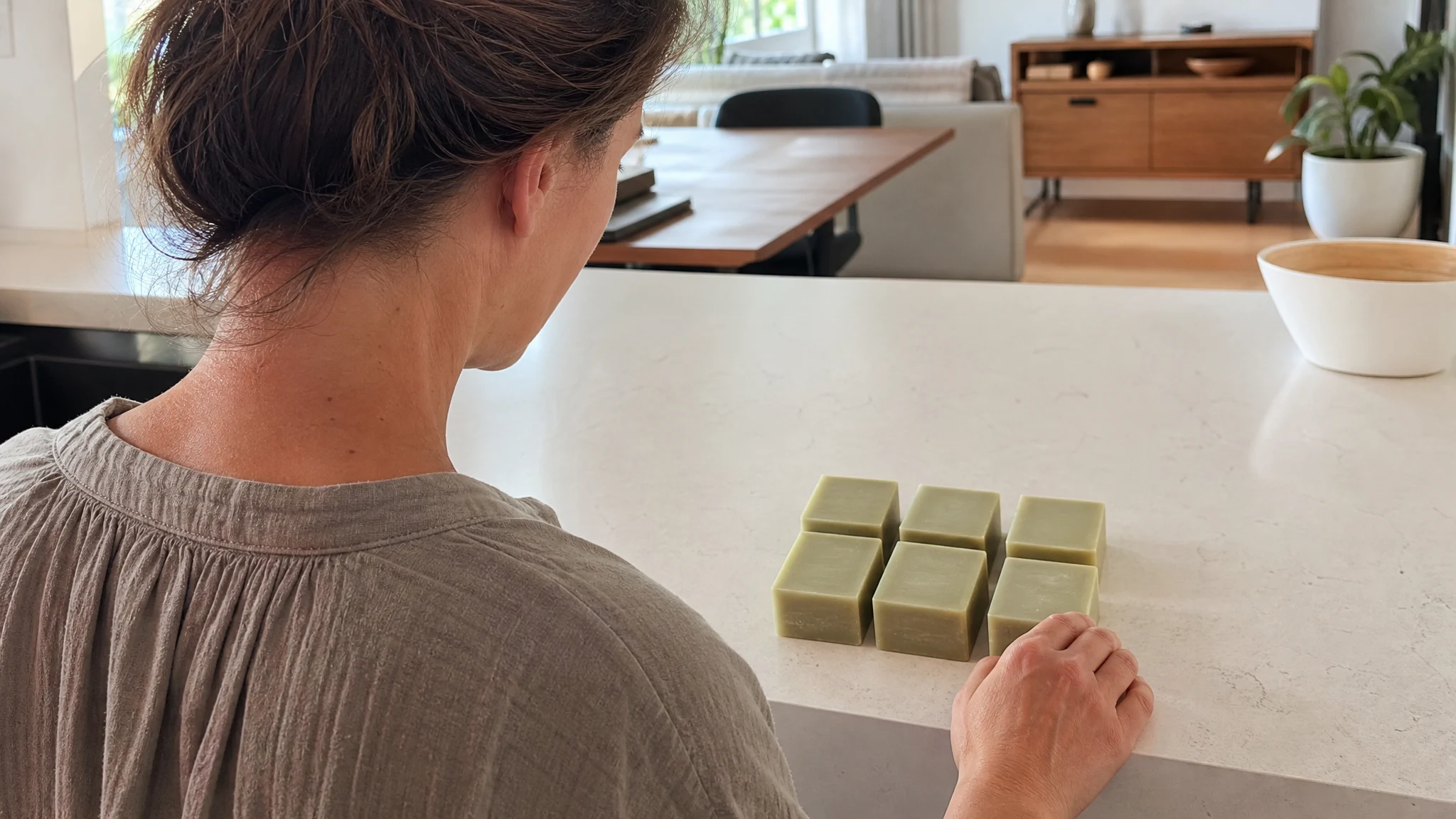
Can You Put Mugwort Oil in Soap? Work Out the Dose
Cold process soapmakers are drawn to botanicals with a story, and mugwort has plenty of them. Before the lye comes out, though, the question that matters most for this particular oil is a number: how much of it can a bar hold? The answer comes from a published limit on thujone, and it is easy to work out once you know where to look.
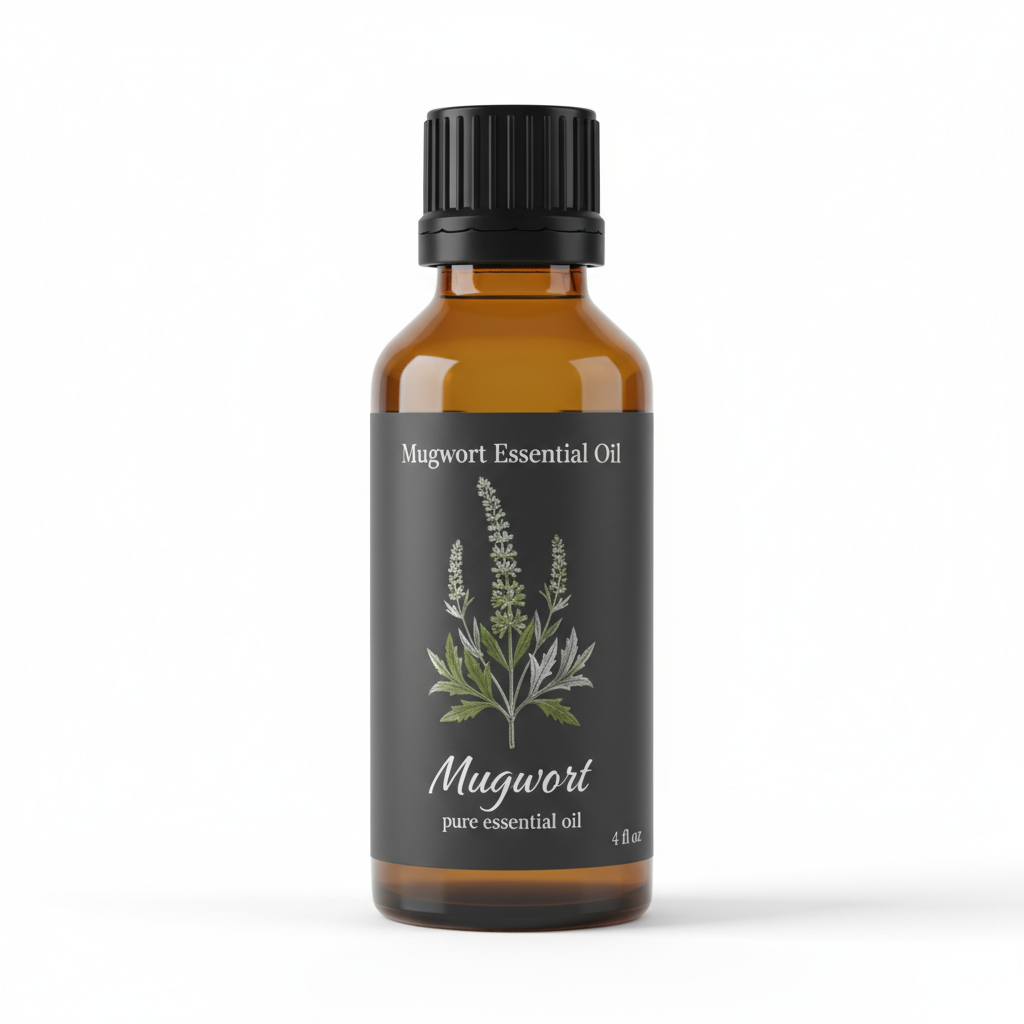
Mugwort Essential Oil
Our own Mugwort Essential Oil, in sizes from 0.5 oz to bulk.
From $16.99
Shop Now →The number that sets the dose
The International Fragrance Association (IFRA) restricts thujone in finished products by category, and its guidance puts bar soap, liquid soap, body wash and rinse-off face cleanser in Category 9. The cap there is 0.13% thujone in the finished product (IFRA Standards, 51st Amendment; IFRA guidance). The cap is on thujone, not on the oil, so the most oil a bar can carry is the cap divided by the thujone share of your oil.
Published mugwort oils vary widely on that share. A leaf oil from Qichun, China came to about 9.9% thujone, alpha and beta together (Guan et al., 2019), while a cultivar called Qihuang 1 from a botanical garden in Wuhan was reported at roughly 59% (Ming et al., 2025). These are stand-ins for the arithmetic, not figures for our oil. Treating the oil dose as a percentage of the finished bar, which is the cautious reading:
- At about 10% thujone, the ceiling works out to roughly 1.3% oil in the bar.
- At about 59% thujone, it falls to roughly 0.2%.
So the same recipe could be comfortable with one mugwort oil and well over the line with another, which is why we would not pour a bar until the thujone figure for the actual lot is in hand. We sell one mugwort oil, and the Certificate of Analysis we publish for one batch lists density, refractive index and optical rotation rather than composition, so if you need GC-MS or thujone data, ask us in writing through our contact page before ordering and rely on the answer once you have it in writing.
It also explains why the 0.5% to 2% dilution we give for skin does not simply transfer to soap. Our guidance for a leave-on carrier blend is a different calculation from a rinse-off bar with its own category and cap.
Is a scented bar still soap?
In US regulation, “soap” has a narrow meaning. FDA applies the word only when most of the non-volatile matter is an alkali salt of fatty acids, the cleansing comes from those compounds, and the product is labelled, sold and represented solely as soap. Those products fall under the Consumer Product Safety Commission. A bar that is also marketed to moisturise or to scent the user counts as a cosmetic, and a bar that makes drug-type claims moves into a different regulatory category again (FDA, Is It a Cosmetic, a Drug, or Both? (Or Is It Soap?)). That is worth knowing because so much mugwort marketing is skin language.
For a cosmetic, ingredients are listed in descending order of predominance, fragrance may be declared simply as “fragrance”, and ingredients at 1% or less can be grouped after the rest in any order (21 CFR 701.3). Selling soap brings safety-assessment and labelling duties that belong to the maker, and a cosmetic chemist or regulatory consultant is the right person to confirm them.
Mugwort and sensitive skin
Mugwort belongs to the daisy family, and a review of the genus notes that contact dermatitis has been reported after skin exposure to various Artemisia species, attributed to sesquiterpene lactones (Sharifi-Rad et al., 2022). The review does not say how much of that material makes it into a distilled oil, so we treat it as a reason for caution, not a number. Soap is washed off, but it is used every day on the same skin. Our shop guidance is to avoid mugwort oil in pregnancy and to keep it away from children and pets. Our allergy article separates the different reactions that share the mugwort name, and the safety article covers thujone in more depth.
What to expect from a scent in soap
Soap is a different place to wear a fragrance than a candle or a jar of potpourri. The scent has to get through the making, the cure and then a damp bar in a dish, so expect a bold, bitter oil like mugwort to read differently in a finished bar than it does on a blotter. Plan on judging it after the cure rather than at the pour, and keep notes you can compare from bar to bar. That patience is what lets you adjust with confidence instead of guessing.
Planning a small test batch
If you decide to go ahead, here is how we would set it up. This is our suggestion, not a sourced method.
- Make a control bar from the same base recipe with no mugwort, and change only the oil dose between bars.
- Weigh the oil to 0.01 g and record the finished bar weight, so the dose can be expressed the way the arithmetic above does.
- Start well under the ceiling your thujone figure allows.
- Note colour and scent at pour, at a day, at a week and at the end of the cure, keeping the control bar alongside.
- Keep the bars for yourself until the labelling questions are settled.
Lye, base oils, moulds and scales come from a soap-making supplier, and so does advice on how well scent holds up in a particular recipe. For the wider picture of skin-adjacent crafts, see mugwort oil for skin-adjacent crafts, and for what published analyses show inside the oil, our composition article.
Mugwort can make a beautiful, earthy bar. Let the thujone figure pick the dose, and the rest is soapmaking.
Mugwort Essential Oil
Mugwort Essential Oil from our own shop, in sizes from 0.5 oz to bulk.
From $16.99
Shop Now →Sources & Further Reading
- IFRA, 2024. The complete IFRA Standards, up to and including the 51st Amendment, Thujone (Amendment 49). IFRA Standards PDF
- IFRA, 2023. Guidance for the Use of IFRA Standards. IFRA guidance PDF
- Guan X et al., 2019. Chemical Composition and Antimicrobial Activities of Artemisia argyi Lévl. et Vant Essential Oils Extracted by Simultaneous Distillation-Extraction, Subcritical Extraction and Hydrodistillation. Molecules. PMC6384757
- Ming J et al., 2025. Effects of drying methods on phenolic acids, flavonoids, and essential oils in three cultivars of Artemisia Argyi. Food Chemistry: X. PMC12721075
- US FDA. Is It a Cosmetic, a Drug, or Both? (Or Is It Soap?). fda.gov
- Electronic Code of Federal Regulations. 21 CFR 701.3 - Designation of ingredients. law.cornell.edu
- Sharifi-Rad J et al., 2022. Artemisia spp.: An Update on Its Chemical Composition, Pharmacological and Toxicological Profiles. Oxidative Medicine and Cellular Longevity. PMC9467740