Mugwort Infused Oil vs Essential Oil: Which Do You Need?
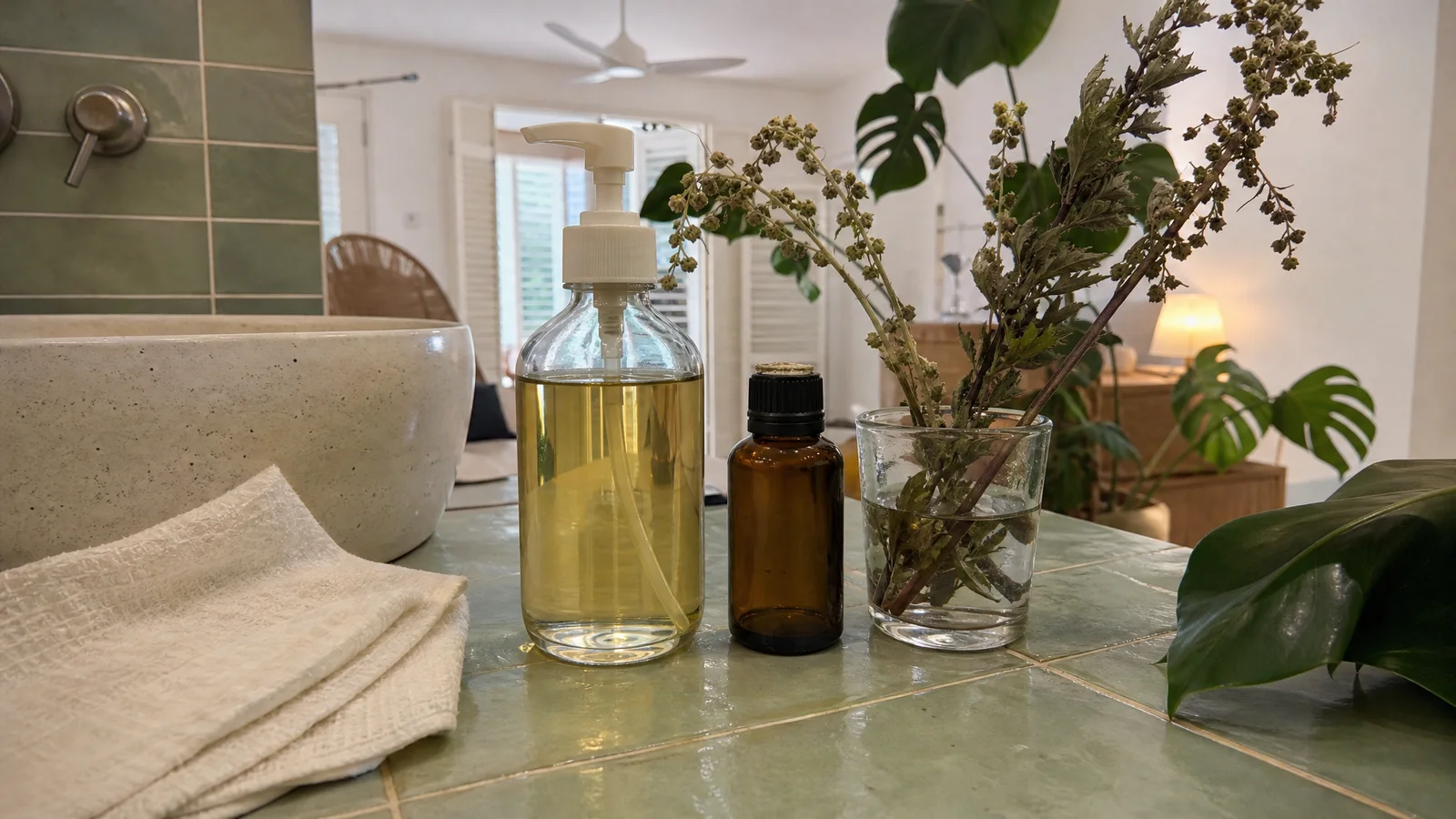
Type "mugwort oil" into a search box and you will land on two very different things: a small bottle of distilled essential oil, and a jar of olive oil that has had dried leaves steeping in it for a few weeks. They share a plant and a name, and after that they go their separate ways.

Mugwort Essential Oil
Our own Mugwort Essential Oil, in sizes from 0.5 oz to bulk.
From $16.99
Shop Now →What is in the little bottle
An essential oil is the aromatic part of the plant, carried over with steam or boiling water and then collected. It takes a lot of leaf to make a little oil. In one study of Artemisia argyi leaves from Qichun, China, a four-hour hydrodistillation gave 0.50% oil by dry weight, and a subcritical extraction of the same leaves gave 1.00% (Guan et al., 2019). Working from the 0.50% figure, a kilogram of dry leaf yields about 5 g of oil, so a bottle of mugwort oil stands for a great deal of plant. That concentration is why we sell ours neat and why the dilution maths is always yours to do.
What is in the jar
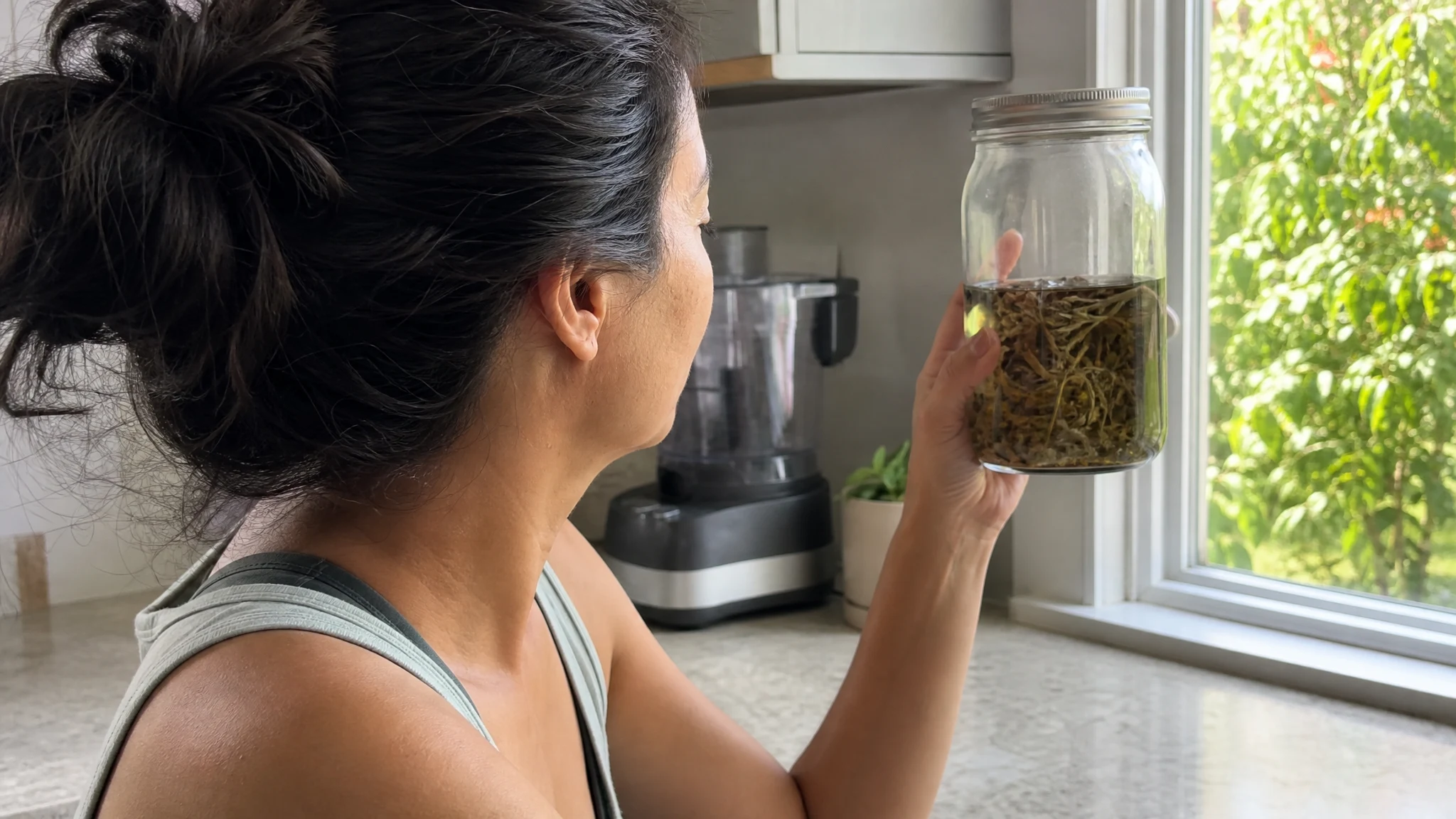
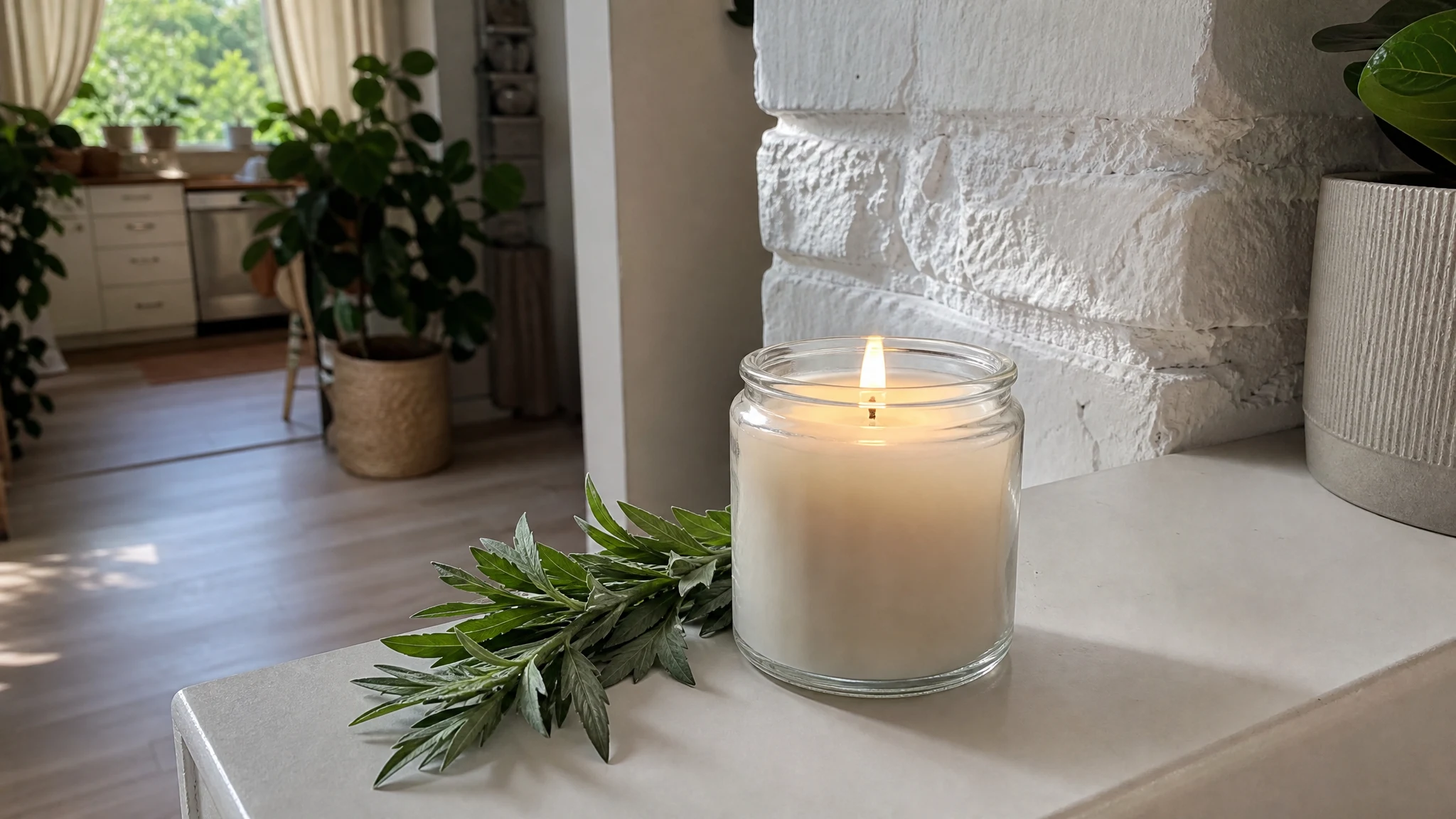
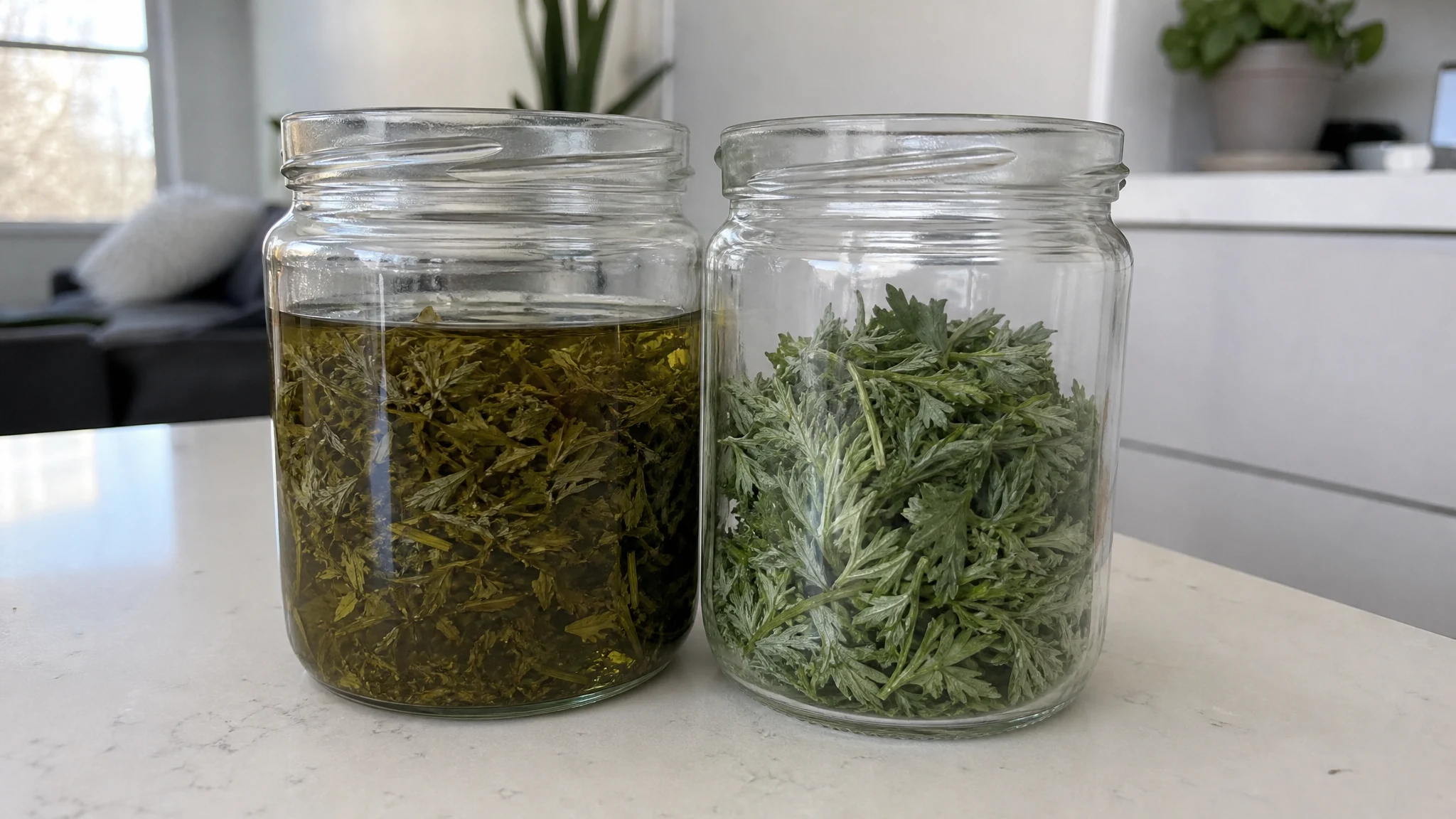
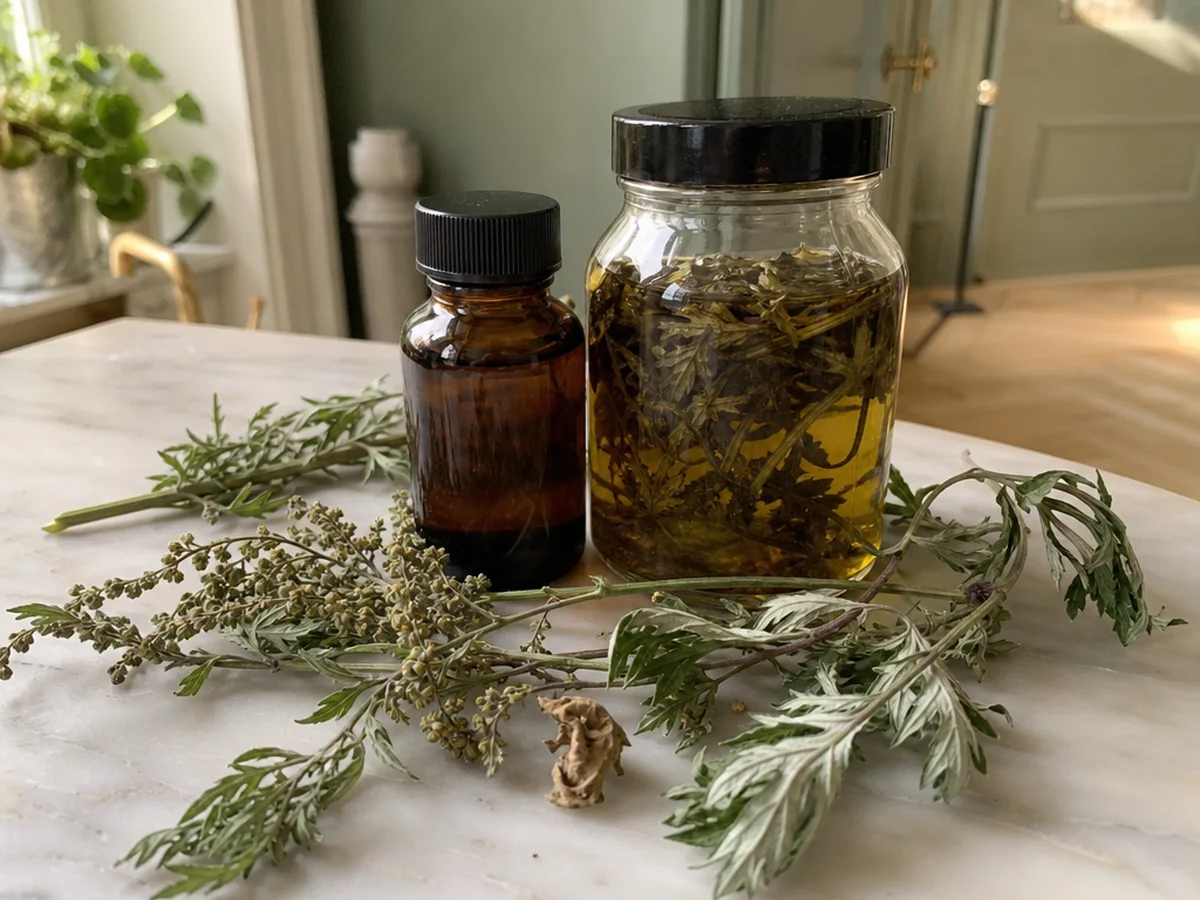
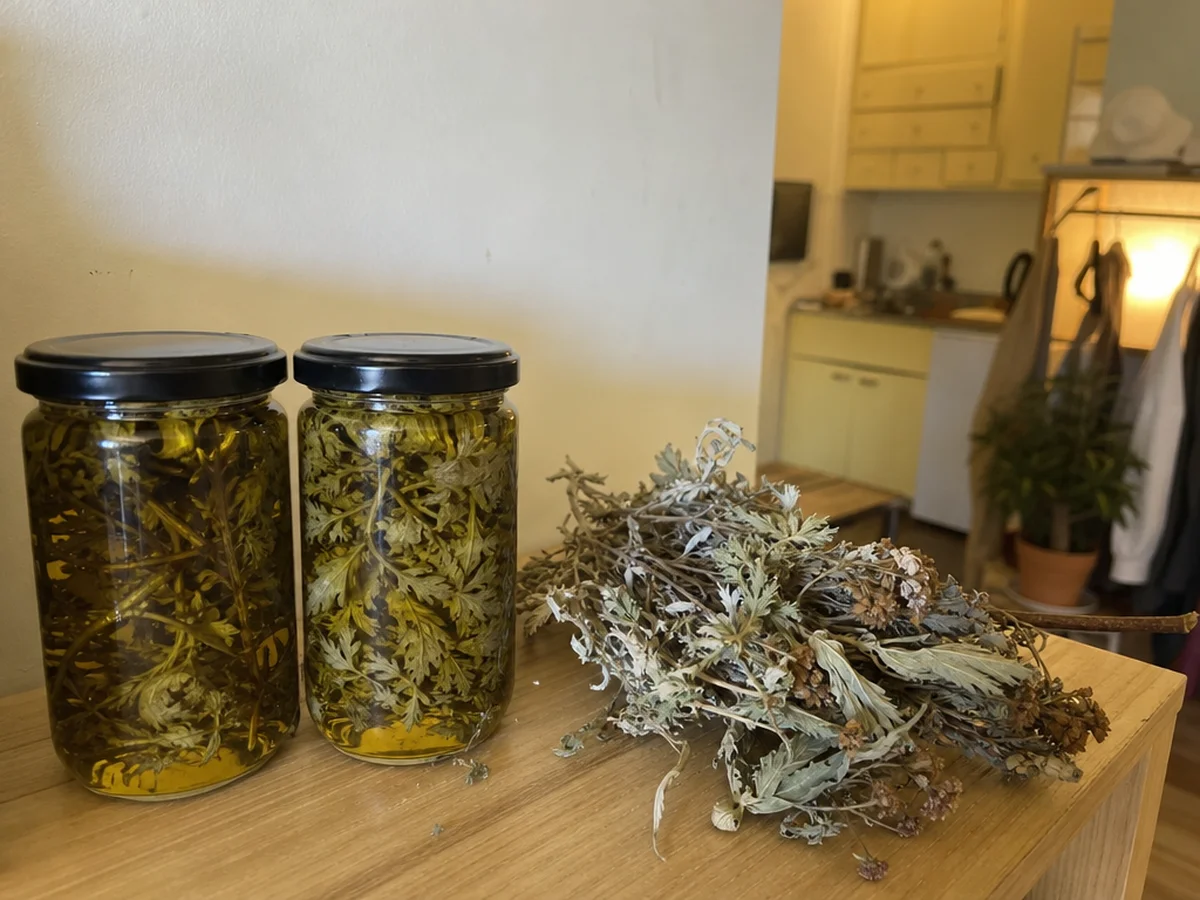
An infused oil works the other way round. The carrier, usually olive or sunflower, is the product, and the plant has simply given it some colour and a faint herbal character. Nothing is concentrated; you are holding a vegetable oil that has spent time with a herb. How much of the mugwort aroma ends up in it depends on the herb, the oil and the time you leave them together, which makes it a craft judgment more than a measurement. If you want mugwort to carry a scent in a candle, an incense blend or a perfume accord, the infusion is too gentle to do the job. The distilled oil is what carries aroma.
A simple smell test for your own bench
If you ever have both on the table, try this. Hold the essential oil a few inches below your nose and take one slow breath rather than a deep sniff at the opening. Look for the green, bitter, camphoraceous note we describe, with a sweet edge underneath. Then do the same with the infused oil. Expect it to smell mostly of its carrier, with any herb character sitting quietly behind it. Rest your nose for a minute between the two, and write down a few words for each while the impression is fresh.
That small side-by-side tells you more about the difference than any description can, and it is a nice way to learn what you actually like before you plan a project around either one.
An essential oil keeps well in a tightly closed bottle away from heat and light, which is how we advise storing ours (typically two to three years). A homemade infusion has a shorter clock. University of Maine Extension explains that fresh herbs in oil most likely carry C. botulinum spores, that dried herbs lack the moisture bacteria need, and that homemade infused oils should not be kept more than three months (Bulletin #4385, Safe Homemade Flavored and Infused Oils). Penn State Extension describes the same approach: dried herbs, refrigeration and up to three months (How to Safely Make Infused Oils). Both are written for kitchen oils, so applying them to a craft or body oil is our reasoning, but it is sensible reasoning: start with fully dried leaves, make small batches, label the date, and finish the jar while it is fresh.
"Infused" does not mean "gentle"
It is easy to assume the infusion is the mild cousin of the essential oil and needs no care. A review of the genus records skin contact dermatitis from several Artemisia species and links it to sesquiterpene lactones, without sorting out which preparations cause it (Artemisia spp.: An Update on Its Chemical Composition, Pharmacological and Toxicological Profiles). Anyone with a known daisy-family allergy should ask an allergist before using either; our mugwort allergy article sorts out the different problems that hide behind the word allergy.
Where the essential oil asks for more thought
Mugwort oils can contain thujone, and fragrance rules cap it by product type. The IFRA 51st Amendment allows 9.5% thujone in a finished candle or incense product but 0.095% in a body cream, oil or lotion (The complete IFRA Standards, up to and including the 51st Amendment). As arithmetic only: an oil with 10% thujone, diluted to 2%, would put 0.2% thujone into a body product, which is over that second cap. Our shop guidance for skin is 0.5% to 2% in a carrier with a patch test and no use in pregnancy, and we would always start at the low end and do this sum first. Our home page also calls our oil one for fragrance craft rather than body care.
How we would choose
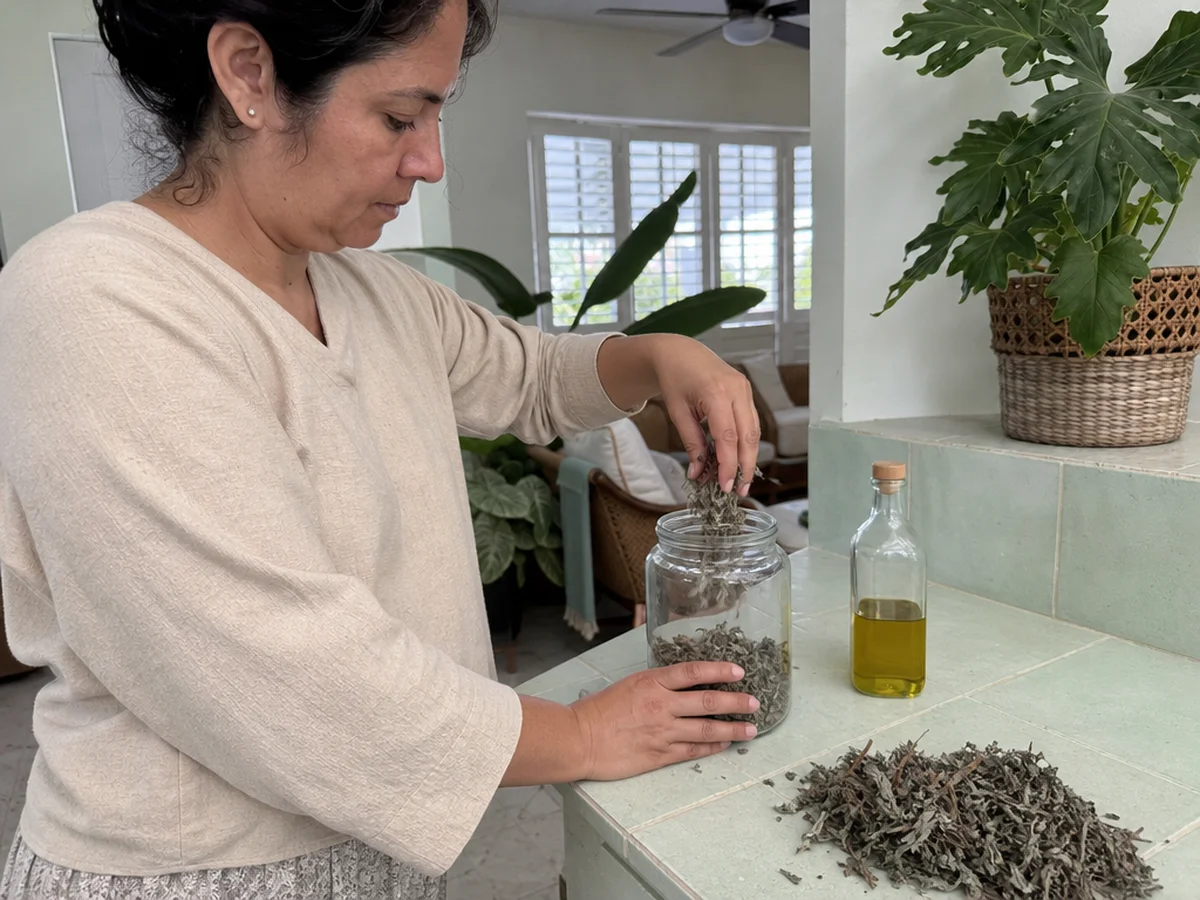
For anything scented, such as incense cones or a room spray, reach for the essential oil and keep the amount small. If you love the idea of a herb-steeped carrier, it is a lovely old craft; you will find dried herb and carrier oils at a herb shop, a soap-supply shop or the grocery, and the rules above are the ones to follow. They suit different jobs, and it helps to know before you buy which one you are actually after.
One practical habit: when a listing says only "mugwort oil", read the ingredient line before you order. A carrier oil such as olive or sunflower listed first tells you it is an infusion, while a Latin plant name and the words essential oil tell you it is the distilled kind. Ours is the second kind, sold neat, so nothing is mixed in for you.
Mugwort Essential Oil
Mugwort Essential Oil from our own shop, in sizes from 0.5 oz to bulk.
From $16.99
Shop Now →Sources & Further Reading
- Chemical Composition and Antimicrobial Activities of Artemisia argyi Lévl. et Vant Essential Oils Extracted by Simultaneous Distillation-Extraction, Subcritical Extraction and Hydrodistillation (Molecules, 2019)
- Bulletin #4385, Safe Homemade Flavored and Infused Oils (University of Maine Cooperative Extension)
- How to Safely Make Infused Oils (Penn State Extension)
- Artemisia spp.: An Update on Its Chemical Composition, Pharmacological and Toxicological Profiles (Oxidative Medicine and Cellular Longevity, 2022)
- The complete IFRA Standards, up to and including the 51st Amendment (IFRA, January 2024), Thujone standard