Does Mugwort Oil's Country of Origin Matter?
It is natural to look for a country on a bottle of mugwort oil and to feel reassured by a good one. Korea, China, Europe: each carries an image. The trouble is that the plant itself does not much care about borders. Published analyses of mugwort leaf oils differ from one another more than a country-by-country comparison can explain, and that is the most useful thing to know before you buy.

Mugwort Essential Oil
Our own Mugwort Essential Oil, in sizes from 0.5 oz to bulk.
From $16.99
Shop Now →One garden, three very different oils
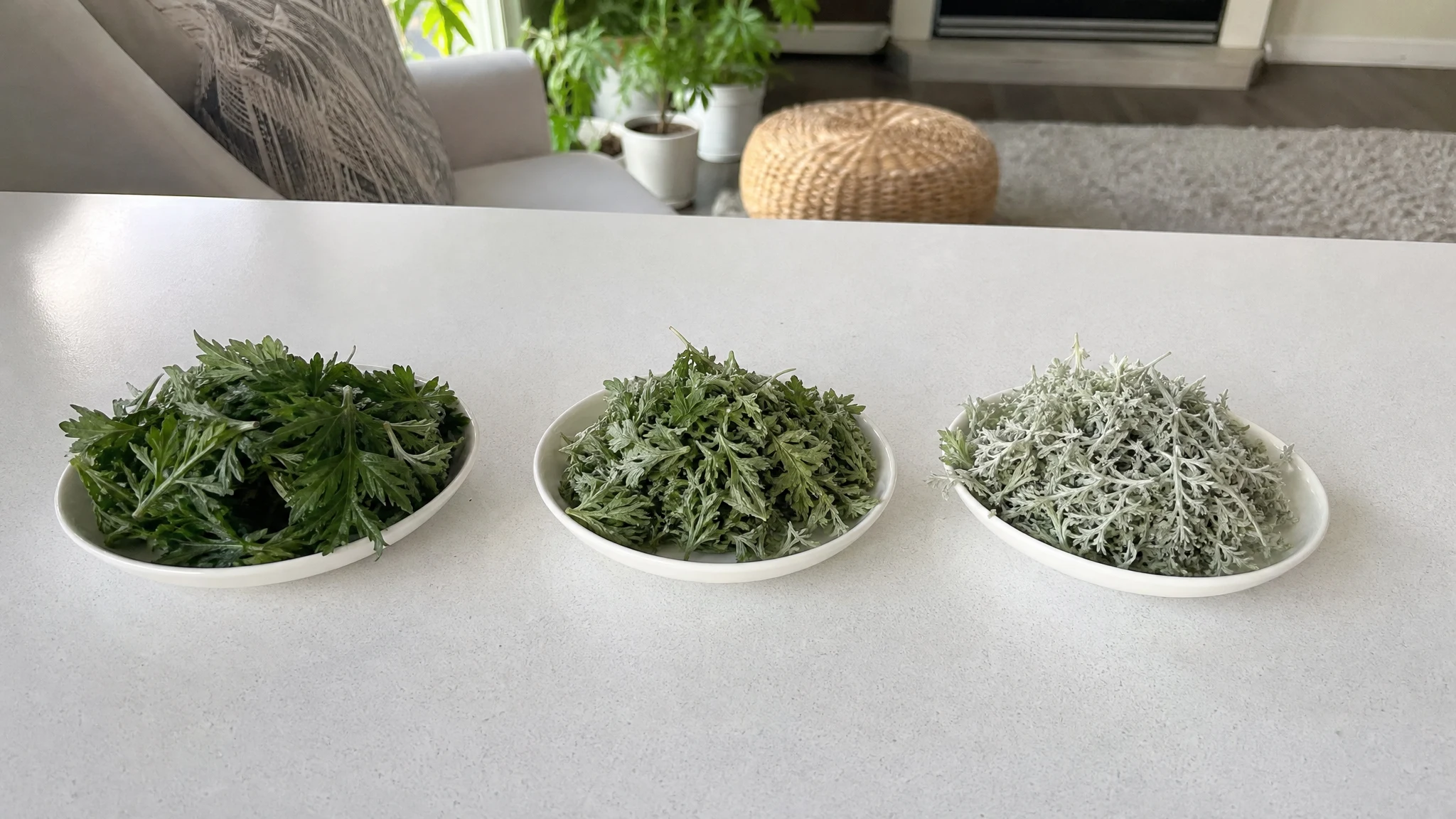
The sharpest example comes from a botanical garden in Wuhan, China. Researchers grew three cultivars of one Artemisia argyi species side by side, then distilled each. One cultivar's oil carried thujone at 57%, while another was led by eucalyptol at 26%. The oil yield also changed with how the leaves were dried, from 1.08% for shade-dried, non-defoliated plant material down to 0.37% for hot-air drying at 80 C. Same garden, same city, same species, and the oils were not the same.
Spread the net wider and the picture holds. A hydrodistilled leaf oil from Qichun, China had alpha-thujone near 8% and caryophyllene oxide near 9%. A steam-distilled oil from an Anhui plantation reported cineole at 13.76% and terpinen-4-ol at 6.77%. An Artemisia vulgaris grown in Maranhao, Brazil was dominated by caryophyllene at 37%, and one from Serbia, harvested in flower and shade-dried, was led by gurjunene, with the thujone peak that defines some mugwort oils not detected at all. These are single samples, with yields measured on different bases, so none of them is a league table. Together they say that species, cultivar, drying, plant part and method all move the result, and country is only one thread in the weave.
Where Korea fits
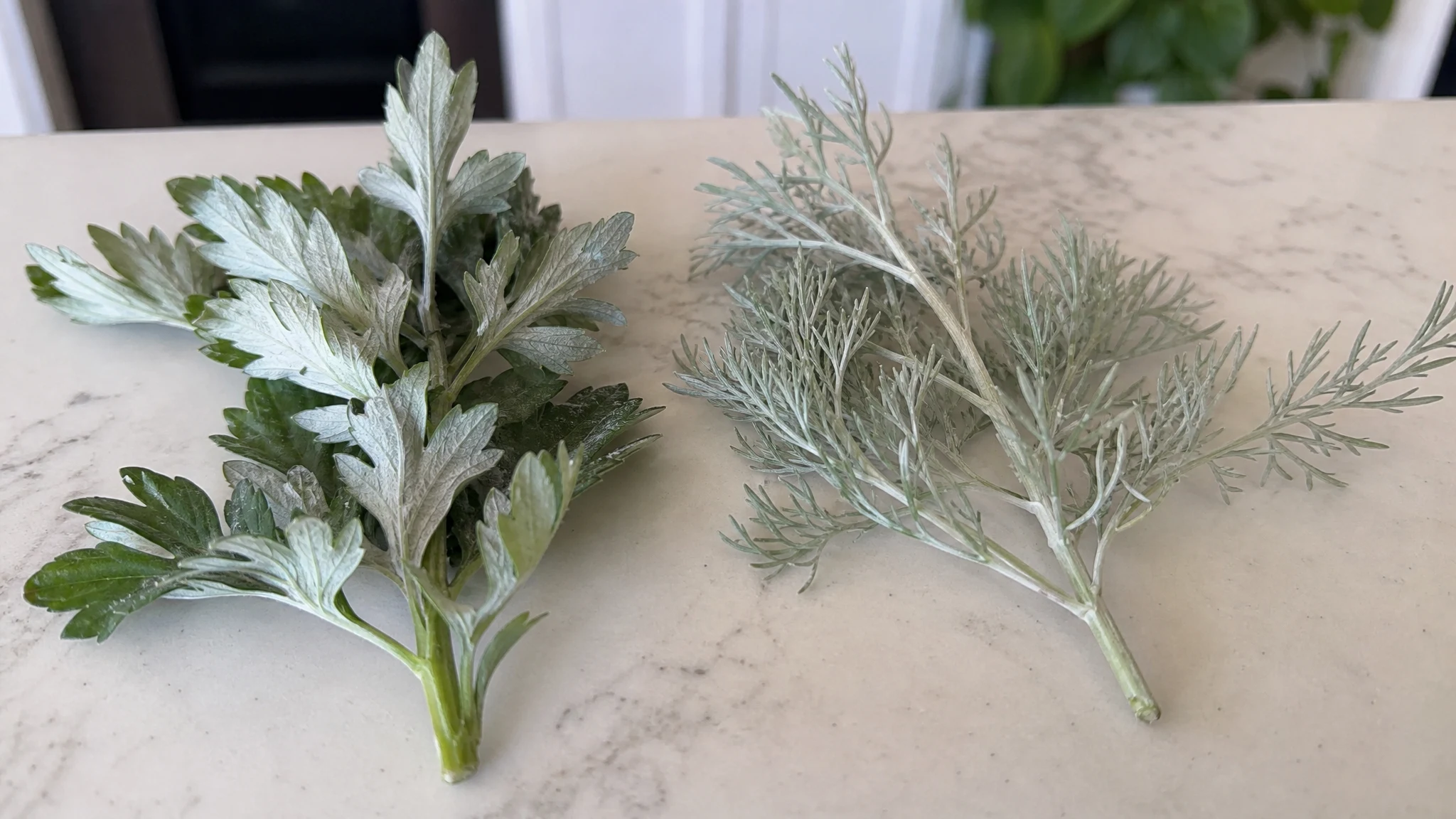
Korea is the origin many buyers ask about, though we could not find a published composition analysis of a Korean mugwort oil to cite. What a 2026 review of Korean Artemisia species does offer is useful context: the name ssuk is commonly associated with Artemisia princeps, that species and A. argyi are grouped together under one traditional drug category, and misidentification is a major concern because the dried herbs are easy to confuse. The authors add that no single DNA marker authenticates every species. That is a review of the herb trade rather than of oils, but it explains why a botanical name on a label tells you more than a place name.
What an origin can and cannot tell you
A region is a fair first filter for one thing: which species are likely to be on offer. It does not establish composition, harvest conditions or whether the plants were wild or cultivated, and none of the papers above tested those things by country. It also says nothing about thujone, the constituent that decides how a given oil fits the fragrance industry's limits. The spread in these papers, from 57% in one cultivar to not detected in another oil, is exactly why mugwort oil safety and the wider comparison in mugwort oil composition are worth reading together.
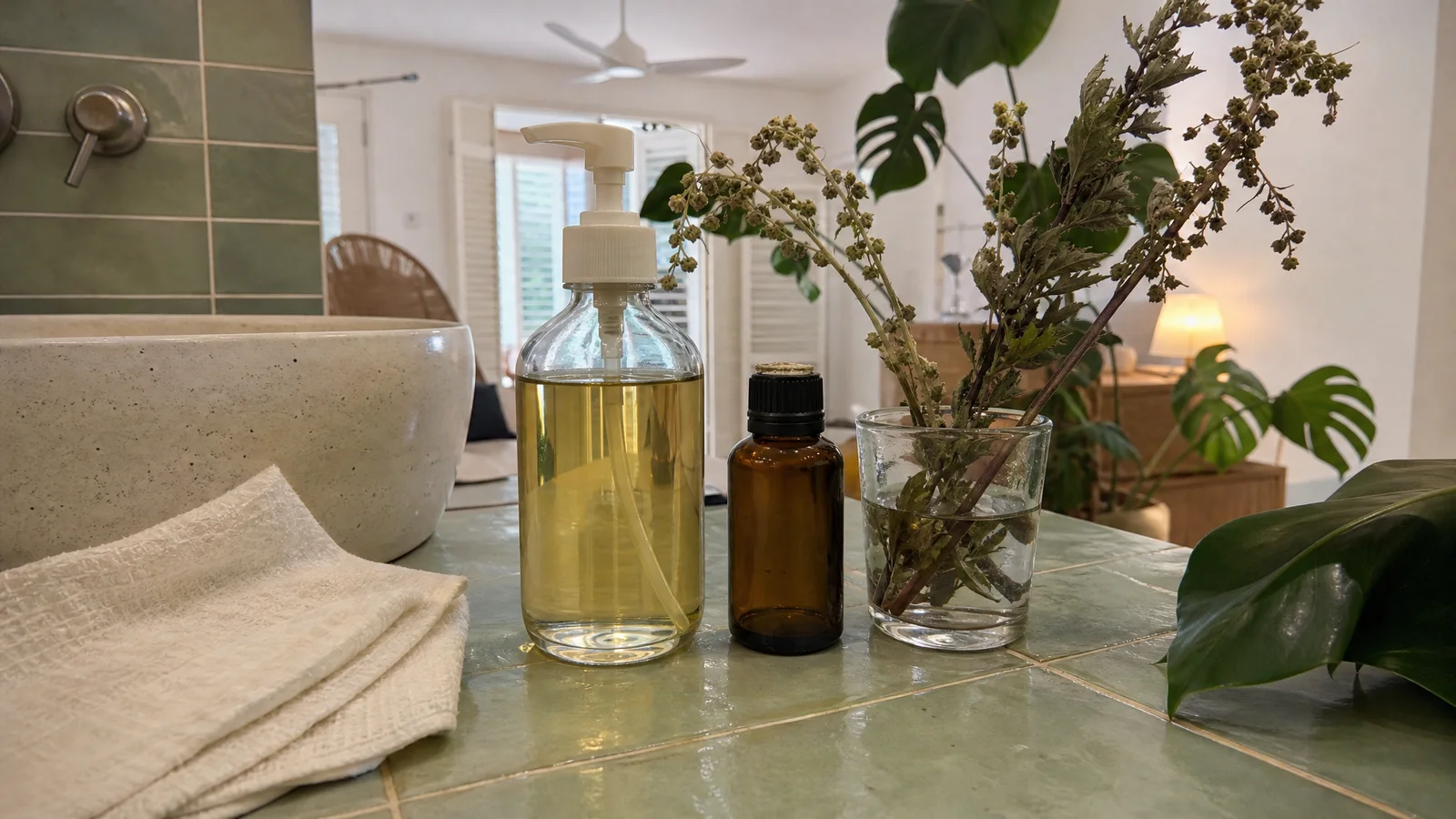
For our own oil, the origin region we give is Europe, and it is steam-distilled and sold neat. We name no farm or country and make no claim about growing method. The Certificate of Analysis we publish for one batch records density and refractive index; it does not record a region or a chemistry profile. If a document you need is not there, ask us in writing through the contact page, and weigh the answer by whether it arrives as a document.
Enjoy the map, then ask the bottle
We understand the pull of a place name. A country on a label feels like a story, and stories are part of why people love botanical oils. Enjoy that, and then do something more useful with it. Smell the oil you have, in a ventilated room, from a few inches away, and write down what you notice. The scent in your hand is the thing you will actually work with, and your notes stay true even if you never learn where every leaf grew.
When you compare two bottles later, put the notes next to the paperwork. A place name can start the conversation, but your own record of what you smelled, with the batch number beside it, is what lets you order again with confidence. Over a few batches you build a small library of your own, which is worth more than any map.
Better questions than "where is it from?"
- What is the full botanical name on the label, and does the batch paperwork name the same plant? Our label-reading article shows how to compare them.
- Which plant part was distilled: leaf, aerial parts, or leaf and stem? The studies above used each.
- Is there a constituent analysis for this lot, and does it report thujone?
- Does the batch number on the bottle match the one on the paperwork?
- If a seller claims organic, wild or single-estate status, where is the document? Organic vs wildcrafted mugwort oil covers what each term would need behind it, and armoise oil in perfumery untangles a perfumer's name that points at a different plant.
One more thing to carry with you: our guidance is to avoid mugwort oil during pregnancy, and the European Medicines Agency's herbal committee says thujone use in pregnant women and children should be minimised because no studies allow a reliable assessment.
A map can start the conversation, but the botanical name, the plant part and a lot-specific analysis are what finish it.
Mugwort Essential Oil
Mugwort Essential Oil from our own shop, in sizes from 0.5 oz to bulk.
From $16.99
Shop Now →Sources & Further Reading
- Chemical Composition and Antimicrobial Activities of Artemisia argyi Lévl. et Vant Essential Oils Extracted by Simultaneous Distillation-Extraction, Subcritical Extraction and Hydrodistillation
- The antimicrobial effect and mechanism of the Artemisia argyi essential oil against bacteria and fungus
- Effects of drying methods on phenolic acids, flavonoids, and essential oils in three cultivars of Artemisia Argyi
- Chemical Profile and Biological Activities of Essential Oil from Artemisia vulgaris L. Cultivated in Brazil
- Allelopathic Potential of Artemisia absinthium and Artemisia vulgaris from Serbia: Chemical Composition and Bioactivity on Weeds
- Korean Artemisia species: phylogenomic authentication, ethnopharmacology, and commercial applications
- European Medicines Agency, HMPC: Public statement on the use of herbal medicinal products containing thujone (EMA/HMPC/732886/2010 Rev. 1)