Mugwort Tincture vs Oil: Which Belongs in Your Perfume?
If you remember one number about mugwort tincture, make it 98%. That is how much of a mugwort tincture analysed by the European Food Safety Authority was plain solvent. A tincture is a lovely, quiet material, but it is a very different thing from the essential oil, and it is worth knowing how different before you decide which belongs in your perfume.

Mugwort Essential Oil
Our own Mugwort Essential Oil, in sizes from 0.5 oz to bulk.
From $16.99
Shop Now →Two ways of pulling scent from a plant
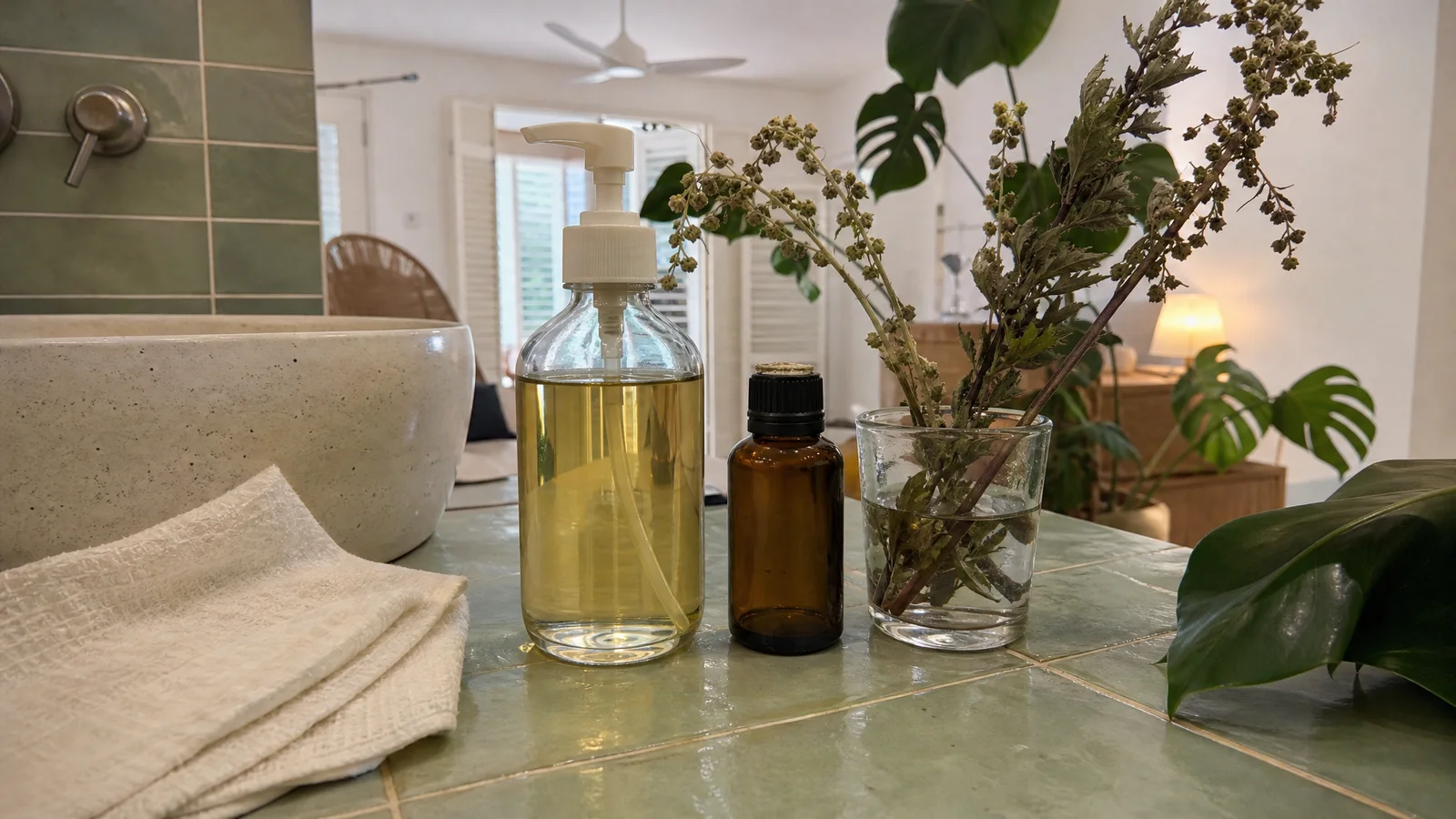
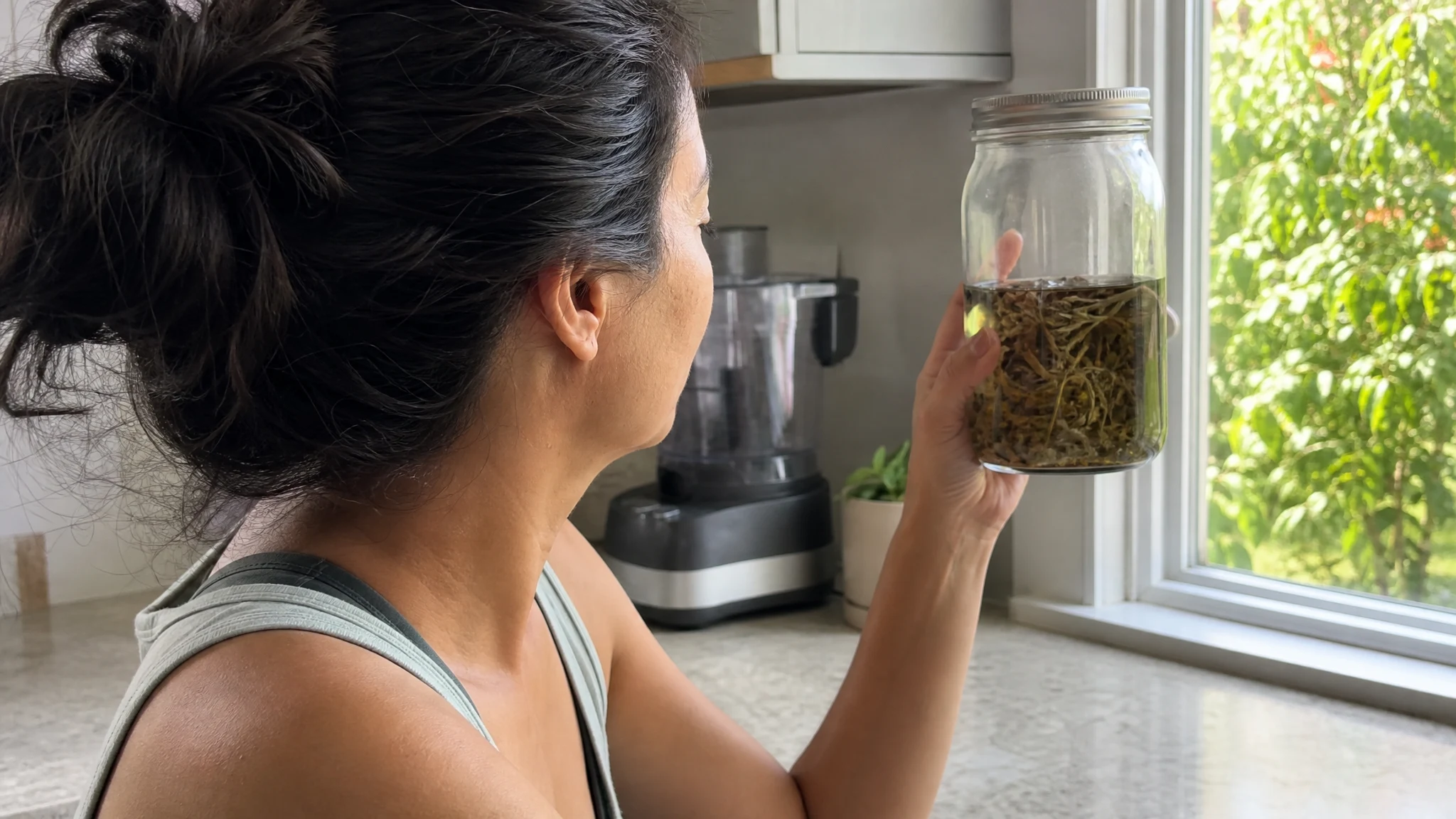
Steam distillation carries over only the volatile fraction of the plant, which is the part that smells. A tincture is made by soaking plant material in alcohol and letting whatever dissolves come out, scent and non-scent alike, then filtering. The EFSA opinion describes a tincture of Artemisia vulgaris aerial parts made by extended extraction in a water and ethanol mixture (Safety and efficacy of a tincture derived from Artemisia vulgaris L. (Mugwort tincture) when used as a sensory additive in feed for all animal species). The result was a brown liquid with a characteristic odour and a density of 940 kg/m³. Solvent made up about 98.34% of it, and dry matter only 1.66%.
What the numbers say about strength
EFSA measured two of the compounds that mugwort oils are known for. Alpha- and beta-thujone were not detected in the tincture (detection limit 0.005%), and 1,8-cineole, a main component of many Artemisia argyi oils, was present at just 0.001%. Compare that with seven Artemisia argyi essential oils from China, where 1,8-cineole ran from 4.86% to 21.89% (Repellency and insecticidal activity of seven Mugwort (Artemisia argyi) essential oils against the malaria vector Anopheles sinensis). As rough arithmetic, that puts the oils thousands of times richer in this one compound. It is two different species and two very different materials, so read it as the order of magnitude, not a conversion factor. A perfumer's tincture is usually made with stronger alcohol than EFSA's water and ethanol mix, so it would likely differ from this sample, but the basic picture holds: a tincture is dilute, and an essential oil is the plant's aroma, concentrated.
What that means in a formula
If you want mugwort to speak up in a perfume accord, incense blend or candle, the oil is the tool, and it is the reason we sell it. Our shop suggests a drop or two as an accent in a perfume accord, and the sensible thing is to weigh the oil rather than count drops once you want a formula you can repeat. On the batch behind the Certificate of Analysis we publish, relative density is 0.895, so 1 ml weighs about 0.895 g. A tincture is for people who enjoy the process of making an extract and want something softer and less intense, and for whom a brown, mostly-alcohol liquid is part of the appeal. How it smells is something only your own nose can settle.
Smelling the two side by side
If you ever have both a tincture and the oil, put a little of each on separate strips and compare. You will probably find the tincture reads softer, with the sharp alcohol lift fading quickly, while the oil is more concentrated and fills the room faster. Wait for the alcohol to fade before judging the tincture's scent, because that first sniff mostly tells you about the solvent.
Which one would we reach for?
For a perfume accord where you want mugwort to show up, we would reach for the oil, in drops you count or, better, weigh. For a gentle, rounded herbal background in a project of your own making, a tincture can be a quiet pleasure. Neither has to be your only choice, and plenty of makers enjoy having both on the shelf.
If you would like to make one
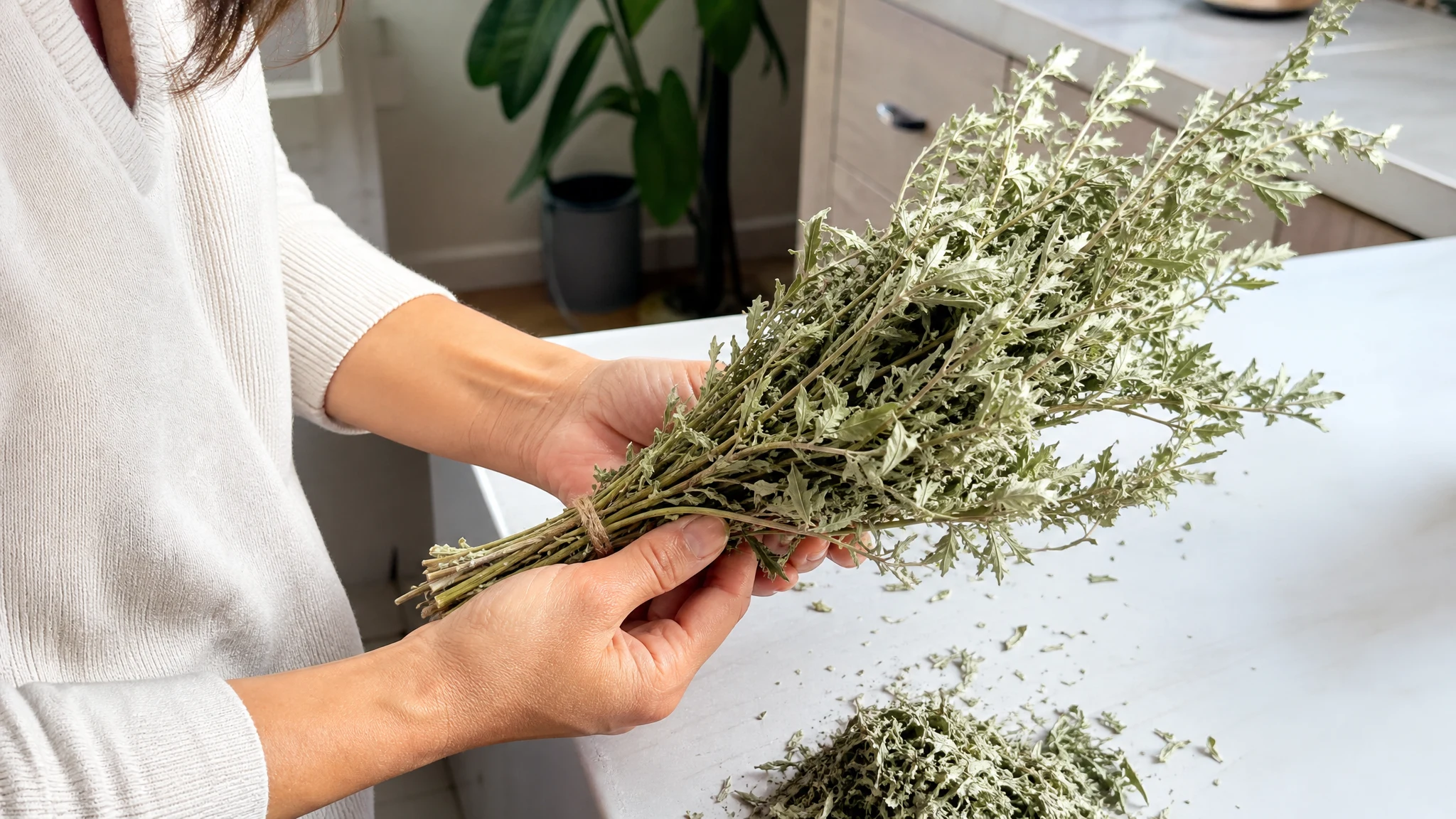
We sell the steam-distilled oil, not dried herb or alcohol, so those come from a herb shop and a craft or soap-supply shop. A few habits make the project go well:
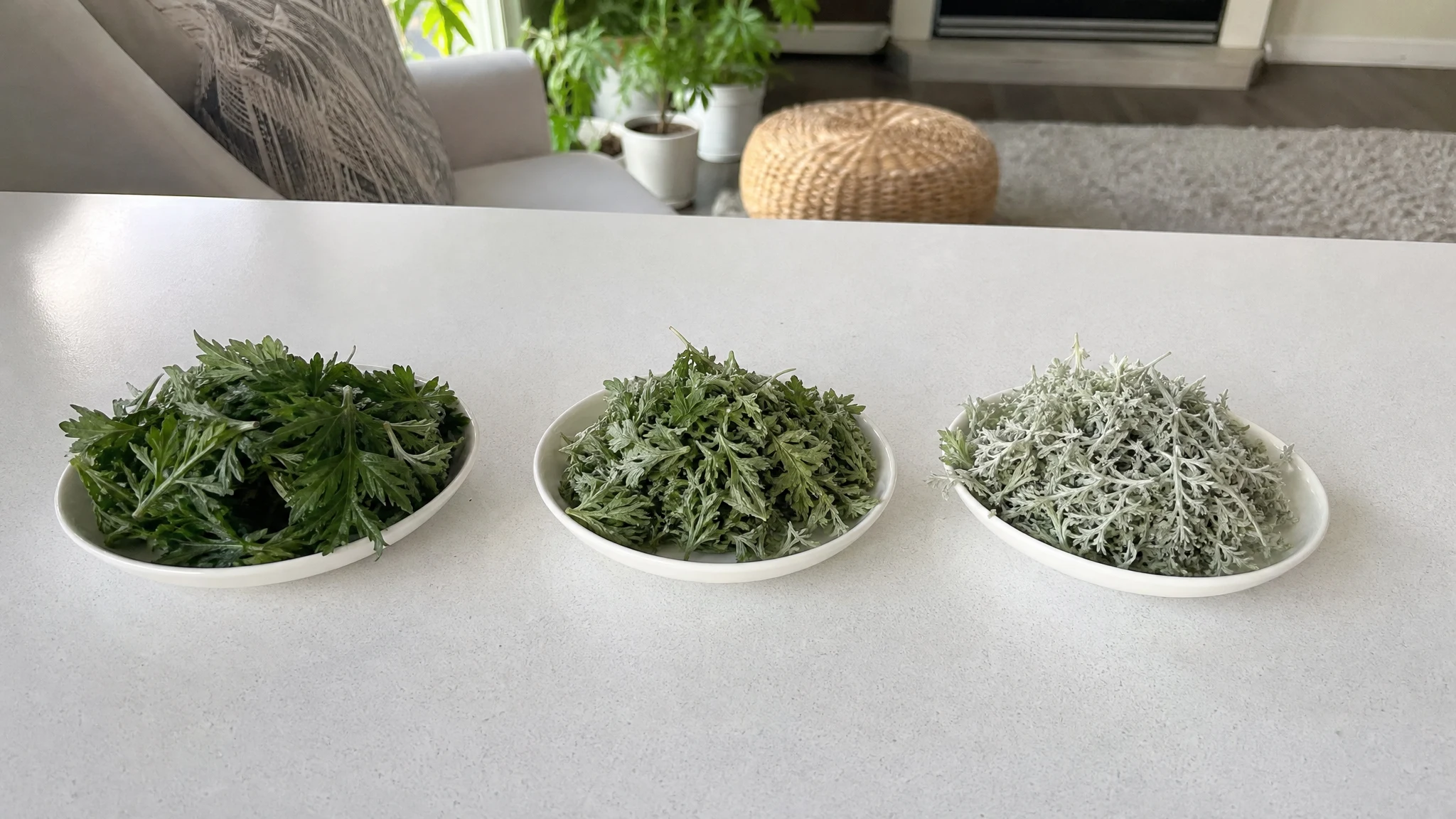
- Ask the herb seller for the Latin name, plant part and harvest year in writing. Species matters, and the thujone in a tincture depends on the herb.
- Buy alcohol meant for perfumery and ask the supplier which grade it is.
- Keep the jar capped, away from heat and flame (alcohol is flammable), and label it with the date and the plant's Latin name.
- Treat it as a craft material, not a drink or a remedy. Neither a tincture nor our oil is for internal use, and both belong out of reach of children and pets.
Thujone still counts
Whichever you use, IFRA's thujone standard counts thujone from every source in the finished product, and caps it by category, for example 1.4% in fine fragrance (The complete IFRA Standards, up to and including the 51st Amendment). A tincture with undetectable thujone leaves a lot of headroom. With an oil, the sum depends on the oil's own thujone share, and published mugwort oils range from none listed to about 10% (see our wormwood comparison). If you need a figure for ours, ask in writing through the contact page and get the answer in writing before relying on it.
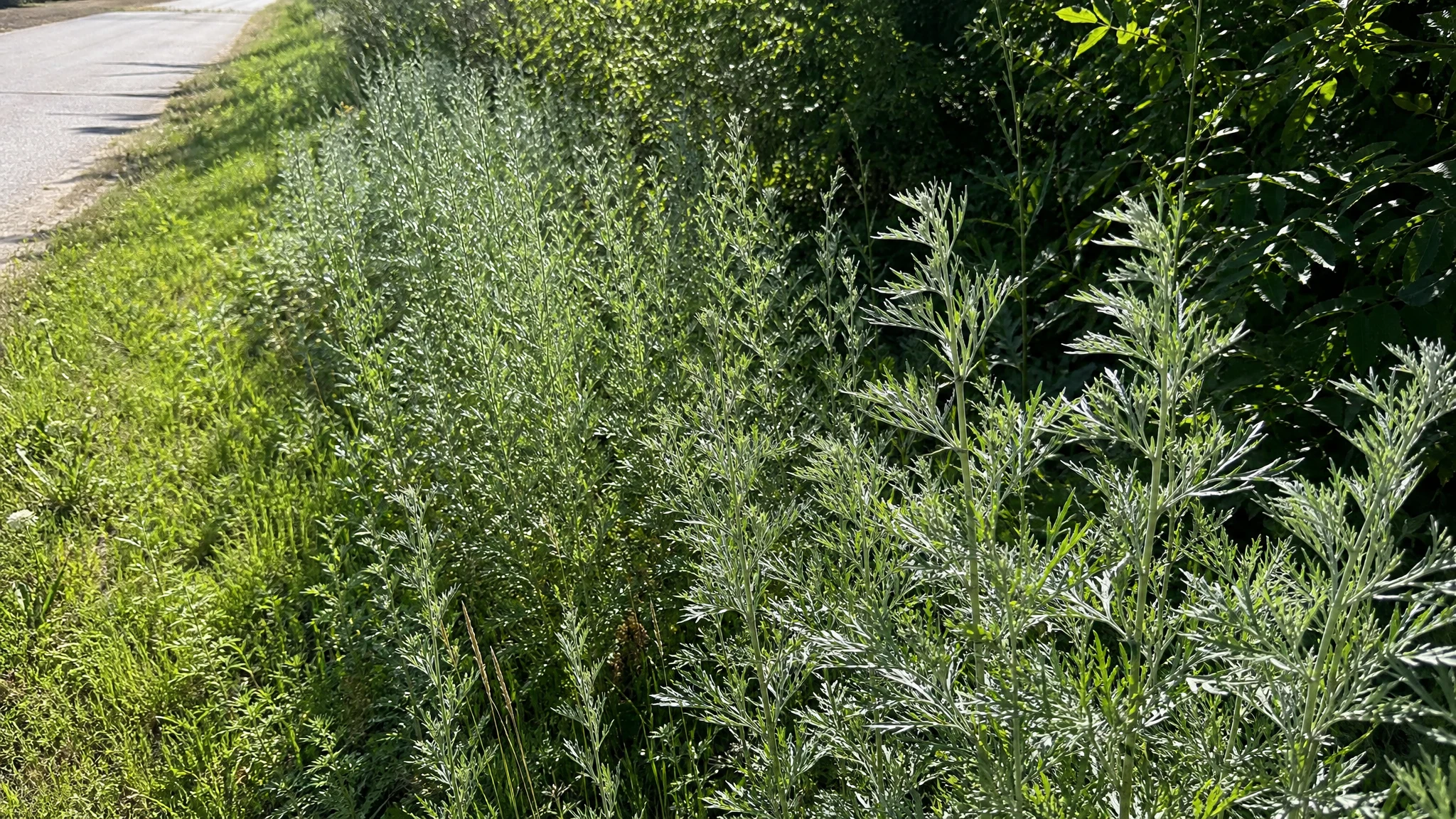
For the plant itself, see our guide to identifying and harvesting it; for oil against a herb-steeped carrier, there is a separate comparison. If perfume is your goal, the accords article is the place to carry on.
Mugwort Essential Oil
Mugwort Essential Oil from our own shop, in sizes from 0.5 oz to bulk.
From $16.99
Shop Now →Sources & Further Reading
- Safety and efficacy of a tincture derived from Artemisia vulgaris L. (Mugwort tincture) when used as a sensory additive in feed for all animal species (EFSA Journal, 2019)
- Repellency and insecticidal activity of seven Mugwort (Artemisia argyi) essential oils against the malaria vector Anopheles sinensis (Scientific Reports, 2022)
- The complete IFRA Standards, up to and including the 51st Amendment (IFRA, January 2024), Thujone standard