Mugwort Oil in Fragrance Craft: Candles, Perfume, Sprays
Mugwort oil finds its happiest home in crafts that never touch skin, and it asks for a steadier hand in the ones that do. The reason is arithmetic rather than temperament: IFRA caps thujone at very different levels depending on what the finished product is, and mugwort oils can carry thujone. Sort your project by what it touches, and most of the decisions make themselves.

Mugwort Essential Oil
Our own Mugwort Essential Oil, in sizes from 0.5 oz to bulk.
From $16.99
Shop Now →The caps, craft by craft
IFRA's guidance puts candles, incense and fragrancing sachets in Category 12, fragranced oil for pot-pourri and reed diffusers in 10A, manual air-freshener sprays in 10B, fine fragrance and solid perfume in Category 4, body creams and oils in 5A, and bar soap and rinse-off cleansers in Category 9 (Guidance for the use of IFRA Standards). The thujone standard then sets the maximum thujone in the finished product for each (The complete IFRA Standards, up to and including the 51st Amendment). To turn a cap into an oil percentage, divide by the oil's thujone share. As an illustration, take an oil at about 10%, roughly the combined thujones in one published Artemisia argyi leaf oil (Guan et al., 2019). Another published mugwort, grown in Brazil, listed no thujone at all (Malik et al., 2019).
| Craft | IFRA category | Thujone cap | Most oil if the oil is 10% thujone |
|---|---|---|---|
| Candles, incense, sachets | 12 | 9.5% | 95% |
| Perfume, solid perfume | 4 | 1.4% | 14% |
| Room sprays | 10B | 0.22% | 2.2% |
| Pot-pourri oil, reed diffuser | 10A | 0.13% | 1.3% |
| Soap, rinse-off cleanser | 9 | 0.13% | 1.3% |
| Body oil, balm, lotion | 5A | 0.095% | 0.95% |
This is a method, not a statement about any bottle. We hold no thujone figure for our oil to put in that last column. The cap also counts thujone from every source in the product, and the European Medicines Agency lists cedar leaf, sage, tansy, wormwood, thyme and rosemary among the plants that contain it, so blends add up (Public statement on the use of herbal medicinal products containing thujone).
Incense, candles and sachets: the natural fit
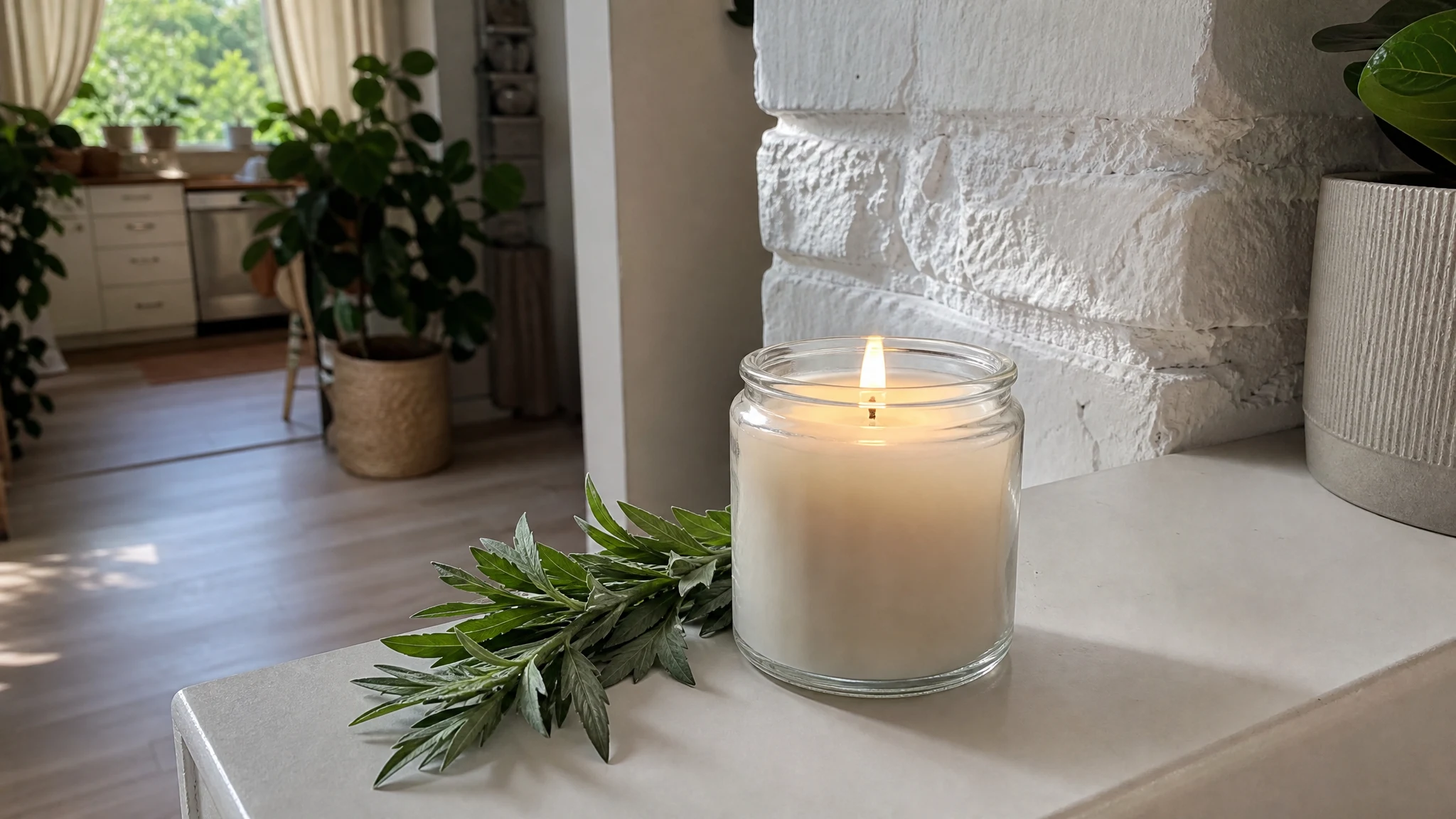
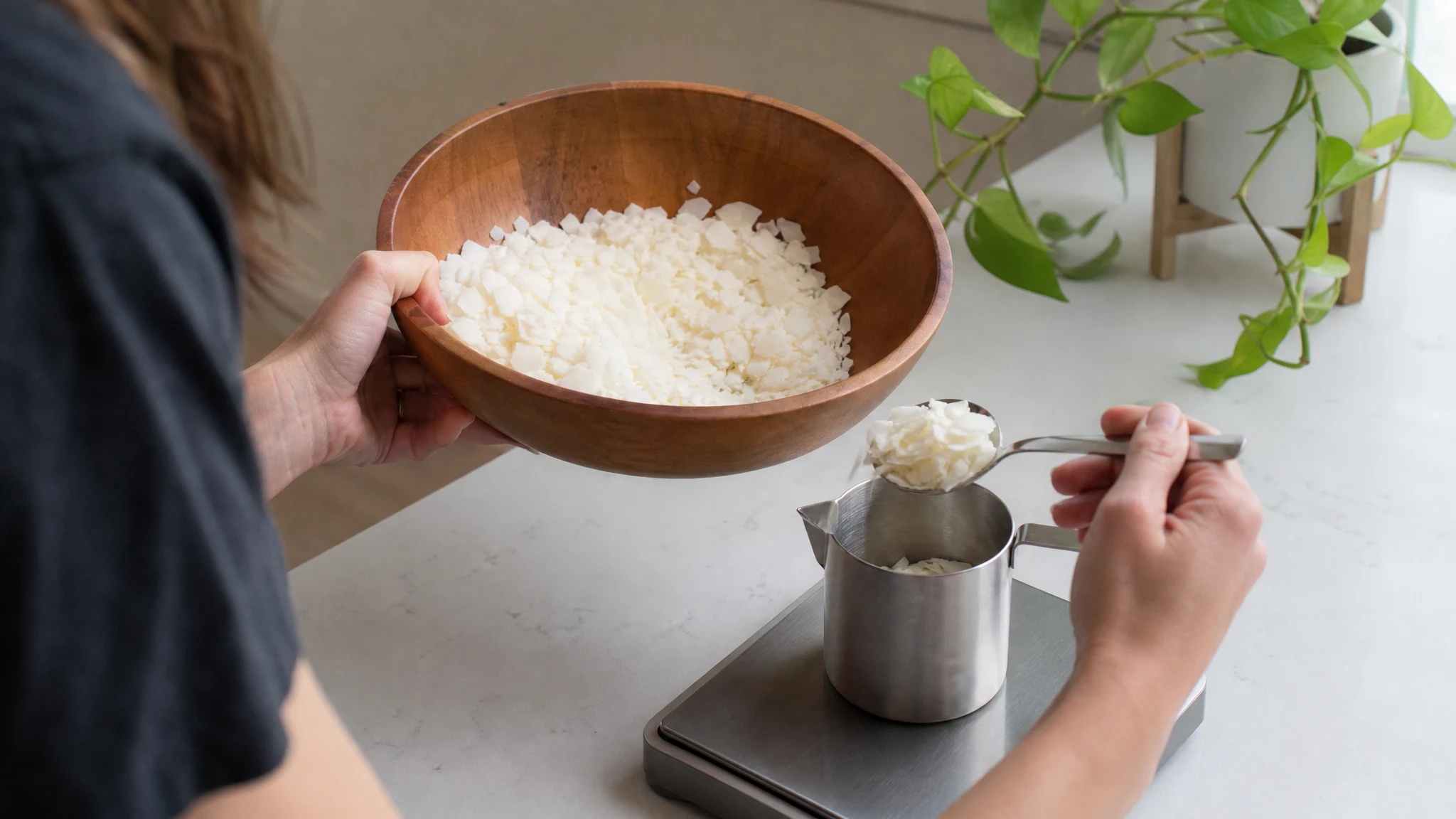
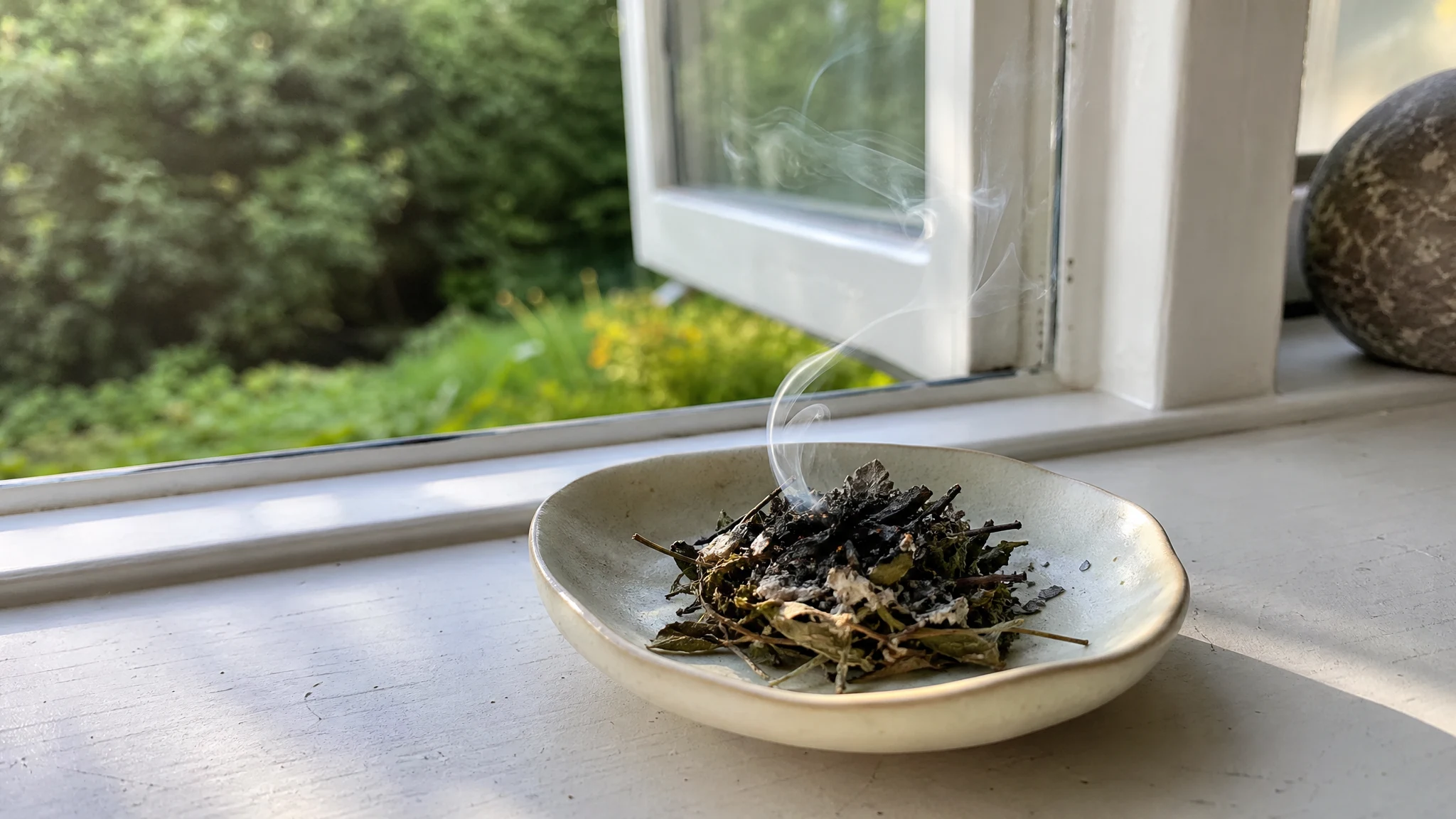
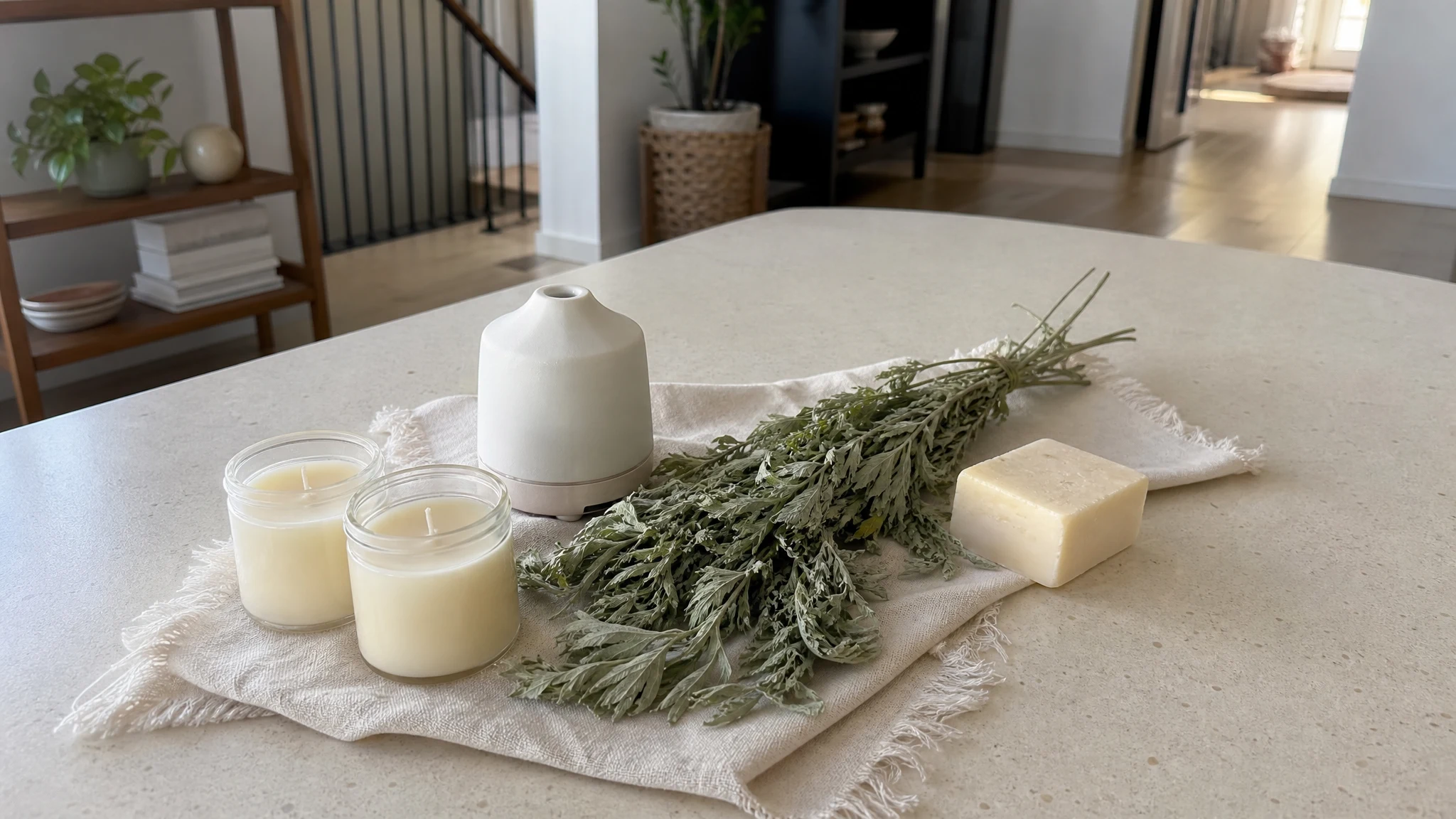
The loosest cap is also where our shop positions the oil: incense and smudge-style blends, ritual and seasonal candles, potpourri and sachets. Thujone is rarely the limit here. Wax, wick, scent throw and comfort will stop you long before IFRA does. Our incense cone article works a batch by weight, and the candle article covers wax, wick and load. We state no flash point for our oil, so ask the seller of any oil for a safety data sheet before you pour.
Perfume: a small accent
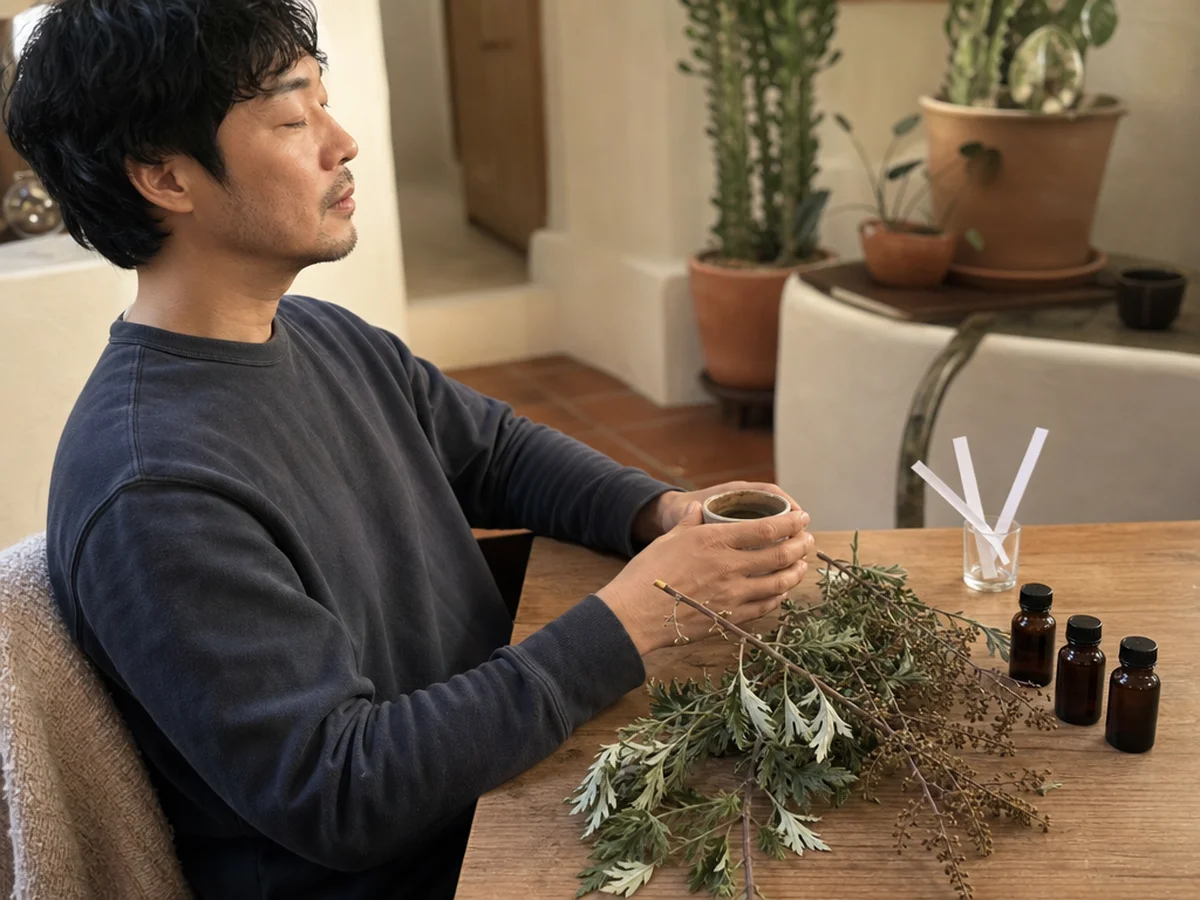
Our shop suggests a drop or two as an accent in a perfume accord and lists the oil as a middle note. Using the rough convention of 20 drops per ml, one to two drops in a 10 ml bottle is about 0.5% to 1% oil, comfortably inside the 14% in the table. It still touches skin, so patch test it, keep it off the eyes, and skip it in pregnancy. Our shop pairs it with cedarwood, clary sage, juniper, frankincense and cypress, which come from other suppliers; the pairing guide and the note article take it further.
Sprays, diffuser oils and potpourri
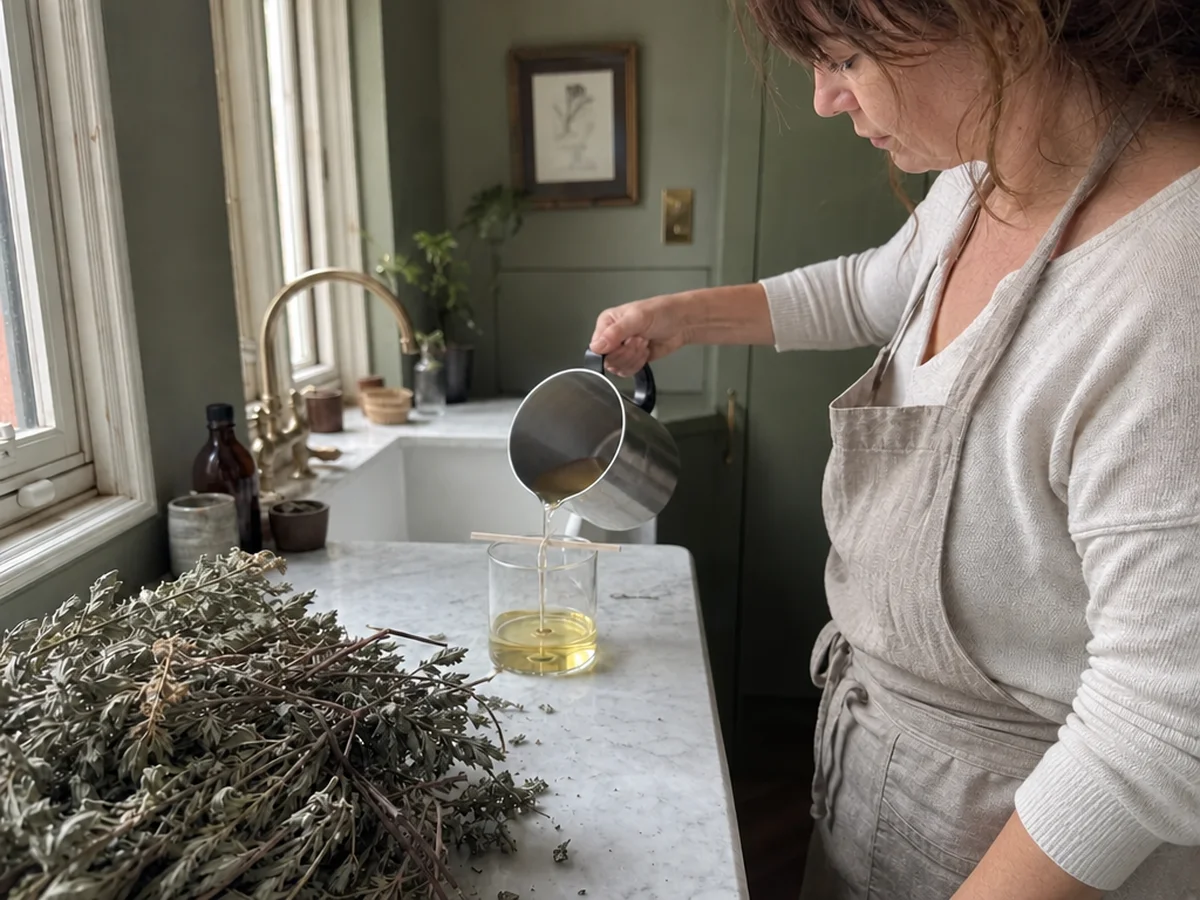
These sit in the strict middle. The caps are roughly a sixth to a tenth of the fine fragrance cap, so a little goes a long way. As a sense of scale, 100 g of finished room spray at the 10B limit could hold at most 2.2 g of a 10% thujone oil, which is about 2.5 ml at the 0.895 relative density of the batch on our Certificate of Analysis. Water-based sprays need thought about preservation, and our room spray article has a worked formula. Diffusing is its own subject, covered in the diffusion article.
Soap and body products: the careful end
Categories 9 and 5A carry the lowest caps, and our shop pitches no skincare use. Our shop guidance for skin is 0.5% to 2% in a carrier with a patch test, no use in pregnancy, and we would start at the low end and never call 2% safe, because an oil at 10% thujone mixed at 2% gives 0.2% thujone, over the 5A cap. Our Standards page says dilutions should be very low indeed. Our view is that a thujone figure should be in hand before any body product is made; the skin-adjacent crafts article takes that route.
Start with the project you already love
If you are new to mugwort oil, resist the urge to try every craft at once. Pick the one you already enjoy, whether that is pouring candles, rolling incense or mixing a potpourri jar, and let the oil join it as a small experiment. You already know how that craft should feel and smell, so you will notice at once what mugwort changes.
Write down the amounts, smell the result after a day, and only then decide whether to try the next craft down the table. The oil is strong enough that a modest bottle goes a long way, and there is no prize for rushing. If a craft later calls for more, larger sizes are listed on our bulk page.
A working order
- Choose the craft first and read its row.
- Unless it is Category 12, get the oil's thujone percentage in writing before formulating. For ours, ask through the contact page.
- Work by weight, and write down the thujone share, the category and the sum for each batch.
- Redo the sum when the oil lot changes, since composition moves with plant part, place and method.
- Keep the container tightly capped in a cool, dark place, and follow the workshop checklist for handling neat oil.
Ask a doctor before use if you are pregnant, nursing or managing a medical condition, and keep oil away from children and pets. Choose the craft that gives the oil room, and let the number decide the rest.
Mugwort Essential Oil
Mugwort Essential Oil from our own shop, in sizes from 0.5 oz to bulk.
From $16.99
Shop Now →Sources & Further Reading
- Guidance for the use of IFRA Standards (IFRA, 30 June 2023)
- The complete IFRA Standards, up to and including the 51st Amendment (IFRA, January 2024), Thujone standard
- Chemical Composition and Antimicrobial Activities of Artemisia argyi Lévl. et Vant Essential Oils Extracted by Simultaneous Distillation-Extraction, Subcritical Extraction and Hydrodistillation (Molecules, 2019)
- Chemical Profile and Biological Activities of Essential Oil from Artemisia vulgaris L. Cultivated in Brazil (Pharmaceuticals, 2019)
- Public statement on the use of herbal medicinal products containing thujone (European Medicines Agency, 2012)