How to Buy Mugwort Oil: 5 Questions to Ask First
The best way to buy mugwort oil is to write to the seller first. Words like "premium" and "authentic" cost nothing to print, but a named plant part, a batch number and a thujone percentage take real work to produce, so the quality of the replies tells you more than any product page. Here is the list of questions we would send, and what each answer can and cannot tell you.

Mugwort Essential Oil
Our own Mugwort Essential Oil, in sizes from 0.5 oz to bulk.
From $16.99
Shop Now →Begin with what you are making
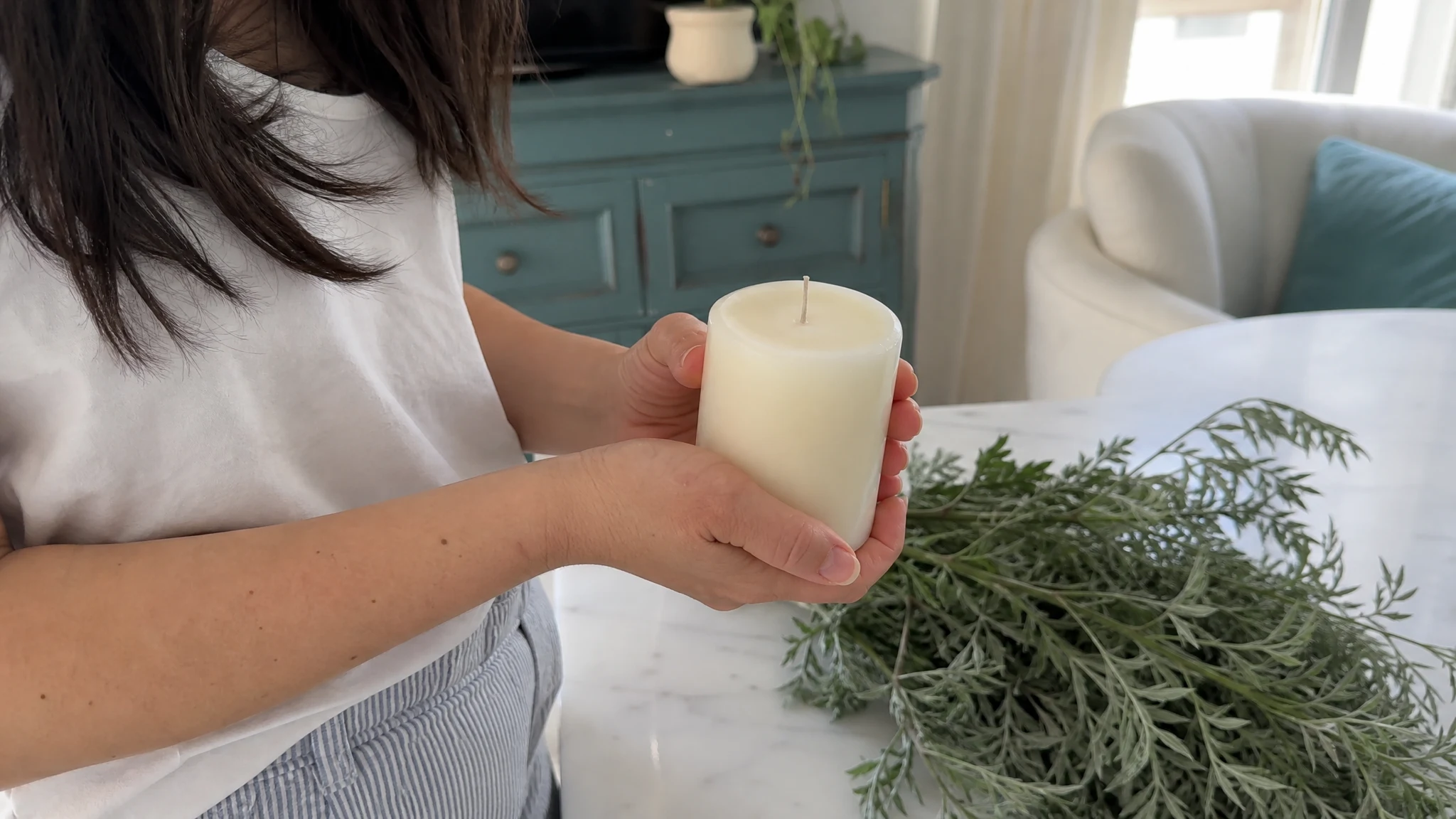
Your project decides which number matters. IFRA's guidance places candles and incense in Category 12, fine fragrance in Category 4, body creams and oils in Category 5A and rinse-off cleansers in Category 9 (Guidance for the use of IFRA Standards, 2023). The thujone standard then caps thujone in the finished product at 9.5%, 1.4%, 0.095% and 0.13% respectively (The complete IFRA Standards, up to and including the 51st Amendment). That is a hundredfold spread, so a candle maker and someone planning a body product need different reassurance from the same bottle. Our home page calls our oil one for fragrance craft rather than body care, and we would suggest keeping that in mind as you read on.
The questions, in order
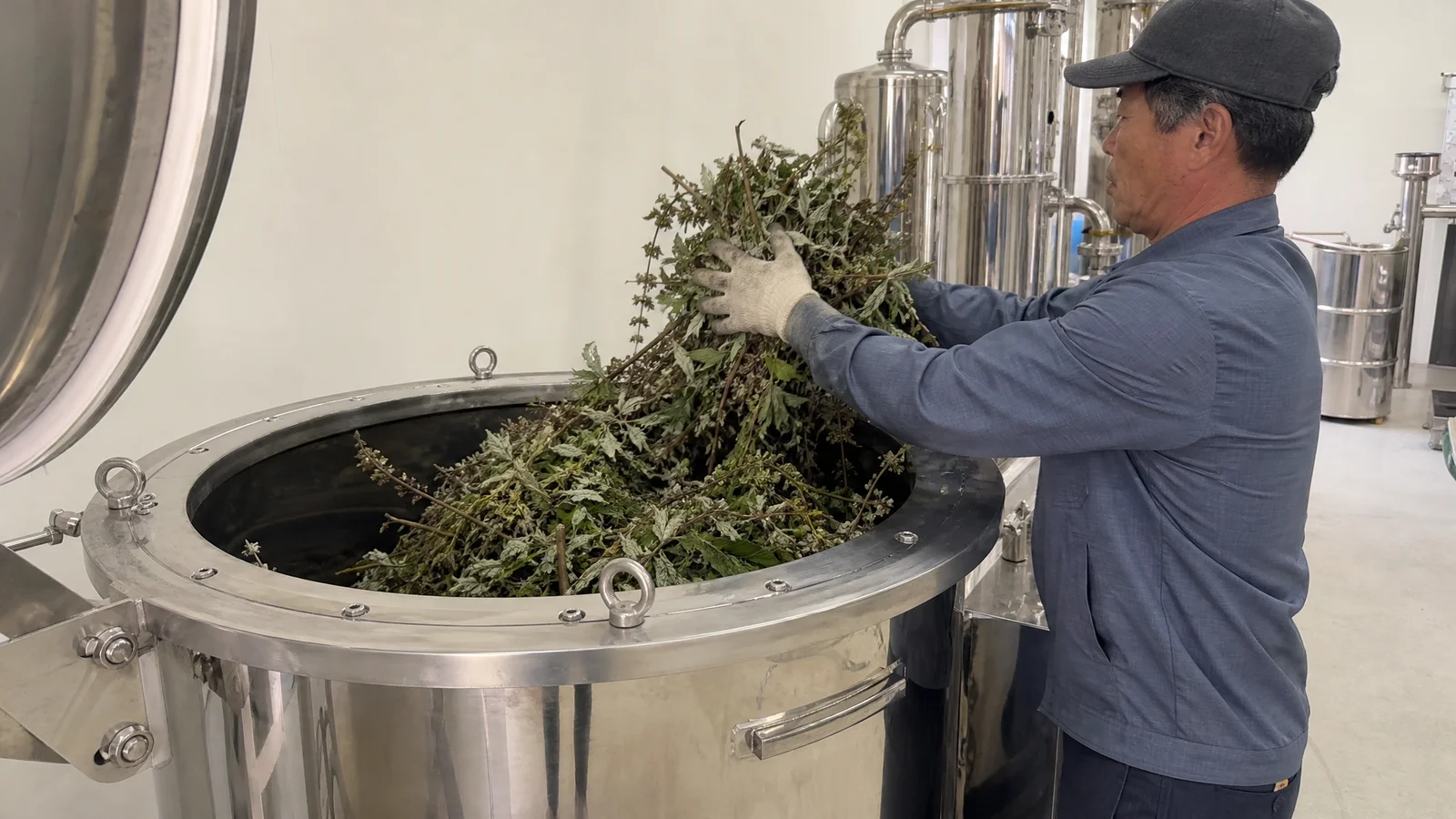
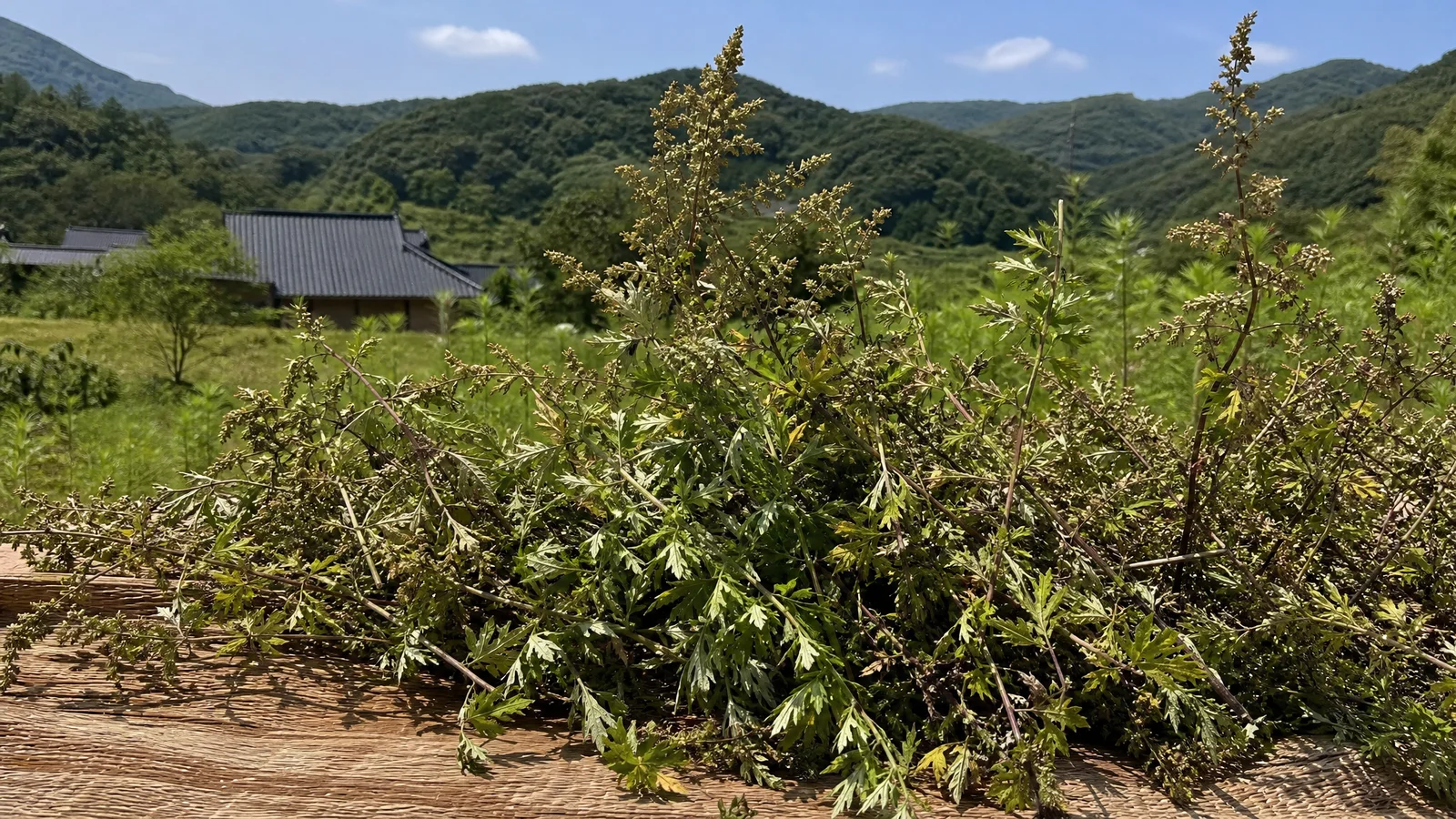
- What is the Latin name, which part of the plant, and which method? These should be on the label and on the paperwork, and they should match. Our label-reading article goes through the fields one at a time.
- Which batch is this, and can I see the certificate for that batch? A certificate describes one batch. The Certificate of Analysis we publish is for a single batch and lists relative density (0.895), refractive index (1.4750) and basic appearance and aroma checks. Those are useful physical readings, but they cannot separate two oils of different chemistry, so we say plainly that they are a starting point, and we do not claim that every batch matches that one.
- Can I have a GC-MS report with the thujone lines shown separately? This is the document that answers the question that matters. Published analyses show why nothing else will: a Brazilian Artemisia vulgaris listed caryophyllene at 37.45% and no thujone (Malik et al., 2019), while Artemisia argyi leaves gave alpha-thujone of 7.989% by hydrodistillation and 11.312% by subcritical extraction (Guan et al., 2019).
- Is there a safety data sheet? US hazard communication rules list sixteen SDS sections, including composition, handling and storage, and physical and chemical properties, and make chemical manufacturers and importers responsible for preparing one (29 CFR 1910.1200 - Hazard communication). If you are making candles, ask for the flash point in writing.
- What can you tell me about IFRA? People often ask for an "IFRA certificate" for an essential oil. IFRA's guidance says it does not provide certification, and that where a Standard exists on a raw material the supplier should communicate its conformity and the presence of IFRA-restricted materials instead. For mugwort, the question to ask is simply: is thujone present, and at what percentage?
Make it easy for the seller to answer
A short, specific email gets a better reply than a long, vague one. Name the product, the size you are considering and what you plan to make, then number your questions so each can be answered in a line. Keep a folder for the replies, with the date and the batch number written at the top, and you will have a tidy record to turn to when you place a larger order later.
Reading the replies
A named plant, part, method and batch number, with documents carrying the same batch number, is a seller who can trace the lot. A purity slogan and no paperwork is only a slogan. A GC-MS that does not break out thujone is incomplete for this particular oil. A study of wormwood herb bought at retail found beta-thujone from not detected to 28.4% across five lots, which is a good reminder that what is sold under a plant name can differ widely (Tabanca et al., 2025). A seller who avoids the questions has answered them.
Where we stand
We publish the Certificate of Analysis described above, and our shop page shows the current price for each size. If you need a GC-MS report, thujone figure or safety data sheet from us, ask in writing through the contact page, where replies typically come within one business day, and get the answer in writing before you rely on it. Our wholesale page also offers sample bottles to evaluate in your own product, which is the cheapest check you can make before scaling. The bottle sizes article helps you choose a first size, and the shopping article covers where to look.
For the batch on our certificate, 1 ml weighs about 0.895 g, so weigh a working amount when precision matters. None of this makes an oil suitable for a particular body: if you are pregnant, nursing or managing a medical condition, ask your doctor, and keep the oil away from children and pets.
If you are new to mugwort, order the smallest size first and open it on a clean, dry surface. Take a slow sniff from a little distance and put a drop on a paper strip. You will notice the green, bitter character straight away, and by the time the strip has dried you will have a clear idea whether this is a smell you want to work with by the ounce.
Good sellers like questions. If you get a good answer, you have found a supplier worth keeping.
Mugwort Essential Oil
Mugwort Essential Oil from our own shop, in sizes from 0.5 oz to bulk.
From $16.99
Shop Now →Sources & Further Reading
- Guidance for the use of IFRA Standards (IFRA, 30 June 2023)
- The complete IFRA Standards, up to and including the 51st Amendment (IFRA, January 2024), Thujone standard
- Chemical Profile and Biological Activities of Essential Oil from Artemisia vulgaris L. Cultivated in Brazil (Pharmaceuticals, 2019)
- Chemical Composition and Antimicrobial Activities of Artemisia argyi Lévl. et Vant Essential Oils Extracted by Simultaneous Distillation-Extraction, Subcritical Extraction and Hydrodistillation (Molecules, 2019)
- 29 CFR 1910.1200 - Hazard communication
- Chemical variability for authenticated and commercial Artemisia absinthium L. essential oils with thujones on tephritid fruit flies: Mediterranean fruit fly Ceratitis capitata (Wiedemann) and Caribbean fruit fly Anastrepha suspensa (Loew) (Frontiers in Plant Science, 2025)