Mugwort Essential Oil vs Fragrance Oil for Candles
If you want a green, herbal candle that behaves the same way every time you pour it, a fragrance oil made for candles is usually the easier road, and we say that as people who sell the essential oil. Mugwort essential oil is for makers who like working with a real plant material and are happy to do a little homework, because that is where its character comes from.

Mugwort Essential Oil
Our own Mugwort Essential Oil, in sizes from 0.5 oz to bulk.
From $16.99
Shop Now →Two different kinds of material
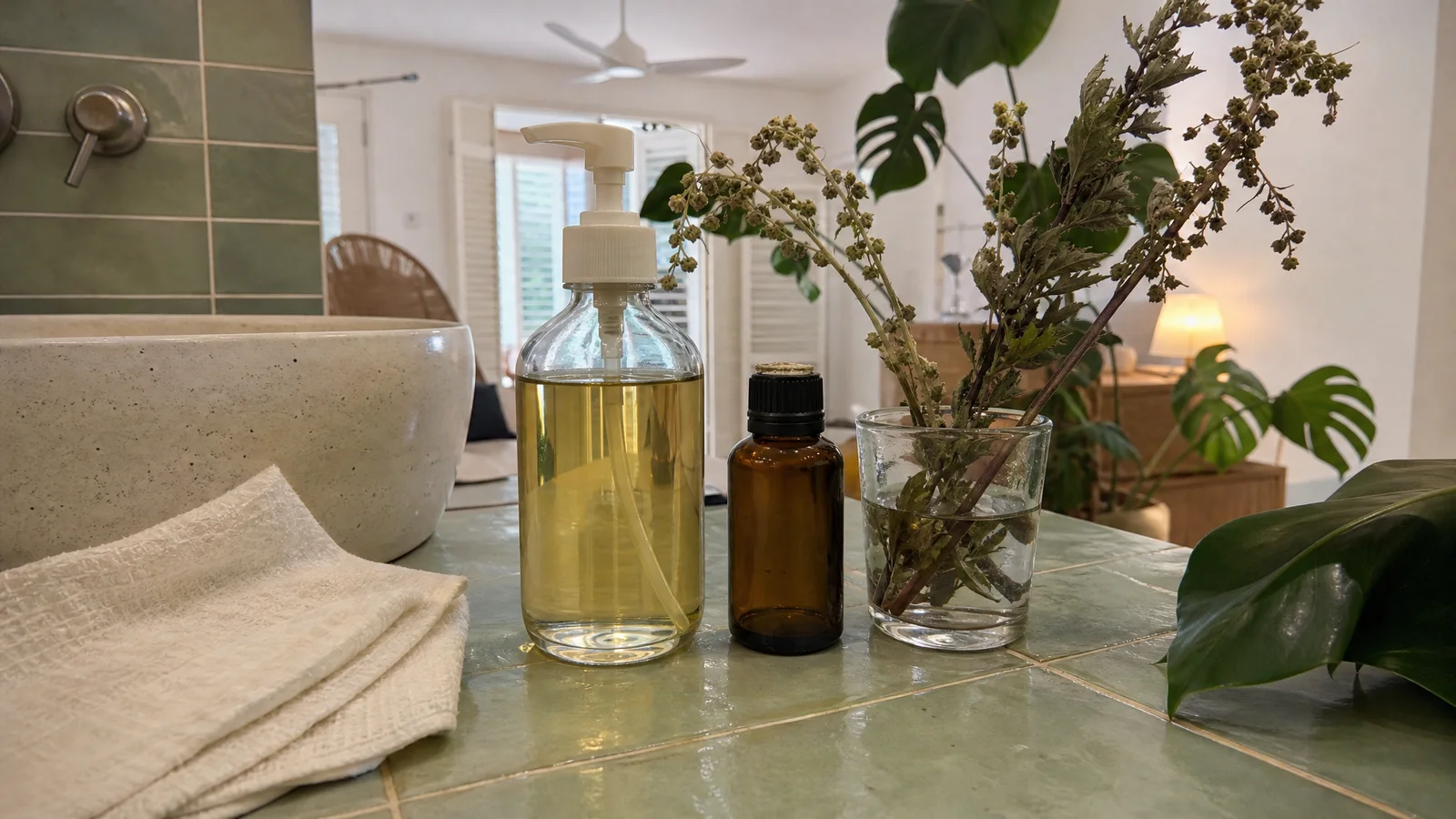
A mugwort essential oil is the volatile fraction of a plant. Ours is steam-distilled and sold neat. A product called "mugwort fragrance oil" is a compounded mixture, and the word mugwort in its name describes the scent the supplier set out to suggest. FDA describes fragrance formulas as complex mixtures of natural and synthetic ingredients, and a candle-supply retailer describes fragrance oils as synthetic blends made from a mix of aroma compounds. So a fragrance oil is not necessarily fully synthetic, and the name alone does not say what is inside.
The difference shows up in consistency. An essential oil follows its species, origin, plant part and distillation, which gives it character and some natural variation between batches (our composition article shows how wide that variation can be). A fragrance oil follows its supplier's formula, so it is designed to smell the same each time.
What you can learn from each label
FDA's fragrance page explains that fragrance ingredients can be listed together as "Fragrance", and that there is no regulatory definition of "essential oils". So the label of a finished candle or a fragrance oil tells you little, and the useful documents differ. For a fragrance oil, it is the safety data sheet and the supplier's IFRA certificate of conformity, which states that a specific mixture can be used in a named product type up to a stated concentration. For an essential oil, IFRA's guidance says the important thing to pass on is which IFRA-restricted materials it contains, since those govern maximum use. For mugwort, the relevant one is thujone, which our safety article discusses.
If you need a composition report for our oil, ask us in writing before you order. The Certificate of Analysis we publish for one batch lists a relative density of 0.895 and a refractive index of 1.4750 and no constituents, and we are glad to talk through what else you need through the contact page.
In the wax
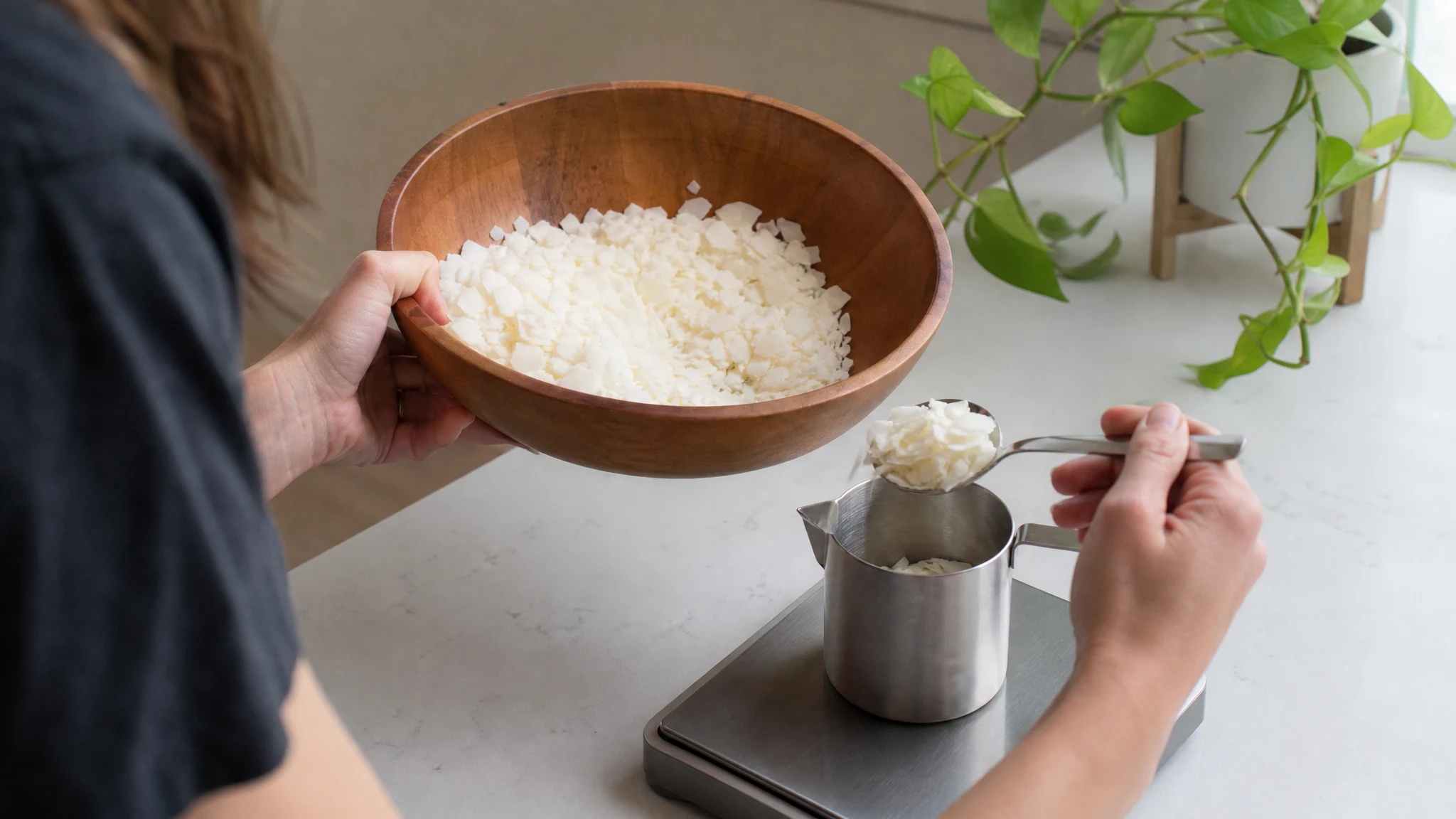
For candles, your wax maker's data sheet decides. One soy container wax sheet says the wax may be used with fragrance at levels up to 10 to 12%, that fragrance developed for natural waxes is highly recommended, and that wick choice is paramount. It names no essential oil, mugwort included. Retailer guides describe essential oils as having lower flash points than fragrance oils, around 40 to 60 C against 80 C and above in one, so when the oil goes into hot wax matters. We do not state a flash point for our oil; request the safety data sheet in writing and read the number there. Our candle buying guide covers what to ask.
Some simple arithmetic shows the scale. A pound of wax is 453.6 g. At a 6% load that is 27.2 g of oil, about 30 ml, or roughly 600 drops, at the 0.895 density on our published batch. A 1 oz bottle holds about 26.5 g, so it falls just short of one pound of wax at 6% and covers about 0.58 lb at 10%. A 250 g pour at 6% takes 15 g. Those percentages are illustrations, and a plant oil may well want a lower load, so treat them as the top of a pilot ladder and not a target. The IFRA thujone standard allows 9.5% of the compound in the finished candle (Category 12), but that rule is about skin exposure and says nothing about burn quality or inhalation, so it is not a clearance for any particular load. Our dilution calculator article works the sums by container size.
Smell them side by side
If you can, do not decide on paper. Put a drop of each on separate blotting strips, label them, and compare after a minute, ten minutes and an hour. You will probably find that one reads as a tidy, finished green while the other is more angular, with edges that come and go. Which one you prefer is a perfectly good reason to choose it, and a good reason to keep the plant oil for projects where its quirks are the point.
When each one suits
A fragrance oil is the better choice when you need the same scent in every pour over a long production run, when you want a wax maker to have recommended the fragrance for the wax, or when budget decides. One retailer guide rates essential oils as costlier because they depend on crop yields.
The essential oil is the better choice when you want one botanical material on the ingredient list, when you are building a perfume accord and want a single identifiable raw material (see mugwort in fougere and chypre accords), and when you are prepared to ask for the GC-MS and safety data sheet and run your own wick and burn tests.
Our guidance for the oil is to avoid use during pregnancy, keep it from children and pets, and never take it internally. Fragrance oils have their own data sheet warnings, so read them before anyone else handles the material, and take label questions to a product-safety attorney. Choosing is mostly a matter of how much you enjoy the plant behind the scent.
Mugwort Essential Oil
Mugwort Essential Oil from our own shop, in sizes from 0.5 oz to bulk.
From $16.99
Shop Now →Sources & Further Reading
- Fragrances in Cosmetics | FDA. www.fda.gov
- Guidance for the use of IFRA Standards, June 30, 2023. IFRA. IFRA guidance
- The complete IFRA Standards, up to and including the 51th Amendment (January 2024), Standard "Thujone" (Amendment 49). IFRA. IFRA Standards, 51st Amendment
- Technical Data Sheet - Soy Wax Container, version 5.0, revised 26 August 2020. cdn.shopify.com
- Fragrance Oil vs. Essential Oil. Wholesale Supplies Plus. www.wholesalesuppliesplus.com
- Fragrance Oils vs Essential Oils: The Ultimate Maker's Guide! NI Candle Supplies. www.nicandlesupplies.com