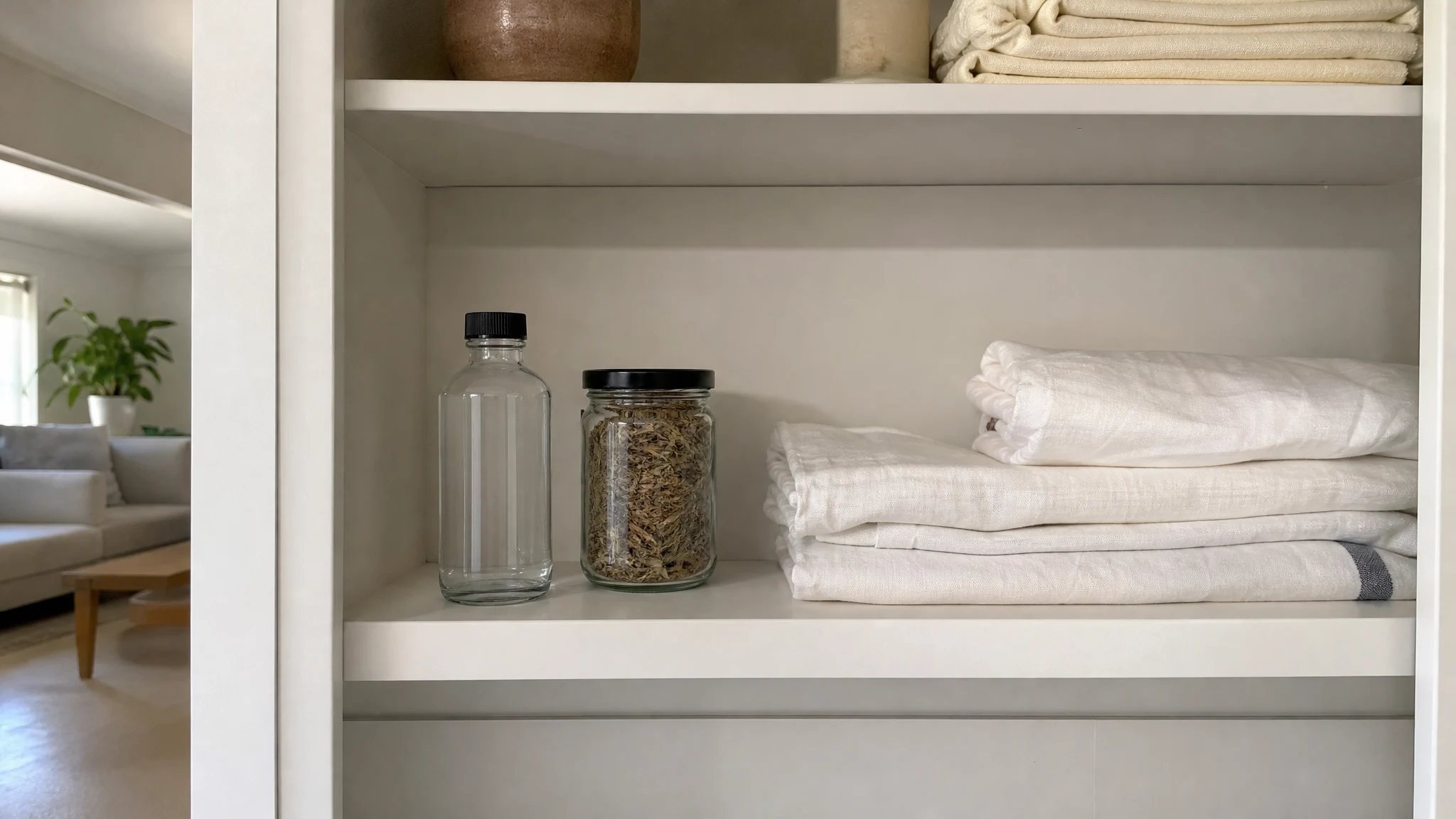
How to Store Mugwort Oil So It Stays Fresh
Open a bottle of mugwort oil and the first thing you notice is how much the green, bitter, camphoraceous aroma carries. That concentration is exactly why it is worth storing well: the oil in a bottle is a small, valuable amount, and three things work on it over time, which are light, heat and air.

Mugwort Essential Oil
Our own Mugwort Essential Oil, in sizes from 0.5 oz to bulk.
From $16.99
Shop Now →What we tell people to expect
We say mugwort oil typically holds its character for 2 to 3 years when it is kept tightly capped in a cool, dark place away from heat and light. The Certificate of Analysis we publish for one batch also carries a best-by date of 07/14/2028. The closest evidence comes from other oils, so the rest of this article reasons from that and says which is which.
Heat and light: what two studies suggest
A 2025 study from Iran stored sage oil, which like mugwort oil contains thujone, at room temperature, in a refrigerator and in a freezer, and analysed it over three months. The main components, including thujone, camphor and 1,8-cineole, were generally stable and the temperatures did not differ significantly. The authors called room temperature the most economical option. It is a short test next to a 2 to 3 year shelf life, but it is reassuring about thujone, which is the figure safety limits care about.
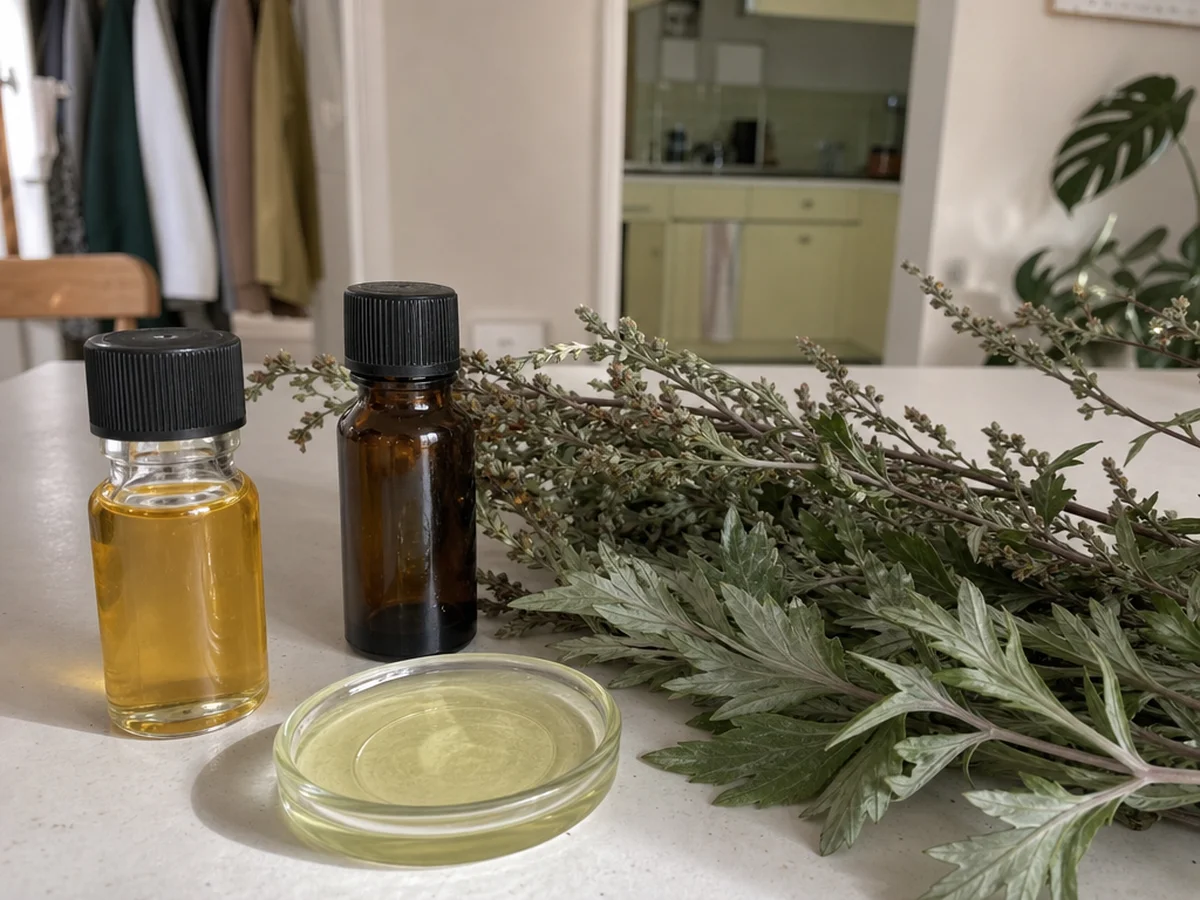
A 2026 study on another plant oil tested amber bottles wrapped in foil at three temperatures and compared them with clear glass under continuous lamps. It measured how well the oil worked against stored-grain beetles, not its chemistry. The oil stayed active throughout, but the light-exposed oil needed a higher dose than the protected oil at four and eight months. Neither paper tested mugwort, so we take the practical lesson and not the numbers: keep the bottle dark and away from a warm bench, and a bottle that has lived in a sunny window deserves a shorter planning horizon than one in a cupboard.
Air is the one the cap controls
Every time a bottle is opened, oxygen gets in, and the air sitting above the oil is a standing supply of it. This is why our bulk guidance is to keep containers sealed and decant working amounts into a smaller airtight bottle. The sums are easy. At the 0.895 relative density printed on our Certificate of Analysis for one batch, 5 ml of oil in a 30 ml bottle leaves 25 ml of air, 15 ml leaves 15 ml, and 25 ml leaves only 5 ml. A nearly empty bottle holds five times its oil volume in air, so pour the last of a decant into a smaller bottle.
There is one more reason to care about air. A Swedish patch-test clinic found that for linalool and limonene, two common fragrance terpenes, the sensitising agents were the oxidation products formed after air exposure, and a meaningful share of patients tested reacted to them. No source we read shows what ageing does to mugwort oil's skin behaviour, so we do not claim it either way. It is simply a good reason to keep the cap on.
A simple routine
- Leave the oil in the container it arrived in until you need to decant, then cap right after pouring and wipe the neck.
- Keep it somewhere cool and dark, away from candle benches, sunny sills and cars.
- Write two dates on a working bottle: received and first opened.
- Consider keeping one small, full, sealed bottle as a reference. This is our reasoning, not a tested method: with almost no headspace it stays closest to what you received, so you can compare scent against it.
- Keep it out of reach of children and pets. Our pet safety article covers the animal side, and our workshop handling checklist covers the fire side.
Small habits at the bench
Most storage trouble starts at the workbench, not in the cupboard. Put the cap back on before you start stirring, not after, and wipe the neck of the bottle so no oil dries on the threads and glues the cap shut. Use a clean dropper or pipette every time, and do not return unused oil to the bottle. If you are working with the oil for an afternoon, pour what you need into a small dish or vial and put the bottle away.
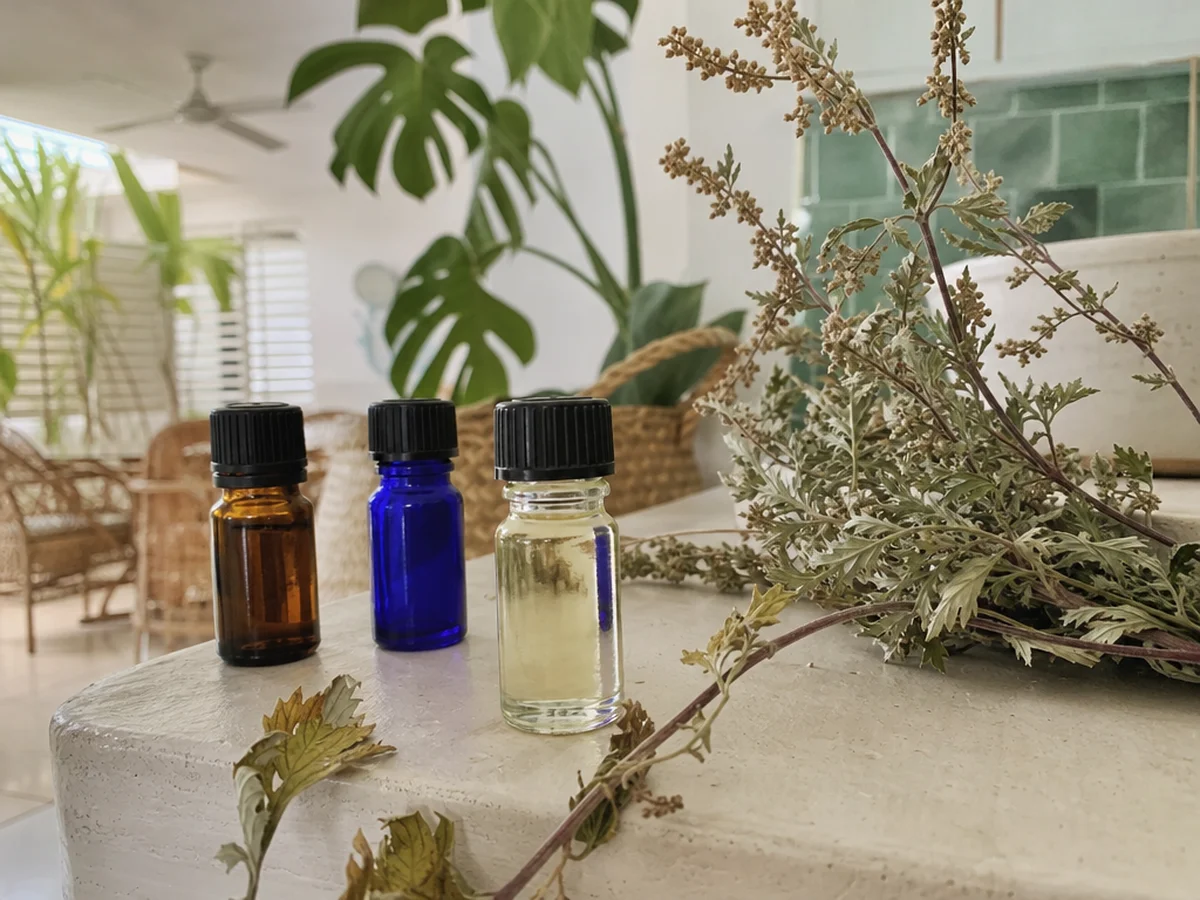
A label on a decanted bottle is worth thirty seconds. Write the name, the date and the dilution if there is one, because an unlabelled vial is easy to mistake for something else later.
A bottle that has aged is not a weaker one
It is easy to assume an older bottle has simply faded. The sage data suggest the thujone arithmetic we set out in our safety article applies to a six-month-old bottle just as it does to a new one. The extra question for an old bottle is oxidation. Our practical rule: if you cannot say when a bottle was opened, or it has stood with the cap loose, use it for non-skin crafts such as incense or candle work and open a fresh bottle for anything that touches skin. If you want batch-specific data, such as a GC-MS report or a safety data sheet, ask in writing through the contact page and get the answer in writing before you rely on it. What published analyses report in general is gathered in our composition article.
Storage cannot make a doubtful oil better, but it keeps a good one as it arrived. Full, capped, dated, cool and dark is the whole recipe.
Mugwort Essential Oil
Mugwort Essential Oil from our own shop, in sizes from 0.5 oz to bulk.
From $16.99
Shop Now →Sources & Further Reading
- Impacts of temperature and storage duration on the stability of Salvia officinalis and Satureja hortensis essential oils
- Toxicological Stability of Piper aduncum L. Essential Oil During Storage Against Stored-Product Insect Pests.
- Contact Allergy to Oxidized Linalool and Oxidized Limonene is Over-represented in Individuals with Photocontact Allergy to Ketoprofen.