How to Dry Mugwort for Bundles and Loose Incense
If you want to burn mugwort, the dried plant is the incense. The oil is an optional extra, and for a tied bundle we would leave it out entirely. What decides whether a bundle or loose blend works is much more ordinary: how well the herb was dried.

Mugwort Essential Oil
Our own Mugwort Essential Oil, in sizes from 0.5 oz to bulk.
From $16.99
Shop Now →Know the plant before you pick it
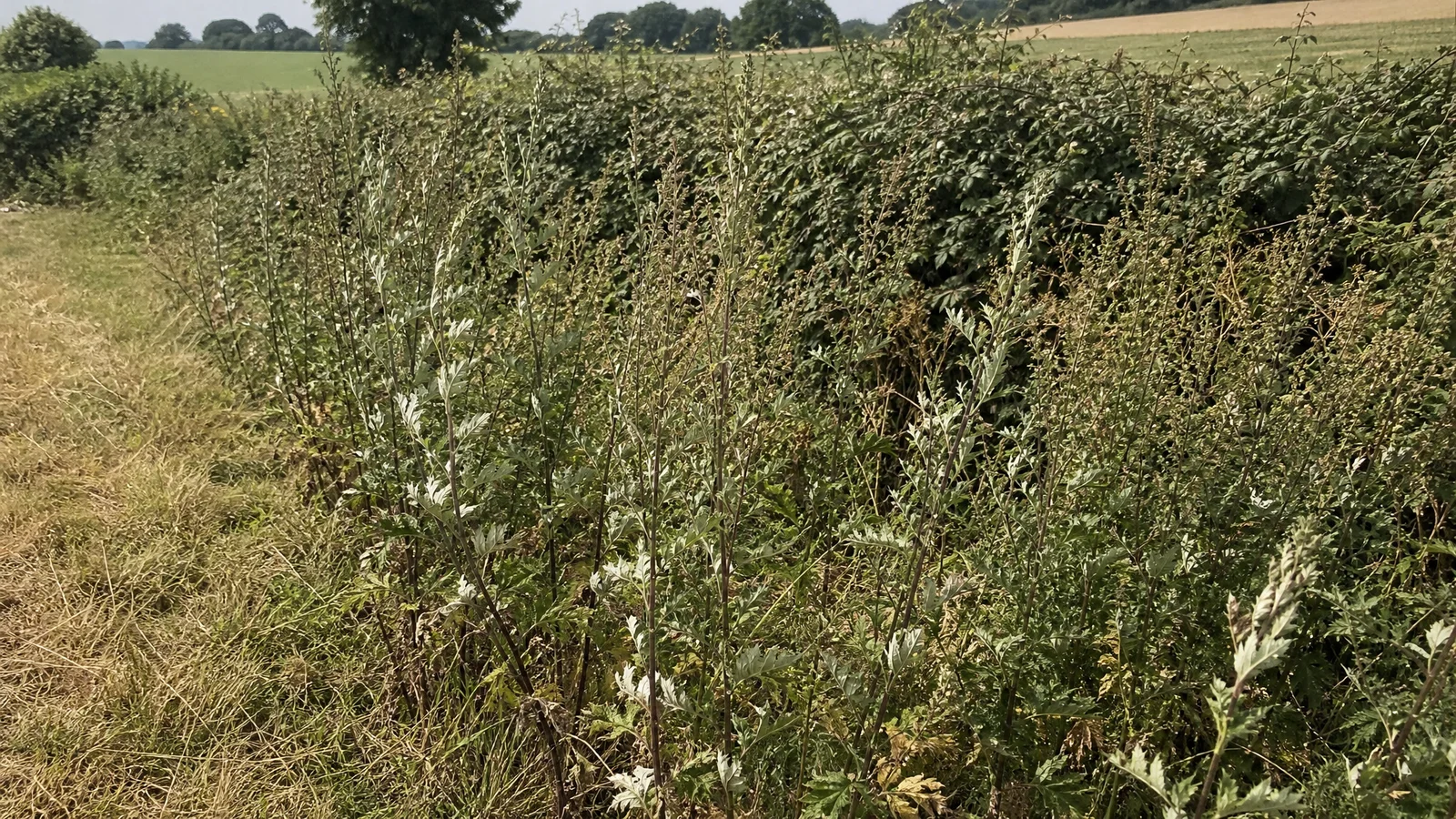
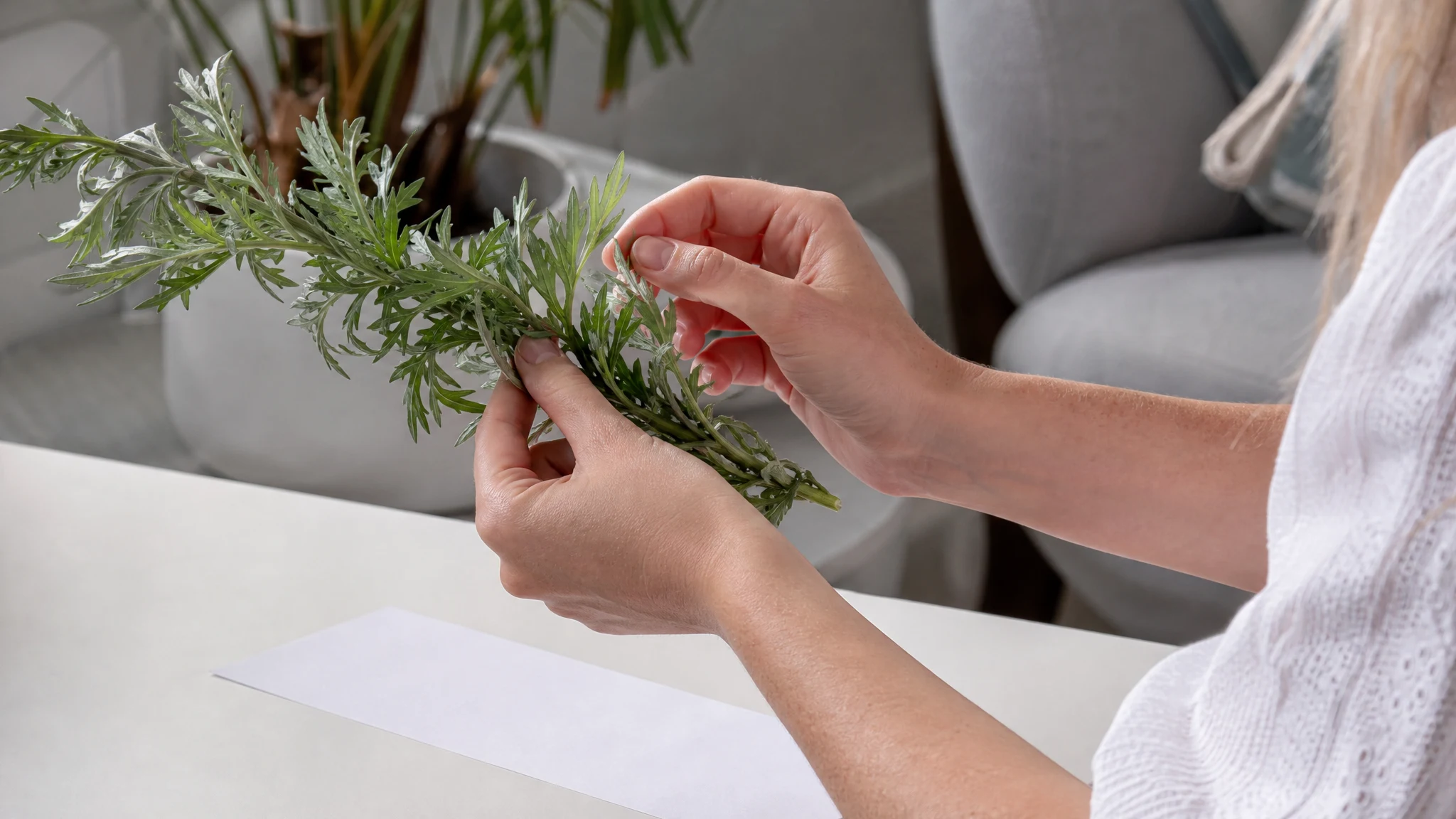
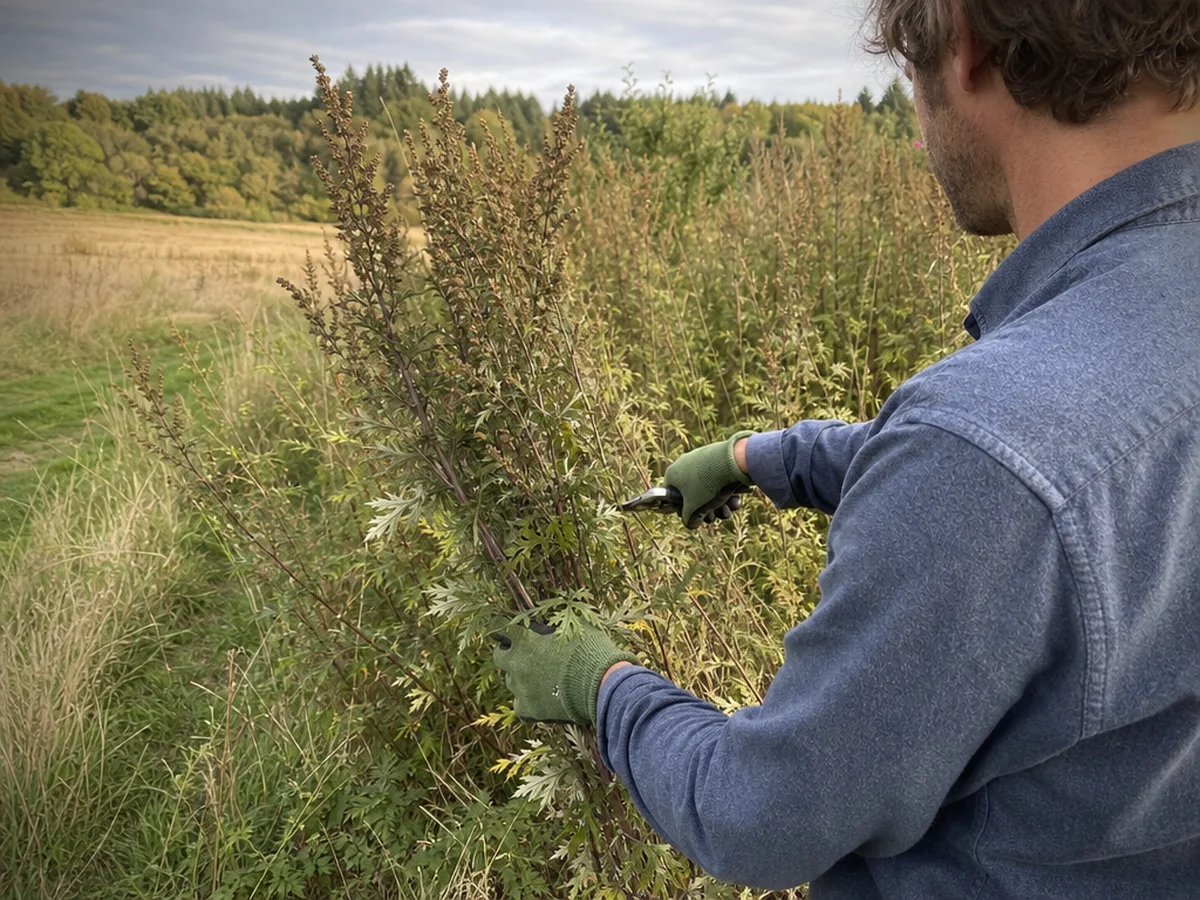
Mugwort grows wild in many places, so identification is the first job. The New York Invasive Species Information page describes alternate leaves that are densely covered with woolly, silver-white hairs on the underside, smooth ridged stems, and small green flowers from July to late September (Mugwort, NYIS). The silver underside is the feature to check. Only gather where you are allowed to, and if you would rather skip foraging, an herb supplier sells dried leaf. We sell the oil but no dried herb.
Three formats
A bound bundle is dried stems and leaves tied tight and lit at the tip, and it needs the least equipment. A loose blend is crumbled dry herb warmed or burned on a support, which suits resin pairings (see our loose incense recipes). A cone needs fine powder and a binder, and has its own page: incense cones with makko. For a bundle or a loose blend, everything starts with drying.
Drying decides everything
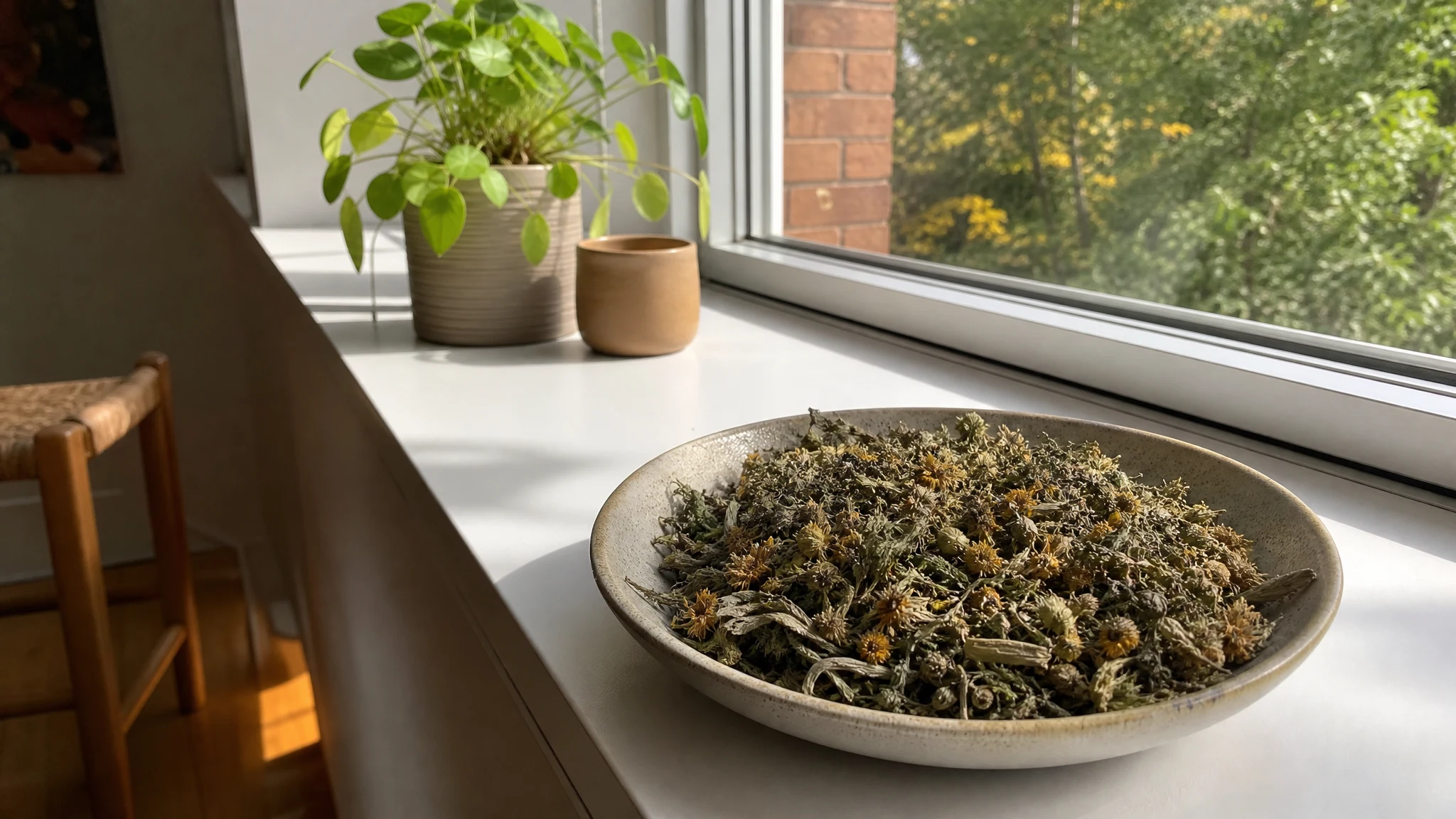
The National Center for Home Food Preservation, writing about culinary herbs, advises harvesting just before the flowers open and says sturdy herbs air dry easily in small tied bundles. It warns that tender herbs and large bunches "will mold if not dried quickly", and defines dry as crumbling easily with stems that snap (Herbs, National Center for Home Food Preservation). The page does not mention mugwort, so we cannot say whether it counts as sturdy or tender, and the sensible takeaway is to keep bundles small, give them air and trust the snap test rather than a calendar.
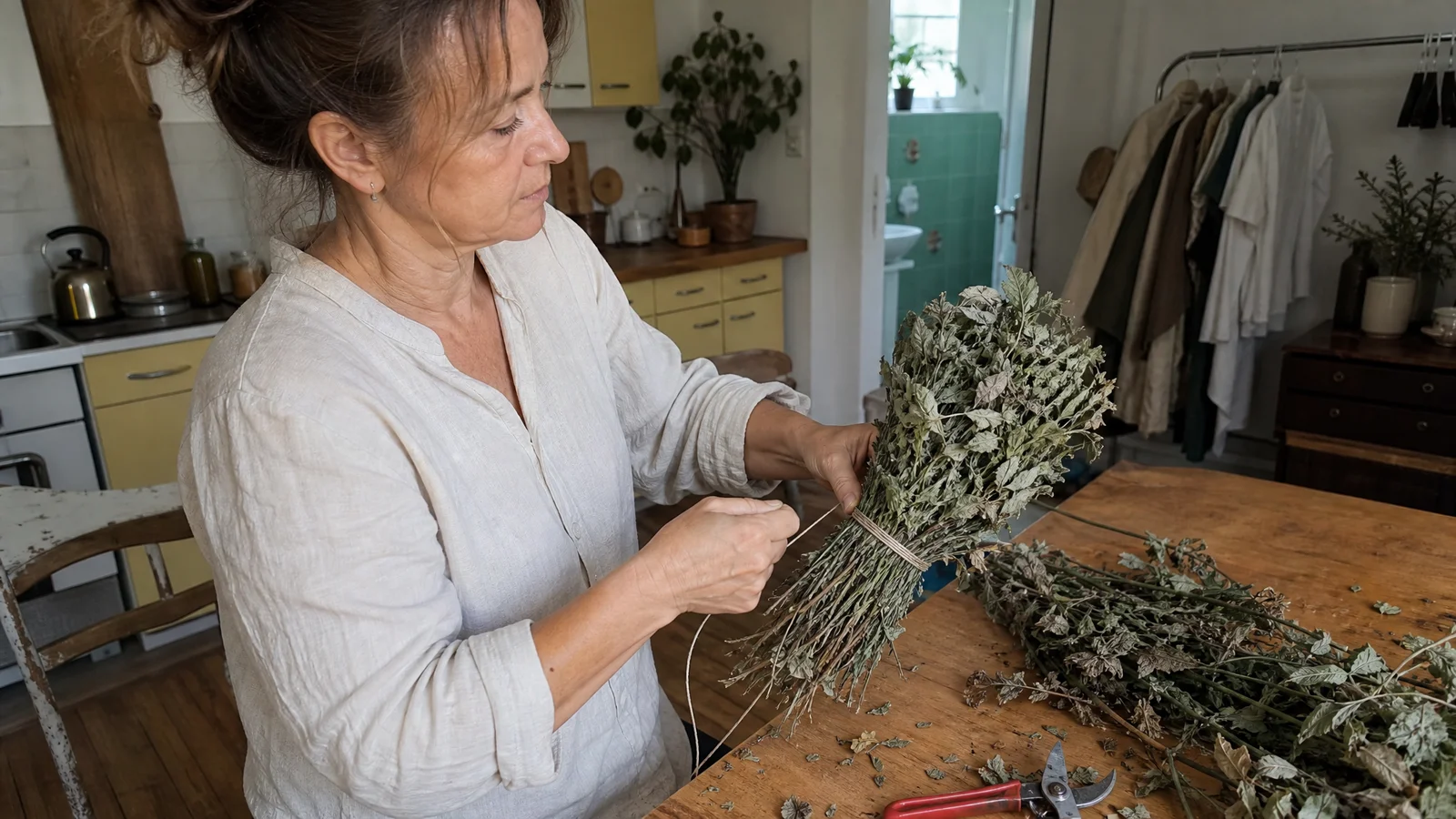
A tight bundle is the opposite of what drying wants, because the centre stays damp longest. Our suggestion, from that reasoning, is to dry the stems loosely first and bind them once they snap. A bundle that smells musty or shows fuzzy patches should be discarded, since there is no safe way to rescue it. Store finished herb airtight in a cool, dry, dark place.
Finding a good drying spot
You do not need a special rack. What you want is a room with moving air, out of direct sun, where nobody will mind a few bunches hanging for a while: a spare room with the window cracked, a covered porch on a dry stretch, an airy corner of the garage. Hang the stems with the cut ends up and leave a hand's width between bunches so the leaves are not pressed together.
Look in on them every day or two at first. You will notice the leaves change from soft and bendy to papery, and the room starts to smell green and faintly bitter, which is the part we enjoy most. Give the plant a little longer than you think it needs, then do the snap test before you tie anything up.
Keep a small label on each bunch with the date you cut it and where you found it. A few weeks later, nobody remembers which stems were which.
For a bundle, we say no. Oil on a tied bundle adds nothing you can dose, and a bundle is lit by definition, while essential oils are flammable and best kept away from a naked flame (Safety Guidelines, Tisserand Institute). For a loose blend warmed gently away from a flame, a little oil is possible: we list incense and smudge-style blends among its uses, and we describe the aroma as green, bitter and camphoraceous with a curious sweet undertone, so a little goes a long way.
IFRA, the fragrance industry's standards body, puts incense in Category 12 and caps thujone at 9.5% of the finished product (IFRA Standards, 51st Amendment). Those rules bind fragrance suppliers, not hobbyists. Using the 0.895 relative density on the batch in our published certificate of analysis and about 20 drops per ml, a 30 g loose blend works out like this:
| Oil share of blend | Weight in 30 g | About how many drops |
|---|---|---|
| 0.5% | 0.15 g | 3 |
| 1.0% | 0.30 g | 7 |
| 2.0% | 0.60 g | 13 |
At these loads the cap cannot bind, because thujone cannot exceed all of the oil. That is not a reason to use more. The cap applies to the product as made, and we found nothing on what burning does to thujone or what a person breathes. Our suggestion is to smell the herb alone first and treat any oil as a second step at the low end of the table. We publish no thujone figure, so a buyer who wants one can ask us in writing through our contact page before ordering.
Lighting it
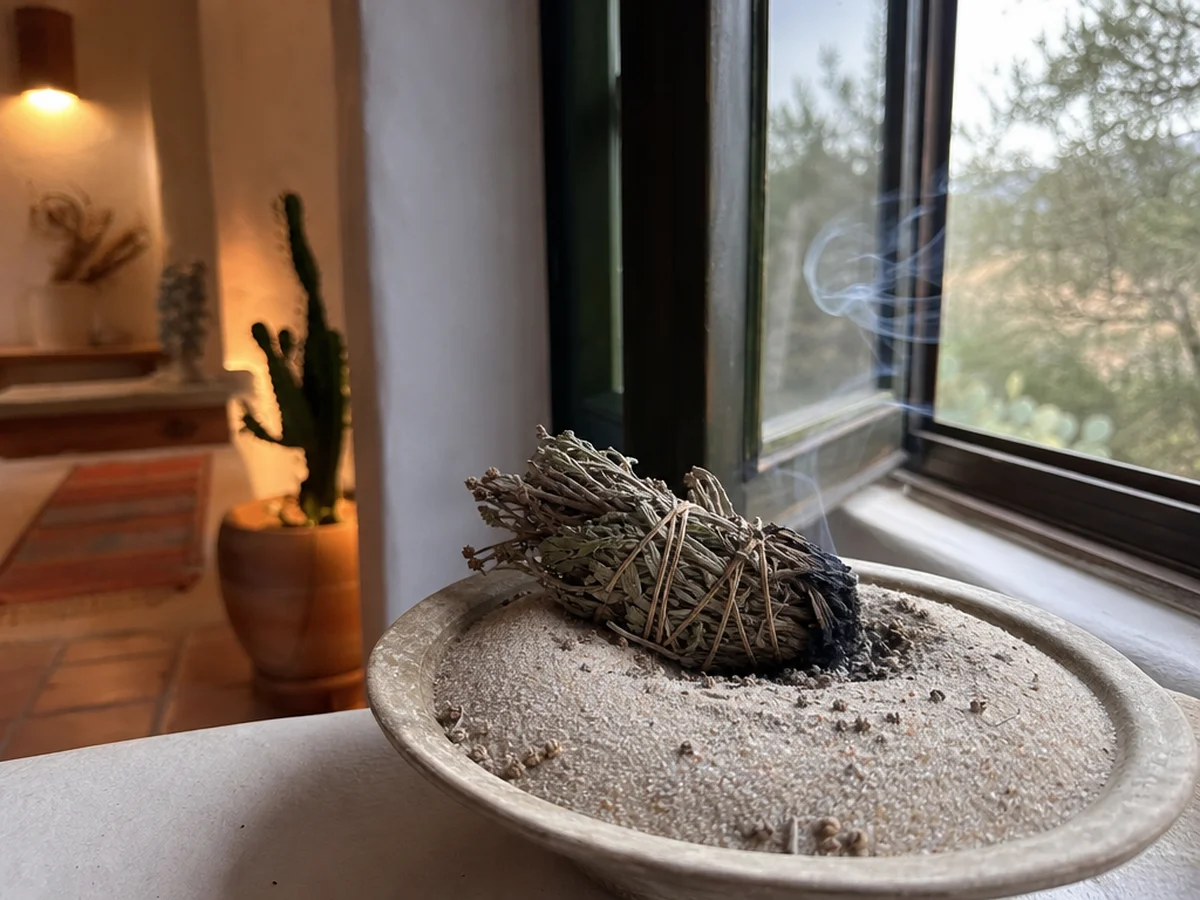
Combustion is a different exposure from smelling a dry sachet. Burn small amounts in a heatproof dish with sand or ash under it, ventilate the room, stay nearby while it smoulders, and put it out completely. Keep it from curtains, paper and pets. Our burning mugwort article covers the smoke studies, and mugwort versus white sage explains why the two are not interchangeable.
Anyone who is pregnant or nursing should avoid it, as should anyone with asthma or a mugwort pollen allergy (see our allergy article) unless a physician agrees. Pet owners should ask a veterinarian first, and our pets article gathers what vets report.
A good first batch is small: dry a handful, tie two little bundles, and keep one for later. Nothing teaches you more about your herb than watching how it dries. If you later want to try a little oil in a loose blend, our mugwort oil is in the shop, and larger sizes are listed on our bulk page.
Mugwort Essential Oil
Mugwort Essential Oil from our own shop, in sizes from 0.5 oz to bulk.
From $16.99
Shop Now →Sources & Further Reading
- NYIS. Mugwort. nyis.info
- National Center for Home Food Preservation. Herbs. nchfp.uga.edu
- Tisserand Institute. Safety Guidelines. tisserandinstitute.org
- IFRA. IFRA Standards, 51st Amendment (Thujone). IFRA Standards PDF