Does Mugwort Oil Go Bad? How to Judge an Old Bottle
Mugwort oil does not spoil the way milk does. There is no single morning when it turns, no mould, no sour smell that announces the end. What happens instead is slow chemistry: the oil keeps reacting with the air in the bottle, and the green, bitter, camphoraceous character we love in it drifts a little at a time. So the honest answer to "does it go bad?" is yes, gradually, and you can usually tell for yourself.

Mugwort Essential Oil
Our own Mugwort Essential Oil, in sizes from 0.5 oz to bulk.
From $16.99
Shop Now →What is actually happening in the bottle
Essential oils are mixtures of small aromatic molecules, and many of them react with oxygen. The Tisserand Institute describes the three drivers as oxygen, light and heat, and adds moisture, a loose cap and a lot of empty air in the bottle to the list of things that speed it up. The products of that reaction include hydroperoxides, which Tisserand describes as slightly toxic and as raising the chance of a skin reaction. That is the part worth taking seriously: an old bottle is not just a duller bottle, it is one you would want to treat more carefully on skin.
There is no mugwort-specific ageing curve to quote, so we will not invent a precise number of months. What we can do is set what we say about our own oil beside the general guidance. We say mugwort oil typically holds its character for 2 to 3 years when it is kept tightly capped in a cool, dark place away from heat and light. Tisserand's general view is that most essential oils keep well for at least one to two years, that shelf lives range from about one year to several, and that using an oil within six to twelve months sidesteps the question altogether. Those figures are not in conflict: they are a range, and where your bottle sits in it depends mostly on how it has been treated.
A five-minute check for an old bottle
You do not need a lab to make a sensible call. Work through these in order, in good light, with the cap off for only as long as you need.
- Smell it from a little distance. Fresh mugwort oil is green and herbal with a camphor edge. Oxidation changes the smell, and the change is usually a duller or harsher version of what you remember. If it smells different from how you remember, trust that.
- Tilt the bottle. Oxidised oils can get thicker, and very old ones can turn syrupy. Tisserand notes that citrus oils may go cloudy if moisture gets in. If the oil moves more slowly than it used to, or leaves a tacky film on the neck that was not there before, that is a sign.
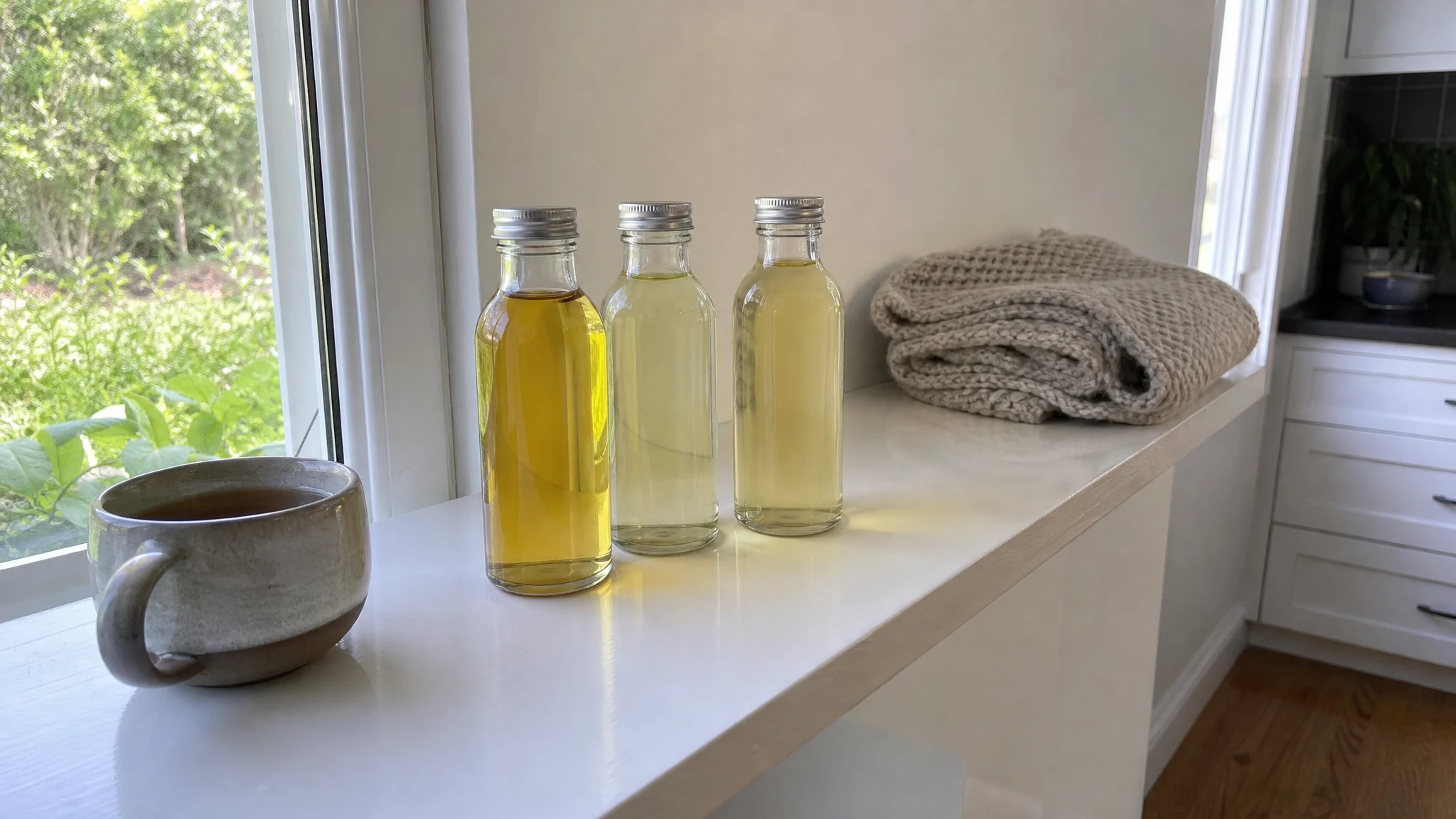
- Look at the colour. We describe our oil as carrying a faint green-brown tint of its own, so colour alone is a poor test. A clear change from what you first saw is the thing to notice, so photograph a new bottle when it arrives.
- Check your dates. If you wrote down when you opened it, you have the most useful evidence of all. A bottle opened last month is rarely the problem; one opened years ago and topped up from time to time is more likely to be.
If it passes all four, it is almost certainly fine for fragrance work. If it fails one, we would retire it from anything that touches skin and let it go. Never put an old oil in your mouth or use it as a substitute for medical care; we sell an external aroma oil, not a remedy.
How to buy yourself more time
Most of what extends life is about air. Keep the bottle capped, keep it away from sunny sills and warm benches, and when a large bottle is half empty, move the remainder to a smaller bottle so there is less air above the oil. Tisserand says refrigeration roughly doubles useful life, which makes a cool cupboard a fair compromise if you have no spare fridge shelf. Our storage guide walks through the headspace arithmetic, and our bottle sizes article will help you decide how much to buy so you finish a bottle while it is still at its best.
That last point is the most practical advice we have. A maker who uses an ounce a year does better with small bottles than a big one opened again and again. A maker who goes through a pound a month need not think about shelf life at all.
Two things that are easy to confuse
A printed best-by date on a certificate is a statement about the batch it covers, not a guarantee for a bottle that has been left open on a bench. And an oil that still smells fine can still have started to oxidise, because noses adapt. This is why the date you opened it matters as much as the smell, and why we suggest reading our quality checks article if you are comparing several bottles.
Treat mugwort oil like a good spice: buy what you will use, keep it dark and tightly closed, and trust your nose when it tells you the bottle has had its day.
Mugwort Essential Oil
Mugwort Essential Oil from our own shop, in sizes from 0.5 oz to bulk.
From $16.99
Shop Now →Sources & Further Reading
- Is my bottle of essential oil oxidized or no longer good to use?, Tisserand Institute
- Oxidation and the Shelf Life of Essential Oils, Tisserand Institute