Does Mugwort Oil Stain Fabric? What to Do After a Spill
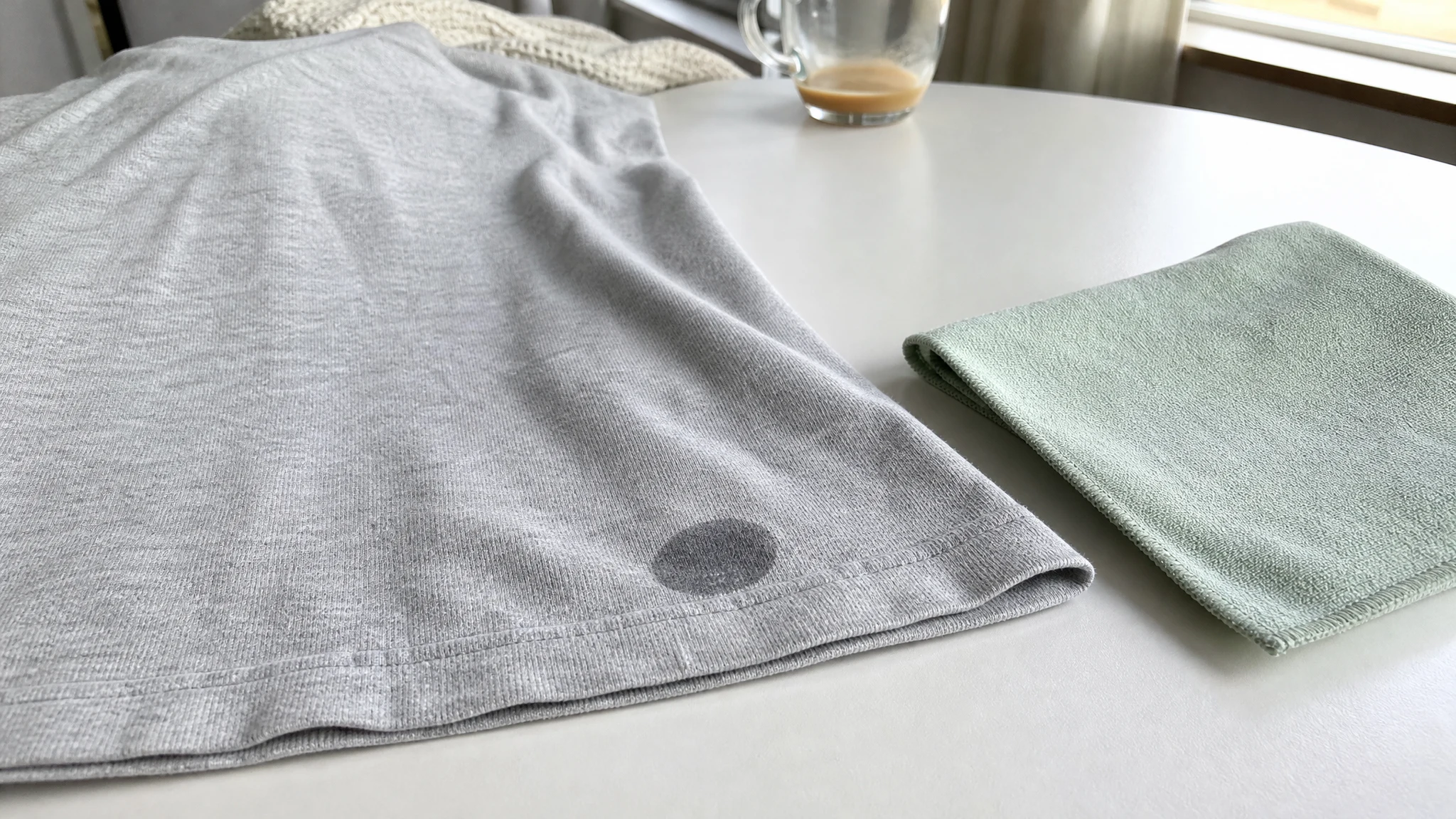
The moment you notice a dark, slightly glossy circle on your sleeve, it is too late to wonder whether essential oil "evaporates". Mugwort oil is an oil, and an oil on fabric leaves a greasy mark in the same way a drop of salad dressing does. The good news is that fresh spots on washable cotton and linen are usually a fifteen-minute job, and what you do in the first few minutes matters more than any product.

Mugwort Essential Oil
Our own Mugwort Essential Oil, in sizes from 0.5 oz to bulk.
From $16.99
Shop Now →Why it marks cloth at all
Essential oils are aromatic and volatile, but they are still oils, and in practice some of what you spill stays in the weave. That is a likely reason why a spot can look gone as it dries and then reappear as a faint shadow after a wash and a tumble. We would not describe our oil as colourless either: our bulk page notes it carries a faint green-brown tint of its own. On a white shirt that is a good reason to deal with a spill promptly, and to treat it as a mark to remove, not one that will fade.
The first five minutes
- Put something absorbent under the spot. University of Georgia Extension's guidance for oil on fabric begins with clean absorbent material beneath the stain, so the oil has somewhere to go besides further into the garment.
- Lift, do not rub. Press a clean paper towel or cloth onto the spot to take up the surface oil. Rubbing spreads the ring. This step is ordinary good sense rather than something we have a source for.
- Check the care label before you reach for anything. Georgia Extension says to read it first and to pretest any cleaner on a hidden patch, such as an inside hem, for colourfastness.
Washable fabrics: cotton, linen, polyester
For oil and grease on washable apparel, extension guidance follows the same pattern. Work a pre-wash stain remover or a little liquid laundry detergent into the dampened spot, wash with the hottest water the care label allows, and repeat if a mark remains. Georgia Extension's advice for greasy food stains adds that if a residue persists after the first wash you should treat it again with detergent and launder again. Check the spot while the garment is still wet, because what survives a tumble dryer is much harder to shift. That last point is our recommendation, based on how heat sets grease; check the spot, treat again if needed, and only then dry.
Dish detergent is a perfectly reasonable stand-in if you have no laundry pretreater, because it is made to cut cooking grease. You will find it, and the pretreaters, at any grocery or hardware store, not from us.
When to stop and call a professional
Some fabrics should not be soaked, scrubbed or treated at home: silk, wool, leather, suede, velvet, and anything marked dry-clean only. Blot gently, keep the item flat, do not apply water or cleaner, and take it to a dry cleaner as soon as you can, telling them it is an essential oil. Cleaners can use solvents that are not available for home use, and the sooner they see it the better. If the spill is on upholstery or carpet, blot, test a cleaner in an out-of-sight corner, and call the manufacturer or a specialist if the covering has a "dry clean only" code.
Surfaces, skin and little helpers
On sealed counters, glass and tile, wipe with a paper towel and then a damp cloth with a drop of dish soap. Raw wood, painted furniture and plastics are another matter, because finishes vary; wipe the excess immediately, then test a small hidden spot before cleaning more widely. If neat oil lands on your skin, wash the area with soap and water, and see a physician if irritation develops. If it reaches your eyes, rinse with plenty of water and get medical advice. Our workshop handling checklist covers the safer way to set up a bench, and if a pet has walked through a spill or licked a surface, our pet owner's guide explains why you should ring a veterinarian or ASPCA Animal Poison Control straight away.
Making spills less likely
Most spills happen while pouring, so work over a tray or an old towel, keep the cap close, and decant into a smaller bottle rather than tipping a large one. Our storage article covers keeping bottles upright and tightly capped, which also helps in a bag or a drawer.
A spill is annoying, not a disaster. Blot it, treat it while it is fresh, read the label, and when a favourite silk blouse is involved, let the professionals take it from there.
Mugwort Essential Oil
Mugwort Essential Oil from our own shop, in sizes from 0.5 oz to bulk.
From $16.99
Shop Now →Sources & Further Reading
- Remove Stains From Oil | Textiles, UGA Cooperative Extension
- Remove Stains From Oil-Based Foods | Textiles, UGA Cooperative Extension