Mugwort, Clary Sage and Cedarwood Blend Recipe
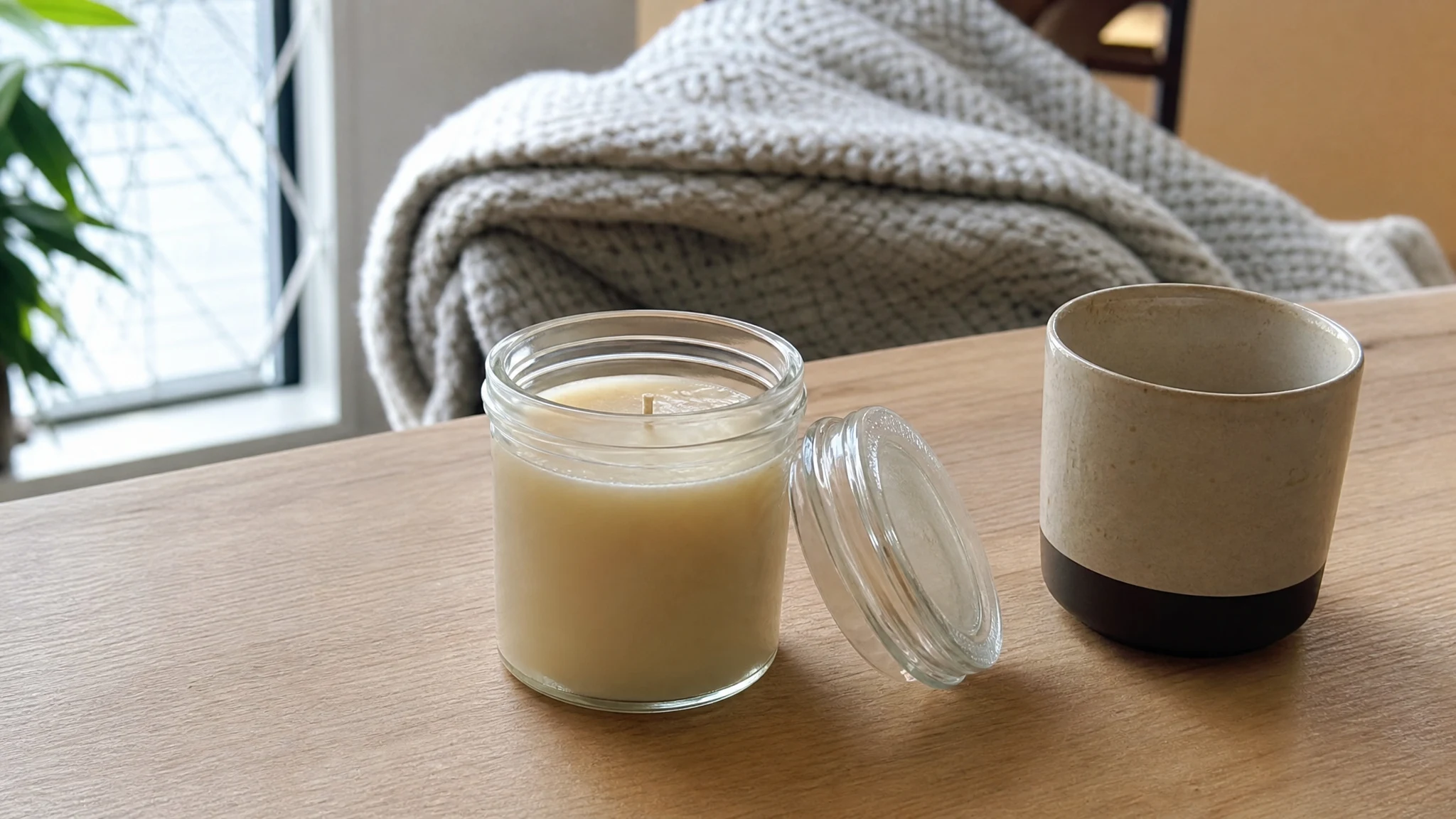
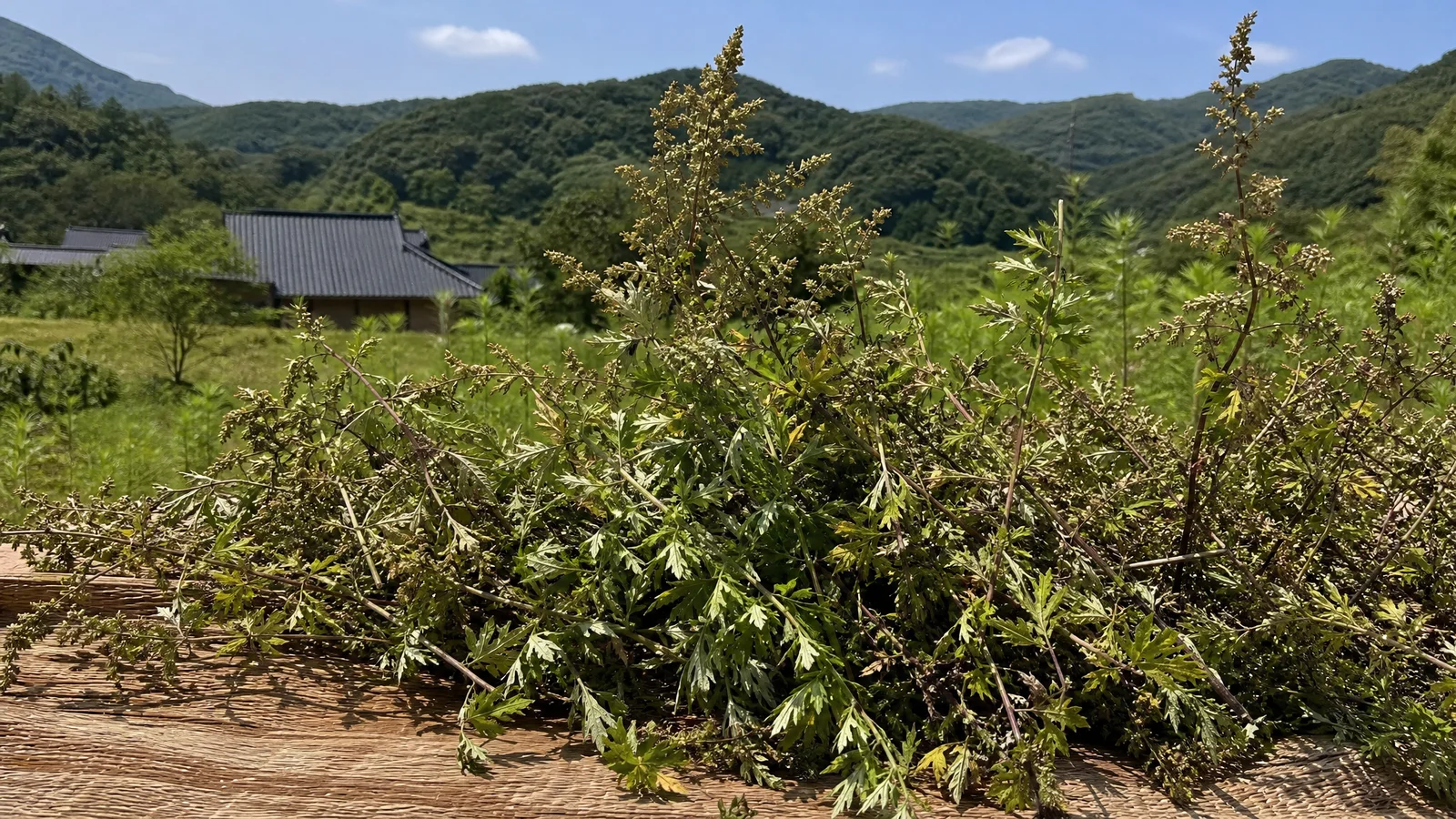
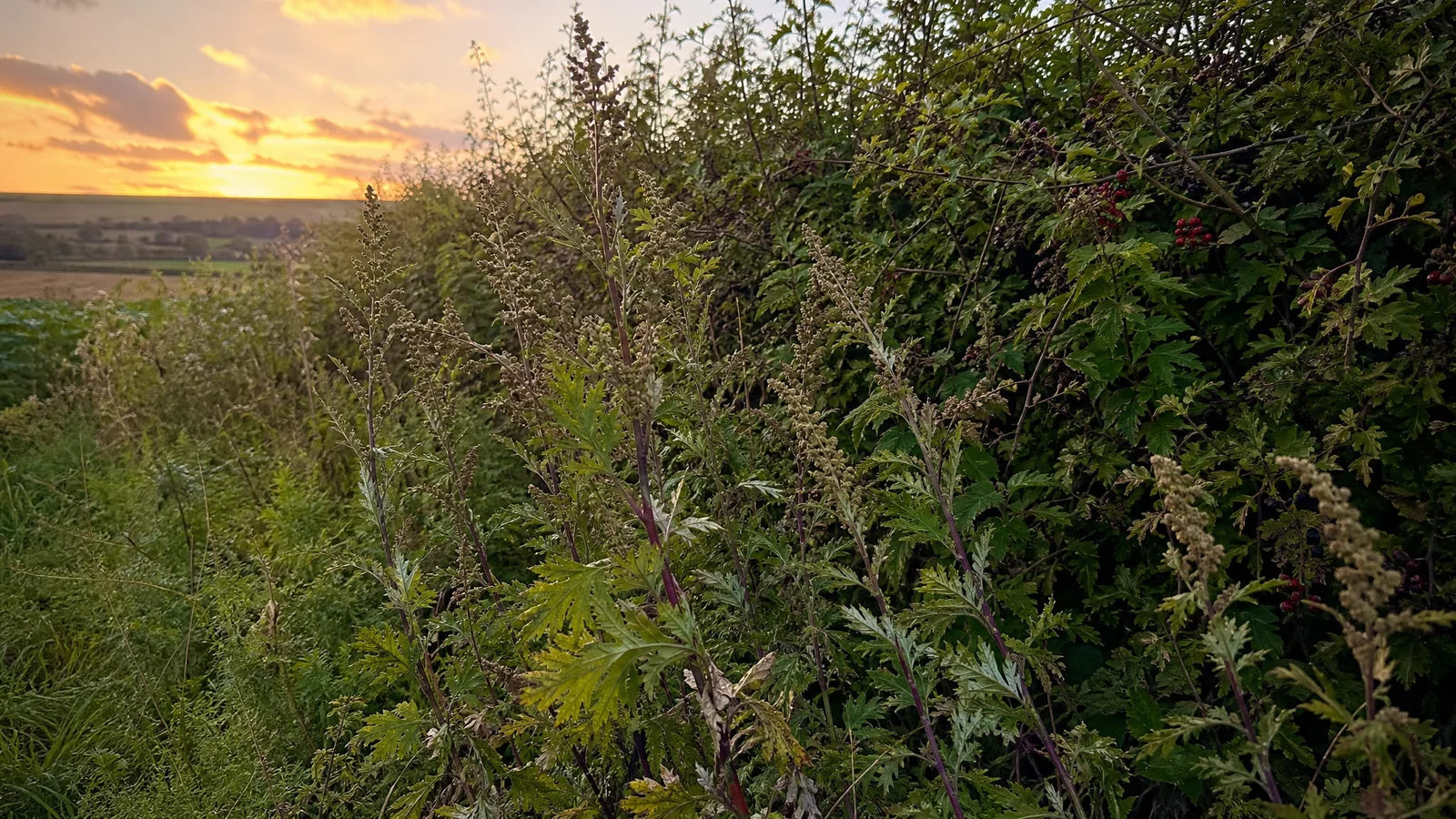
Some blends start with a story. This one starts with a sketch: a bitter, green accent of mugwort set against the sweet herbal softness of clary sage and the dry, quiet woodiness of Atlas cedarwood. Think of it as a hedgerow at dusk, with the mugwort as the cool shadow at the edge. Because mugwort is the oil in this trio with a limit attached, we build the blend by weight and let the arithmetic tell us where it can go.

Mugwort Essential Oil
Our own Mugwort Essential Oil, in sizes from 0.5 oz to bulk.
From $16.99
Shop Now →The 10 g sketch
| Oil | Share | Weight | Role |
|---|---|---|---|
| Mugwort | 5% | 0.5 g | Green, bitter, camphoraceous accent |
| Clary sage | 45% | 4.5 g | Sweet, herbal heart |
| Atlas cedarwood | 50% | 5.0 g | Dry, woody base |
These are suggested proportions built from the aroma descriptions and the sources below, a starting structure to adjust by weight. We describe our mugwort as green, bitter and camphoraceous with sage-like, herbaceous facets, and we list clary sage and cedarwood among the oils that suit it, which is the thinking behind this trio. We sell only the mugwort. Clary sage and cedarwood come from an aromatherapy or perfumery supplier.
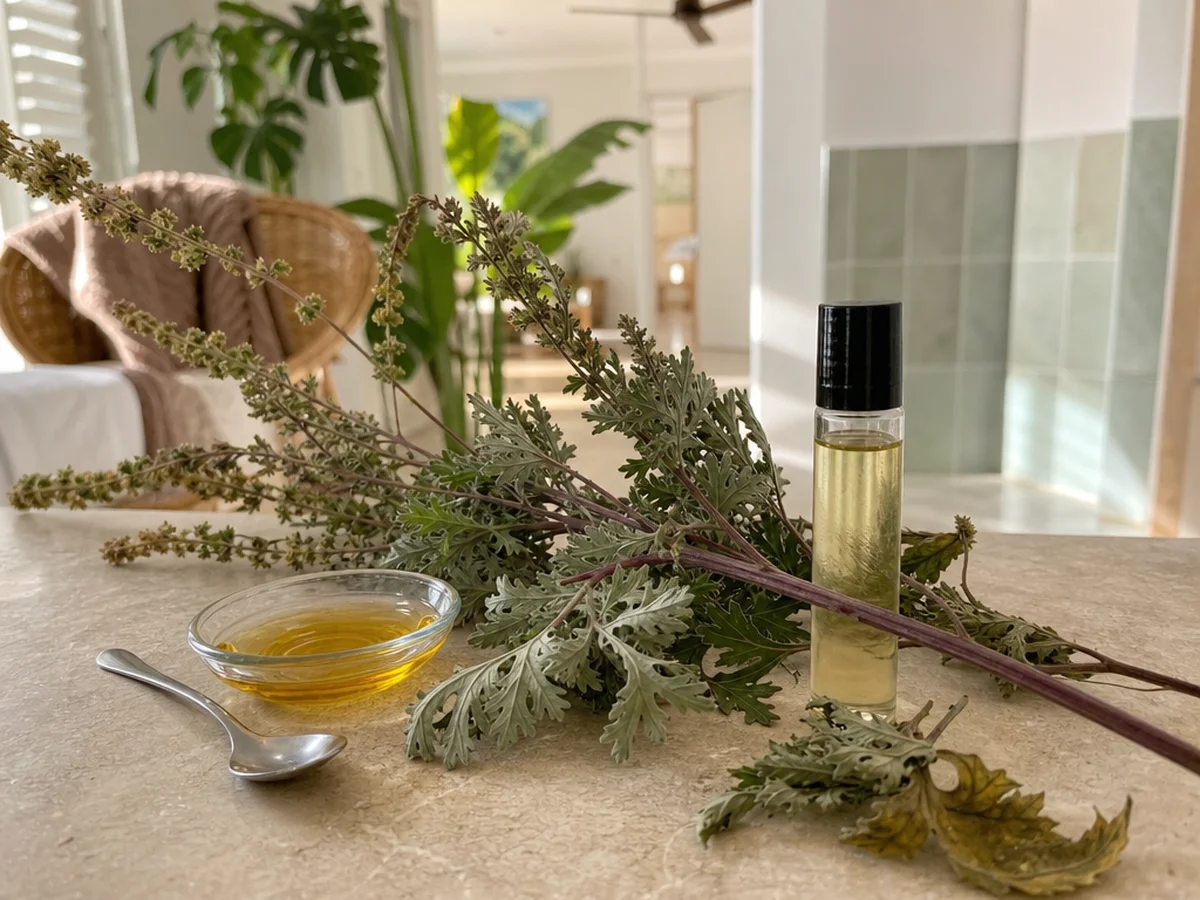
Weigh rather than count drops. Droppers vary, and 0.5 g of mugwort is only about 11 drops at the common rough convention of 20 drops to a millilitre, using the 0.895 relative density on the Certificate of Analysis we publish for one batch.
Why the Latin name on the cedarwood matters
"Cedarwood" is sold as several different oils, and they are not interchangeable. We chose Atlas cedarwood (Cedrus atlantica) because its published profile is led by a family of woody sesquiterpenes called himachalenes: in one analysis of oil hydrodistilled from dry wood, beta-himachalene made up 28.99% and alpha-himachalene 14.43% (El Hachlafi et al., 2023). That is a single sample, so read the figures as indicative.
The same care applies to clary sage, which should be Salvia sclarea, not common sage. A steam-distilled sample was led by linalyl acetate (49.1%) and linalool (20.6%) (Kačániová et al., 2023). Neither paper mentions thujone, but one sample is not a guarantee, so ask your supplier for figures on your own lots.
The thujone budget
Mugwort oils can carry thujone, and IFRA sets a ceiling for it in finished products that depends on the product type. In its 51st Amendment, thujone may make up at most 0.13% of a reed diffuser or pot-pourri oil (category 10A), 0.22% of a manual room spray (10B), 1.4% of fine fragrance including solid perfume (4), and 9.5% of candles and incense (12).
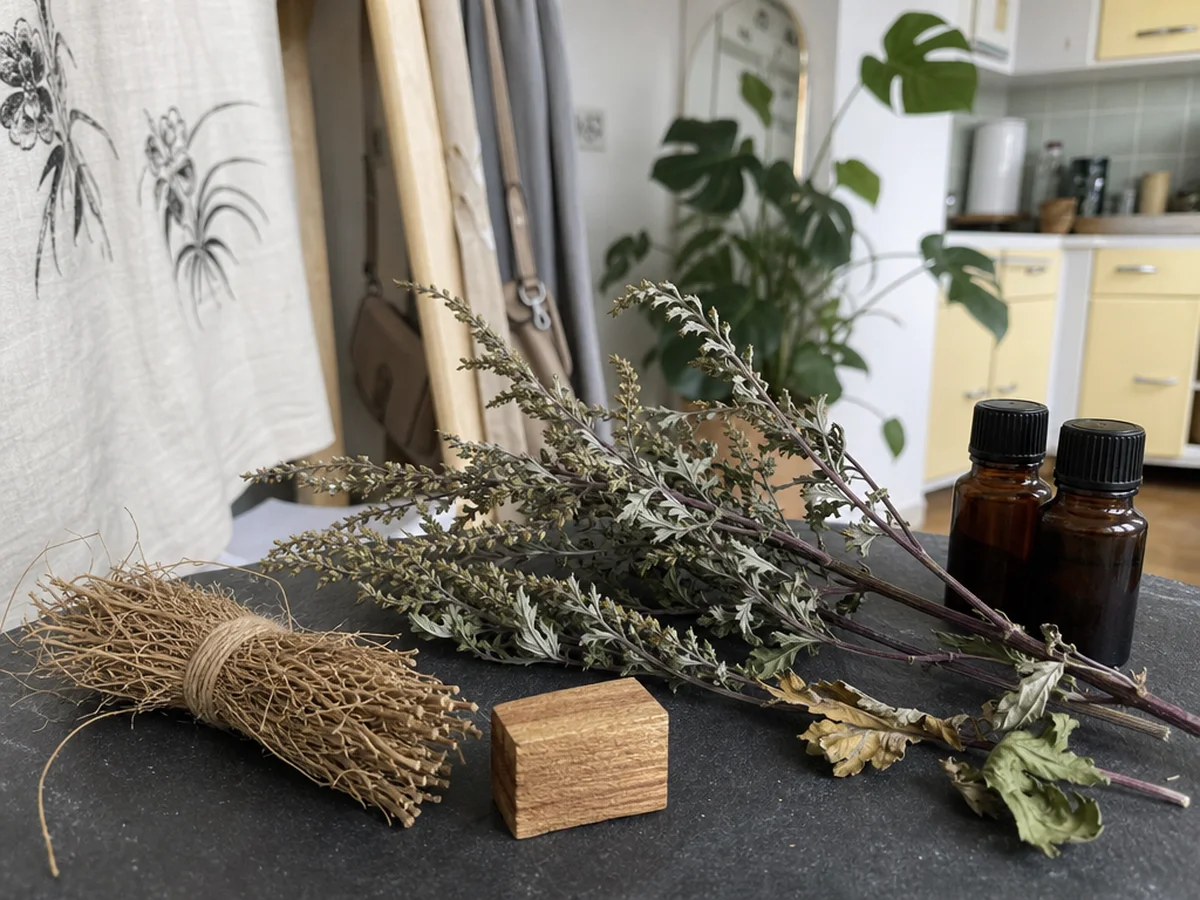
We do not have a thujone figure for our oil, and published mugwort analyses range widely. So here is the arithmetic with two stand-ins from Artemisia argyi studies, neither of them our oil: about 9.9% thujone for a hydrodistilled leaf oil (Guan et al., 2019) and about 59% for a cultivar grown in a botanical garden (Ming et al., 2025). At a 5% mugwort share, the blend would carry roughly 0.5% thujone in the first case and about 3% in the second. Dividing each IFRA ceiling by that figure gives the largest share of this blend a finished product can hold:
| Product | Lower-thujone oil (9.9%) | Higher-thujone oil (59%) |
|---|---|---|
| Reed diffuser (10A) | about 26% | about 4.4% |
| Room spray (10B) | about 44% | about 7.4% |
| Solid perfume (4) | any practical amount | about 47% |
| Candle or incense (12) | any practical amount | any practical amount |
One example makes it concrete. A 100 g reed diffuser holding 5 g of this blend contains 0.25 g of mugwort. With the lower-thujone stand-in that is 0.025% thujone, comfortably under 0.13%. With the higher one it is about 0.15%, a little over, and trimming the blend to 4 g brings it under. The same recipe can pass or not depending on a number that sits on your lot's analysis, which is why we suggest asking in writing for a thujone figure for every oil you plan to use, then relying on it only once you have it.
Smelling the trio on a strip
Once your three oils are weighed, dip a fresh blotter strip in each oil on its own and label it in pencil. Then dip a fourth strip in the blend. Smell them one after another with a breath of fresh air in between, and notice how the sharp, bitter edge of the mugwort softens next to the sweeter clary sage and the dry cedarwood. Come back after ten minutes and again after an hour, and write down the words that come to mind. The base often shows up late, and the green edge is the part you will notice first.
Where the blend fits
The table tells a clear story: candles and incense have plenty of room, while diffusers and sprays are the tight categories. For a spray, our room spray formula works through a full 100 g by weight, and for candle structures our candle blend post is the place to look. Whether a diffuser suits mugwort at all is a different question, covered in can you diffuse mugwort oil, and our mugwort against clary sage comparison explains how these two sage-like oils differ.
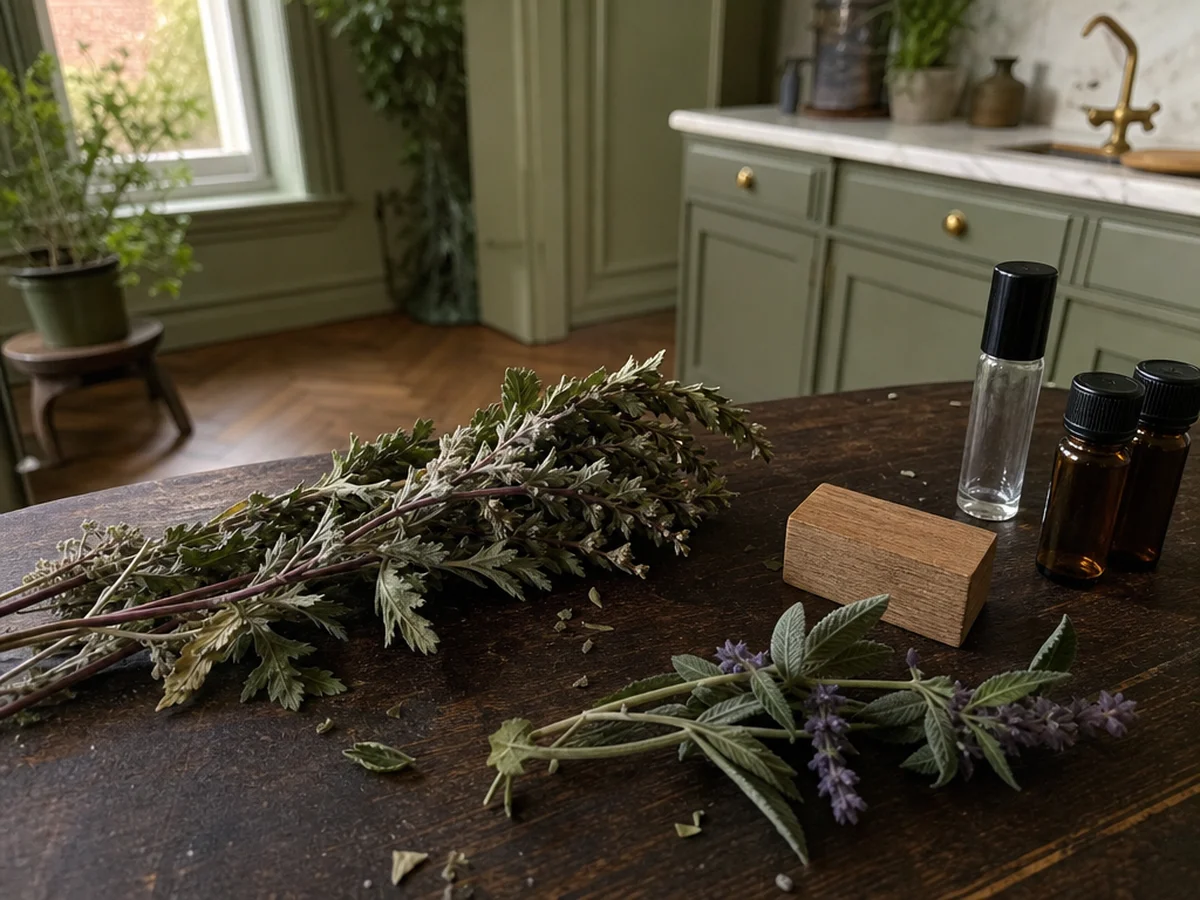
If the blend feels too bitter, nudge the mugwort down and the clary sage up in small steps, changing one oil at a time. If it feels flat, a touch more mugwort may bring it back to life. Either way, weigh every change and note it, and let the blend rest a few days before you decide.
We recommend avoiding mugwort during pregnancy and keeping it away from children and pets, and that applies to any room or object you scent with this blend. Mix a small amount first, smell it on a paper strip after a day, and write every adjustment down. A blend is a sketch until it has met your nose.
Mugwort Essential Oil
Mugwort Essential Oil from our own shop, in sizes from 0.5 oz to bulk.
From $16.99
Shop Now →Sources & Further Reading
- IFRA, 2024. The complete IFRA Standards, up to and including the 51th Amendment (January 2024): Thujone standard. ifra-standards-51st-amendment.pdf
- IFRA, 2023. Guidance for the use of IFRA Standards (June 30, 2023). IFRA guidance, 51st Amendment
- El Hachlafi N, Mrabti HN, Al-Mijalli SH, et al., 2023. Antioxidant, Volatile Compounds; Antimicrobial, Anti-Inflammatory, and Dermatoprotective Properties of Cedrus atlantica (Endl.) Manetti Ex Carriere Essential Oil: In Vitro and In Silico Investigations. Molecules 28(15):5913. pmc.ncbi.nlm.nih.gov/articles/PMC10421490
- Kačániová M, Vukovic NL, Čmiková N, et al., 2023. Salvia sclarea Essential Oil Chemical Composition and Biological Activities. International Journal of Molecular Sciences 24(6):5179. pmc.ncbi.nlm.nih.gov/articles/PMC10049179
- Guan X, Ge D, Li S, et al., 2019. Chemical Composition and Antimicrobial Activities of Artemisia argyi Lévl. et Vant Essential Oils Extracted by Simultaneous Distillation-Extraction, Subcritical Extraction and Hydrodistillation. Molecules 24(3):483. pmc.ncbi.nlm.nih.gov/articles/PMC6384757
- Ming J, Wu Y, Fu H, et al., 2025. Effects of drying methods on phenolic acids, flavonoids, and essential oils in three cultivars of Artemisia Argyi. Food Chemistry: X. pmc.ncbi.nlm.nih.gov/articles/PMC12721075