Green Oils for Natural Perfume: How Much of Each
Ask ten people what "green" smells like in perfume and you will get ten answers: cut grass, crushed stems, tomato leaf, bitter herbs, sage. The truth is that green is a whole family of notes, and the oils that deliver it behave very differently once you start measuring. Here is a short tour of three green materials a natural perfumer might reach for, with mugwort as the bitter, camphor-edged one, and an honest look at how much of each a finished perfume can hold.

Mugwort Essential Oil
Our own Mugwort Essential Oil, in sizes from 0.5 oz to bulk.
From $16.99
Shop Now →Clary sage, the sweet green
Clary sage is the soft end of the family. A steam-distilled Salvia sclarea oil analysed in one study was led by linalyl acetate (49.1%) and linalool (20.6%) (Kačániová et al., 2023). That soft, sweet profile is why we think of clary sage as an easy blending partner: it rounds off sharper herbs rather than competing with them. We list it among the oils that suit mugwort, and our comparison of mugwort and clary sage shows how two sage-like oils end up so different.
Basil, where the chemotype changes everything
Basil is a lesson in why the botanical name alone does not tell you what you are getting. A study of three basil cultivars found one oil with 57.3% methyl chavicol (also called estragole) and another, from a different cultivar of the same species, with 68.0% linalool (Avetisyan et al., 2017). A perfumer would use those two oils in quite different ways.
Estragole also comes with a ceiling. IFRA's standard allows it at no more than 0.014% of a fine fragrance (category 4). Dividing that by a 57% estragole share means the basil oil can make up only about 0.024% of the finished perfume. In a 10 g concentrate used at 15%, that works out to roughly 0.016 g, less than a single drop at the usual rough figure of 0.04 g to a drop. Basil is a whisper, not a heart note, and that is useful to know before you fall in love with it.
Mugwort, the bitter edge
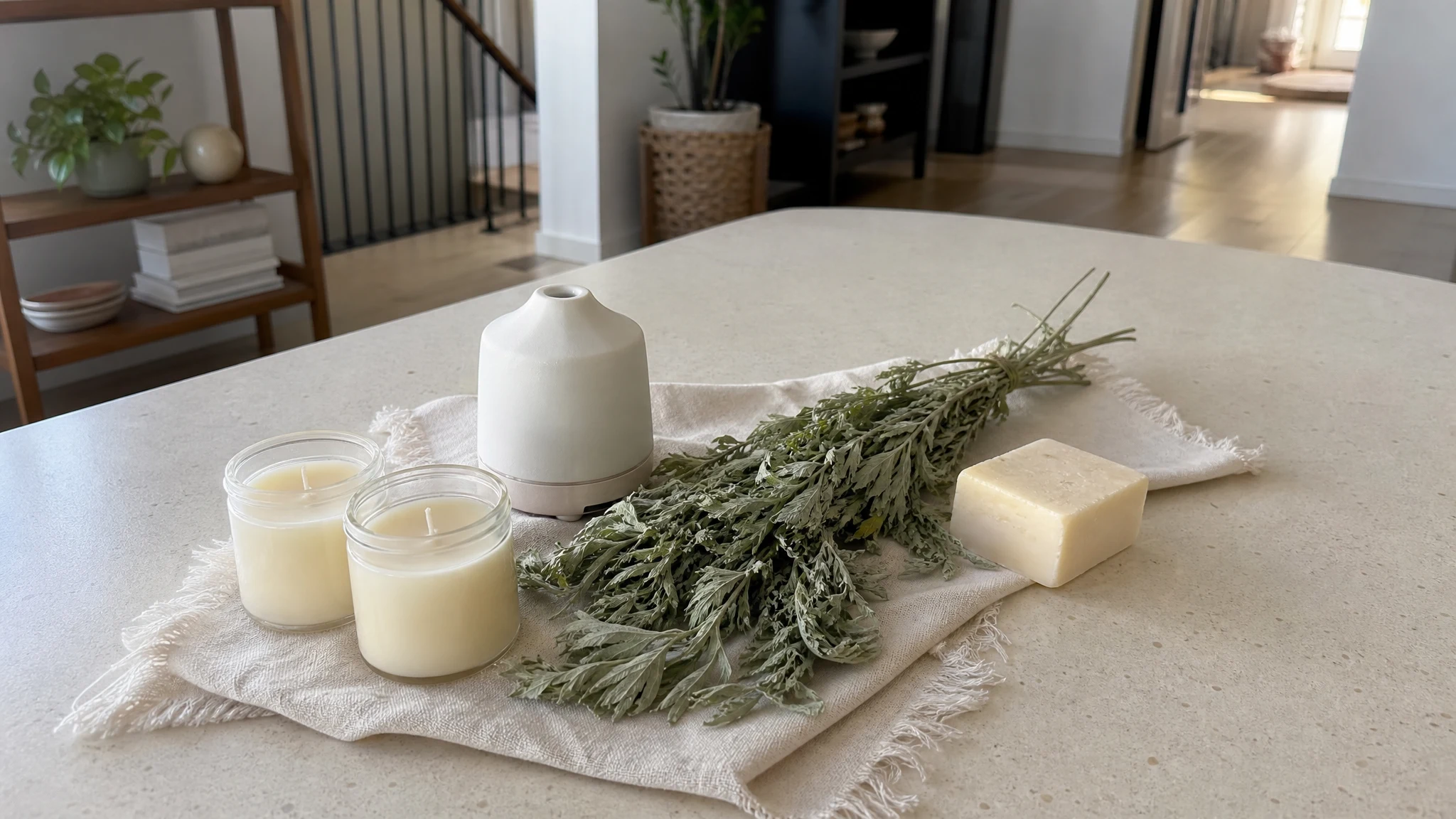
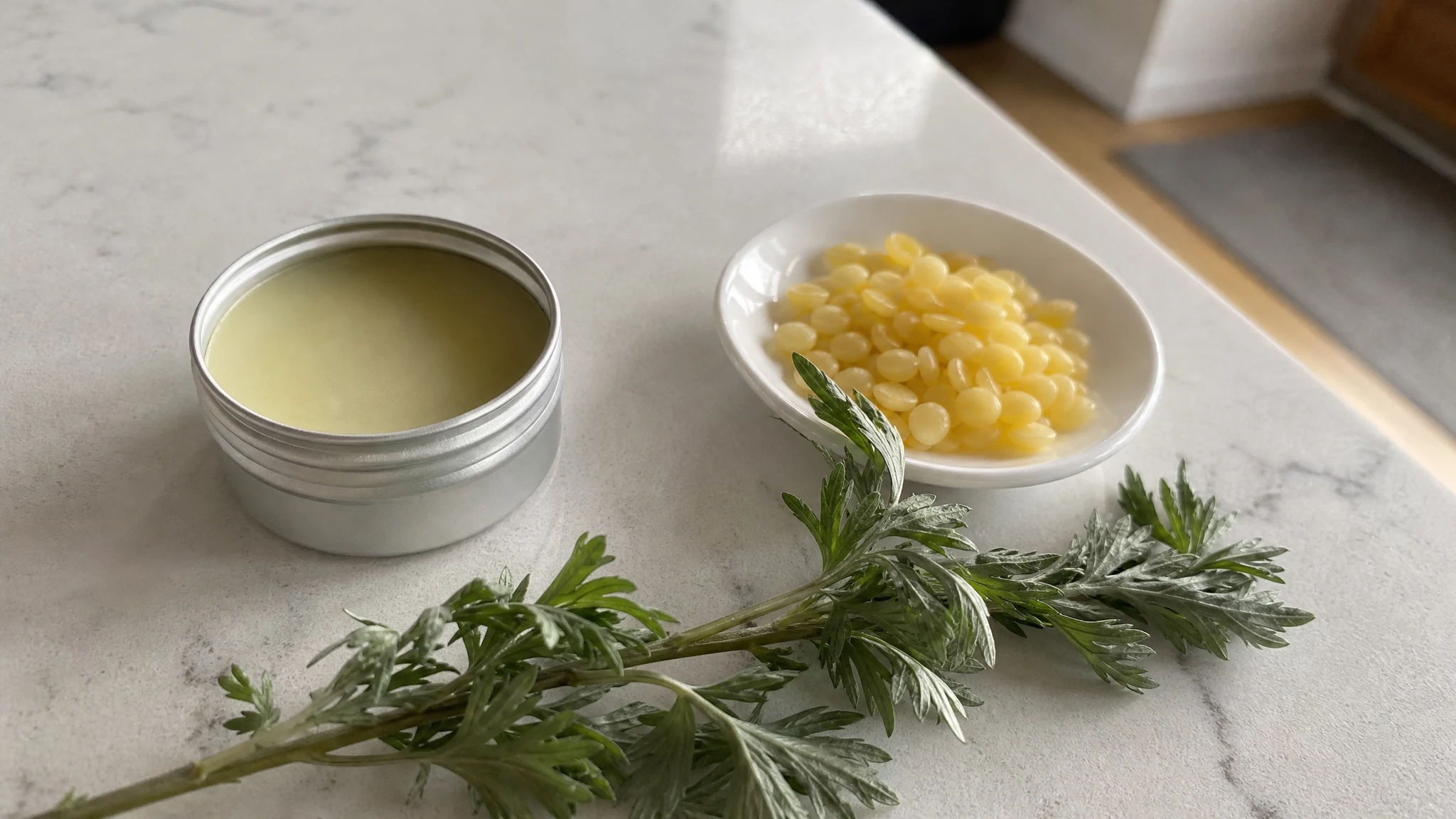
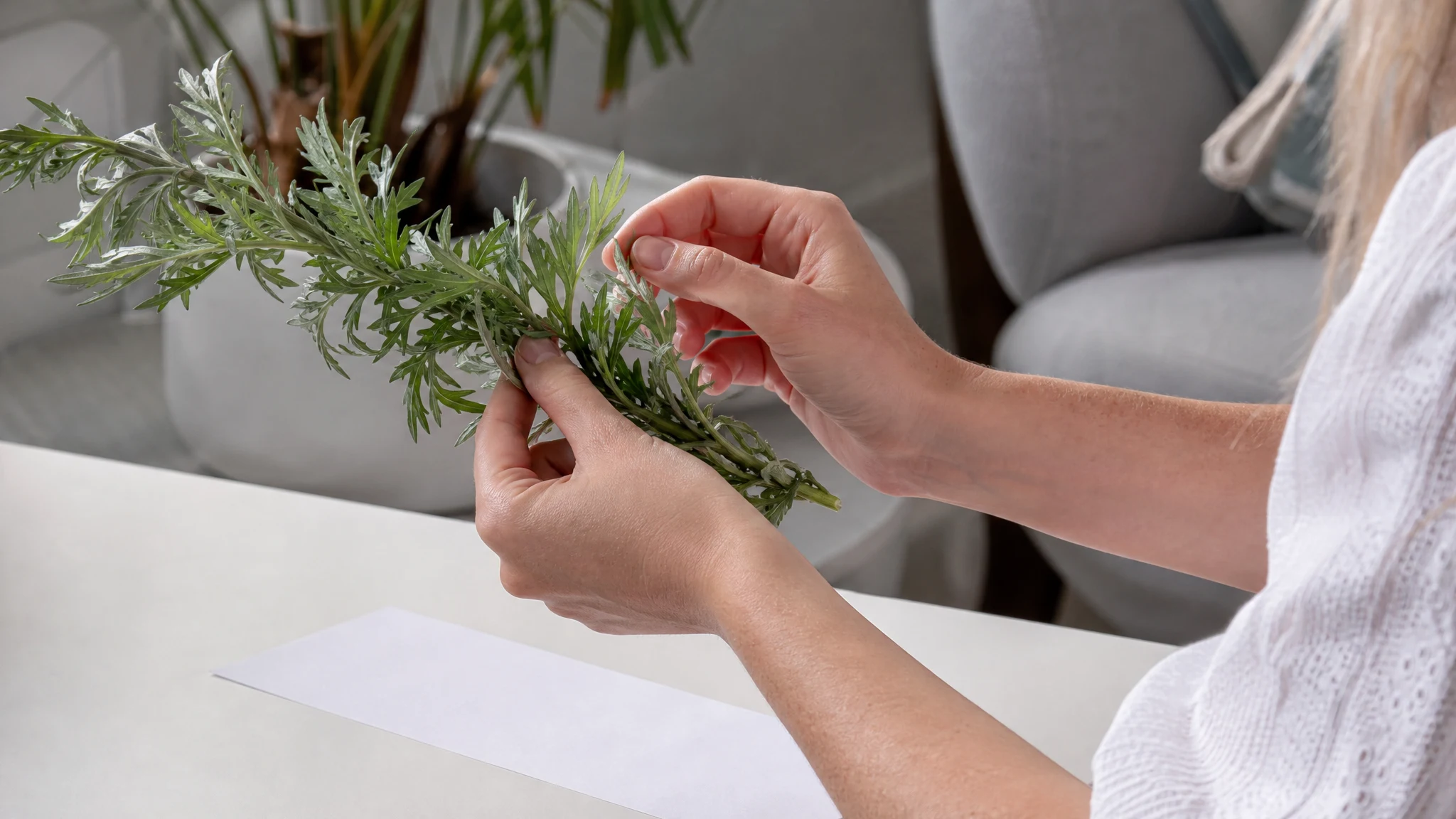
Mugwort sits at the dry, bitter end of green, with a camphoraceous lift. We describe our oil's aroma as green, bitter and camphoraceous, with sage-like, herbaceous facets and a curious sweet undertone, and our shop lists it as a middle note. In a green accord it plays the role bitter greens play on a plate: a little goes a long way and it makes everything else taste fresher.
Its limit works differently from basil's. IFRA has no standard under mugwort's own name, but its thujone standard applies to any oil that carries thujone, with a ceiling of 1.4% of the finished product for fine fragrance. Published analyses of Artemisia argyi oils range from about 9.9% thujone for a hydrodistilled leaf oil (Guan et al., 2019) to about 59% for one cultivar (Ming et al., 2025). Neither is our oil, and we do not have a thujone figure for ours. Even with the higher stand-in, the arithmetic puts mugwort at roughly 2.4% of the finished perfume, or around 16% of a 15% concentrate, so a small accent of mugwort sits comfortably inside the fine fragrance ceiling in a way basil does not.
That headroom only applies to a perfume, which IFRA treats as its own category. Other products have much tighter thujone ceilings (0.095% for body creams, oils and lotions, for example), so before you take mugwort beyond perfume, work the numbers for that product type, as we do in our room spray formula. For skin, our guidance is to dilute to 0.5% to 2% in a carrier and patch test first, and we would start at the low end; a perfume that goes on the skin is better off keeping mugwort to a tiny accent. We also recommend avoiding mugwort during pregnancy and keeping it away from children and pets.
Training your nose for green
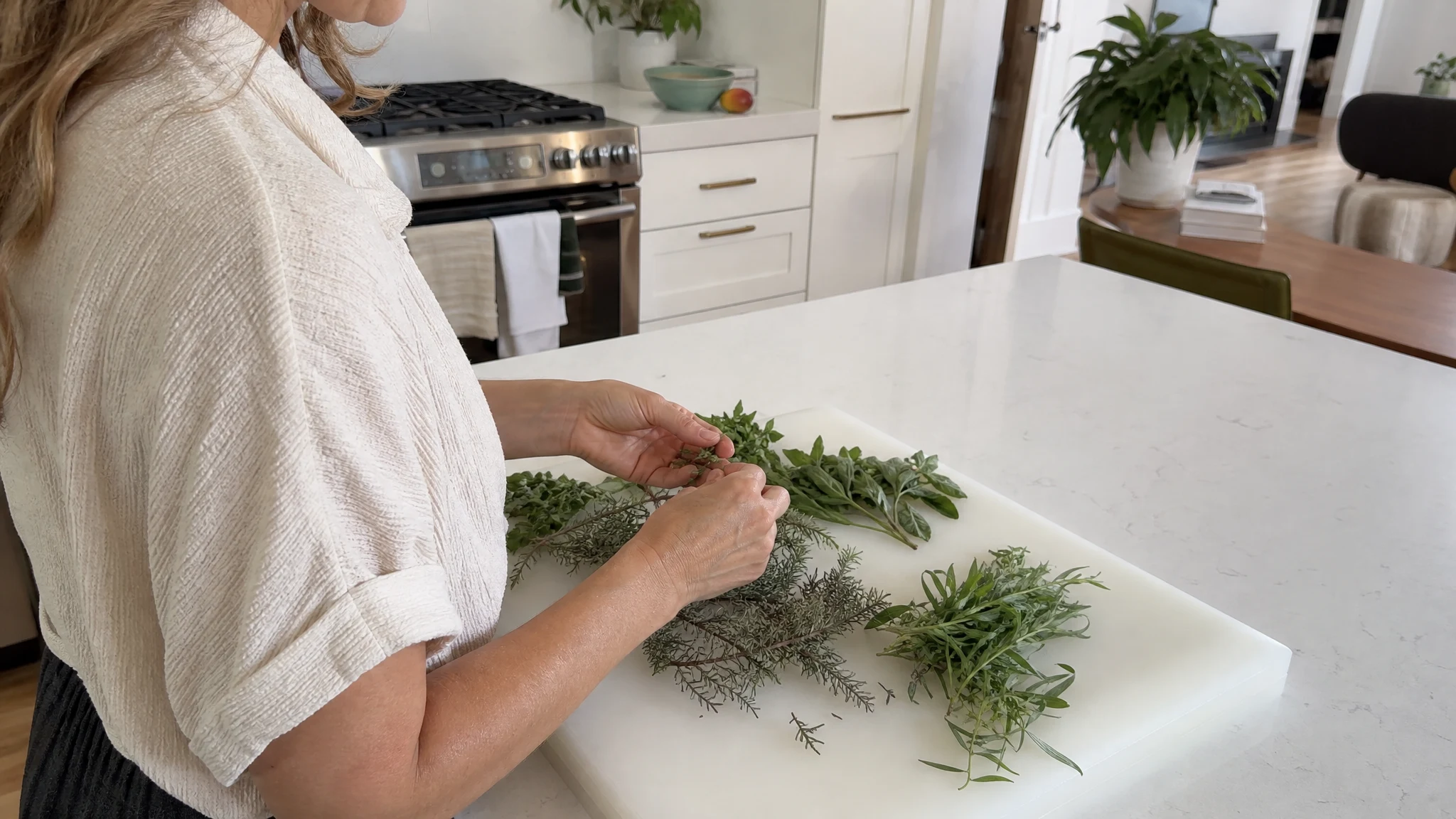
Green is the hardest family to describe, so it helps to hold your own reference points. A crushed stem, a torn leaf from a tomato plant, a handful of cut grass, a sprig of sage rubbed between your fingers: smell each one, then smell your oils on strips. You will start to notice that one oil sits closer to the cut-grass end, another leans to the bitter, medicinal side, and a third is mostly sweet. Write those words down; they become your own shorthand when you build later.
Putting a green accord together
If you like to build by weight, the sensible order is the one the numbers suggest: let the sweet green (clary sage) carry the body, add a small amount of the sharp green you want, and use mugwort as the final dry touch rather than the foundation. Our pairing guide goes through the partners we list for it, and our piece on fougère and chypre accords shows where bitter green sits in classic perfume structures. For a worked trio, see our mugwort, clary sage and cedarwood blend.
One more tip for building by weight: write each trial in a small notebook with the date, then let the mix rest for a few days before you judge it. Green accords can seem harsh when freshly mixed and then soften and round out as they settle. A fresh strip every time, and a pause between sniffs, will keep you honest.
Whichever green you choose, ask your supplier for the botanical name, the chemotype and written composition data, and rely on the answers only once you have them in writing. IFRA updates its standards regularly, so check the current amendment before you finalise a formula.
Mugwort Essential Oil
Mugwort Essential Oil from our own shop, in sizes from 0.5 oz to bulk.
From $16.99
Shop Now →Sources & Further Reading
- IFRA, 2024. The complete IFRA Standards, up to and including the 51th Amendment (January 2024): Estragole and Thujone standards. ifra-standards-51st-amendment.pdf
- Kačániová M, Vukovic NL, Čmiková N, et al., 2023. Salvia sclarea Essential Oil Chemical Composition and Biological Activities. International Journal of Molecular Sciences 24(6):5179. pmc.ncbi.nlm.nih.gov/articles/PMC10049179
- Avetisyan A, Markosian A, Petrosyan M, et al., 2017. Chemical composition and some biological activities of the essential oils from basil Ocimum different cultivars. BMC Complementary and Alternative Medicine 17:60. pmc.ncbi.nlm.nih.gov/articles/PMC5248495
- Guan X, Ge D, Li S, et al., 2019. Chemical Composition and Antimicrobial Activities of Artemisia argyi Lévl. et Vant Essential Oils Extracted by Simultaneous Distillation-Extraction, Subcritical Extraction and Hydrodistillation. Molecules 24(3):483. pmc.ncbi.nlm.nih.gov/articles/PMC6384757
- Ming J, Wu Y, Fu H, et al., 2025. Effects of drying methods on phenolic acids, flavonoids, and essential oils in three cultivars of Artemisia Argyi. Food Chemistry: X. pmc.ncbi.nlm.nih.gov/articles/PMC12721075